
Cardio Strength Workout: Full-Body Hybrid Frameworks, Interval Architecture, and Home Floor Staging
Understanding the Cardio Strength Workout: Movement Architecture & Hybrid Mechanics
A hybrid cardio strength workout integrates traditional resistance training with elevated aerobic work. Instead of separating heavy lifting sessions from endurance conditioning on different days, a blended training structure organizes these modalities into cohesive, high-density training blocks. This approach challenges both localized muscular endurance and overall cardiovascular output within a single time window.
The mechanics of a cardio strength training workout rely on alternating between loaded compound movements and dynamic bodyweight or rhythmic cardio intervals. When a lifter performs a resistance exercise, tension focuses primarily on target muscle groups. Immediately following that set with an athletic, cardiovascular drill maintains an elevated heart rate while giving primary movers a partial active recovery phase. When balancing pure load lifting versus elevated aerobic tempo, referencing a focused strength workout cardio guide helps illustrate how removing or adding cardiovascular intervals changes training adaptations.
Structuring these combined formats requires attention to movement quality and fatigue management. When strength training cardio demands are combined, the nervous system faces both mechanical load and metabolic fatigue. Maintaining strict lifting posture throughout the session ensures that movement patterns remain clean, even as breathing rates climb.
Essential Movement Categories: Strategic Pairings for Strength and Cardio
Building an effective strength and cardio workout begins with categorizing exercises by their mechanical demands. Combining the wrong movements can lead to localized muscular burnout, which compromises form. A structured session groups exercises into three primary categories:
- Primary Compound Lifts: Multi-joint movements such as dumbbell front squats, Romanian deadlifts, overhead presses, and bent-over rows. These establish the structural resistance baseline for the circuit.
- Ballistic Conditioning Drills: Dynamic exercises like kettlebell swings, medicine ball slams, and broad jumps that emphasize rate of force development without prolonged eccentric strain.
- Continuous Cardio Strength Exercises: Rhythmic, low-load or bodyweight movements such as mountain climbers, jump rope intervals, skater hops, and high knees that drive cardiovascular demand.
When selecting pairings for a strength training and cardio workout, complementary mechanics yield the most balanced output. For instance, pairing a lower-body knee-dominant lift with an upper-body cardio drill prevents premature leg fatigue. Similarly, following an upper-body pressing pattern with a lower-body agility drill keeps the overall tempo high while distributing metabolic stress across the entire body. Integrating functional load accessories from a dedicated strength training collection allows lifters to adjust resistance seamlessly between explosive sets.
Structuring a 30-Minute Routine: Interval Densities and Circuit Blueprints
Managing interval timing and density is critical when executing a 30-minute hybrid session. A standard cardio strength training workout can be organized using circuit or ladder blueprints that govern work-to-rest ratios.
For practitioners seeking high-density interval models, exploring a structured workout strength cardio guide illustrates how Tabata and ladder timers pace combined lifting and cardio rounds. Below is a foundational framework for organizing a hybrid training block:
- Block A (Strength Priority): 45 seconds of controlled compound resistance movement, followed by 15 seconds of transition rest. Focus on mechanical control and complete range of motion.
- Block B (Aerobic Acceleration): 30 seconds of dynamic cardio strength exercises, followed by 30 seconds of active recovery. Focus on steady rhythm and continuous footwork.
- Block C (Integrated Hybrid Finisher): 40 seconds of high-tempo combination drills (such as dumbbell thrusters or clean-to-press variations), followed by 20 seconds of rest.
Repeating this sequence across multiple rounds allows lifters to maintain steady output without experiencing sudden performance drop-offs. Transition pacing should remain deliberate; rushing between stations without adequate setup can compromise form on the subsequent lifting set.
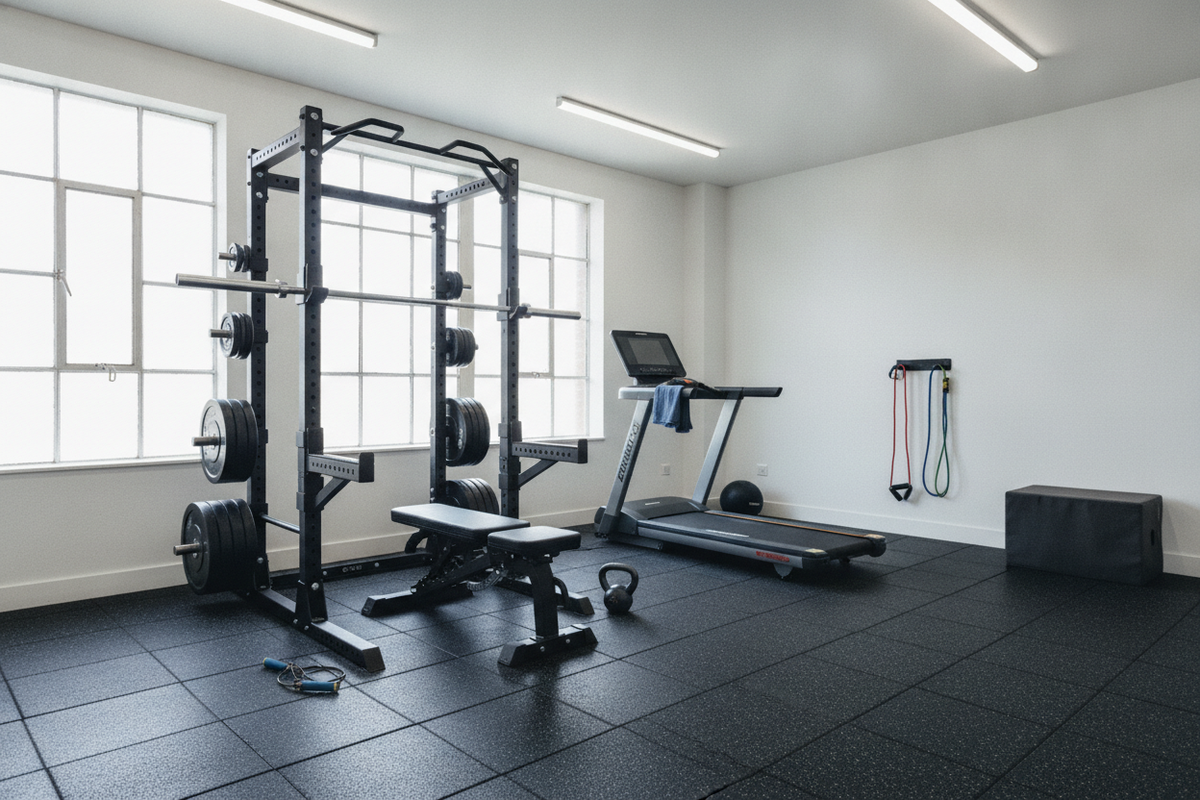
Home Gym Floor Staging: Surface Grip, Shock Dissipation, and Heavy Station Layout
Executing dynamic multi-planar intervals alongside weighted exercises introduces unique flooring demands. A standard residential floor surface rarely provides the stability, grip, or shock dissipation required for rapid directional shifts and loaded landings. Flooring for a hybrid workout must balance firm stability under heavy loads with sufficient compliance for plyometric impacts.
During explosive movements such as lateral bounds or jumping lunges, horizontal shear forces push against the floor surface. If the mat lacks an effective textured traction pattern or low-slip backing, shifting can disrupt balance. Conversely, performing heavy barbell or dumbbell sets on overly soft foam can compress unevenly, destabilizing ankle and foot mechanics. Establishing a wide, non-slip base using a dedicated workout product provides ample boundary space for seamless shifts between weighted squats and wide lateral bounds.
Shock dissipation is equally vital for home workouts. High-density rubber or micro-cellular composite mats help disperse the vibration generated from repeated jumping drills and equipment placement, contributing to a controlled home gym environment.
Room Protection, Station Separation, and Mat Maintenance Frameworks
Designing a dedicated layout prevents clutter and enhances safety during fast-paced hybrid sessions. Free weights, kettlebells, and accessories should have designated resting zones adjacent to, but distinct from, the active conditioning floor area. This separation ensures that dynamic agility footwork does not intersect with stored iron.
When zoning home spaces that incorporate dedicated stationary rigs from a strength collection, ensure protective high-density floor padding isolates the frame from dynamic cardio floor areas. Heavy machinery requires firm, unyielding floor support to prevent permanent subfloor indents, while the surrounding open space can be layered with resilient exercise mats for functional movement.
Routine mat maintenance preserves surface traction and hygiene. Sweat, ambient dust, and shoe debris can gradually degrade the friction coefficient of gym flooring. Periodic cleaning using mild, non-corrosive soaps and warm water removes surface films without deteriorating the mat material. Allowing surfaces to dry fully before high-intensity sessions ensures dependable multi-directional footing across every cardio strength workout.


