Fitness Cardio Workout: Full-Body Gym Blueprints, Interval Frameworks, and Floor Staging
Executing an intentional fitness cardio workout requires more than simply stepping onto a treadmill and watching a display timer tick down. A well-rounded cardio program blends aerobic endurance, rapid agility, explosive calisthenics, and core stabilization into a structured session. Whether training in a commercial fitness center or setting up a dedicated conditioning zone in a garage gym, structuring your movements, pacing your intervals, and properly preparing your workout surface ensure consistent training progress and joint comfort over time.
Core Architectural Pillars of an Effective Fitness Cardio Workout
A productive cardio session targets multiple energy pathways while challenging diverse muscle groups. Rather than relying on repetitive, single-plane movements, incorporating multi-directional exercises and variable tempos yields a more engaging conditioning experience.
Balancing Steady-State Aerobic Conditioning with Dynamic Intervals
An effective routine often balances continuous, moderate-intensity aerobic efforts with high-output interval bursts. Steady-state training develops foundational endurance and stamina, allowing you to sustain rhythmic output without sudden muscular fatigue. In contrast, interval training alternates between brief phases of elevated effort and structured recovery. Combining both methodologies across a weekly regimen develops broad conditioning adaptability without causing mental burnout or repetitive stress.
Full-Body Movement Integration: Upper, Lower, and Core Synergy
Traditional cardio often focuses disproportionately on lower-body cyclic actions like cycling or jogging. A complete gym cardio plan integrates the upper body and core musculature to create a balanced physical challenge. Movements such as rowing, medicine ball slams, bear crawls, and shadowboxing demand total-body coordination, engaging the back, shoulders, hips, and abdominal wall throughout every movement transition.
Structuring Your Gym Cardio Session: 3 Proven Workout Blueprints
Depending on your personal fitness goals and the equipment at your disposal, you can adapt your gym cardio routine into distinct session formats. For additional movement synergy, cross-referencing an exercise full body guide can help you align your aerobic intervals with broader resistance training routines.
1. The Machine-to-Floor Circuit: Blending Ergometers and Calisthenics
This layout alternates between stationary cardiovascular equipment and bodyweight floor work to keep heart rates elevated while training movement variety:
- Ergometer Segment: Row, cycle, or use an elliptical machine at a steady, sustainable pace.
- Ground-Based Transition: Step off the machine onto a padded floor area for mountain climbers, bodyweight squats, or plank shoulder taps.
- Tempo Acceleration: Perform rapid lateral skaters or high knees before a short recovery period, then repeat the sequence across multiple rounds.
2. The Multi-Station Agility and High-Velocity Interval Plan
Designed for open floor spaces, this format emphasizes quick changes of direction, foot speed, and explosive calisthenics:
- Station A: Jump rope or lateral line hops for rhythmic coordination and ankle stability.
- Station B: High-tempo shadowboxing, jab-cross combinations, and defensive slips.
- Station C: Explosive broad jumps or tuck jumps landing smoothly into an athletic stance.
- Station D: Controlled ground-based bear crawls or crab walks to challenge core control.
3. Low-Impact High-Effort Blueprint for Joint Longevity
Conditioning does not require high-impact landings to remain physically demanding. A low-impact layout focuses on continuous muscular tension and fluid full-body movement:
- Incline Striding: Walking at a steep elevation on a treadmill to recruit glutes and hamstrings without landing shock.
- Fan Bike Intervals: Pushing and pulling the handles while driving the pedals in sustained cadence intervals.
- Slider Drills: Using foot sliders on a smooth surface for continuous sliding lunges, mountain climbers, and body saws.
Essential Movement Library for Full-Body Gym Cardio
Selecting the right exercises allows you to customize your sessions based on space, available gear, and conditioning level. Grouping movements by movement plane ensures well-rounded athletic development.
Dynamic Calisthenics and Ground-Based Agility Drills
- Lateral Skater Hops: Leaping side to side while stabilizing on the outer leg encourages hip stability and lateral deceleration strength.
- Mountain Climbers: Holding a strong plank position while driving alternating knees toward the chest engages the anterior core and shoulders.
- Sprawls and Squat Thrusts: A fluid transition from standing down to a push-up stance and back up develops hip mobility and explosive hip extension.
Rhythm-Based Pumping Intervals and Plyometric Transitions
- Speed Rope Revolutions: Continuous rope turning promotes wrist agility, calf reactivity, and steady breathing cadence.
- High-Knee Floor Bounds: Driving knees toward waist level in place reinforces upright posture and quick ground-contact cadence.
- Burpee Variations: Modifying standard burpees with stepping patterns or elevated push-ups provides scalable intensity for any fitness level.
Gym and Home Setup: Impact Dissipation, Equipment Anchoring, and Floor Protection
Dynamic cardio routines generate substantial floor vibrations, sweat, and repetitive footwear friction. Staging your training space with high-grade flooring materials protects underlying surfaces, stabilizes equipment, and softens landing forces.
Subfloor Protection Under Heavy Cardio Machines and Jump Zones
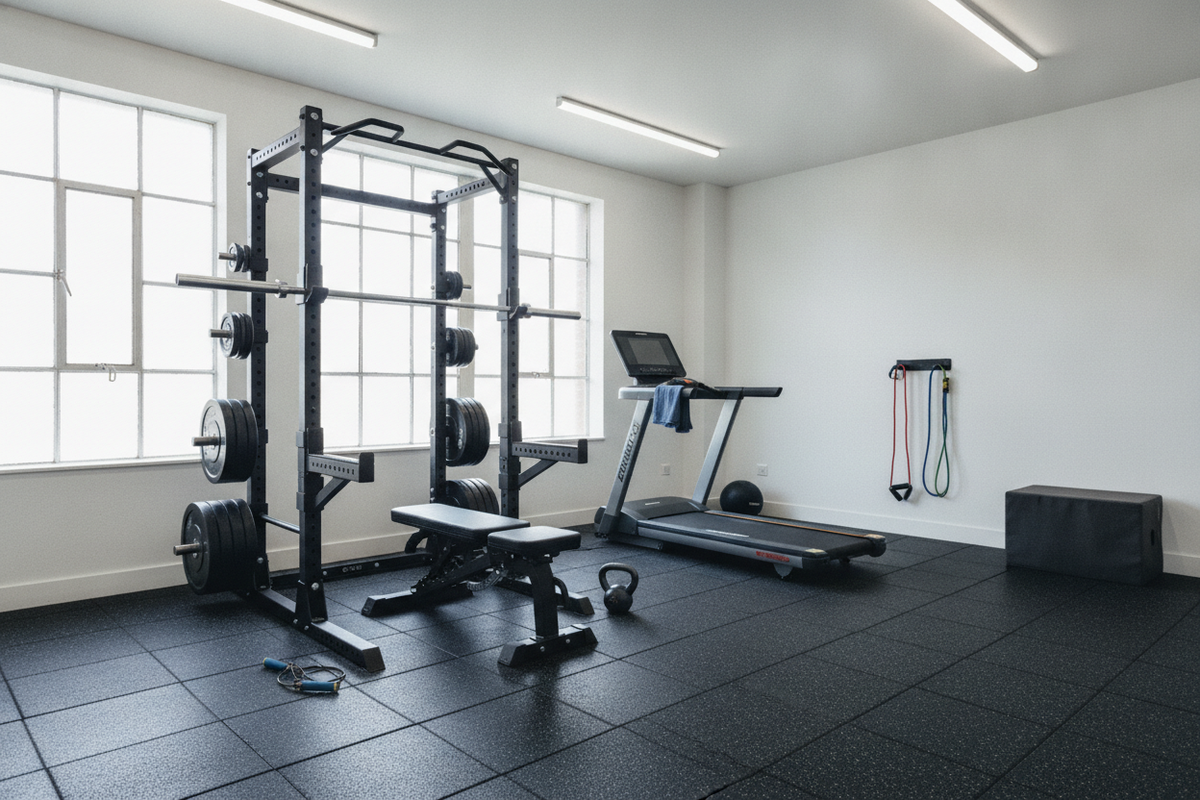
Cardio machinery such as treadmills, rowers, and stationary bikes exert localized downward pressure. Over time, mechanical vibrations and shifting feet can scuff hardwood, crack tile, or compress domestic carpeting. Placing a dedicated mat from an exercise gym collection under heavy machinery dampens acoustic vibration, prevents machine walking during high-output intervals, and catches moisture before it reaches delicate subflooring.
High-Density Mat Staging for Lateral Drills and Joint Comfort
Calisthenics, plyometric hops, and floor-based conditioning drills place repetitive demands on the ankles, knees, and hips. Utilizing a durable surface like an exercise gym workout product provides a stable, non-slip foundation that cushions joint impacts without feeling overly soft or compromising balance during rapid lateral cuts.
Session Management: Pacing, Fatigue Management, and Maintenance
Sustaining consistent progress with your conditioning requires smart programming, conscious fatigue management, and basic equipment maintenance.
Weekly Cardio Programming and Recovery Balance
To avoid overtraining, balance intense cardio sessions with adequate recovery and resistance training. Pairing your cardio routine alongside a structured full body training guide helps maintain an optimal split between muscle building and cardiovascular conditioning. Aim for progressive pacing, increasing circuit duration or movement density gradually rather than making sudden spikes in session volume.
Sweat Management and Long-Term Mat Care
High-intensity cardio inevitably produces perspiration. Keeping non-porous, water-resistant mats clean preserves floor hygiene and maintains optimal shoe traction over time:
- Wipe down mat surfaces immediately after training with a mild, non-abrasive cleanser and a microfiber cloth.
- Allow the surface to air dry completely before rolling or storing accessories on top.
- Regularly inspect the mat underside to ensure no dust or debris has accumulated, maintaining firm floor grip during dynamic agility drills.