Cardio on Off Days Bodybuilding Tips and Setup
Balancing heavy resistance training with cardiovascular work is an ongoing puzzle for physique athletes. When planned with care, integrating cardio on off days bodybuilding routines helps flush metabolic waste, maintains baseline endurance, and keeps joint tissues supple without blunting size gains. Many lifters struggle with how to approach cardio on rest days bodybuilding schedules, worrying that extra work will undermine their strength or drain energy needed for future barbell sessions. Understanding how to manage intensity and arrange your training space solves these concerns.
Should You Do Cardio on Off Days in Bodybuilding?
Bodybuilders can gain substantial benefits from non-lifting conditioning when session duration and heart rate remain modest. Non-lifting days provide an opportunity to encourage circulation without adding the mechanical fatigue that stems from heavy loaded movements.
Balancing Muscle Recovery and Calorie Burn
The central objective for physique development is preserving muscle growth while controlling body fat. If an aerobic workout becomes too grueling, it drains glycogen reserves and interferes with muscle recovery. In contrast, low-demand movement increases systemic blood flow, bringing oxygen and nutrients into repairing muscle tissue. Thoughtfully scheduling cardio between lifting days bridges the time between heavy training sessions, supporting natural recuperation while sustaining a mild calorie deficit.
Can Off-Day Cardio Improve Bodybuilding Recovery?
Light aerobic sessions can speed recuperation by clearing exercise metabolites without imposing heavy muscular stress. A gentle session keeps tendons and ligaments mobile, reducing stiffness after demanding resistance work. The priority is ensuring this work avoids overtaxing your central nervous system, which requires genuine downtime between hard gym sessions to reset neuromuscular drive.
Signs Off-Day Activity Is Helping or Hurting Progress
Monitoring your performance during primary lifting sessions is the best way to evaluate off-day work. If your legs feel sluggish during squats, or if grip strength declines noticeably, your rest-day conditioning is likely programmed at an intensity that is too demanding. When programmed at the right pace, non-lifting conditioning leaves you feeling limber, hungry, and ready to attack your next scheduled workout.
Best Types of Cardio Between Lifting Days
The type of movement chosen on non-lifting days determines whether aerobic work aids your physique or competes with it. The objective is to elevate heart rate comfortably while avoiding eccentric muscle damage.
Low-Impact Steady State for Active Recovery
For most strength athletes, low-impact steady state activity serves as the most dependable conditioning format. Dedicated liss cardio keeps heart rate within an aerobic bracket where oxygen delivery stays steady without triggering micro-trauma in muscle fibers. Easy incline walking on a treadmill or smooth pedaling on a stationary bike provides consistent active recovery that leaves your legs fresh for upcoming resistance work.
Riding a stationary bike minimizes joint impact across the hips, knees, and ankles. Meanwhile, gentle incline walking strengthens posterior chain endurance without repetitive pounding. Relying on continuous, low-intensity active recovery ensures that conditioning acts as a restorative tool rather than an additional stressor.
Bodyweight Conditioning and Jump Rope Considerations
Some lifters prefer bodyweight circuits or rhythm drills over traditional cardio machines. While a brief jump rope sequence builds foot speed and calf elasticity, continuous jumping introduces repetitive impact forces. If you incorporate a jump rope into your non-lifting days, keep rounds short and execute them on a forgiving surface to prevent unwarranted joint stress.
Cardio on Rest Days for Fat Loss Without Losing Muscle
Improving body composition requires striking a balance between energy output and muscular retention. Strategic conditioning between lifting bouts allows you to accelerate fat oxidation while safeguarding lean mass.
Does Cardio on Rest Days Burn Muscle or Fat?
Low-to-moderate aerobic exercise relies primarily on fatty acids for energy, sparing stored glycogen and muscle protein as long as daily protein and caloric targets are met. For a deeper look at timing strategies, consult our cardio fat loss guide. By keeping effort aerobic, conditioning on rest days helps you achieve your fat loss goals without compromising your hard-earned muscle tissue.
Managing Intensity and Session Duration
Keeping session length and perceived exertion under control prevents negative interference with your physique goals. Limiting non-lifting aerobic sessions to thirty or forty-five minutes stimulates cardiovascular health and caloric expenditure without causing excessive fatigue. Focus on an easy, conversational pace that creates a light sweat rather than breathless exhaustion.
Coordinating Off-Day Sessions With Your Lifting Split
Your weekly lifting split should dictate how you time off-day conditioning. High-impact or quad-heavy cardio placed directly ahead of a demanding leg day can reduce squat strength and sap quad drive. Structuring adequate rest between intense workouts is essential, as explored in our rest days between guide.
Steer clear of vigorous lower-body conditioning right before heavy lifting days so major muscle groups stay primed. If you choose to spin on a stationary bike the day after lower-body training, keep resistance very light simply to promote blood flow through stiff tissues.
Setting Up Your Home Gym Floor for Off-Day Conditioning
Performing active recovery at home requires a forgiving, durable surface. Proper flooring minimizes stress on joints and keeps your residential space protected from wear and sweat.
Subfloor Protection Under Cardio Gear and Mats
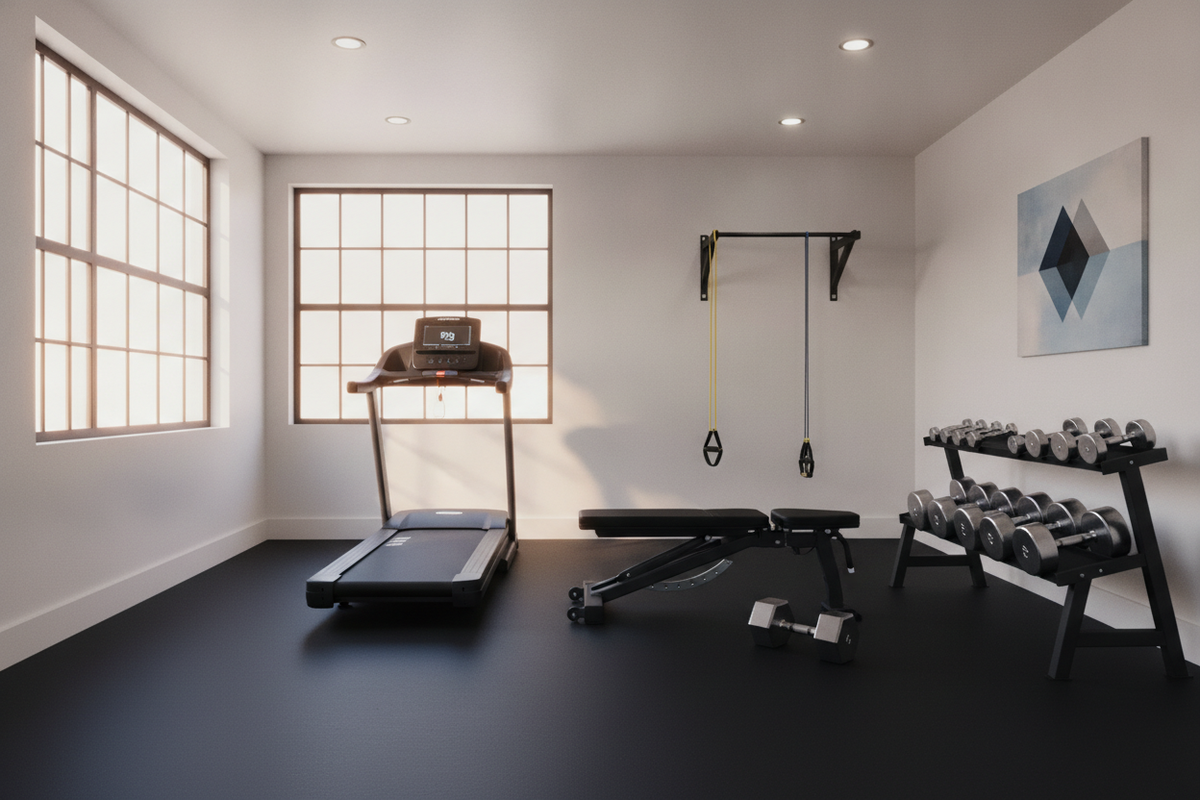
Stationary fitness equipment vibrates during operation and exerts concentrated pressure points onto residential surfaces. Implementing reliable subfloor protection safeguards hardwood, laminate, or finished concrete from gouges and scratches. Placing an exercise mat beneath stationary bikes or treadmills helps disperse machine weight while catching perspiration runoff during conditioning sessions.
Impact Absorption and Gym Flooring Layouts
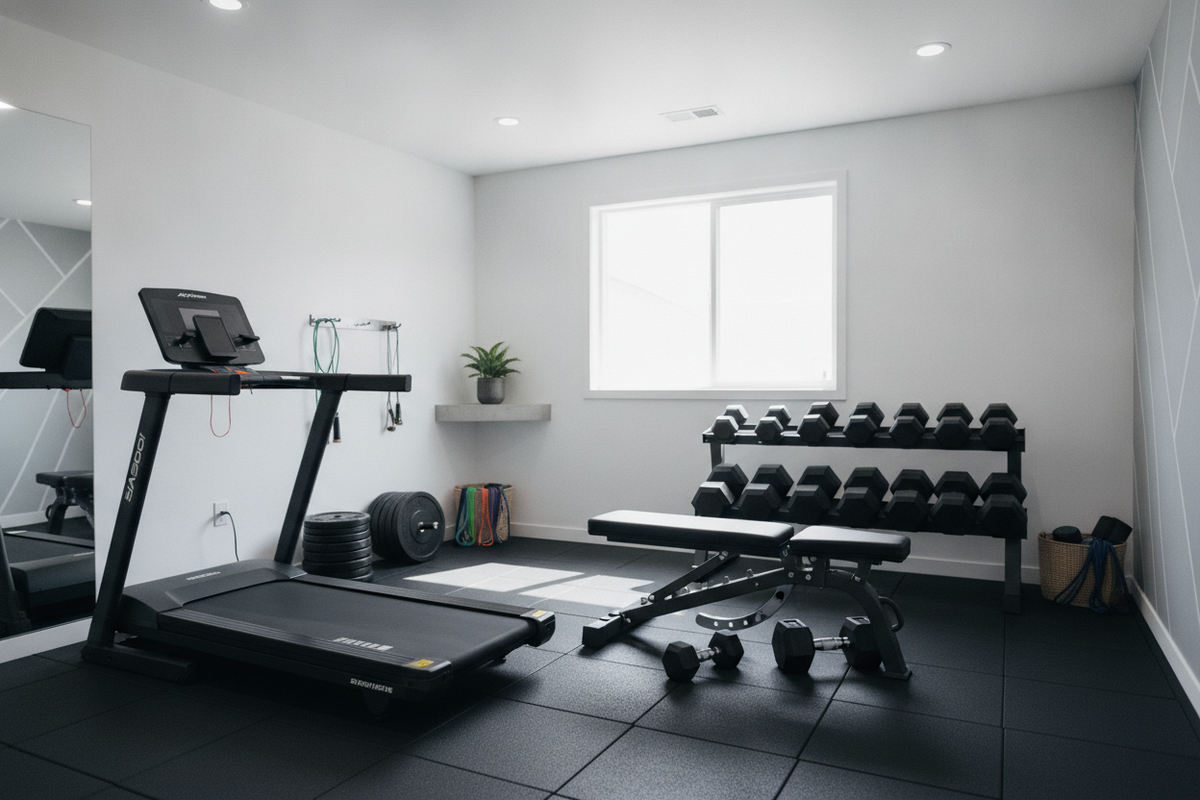
When rest-day work includes agility drills, light calisthenics, or skipping, sufficient impact absorption is essential to reduce ground reaction forces on your shins, knees, and lower back. Equipping your workout area with durable gym flooring creates a stable, shock-dampening surface that protects joints through dynamic movements.
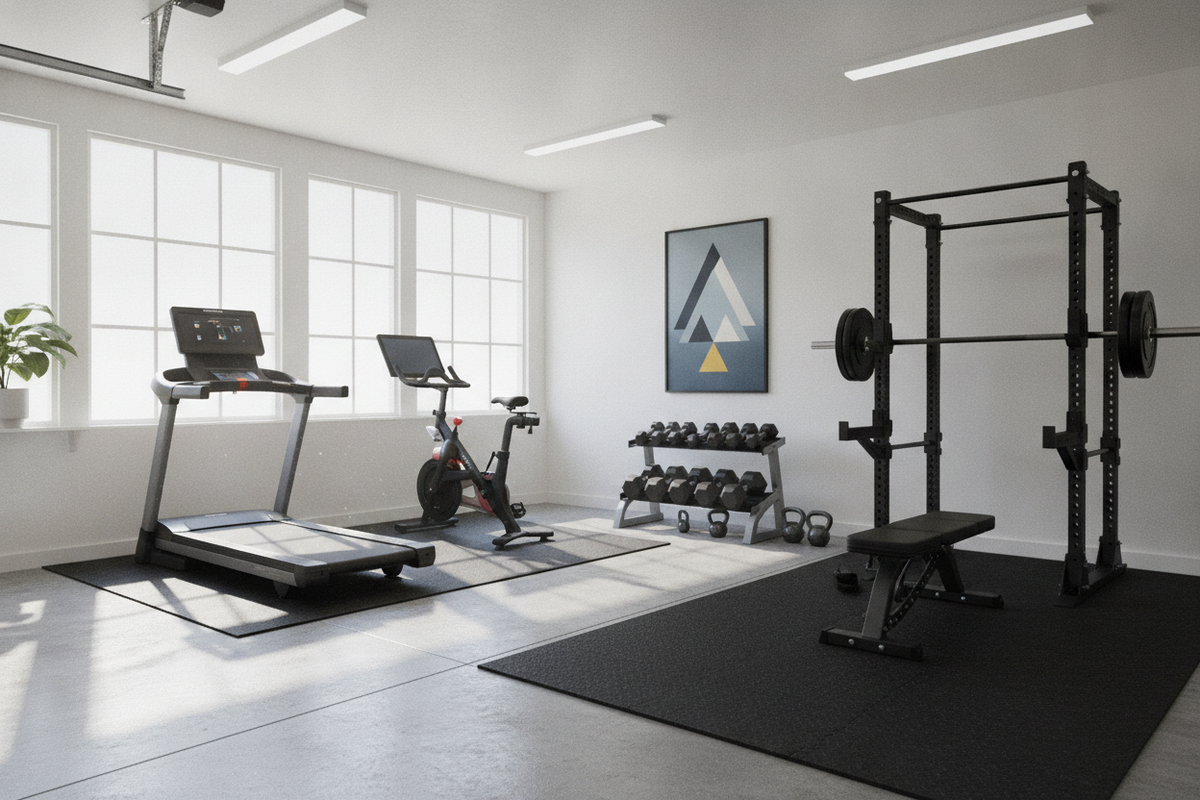
A resilient home gym floor absorbs downward force, providing a comfortable base for stretching, core circuits, or bodyweight lunges. Selecting protective gym flooring turns an ordinary garage or spare room into an inviting space for recovery work.
Spacing Cardio Zones Away From Heavy Weight Racks
Safe and efficient home workouts rely on practical room organization. Prioritize sensible equipment placement by separating your open recovery zone from heavy barbell stations. If your room features equipment from our lifting collection, leave generous clearance around uprights, weight horns, and barbell collars so your movement mat stays completely unobstructed.
Organized equipment placement guarantees that your home gym floor remains open for multi-directional mobility work and recovery drills. A clear floor plan makes it much easier to transition smoothly between lifting days and recovery sessions.
Mat Traction and Easy Post-Session Maintenance
A supportive, non-slip exercise mat provides dependable footing during warm-ups and bodyweight conditioning. Moisture buildup on smooth surfaces creates slipping risks, making textured, non-porous mats an essential feature for home safety. Regularly wiping down your mat after conditioning keeps the surface sanitary and preserves traction over years of use.
Common Mistakes When Doing Cardio on Non-Lifting Days
Even dedicated lifters occasionally make mistakes when planning their non-lifting days. Sidestepping a few common pitfalls ensures your strength development continues unhindered.
Turning Active Recovery into Exhausting Workouts
The most frequent error is treating off-day conditioning as an all-out endurance test. Incorporating frequent sprint intervals or exhaustive circuits drains systemic energy and stresses the central nervous system, impairing performance on subsequent heavy lifting days. True recovery sessions should recharge your body, not generate additional fatigue that holds back muscle growth.
Neglecting Footwear and Ground Cushioning
Hard, flat-soled lifting shoes work well for deadlifts and squats, but they lack the cushioning needed for continuous aerobic movement. Performing off-day movement on unpadded concrete without proper shock absorption increases joint stress on the feet and ankles. Always use supportive athletic shoes and train on an exercise mat or cushioned surface to keep joints healthy while managing your conditioning schedule.