Cardio Is the Best Exercise? A Clear Guide
For decades, fitness culture promoted the idea that cardio is the best exercise for anyone who wants to stay active, manage weight, or maintain energy. When people begin a new fitness journey, running, cycling, or following an online aerobics routine is usually their first step. But as training philosophies evolve, many individuals pause to ask: is cardio the best exercise, or does it leave critical gaps in your physical development?
Understanding whether cardio is the best exercise requires looking at what aerobic work does well, where it falls short, and how it fits into a comprehensive routine. Aerobic conditioning builds stamina and provides efficient calorie burn, yet a balanced fitness program rarely relies on one single movement pattern. By evaluating your personal goals alongside practical training demands, you can decide how heavily to focus on cardio exercise while keeping your body resilient over the long haul.
Why Do People Think Cardio Is the Best Exercise?
People often assume cardio is the best exercise because it offers an immediate, noticeable sense of exertion and an easily measurable calorie burn. From childhood gym classes to community 5K runs, aerobic conditioning is accessible. You do not necessarily need specialized coaching to lace up shoes, hop on a treadmill, or pick up a jump rope. That low barrier to entry reinforces the popular claim that cardio is the best exercise for anyone seeking a healthier lifestyle.
Moreover, the mental feedback of a vigorous cardio workout is powerful. Breaking a sweat and elevating your heart rate provides a clear sense of accomplishment. Because traditional messaging frequently linked weight loss almost entirely to sweating and endurance, generations of exercisers grew up believing cardio is the best exercise for body transformation.
Where Cardio Excels: Stamina and Daily Energy
Aerobic exercise remains unmatched in its ability to develop cardiovascular endurance and support everyday vitality. Engaging in regular cardio exercise conditions your heart, lungs, and blood vessels to deliver oxygen efficiently throughout the body. This adaptation supports heart health and translates directly into higher energy levels during everyday chores, stair climbs, and active weekends.
Different styles of conditioning serve distinct purposes. Engaging in steady-state cardio—such as steady jogging, rowing, or pedaling an exercise bike at a conversational rhythm—trains your aerobic base and improves stamina over extended durations. Conversely, high-intensity interval training alternates bursts of vigorous effort with short recovery intervals, building speed and conditioning in shorter sessions. When someone asserts that cardio is the best exercise, they are usually recognizing how dependable cardiovascular endurance makes every physical task feel significantly easier.
If you prefer structured gym sessions, reviewing a gym cardio workout guide can help you choose between rowing machines, elliptical trainers, and track intervals to keep your sessions varied.
The Limits of Relying Only on Cardio
Despite its clear advantages, claims that cardio is the best exercise overlook what happens when you train without resistance. While steady-state cardio supports heart health and general stamina, it does relatively little to preserve or build lean muscle mass. As the body adapts to repetitive endurance sessions, it becomes more fuel-efficient, which means relying purely on cardio workouts for weight loss can lead to diminishing returns over time.
Excessive repetitive impact is another concern. High-mileage running, continuous plyometrics, and frequent jump rope routines subject the ankles, knees, and hips to continuous joint impact. Without adequate strength in surrounding tendons and stabilizing muscles, this repetitive stress can lead to joint soreness or training fatigue. For sustainable health, your physical foundation needs more than just aerobic output.
Is Cardio or Strength Training Better for Overall Health?
Cardio and strength training address complementary aspects of human performance, meaning neither one is objectively superior on its own. While aerobic exercise develops cardiorespiratory stamina, resistance training stimulates muscle mass, reinforces bone density, and strengthens connective tissues around key joints.
Relying solely on weights can leave you winded during everyday endurance tasks, while relying solely on cardio can leave your joints vulnerable and reduce functional strength. Combining steady-state cardio or high-intensity interval training with regular strength training creates a resilient body capable of lifting loads and sustaining physical work. Instead of debating whether is cardio the best exercise or whether weights reign supreme, experienced trainees view them as partners. A thoughtful blend delivers the calorie burn and metabolic support of cardio exercise alongside the structural protection of resistance training.
How Do You Protect Your Joints and Floors During Home Cardio?
You can protect your joints and floors during home cardio by creating a dedicated workout surface with high-density mats that cushion high-impact landings. Many individuals assume that cardio is the best exercise to do at home because it requires minimal gear. However, performing jump rope drills, burpees, and bodyweight exercises directly on unyielding concrete or finished hardwood can quickly cause joint discomfort while scuffing residential floors.
A well-planned home gym setup starts from the floor up. Bare subfloors offer zero shock absorption, reflecting impact force straight back into your shins, knees, and lower back. Incorporating protective flooring helps disperse that downward pressure during dynamic footwork.
Surface Stability and Machine Placement
When selecting a surface, standard thin yoga mats are insufficient for vigorous movement. They tend to slide, bunch up during lateral shuffles, and wear through quickly under athletic footwear. Using a dense exercise mat provides both subfloor protection and dependable traction, ensuring you do not slip when transitioning between quick hops and floor drills.
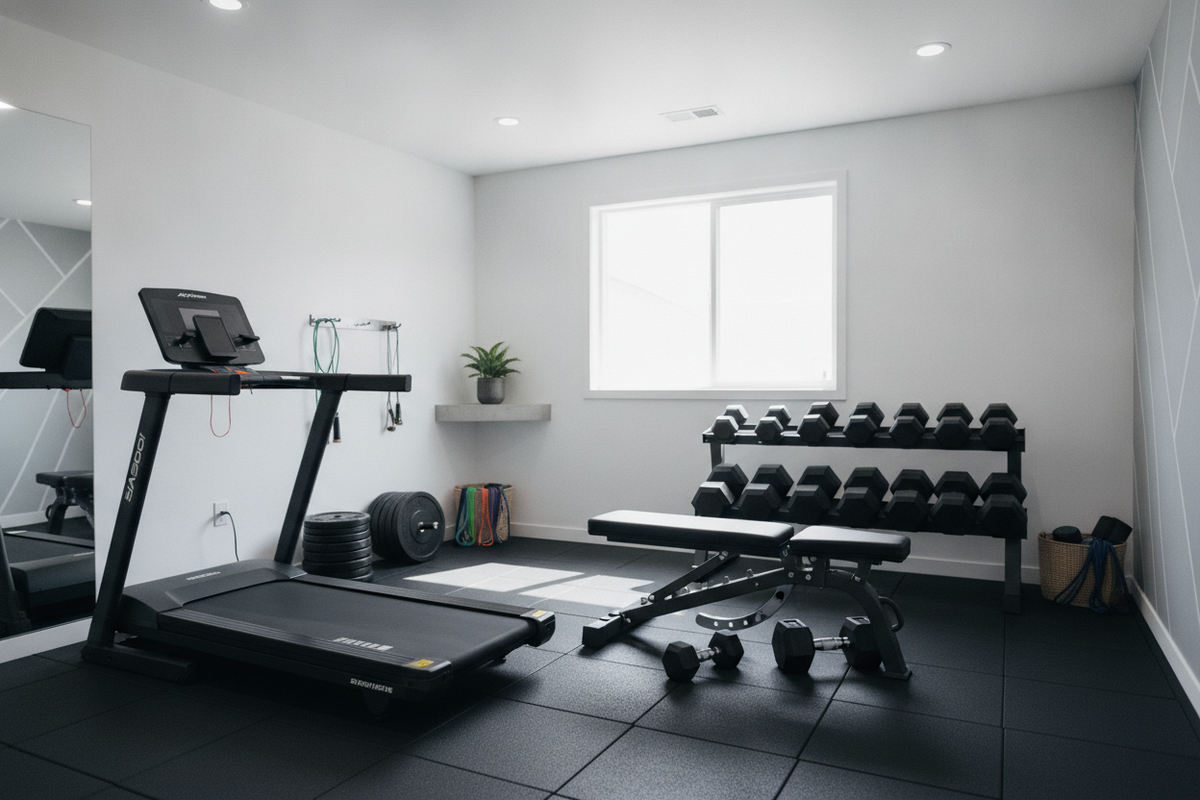
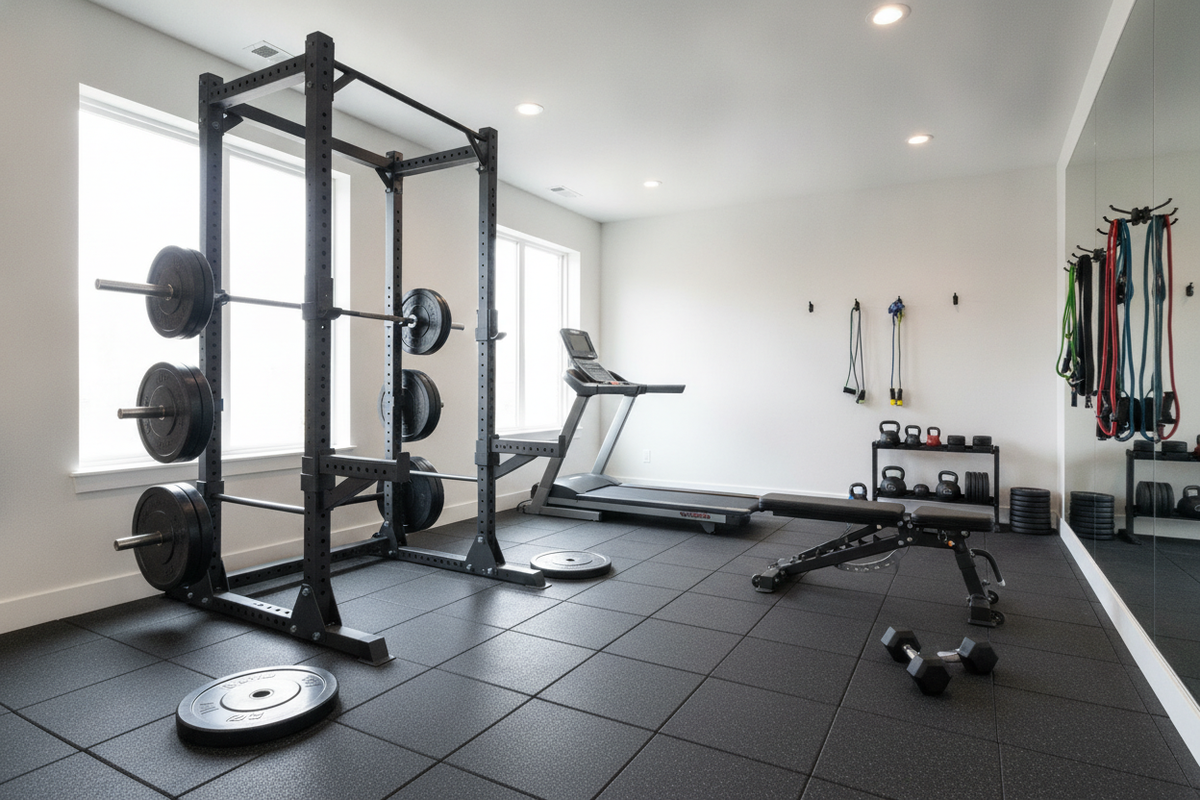
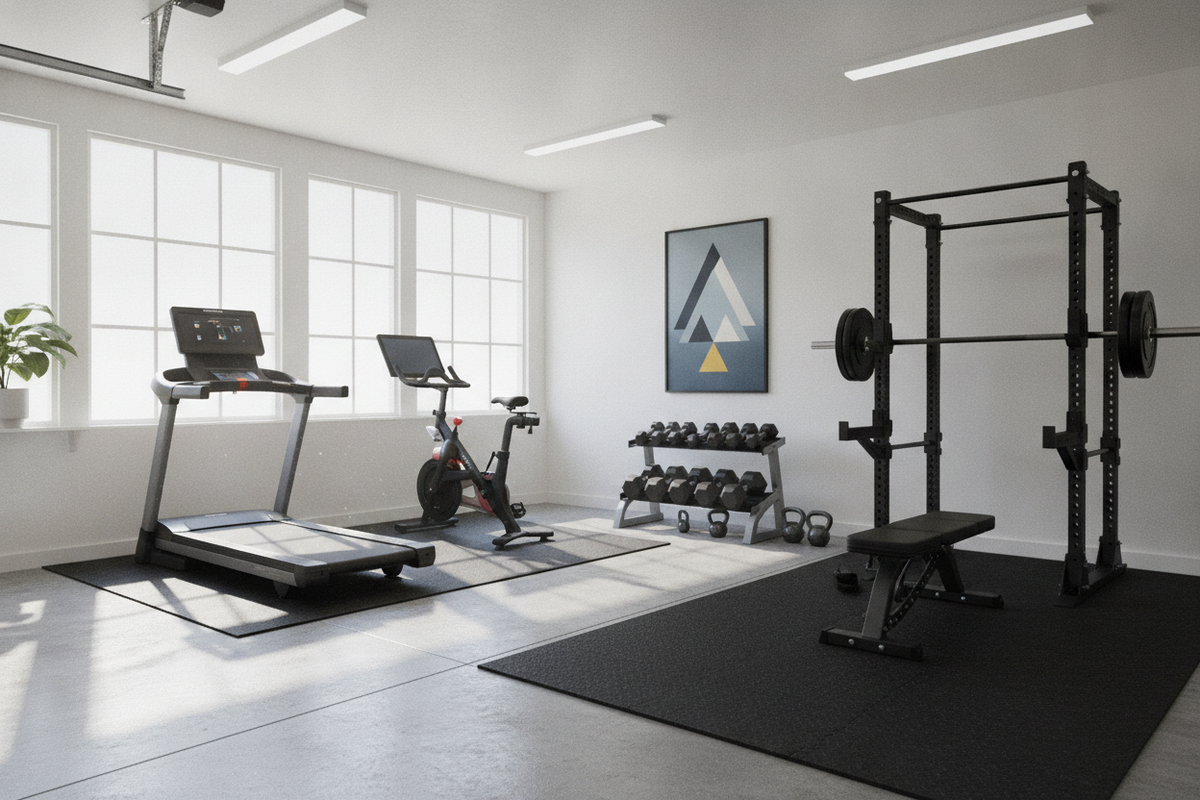
For stationary equipment such as a treadmill or an indoor cycle, protective flooring is equally vital. Placing equipment over resilient padding dampens operating vibrations and guards against floor scratches. If you are outfitting your space on a budget, exploring a budget exercise bike guide is a smart way to establish low-impact conditioning without overspending.
When your cardio workout includes expansive movement—such as skater jumps, mountain climbers, or skipping—having ample floor coverage is critical. Investing in a dedicated large exercise mat collection allows you to step freely in any direction without stepping off the padded boundary. For homes requiring wide coverage for high-intensity intervals, a specialized surface like the large exercise mat for cardio 6x12 supplies ample shock absorption, subfloor protection, and grip for sneakers.
Building a Sustainable Weekly Routine
To avoid burnout and overuse injuries, design a balanced weekly routine that honors both aerobic endurance and muscle preservation. Declaring that cardio is the best exercise often pushes trainees into doing long sessions seven days a week, which rapidly exhausts joints and central fatigue reserves.
A well-structured weekly routine can follow a simple, sustainable template:
- Two to Three Days of Cardio Exercise: Alternate between moderate steady-state cardio sessions (such as cycling or light jogging) and one shorter high-intensity interval training session. This supports heart health and cardiovascular endurance without excessive joint impact.
- Two to Three Days of Strength Training: Focus on compound resistance training and bodyweight exercises to build muscle mass, stabilize joints, and support long-term weight loss.
- One to Two Days of Active Recovery: Dedicate these days to gentle walking, mobility stretches on a dense exercise mat, or leisure activities that encourage circulation without heavy physical strain.
By framing your training this way, you no longer need to worry about whether is cardio the best exercise in absolute terms. Cardio becomes a powerful engine within your overall fitness plan, balanced by strength, supported by protective flooring, and tailored to keep you moving comfortably for years to come.