Cardio 5 Days a Week Results and Schedule
When planning a home fitness routine, many people wonder what kind of cardio 5 days a week results they can realistically expect. When evaluating cardio 5 days a week results, most exercisers notice steady gains in stamina, improved energy, and reliable habit formation within several weeks of regular training. Dedicating time to cardio 5 days a week is an ambitious commitment that accelerates conditioning, but it also raises important questions about recovery, weekly frequency balance, and surface comfort.
Understanding cardio 5 days a week results requires looking at how your body adapts to frequent training. Regular sessions help build cardiovascular endurance, support general conditioning, and can favorably influence your resting heart rate over time. However, jumping straight into five intense sessions without assessing your starting fitness or workout environment can lead to joint soreness or training fatigue. Knowing how often to do aerobic exercise and balancing effort levels is essential for long-term consistency.
Comparing Frequencies: How Often Should You Do Cardiovascular Exercise?
People often ask: how often should you do cardiovascular exercise to achieve lasting benefits? Fitness enthusiasts also wonder how often can i do cardio without overstressing their bodies, and how often should cardio be done for general health versus athletic conditioning. The ideal frequency depends largely on your goals, current conditioning, and personal schedule.
Is Cardio 2 Times a Week Enough for Progress?
Is cardio 2 times a week enough to see improvements? While two sessions provide a gentle introduction to movement and help maintain baseline conditioning, they generally deliver slower progress than higher weekly frequencies. If you are asking is 2 days of cardio enough to support light cardiovascular endurance, it provides real value, particularly for beginners or individuals pairing it with heavy lifting.
However, when asking is cardio 2 times a week enough for rapid stamina development, the stimulus may be spaced too far apart to drive major conditioning gains. A broader look at training volume in our frequency guide for weekly exercise shows that two days per week serves primarily as maintenance. If your goal is accelerated progress, asking is 2 days of cardio enough usually leads to adding at least one more workout day.
Benefits of Cardio 3 Times a Week as a Practical Baseline
The benefits of cardio 3 times a week represent an ideal sweet spot for many home exercisers. When exploring the benefits of cardio 3 times a week, you find that alternating workout days with rest provides ample time for muscular and joint recovery while still promoting steady conditioning. Doing cardio 3 days a week allows you to push with solid effort during each session because fatigue does not accumulate as quickly.
For those debating cardio 3 days a week versus higher frequencies, choosing cardio three times a week makes it simple to integrate cross-training or mobility work. When asking how many times a week should you do aerobic exercise, three days delivers an efficient balance between cardiovascular development and everyday schedule flexibility. Many athletes maintain cardio three times a week year-round to support general stamina without draining their physical reserves.
When Cardio 5 Days a Week Makes Sense
If you want to maximize cardiovascular endurance and build a daily exercise rhythm, committing to cardio 5 days a week can deliver powerful results. Trainees often wonder how often should you do cardio endurance sessions, and a five-day split allows you to divide workouts across different zones and modalities. With cardio 5 days a week results, you gain the volume needed to enhance aerobic capacity, refine technique in activities like jump rope or rowing, and promote overall wellness.
When considering how often can i do cardio with higher intensity, trainees often find it helpful to vary their daily output rather than pushing to fatigue in every session. Alternating vigorous aerobic exercise with lighter, recovery-oriented movement can help you pursue positive cardio 5 days a week results while keeping your routine approachable and sustainable over time.
Structuring Aerobic Exercise Across a Weekly Workout Routine
When asking how many times a week should you do aerobic exercise, structure matters just as much as frequency. A well-designed weekly workout routine prevents overuse strain and keeps training engaging. If you are considering how often should i do aerobic exercise, five days works best when you alternate movement patterns and training intensities.
- Day 1: Steady-State Cardio. Begin the week with continuous, moderate-intensity work such as stationary cycling or incline treadmill walking to build aerobic capacity without severe joint impact.
- Day 2: Interval Training. Incorporate interval training with short bursts of higher effort followed by structured active rest. For ideas on organizing interval movements, consult our aerobic exercise movement selection guide.
- Day 3: Low-Impact Recovery Work. A lighter session focusing on smooth rowing, elliptical training, or bodyweight step work keeps blood moving while protecting sensitive joints.
- Day 4: Interval Training and Agility. Return to higher-tempo work such as calisthenics, jump rope, or dance cardio to test cardiovascular endurance and footwork.
- Day 5: Long Steady-State Cardio. Finish your five training days with extended steady-state cardio to reinforce aerobic efficiency and mental stamina.
- Days 6 & 7: Recovery Days. Dedicated recovery days give tendons, muscles, and the nervous system time to rebuild, helping you sustain positive cardio 5 days a week results week after week.
This organized weekly workout routine answers the question of how often to do aerobic exercise by showing that variation protects the body. By scheduling dedicated recovery days, you allow your resting heart rate to normalize and avoid cumulative fatigue.
How Do You Protect Your Floors During 5 Weekly Cardio Sessions?
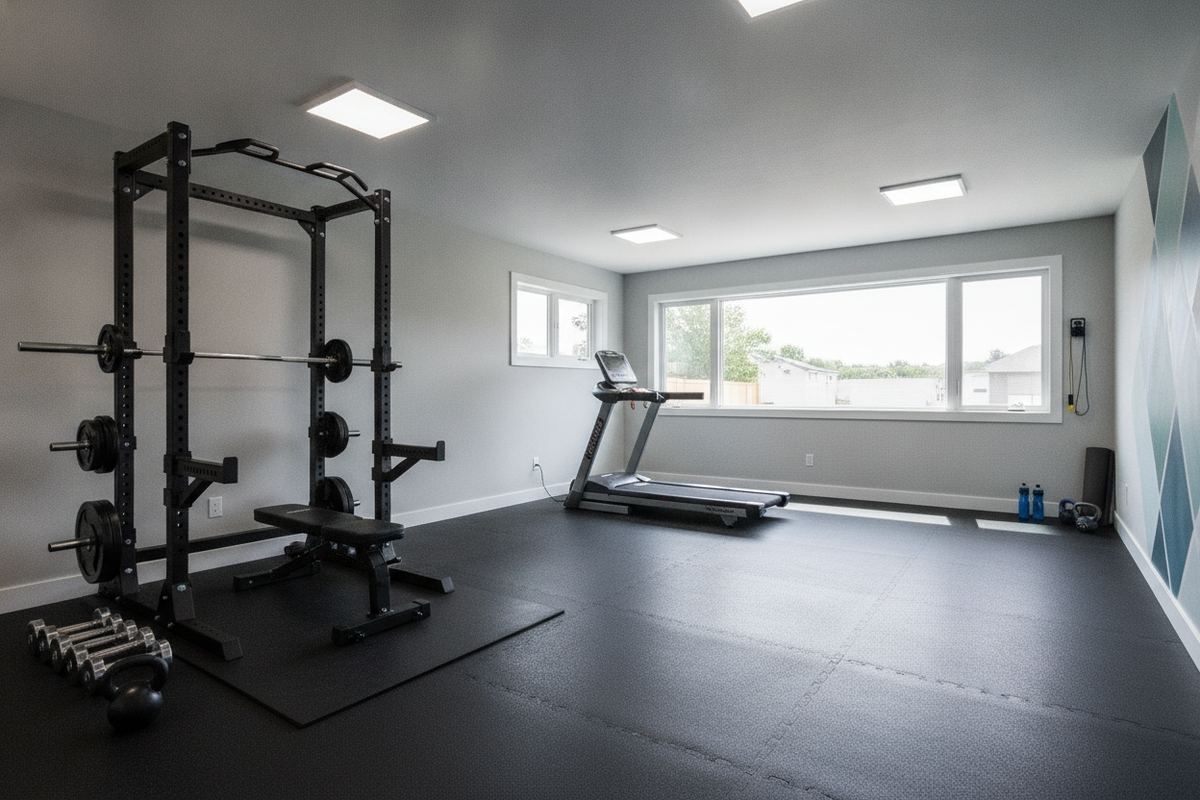
How do you protect your floors during 5 weekly cardio sessions? Protecting your home training area requires high-density floor padding that absorbs impact before it reaches your subfloor or your lower-body joints. When training five days a week at home, the repetitive joint impact of jumping jacks, burpees, and high knees quickly takes a toll on knees, ankles, and flooring surfaces.
Exercising directly on concrete, hardwood, or tile transmits shock directly back through your joints. Over multiple weeks, this repetitive stress can cause unnecessary discomfort. Installing a dedicated large exercise mat collection surface provides vital shock absorption that cushions each landing and dampens noise throughout the home. A quality workout mat also delivers subfloor protection, keeping heavy equipment and dropped items from scratching or denting finished floors.
When selecting protective flooring for dynamic movement, surface area is critical. Utilizing a dedicated large exercise mat for cardio gives you the unrestricted freedom to lunge, skip, and perform lateral shuffles without sliding off the edge. In my own home gym, having a wide, non-slip home gym floor surface made daily conditioning noticeably more comfortable on my ankles. Reliable shock absorption and subfloor protection turn any spare room or garage into a durable training zone capable of handling daily cardio sessions.
Practical Setup and Habits for Aerobic Exercise at Home
Achieving positive cardio 5 days a week results requires attention to details beyond the workout itself. If you frequently ask how often should i do aerobic exercise or how often should cardio be done safely, start by assessing your equipment, footwear, and recovery habits.
- Invest in Supportive Footwear: Use cross-trainers or running shoes with adequate arch support, and replace them regularly to reduce unnecessary joint impact.
- Anchor Your Space: Lay down a high-density workout mat or large exercise mat over your home gym floor to prevent sliding during rapid directional changes.
- Monitor Recovery Signals: Listen to muscle soreness, energy levels, and changes in resting heart rate to determine if you need an unscheduled rest day.
- Clean Your Mats Regularly: Sweating five days a week means wiping down your workout mat after every session to preserve traction and maintain hygiene.
Ultimately, determining how often should you do cardio endurance work or how often to do aerobic exercise comes down to consistency, sensible pacing, and joint safety. Whether you choose cardio 3 days a week or commit fully to cardio 5 days a week, matching your weekly workout routine with proper surface cushioning ensures lasting, injury-free progress.