Optimal Home Cardio: Best Aerobic Exercise for Weight Loss, Movement Selection, and Surface Safety
Understanding Aerobic Training for Fat Loss and Conditioning
Aerobic exercise relies on continuous oxygen delivery to sustain muscular activity over prolonged durations. When designing a routine for conditioning and fat loss, selecting movements that balance elevated energy expenditure with manageable joint stress is essential for long-term consistency. Sustainable progress depends less on extreme isolated sessions and more on repeatable weekly volume.
Engaging large muscle groups simultaneously increases total metabolic demand. By alternating between multi-joint calisthenics, steady rhythmic pacing, and variable-intensity intervals, exercisers can challenge their cardiovascular capacity while supporting active recovery throughout the training week.
Comparative Breakdown of Aerobic Modalities
Different cardiovascular methods provide distinct biomechanical and physiological benefits. Combining multiple modalities helps prevent overuse while maintaining training motivation.
Low-Impact Steady State (LISS) Mechanics
Low-impact steady-state cardio involves maintaining a consistent, moderate pace for extended periods. Activities such as brisk walking, incline treadmill work, stationary cycling, and rhythmic low-impact stepping facilitate continuous aerobic turnover without generating harsh deceleration forces on the lower extremities. This modality serves as a reliable base for recovery sessions and general energy expenditure.
Dynamic Interval and Rhythmic Cardio
Interval-based aerobic training alternates between bouts of high-effort calisthenics and brief active recovery periods. Movements such as high knees, squat thrusts, and jumping rope rapidly elevate breathing rates and demand quick muscular recruitment. Integrating structured intervals through a workout fast weight guide provides a time-efficient method to introduce variety into home conditioning programs.
Top Home Aerobic Exercises for Calorie Burn
Home aerobic conditioning thrives on simple, scalable movements that require minimal equipment while maximizing dynamic full-body engagement.
- Shadowboxing Combinations: Throwing continuous punch combinations while pivoting and stepping activates core rotators and upper body musculature without ground impacts.
- Lateral Skater Hops: Leaping side to side from one foot to the other builds single-leg balance, lateral hip stability, and elevates heart rate.
- High Plank Mountain Climbers: Driving knees toward the chest from a push-up position challenges shoulder stabilizers and core control in an aerobic rhythm.
- Modified Burpees: Stepping back into a plank and stepping forward to stand removes the harsh landing while keeping continuous whole-body movement.
- Step Jacks and Seal Jacks: Lateral stepping arm sweeps provide rhythmic cardiovascular pacing without repetitive jumping impacts.
Multi-Planar Agility and Footwork Patterns
Traditional cardio often locks movement into a single forward plane. Introducing lateral shuffles, diagonal grapevines, and rotational pivots trains stabilizing tendons and activates secondary muscle groups, contributing to a more well-rounded movement foundation.
Low-Impact Aerobic Substitutions for Joint Longevity
For individuals managing knee, ankle, or hip sensitivity, substituting jumps with low-impact power moves maintains high cardiovascular effort. Squat pulses, alternating knee-to-elbow drives, and rapid marching in place generate substantial aerobic demand while keeping at least one foot grounded at all times.
Designing a Balanced Weekly Aerobic Split
Structuring a weekly aerobic routine involves distributing high-intensity intervals and moderate continuous sessions across distinct days to prevent physical fatigue. Blending conditioning with controlled core stability work through a workout weight loss guide provides balanced structural stimulus.
- Day 1: Interval bodyweight conditioning with multi-planar agility drills.
- Day 2: Low-impact steady-state session, such as brisk marching or indoor cycling.
- Day 3: Active mobility, light dynamic stretches, and core control.
- Day 4: Rhythmic calisthenic aerobic circuit with alternating upper- and lower-body stations.
- Day 5: Sustained moderate-tempo cardio and balance footwork.
- Days 6 & 7: Rest and unstructured active recovery.
Floor Dynamics and Joint Protection in Home Aerobic Training
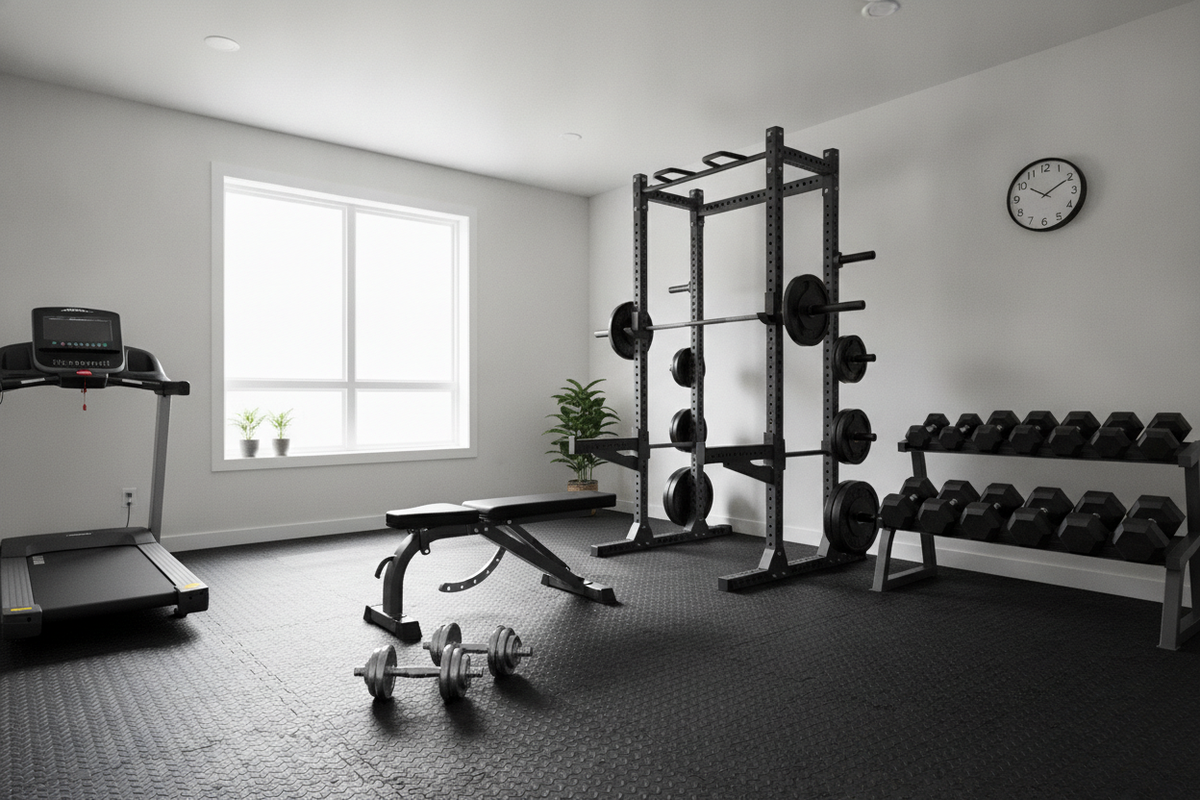
Performing dynamic calisthenics, lateral hops, and continuous footwork directly over bare concrete, tile, or unpadded hardwood can transfer unwanted impact shock into the lower kinetic chain. Utilizing dedicated padding from an exercise collection helps dampen ground reaction forces during repetitive landing patterns.
Traction, Grip, and Multi-Directional Stability
Rapid directional changes require a high-friction surface to prevent slipping. Dense textured workout matting provides secure shoe grip during wide lunges, lateral bounds, and rotational steps, ensuring movement mechanics remain stable throughout high-perspiration workouts.
Surface Staging and Home Workout Space Organization
Adequate floor clearance is essential for executing expansive aerobic drills safely. Setting up an expansive surface like a dedicated exercise workout product offers ample room for uninterrupted lateral shuffles, step combinations, and floor-based transitions without feeling constrained by narrow mat borders.
Care and Maintenance for High-Output Workout Surfaces
Consistent aerobic workouts generate perspiration and surface friction. To preserve mat durability, clean the surface after high-output sessions using a mild soap solution and a soft microfiber towel. Allow the mat to air-dry completely before rolling or storing to maintain material integrity and surface grip.