Cardio Versus Strength Training: Home Gym Guide
Balancing a home routine often brings up the classic debate of cardio versus strength training. When setting up a workout zone, deciding whether to dedicate your floor space to conditioning drills or resistance work influences how you schedule your week and furnish your room. Understanding the purpose of each method allows you to tailor your sessions, prevent physical burnout, and select the right foundation for everyday exercise.
Cardio Versus Strength Training: Key Differences Explained
At its core, the primary distinction between cardio versus strength training comes down to energy pathways, physical pacing, and how external resistance is applied. Cardiovascular workouts emphasize continuous, rhythmic movements that elevate breathing and heart activity over sustained intervals. In contrast, lifting relies on targeted muscle recruitment against external loads or leverage to challenge muscular capacity.
What is the difference between cardio and strength training?
The main difference between cardio and strength training lies in whether an activity prioritizes ongoing stamina or short-duration muscular force. Dedicated aerobic exercise focuses on sustained movement patterns that improve overall endurance and daily stamina. Meanwhile, structured resistance training prompts adaptations that support lean muscle mass and functional joint stability.
When you examine cardio versus strength training for daily fitness, each modality alters energy expenditure differently. Sustained aerobic bouts often generate immediate calorie burn while moving, whereas progressive resistance work stimulates active tissue that promotes prolonged metabolic energy expenditure even while resting. If you want a deeper look at metabolic conditioning differences, check out our cardio versus fat burn guide to see how energy demands vary across pacing styles.
Equipment choices also reflect the divide in cardio vs strength training. Aerobic sessions frequently rely on lightweight accessories, stationary cycles, or simple spatial clearance for agility drills. Resistance sessions depend on tools such as free weights, adjustable dumbbells, or leverage machines that demand stable ground contact and precise physical control.
Understanding What Is Cardio Strength Hybrid Workouts
Many home athletes prefer not to treat cardio versus strength training as mutually exclusive tracks. Blending both formats creates a hybrid session that combines active conditioning with loaded sets to maximize training efficiency in tight spaces.
What is cardio strength training in practice?
When asking what is cardio strength exercise, it refers to structured routines that combine dynamic resistance intervals with elevated cardiovascular output. Rather than sitting passively between heavy lifts, you might rotate through loaded movements using kettlebells followed immediately by active recovery or brief bursts of bodyweight exercises.
By integrating high-intensity intervals into a lifting sequence, a cardio strength program challenges muscular stamina while keeping your breathing rate elevated. To see a practical layout of timed circuits, browse our cardio strength workout guide for ideas on sequencing intervals smoothly. This hybrid approach delivers both cardiovascular benefits and targeted muscle loading, making it popular for those who lack the time to run separate daily routines.
Deciding on Strength Training or Cardio for Your Goals
When organizing a home schedule, you may wonder whether to prioritize strength training or cardio throughout the week. The ideal split depends on your personal lifestyle, fitness priorities, and the equipment you have on hand.
Is strength training or cardio better for daily fitness?
Neither modality is universally superior; choosing strength training or cardio depends entirely on whether your current focus is building muscular power or building sustained aerobic stamina. If your goal is to support bone density, preserve lean muscle mass, and improve joint resilience, dedicating two or three sessions each week to resistance training forms an effective core habit. If you want to refine athletic endurance, manage resting energy levels, or enjoy rapid calorie burn, scheduling regular aerobic exercise should take precedence.
Consider these balanced suggestions when weighing cardio vs strength training options for your calendar:
- For balanced conditioning: Alternate days between dedicated cardio sessions and full-body resistance sessions to give muscle groups adequate rest.
- For limited time: Perform a combined cardio strength format two to three times per week using bodyweight exercises and dumbbells.
- For focused muscle development: Prioritize resistance movements early in your workout when focus is highest, finishing with light aerobic exercise for cool-down pacing.
To support steady progressive loading without crowding your home gym, explore our strength training accessories to find versatile options like weight trees, bands, and collars that keep training spaces organized.
Flooring Needs for Cardio vs Strength Workouts
One often-overlooked factor in the cardio versus strength training discussion is how each discipline affects your room. High-cadence aerobic routines create repetitive ground strikes, while heavy lifting concentrates massive forces into small footprints.
Which requires thicker flooring: cardio or strength training?
Heavy lifting generally requires thicker, higher-density material to deliver adequate subfloor protection against dropped weights, while aerobic exercise prioritizes lighter impact dampening for joint comfort. In a dedicated lifting zone, choosing dense rubber flooring protects concrete or wood subfloors from cracking when free weights or kettlebells hit the deck.
When assessing cardio vs strength demands on your room, surface texture and resilience matter just as much as thickness. Fast-moving aerobic workouts like skipping rope with a jump rope or doing burpees produce cumulative joint impact on ankles and knees. In those zones, adequate shock absorption cushions repeated bounces while a textured non-slip surface prevents slipping during sweaty lateral shuffles. For heavy squats or deadlifts, however, you need firm footing where shoes do not sink, ensuring clean balance under load.
Selecting durable home gym flooring allows you to bridge the gap between cardio vs strength training needs. A solid, vulcanized rubber surface delivers the necessary firmness for stable lifts while offering sufficient shock absorption to ease high-tempo plyometrics.
Home Gym Layout for Cardio Versus Strength Training
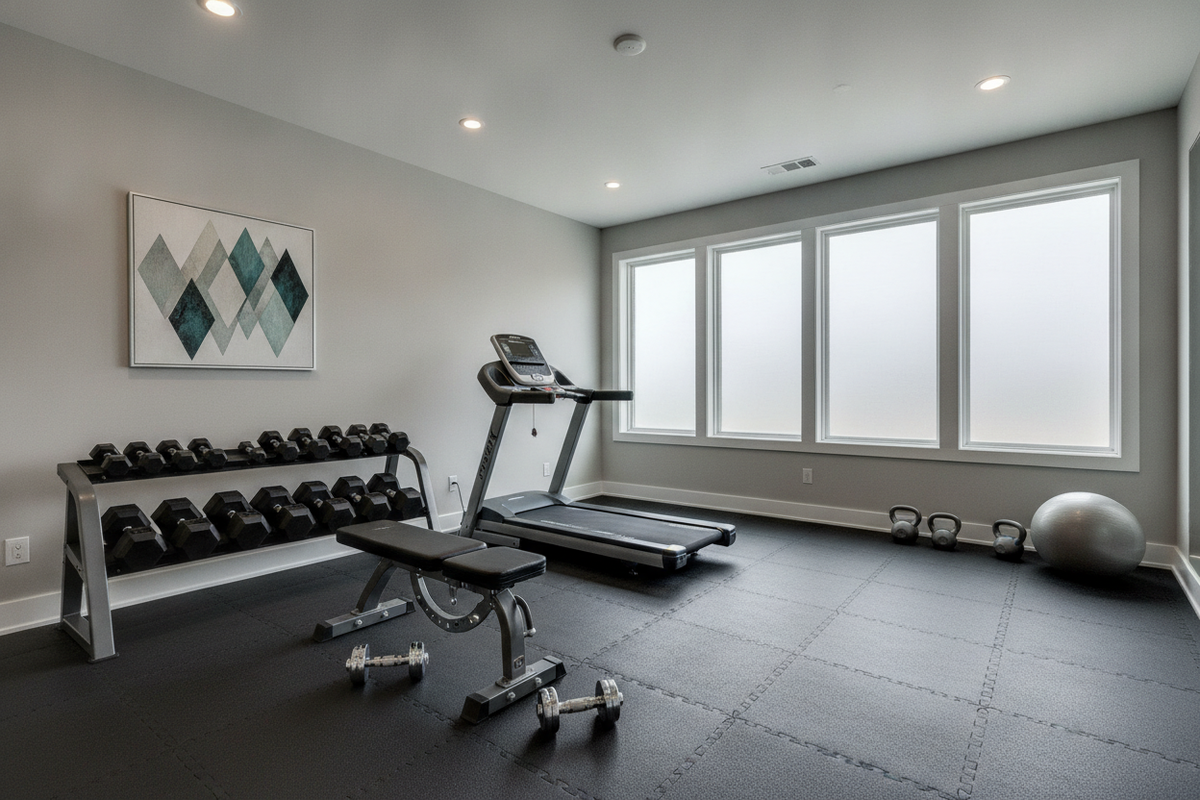
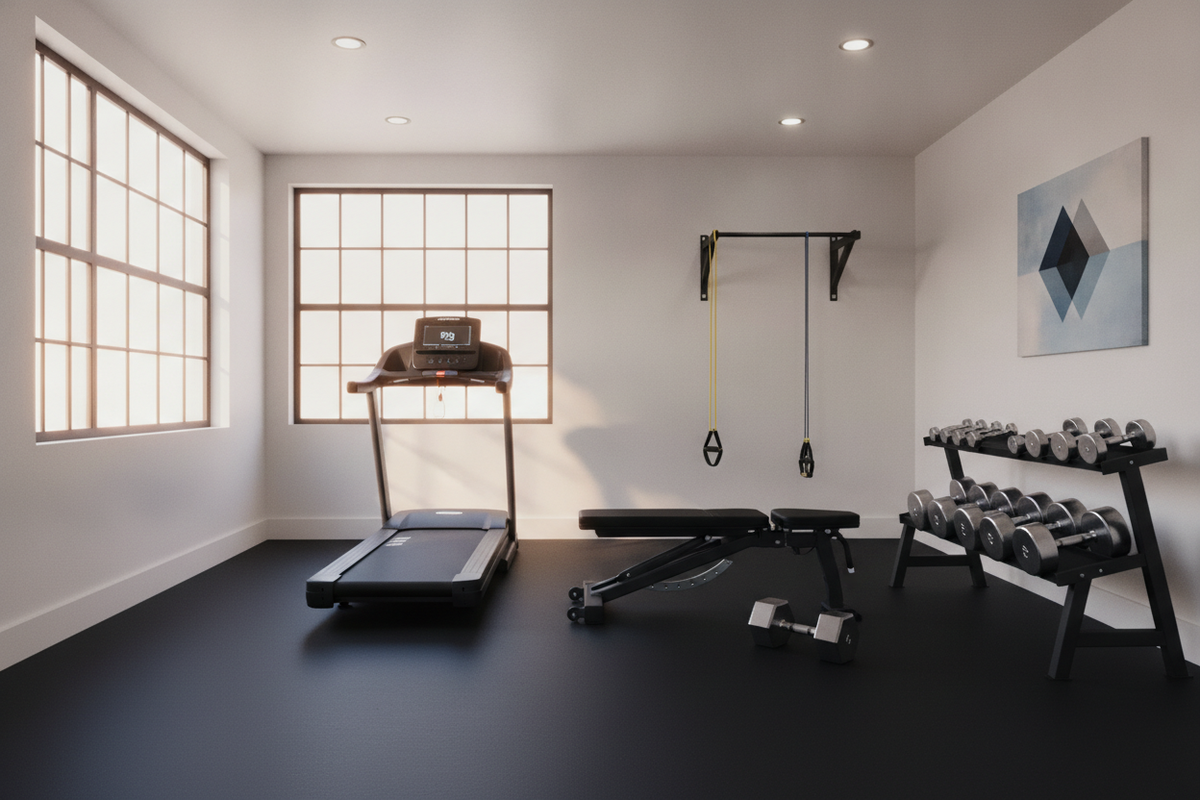
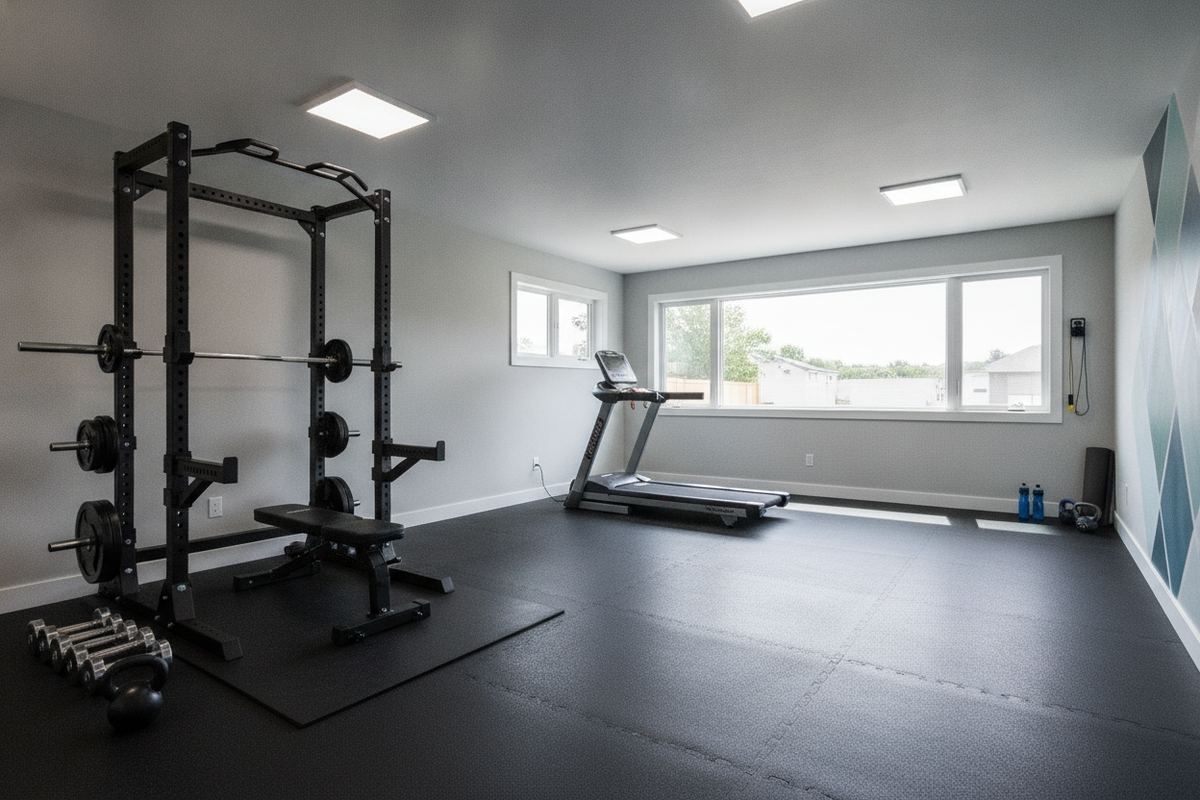
Arranging your room to accommodate cardio versus strength training ensures safe transitions, protects home interiors, and keeps motivation high. A well-organized room separates dynamic movement paths from stationary loaded racks.
Equipment Placement and Mat Layout
Thoughtful equipment placement is crucial when coordinating cardio versus strength training in a shared space. Position heavy items—such as weight benches, racks, or stationary machines—against perimeter walls or directly over structural floor joists. For larger strength setups, you can explore our lower body strength machines to assess footprint dimensions before laying down mats.
Keep the center of the room open for dynamic drills. An expansive exercise mat laid over dense rubber flooring creates a safe, open zone where you can transition from jump rope sets to dumbbell lunges without knocking into equipment. Having a clear non-slip surface in the center of the room also lets you shift smoothly between cardio strength circuits and ground-based core work.
Mat Maintenance for Multi-Purpose Spaces
Because home gym flooring accommodates both high-sweat conditioning and heavy iron, consistent mat maintenance preserves material grip and prevents odors. Wipe down each exercise mat after intense sessions using mild, pH-neutral soap and water. Avoid harsh petroleum-based solvents or bleach, which can degrade rubber compounds, reduce shock absorption, and leave behind slick residues that compromise traction during cardio versus strength training routines.
Summary: Balancing Cardio Versus Strength Training at Home
Navigating cardio versus strength training does not require choosing one discipline over the other. Combining the cardiovascular benefits of aerobic exercise with the structural support of resistance training provides a complete foundation for everyday wellness. By establishing a thoughtful layout, investing in quality home gym flooring for subfloor protection, and alternating your focus throughout the week, your home gym can comfortably support every phase of your fitness journey.