Best Time to Do Cardio for Fat Loss: Timing Windows, Workout Sequencing, and Home Setup
Understanding Cardio Timing: Energy Balance vs. Session Placement
When planning a fitness routine, determining the best time to do cardio for fat loss often leads to debates between morning proponents and evening athletes. While metabolic debates are common, sustainable fat reduction fundamentally depends on maintaining consistent energy expenditure over time rather than a single magic hour on the clock. Session placement, however, directly influences how energetic you feel, how hard you can push, and how reliably you stick to your training schedule.
Viewing cardio timing as an operational tool rather than a strict biological rule allows you to align workouts with your natural energy rhythms. The true best time to do cardio for weight loss is the time window that allows you to train with high effort, complete your planned intervals or steady-state mileage, and recover adequately without disrupting sleep or daily obligations.
Evaluating Daily Cardio Windows: Morning, Afternoon, and Evening
Different parts of the day present distinct physical and logistical tradeoffs. Selecting the right window involves balancing schedule predictability with physical readiness.
Morning and Fasted Cardio: Consistency and Routine Building
Morning sessions offer significant scheduling advantages. Completing cardio early minimizes the risk of daily distractions, work commitments, or fatigue interfering with your workout. For many, morning training creates a structured start to the day that reinforces healthy habits.
Fasted cardio—training before breakfast—remains a popular practice. While some trainees prefer moving on an empty stomach to avoid digestive discomfort, training fasted is an individual preference rather than a mandatory requirement for fat reduction. If working out without food causes lightheadedness or reduces your physical output, a light pre-workout snack may yield better training quality and higher total activity.
Afternoon and Evening Cardio: Core Body Temperature and Performance Peaks
Later daily windows provide natural physical advantages. As the day progresses, normal activity elevates core body temperature, promotes joint mobility, and allows for several meals to fuel muscular energy stores. Trainees often report feeling physically stronger and capable of handling harder interval efforts during afternoon or early evening hours.
For individuals executing high-intensity intervals or conditioning circuits, referencing a structured weight loss cardio guide can help maintain a planned pace and density during these peak energy windows. However, scheduling high-intensity sessions too close to bedtime may elevate alertness, so leaving a buffer period before sleep is advisable.
Workout Sequencing: Should You Do Cardio Before or After Lifting?
If you combine resistance training and conditioning in the same session, determining the best time to do cardio to lose weight involves prioritizing session order. Resistance training relies heavily on immediate neuromuscular power and stored glycogen to maintain form and lift challenging loads.
- Cardio After Lifting: Performing conditioning after strength work ensures your energy, focus, and muscular stability are dedicated to heavy lifts. This sequence supports lean muscle retention while allowing you to expend remaining energy on steady-state or moderate conditioning.
- Cardio Before Lifting: Placing demanding cardio before resistance work can induce acute muscular fatigue, potentially compromising lifting technique and reducing the total load handled during strength exercises.
- Separated Sessions: Splitting sessions across the day—such as lifting in the morning and performing low-impact cardio in the evening—can provide fresh energy for both disciplines if your schedule permits.
Cardio Modality Selection: Matching Timing with Intensity
Matching your cardio style to your daily schedule and recovery status prevents burnout while keeping training productive.
Low-intensity steady-state (LISS) cardio, such as incline walking, light cycling, or steady rowing, places low demand on the nervous system. LISS integrates smoothly into early mornings or active recovery days. Conversely, high-intensity interval training (HIIT) requires significant physical readiness and is often best placed during mid-day or late afternoon windows when energy availability is high. For high-density training blocks, utilizing an established cardio weight loss guide can provide interval structure while managing work-to-rest ratios.
Home Training Floor Setup: Impact Absorption and Joint Protection
Regardless of when you train, repetitive cardio movements—such as jump rope, lateral bounds, treadmill running, and plyometrics—exert continuous mechanical force on your joints and subfloors. Hard surfaces like bare concrete or unpadded hardwood reflect impact shock back into the ankles, knees, and hips while generating unwanted vibration throughout the home.
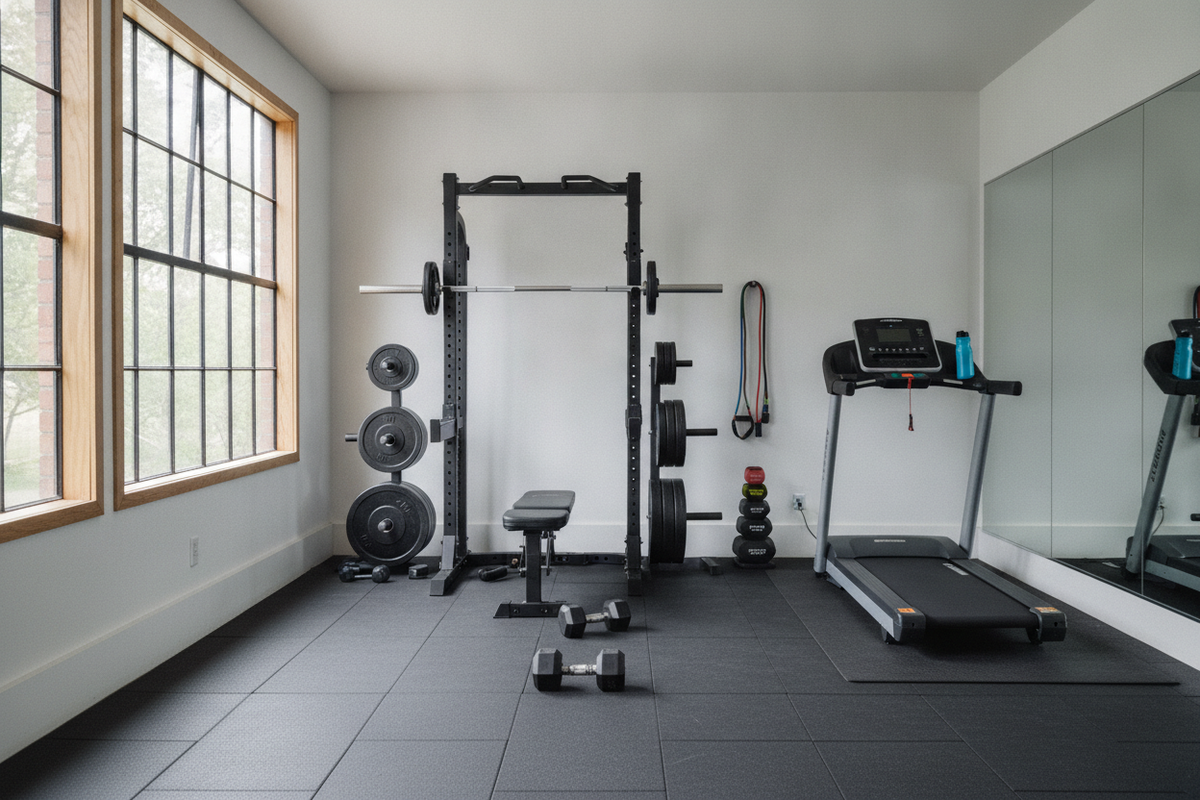
Integrating high-density exercise mats and dedicated gym flooring creates a supportive, shock-absorbing barrier. Quality mats provide essential traction to prevent slips during sweaty sessions, dampen acoustic noise from foot strikes, and protect subfloors from heavy equipment wear. Pairing proper equipment choices from a detailed weight loss cardio guide with shock-absorbing protective flooring ensures your home gym space remains functional, safe, and durable over long-term training cycles.
Structuring Your Weekly Cardio Fat Loss Blueprint
To establish a sustainable weekly balance, consider the following structural guidelines:
- Assess Your Daily Schedule: Select workout slots that face the fewest potential interruptions during the week.
- Prioritize Strength Retention: Keep demanding resistance workouts at the front of your combined sessions, placing conditioning at the end.
- Alternate Intensities: Rotate between high-intensity intervals and low-intensity steady-state sessions to manage systemic fatigue.
- Optimize Your Surface: Perform all high-impact jumping, running, and dynamic drills on high-density protective flooring to preserve joint comfort and protect your home environment.