Cardio and Resistance Training for Weight Loss at Home
Combining cardio and resistance training is one of the most balanced approaches you can take for long-term health and body composition. While steady aerobic exercise burns calories during a session, lifting weights builds lean tissue that raises your baseline energy expenditure throughout the day. Setting up these hybrid workouts in a home environment lets you tailor intervals, manage fatigue, and protect your living space without waiting for gym machines.
A successful routine relies on both sound programming and a supportive physical environment. Whether you work with dumbbells, resistance bands, or high-intensity bodyweight exercises, understanding how to structure your training and set up your floor helps you stay consistent while minimizing joint discomfort.
How to Combine Cardio and Resistance Training for Weight Loss
To combine cardio and resistance training for weight loss effectively, structure your week so that neither endurance demands nor muscle fatigue compromise your form and lifting effort. Balancing these two styles requires prioritizing the stimulus that matters most for your specific goals.
For weight management, keeping lean muscle tissue is essential. When you rely solely on calorie reduction and sustained cardio, your body can draw energy from muscle breakdown alongside fat reserves. Resistance work signals to your body that muscle tissue is essential, encouraging progressive overload and muscle retention even as total body mass declines.
You can read our guide to home resistance training for weight loss to see how multi-joint movements enhance overall energy output during structured lifting sessions.
Benefits of Combining Cardio and Strength Training
Pairing aerobic conditioning with strength work provides functional advantages that single-mode training rarely achieves. Cardio enhances your cardiovascular endurance and work capacity, allowing you to recover faster between heavy sets of squats or presses. In turn, stronger legs and core musculature stabilize your posture during repetitive aerobic activities like jogging or rowing.
Furthermore, alternating between lifting sessions and cardiovascular drills keeps home workouts mentally engaging. Rather than spending an hour on a stationary bike, you can alternate between strength supersets and quick bouts of interval training or jump rope intervals to elevate your heart rate while challenging your muscles. For a deeper breakdown of schedule options, explore our cardio and weight training integration guide.
Should You Do Cardio Before or After Resistance Training?
You should generally do cardio after resistance training if your main objective is fat loss, strength maintenance, or hypertrophy. Lifting requires peak nervous system output and muscular power; depleting your glycogen stores and fatiguing your stabilizer muscles with intense cardio first can compromise lifting mechanics and increase injury risk.
If you prefer performing both on the same day, dedicate five to ten minutes to a gentle warm-up, complete your focused strength exercises, and finish with your aerobic conditioning or interval session. Alternatively, if building pure running or cycling stamina is your primary ambition, place your aerobic session first and treat strength training as supplemental core and posture work.
Can You Do Cardio and Resistance Training on the Same Day?
Yes, you can do cardio and resistance training on the same day, provided you manage session volume, nutrition, and rest between challenging efforts. Many home exercisers find same-day programming convenient, especially when limited to three or four workout days each week.
To avoid burnout, keep one of the two modalities moderate in intensity. For example, follow a demanding lower-body lifting workout with low-impact steady-state walking, or pair an upper-body dumbbell session with moderate circuit training. For personal testing notes on daily splits, see our review of cardio and weight training fat loss splits.
Home Gym Setup: Flooring and Subfloor Protection
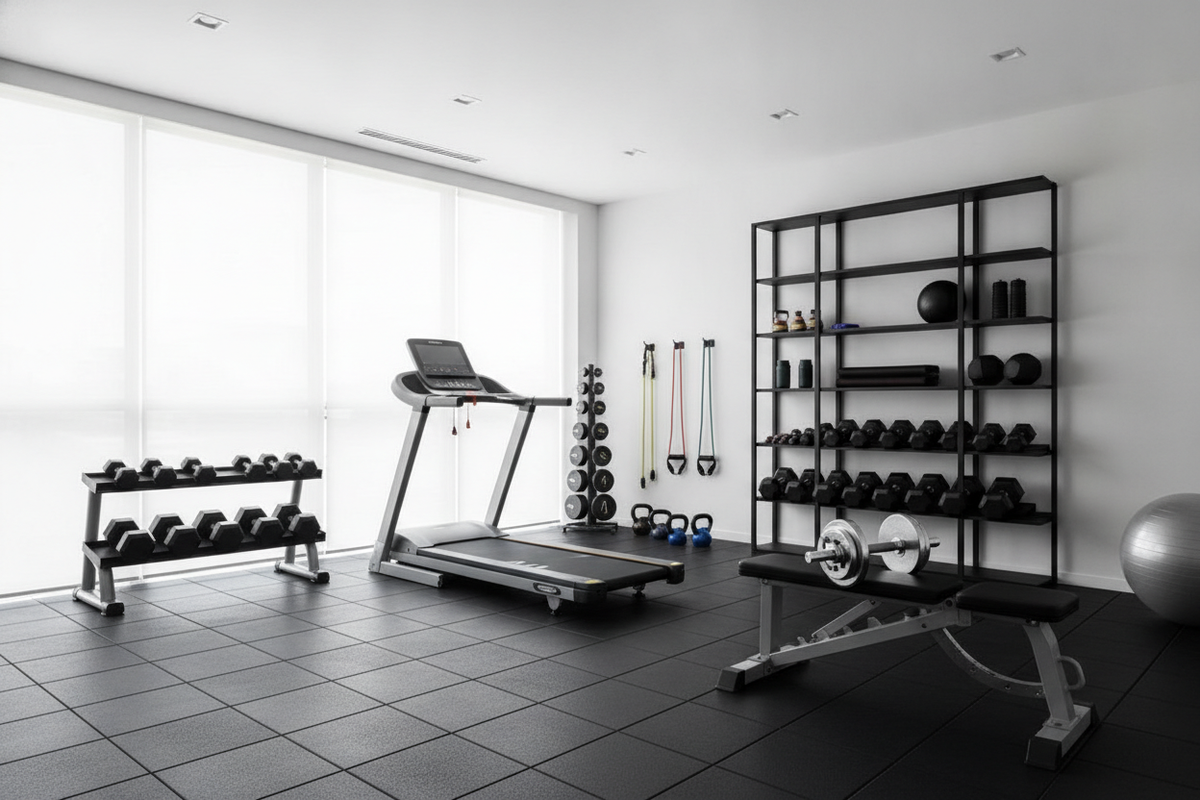
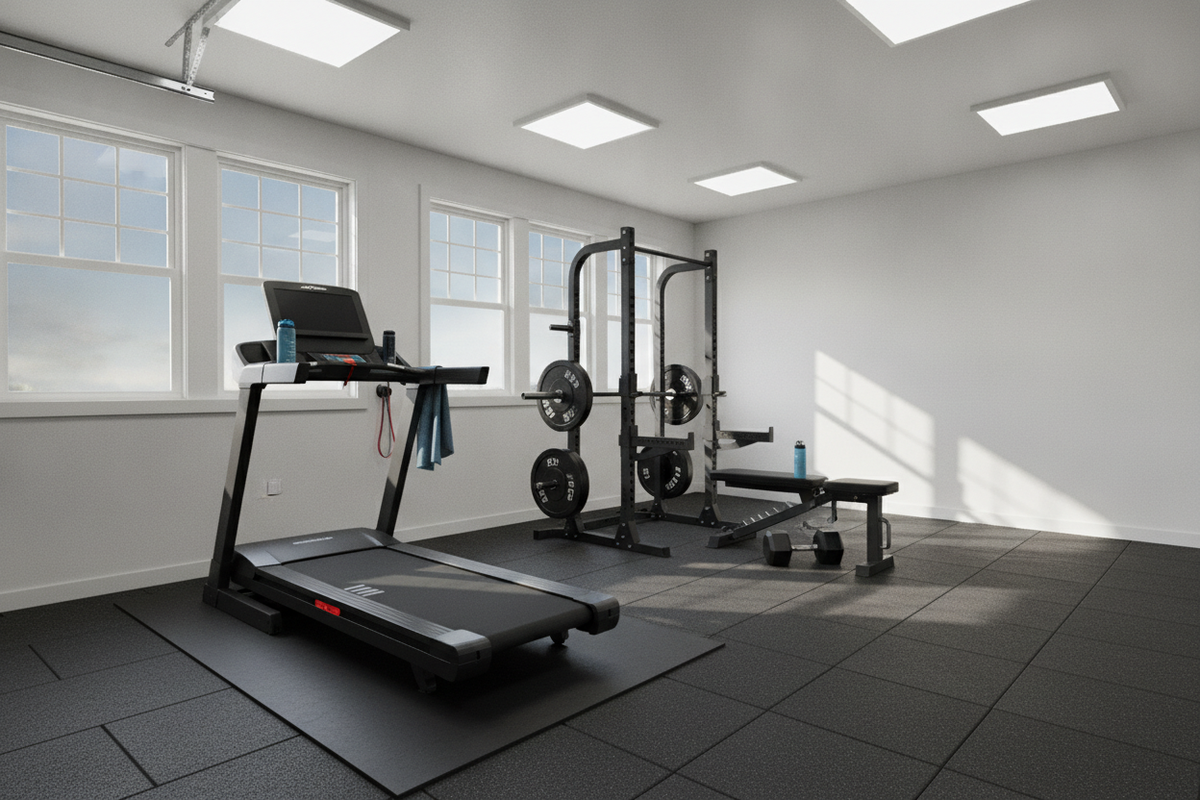
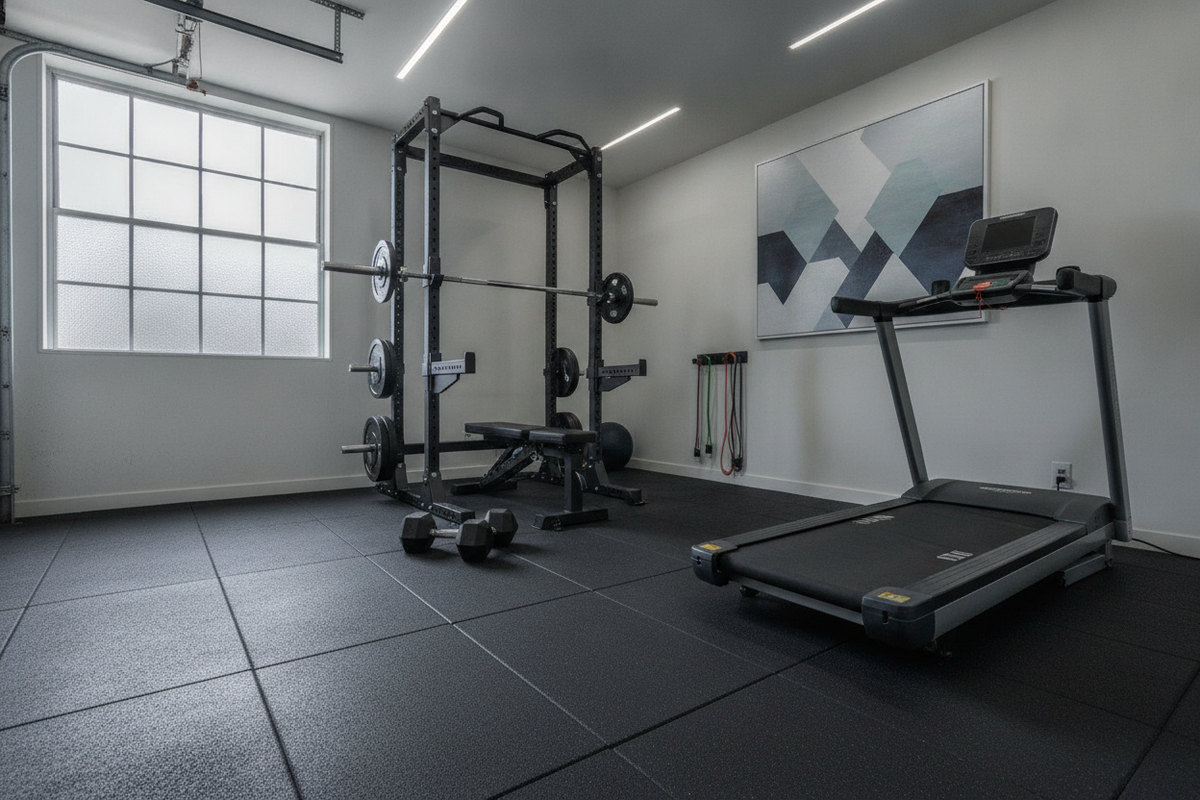
Creating an effective home fitness space requires careful thought about impact, noise, and surface stability. When combining dynamic aerobic bursts like burpees or jump rope with heavy resistance movements, your floor takes significant punishment. Subfloor protection is necessary to prevent cracked concrete, dented hardwood, or damaged subflooring caused by dropped kettlebells or repetitive foot strikes.
A dense exercise mat or interlocking rubber gym mats provide the essential foundation for dual-purpose training. Standard yoga mats are too soft and thin, often stretching during lateral shuffles or compressing flat under heavy loads. High-density foam paired with thick rubber surfaces delivers true shock absorption, blunting joint impact during plyometric drills while remaining rigid enough to support stable foot placement during barbell squats or overhead presses.
Look for gym flooring that offers non-slip traction on both sides. The top texture should give athletic shoes secure grip during rapid directional changes, while the bottom surface must anchor firmly to your underlying floor to prevent shifting during explosive drills.
Equipment Placement and Room Layout
Organizing your workout area around movement lanes ensures seamless transitions between lifting sets and cardio intervals. Place stationary pieces and heavy storage racks around the perimeter of the room. You can browse our lower body strength machine collection to plan adequate perimeter spacing for dedicated equipment.
Keep the central zone open and covered with a wide, continuous mat. This open floor acts as your flex area where you can safely perform dumbbell lunges, kettlebells swings, or calisthenics without tripping over clutter. Position smaller items like bands, collars, and fractional plates on nearby shelving using options from our strength training accessories collection so your movement paths stay completely clear.
Mat Maintenance and Surface Care for Daily Workouts
Regular mat maintenance keeps your workout area sanitary, preserves grip, and extends the lifespan of your floor coverings. Hybrid training routines generate significant sweat, dust, and friction, which can degrade surface textures if left unaddressed.
- Daily wipe-downs: After sweaty circuit sessions, wipe your mats down with a damp microfiber cloth and a mild, pH-neutral soap solution. Avoid bleach or abrasive chemicals that can break down rubber binders.
- Moisture control: Allow the mat surface to air-dry completely before rolling it up or stacking weights on top, preventing trapped moisture from forming mildew underneath.
- Periodic deep cleaning: Once every few weeks, vacuum beneath interlocking edges to remove grit and drywall dust that could grind against your subfloor.
Weekly Balance and Recovery Strategies
Sustainable progress comes from the balance between training stimulus and systematic recovery. When combining cardio and resistance training, listen closely to fatigue indicators such as lingering muscle soreness, poor sleep, or diminishing grip strength. Plan at least one to two days of complete rest or gentle active recovery each week to allow muscle fibers and connective tissues to rebuild.
In my own training space, keeping a dedicated recovery zone with a foam roller right next to the main lifting area makes cool-down routines effortless. By respecting your recovery, organizing your layout, and pairing aerobic stamina with consistent lifting, your home workouts can deliver steady, lifelong physical rewards.