Cardio Weight Loss Plan: Home Routine & Setup
Starting a dedicated cardio weight loss plan at home offers a flexible, effective path toward better fitness and long-term weight management. Exercising at home removes travel friction, but it introduces a distinct set of practical considerations. Without commercial gym facilities, you need to organize your weekly sessions, vary your movement styles, and prepare your floor space so that repeated workouts remain comfortable and sustainable over many months.
Designing a Sustainable Cardio Weight Loss Plan at Home
A successful conditioning routine relies on balance rather than sudden, exhausting effort. When planning a home routine, combining varied movement intensities ensures you stay engaged while giving your body time to adapt. Rather than repeating identical workouts every day, mixing moderate aerobic sessions with higher-effort circuits helps you stay consistent week after week.
For individuals establishing a foundational schedule, exploring a dedicated home workout hub can provide helpful guidance on exercise selection and movement progressions. A balanced weekly approach typically pairs continuous movement, such as steady stepping or cycling, with interval workouts that alternate brief bursts of higher effort with controlled breathing periods. This combination keeps training interesting and manages physical fatigue effectively.
How Often Should I Do Cardio for Weight Loss at Home?
Most people find success by scheduling three to five cardio sessions per week, balancing moderate effort with dedicated rest. Spreading your workouts across the week prevents burnout, supports gradual progression, and allows tissues to recover between sessions.
If you are newer to conditioning, starting with three sessions spaced across alternating days gives you a baseline to assess how your energy and joints respond. As your stamina improves, adding a fourth or fifth session—or simply extending the duration of an existing workout—allows for steady adaptation. For those evaluating how home routines compare with traditional equipment, reading our comparison of machine workouts and active cardio highlights how bodyweight movements can provide an engaging alternative to stationary equipment.
Core Movement Styles for Your Cardio Sessions
A well-rounded cardio workout for weight loss plan draws from multiple movement patterns rather than relying solely on repetitive running or bouncing. Blending several styles distributes effort across different muscle groups and reduces repetitive strain on any single joint.
- Steady-state cardio: Continuous, moderate pacing such as brisk marching in place, step taps, or smooth indoor cycling keeps breathing elevated at a predictable rhythm.
- Interval training: Alternating short segments of higher-tempo work with active rest challenges your stamina and creates efficient training sessions.
- Bodyweight circuits: Exercises like air squats, mountain climbers, modified burpees, and alternating lunges elevate heart rate while building coordination.
- Agility drills: Movements such as lateral shuffles, skater hops, and light jump rope drills train balance and side-to-side coordination.
- Low-impact modifications: Removing airborne jumps by using step-jacks, reverse lunges, and controlled knee drives keeps conditioning high while reducing ground shock.
Integrating low-impact modifications into high-tempo circuits ensures you can complete full workout durations without placing unnecessary strain on your ankles, knees, or lower back.
Structuring Your Weekly Training Schedule
Creating a predictable weekly flow helps turn exercise into an automatic habit. A balanced weight loss cardio routine pairs demanding intervals with lower-stress aerobic days and full recovery. For complementary insights into establishing structured training blocks, our beginner weight loss training guide outlines practical pacing strategies.
Consider structuring your week with varied training targets:
- Day 1 (Interval Intervals): 25 to 30 minutes of alternating bodyweight intervals with low-impact recovery steps.
- Day 2 (Steady-State Aerobic Work): 30 to 40 minutes of continuous moderate movement, such as brisk shadow boxing, stepping, or continuous cycle work.
- Day 3 (Active Recovery): Gentle walking, light mobility drills, and dynamic stretching to encourage blood flow.
- Day 4 (Bodyweight Circuit): Multi-movement circuit combining lateral shuffles, step-back lunges, and plank variations.
- Day 5 (Tempo Session): Controlled high-tempo session utilizing jump rope drills or rhythmic cardio intervals.
- Weekend: Rest days or unstructured outdoor movement to recharge physically and mentally.
What Type of Floor Mat Is Best for High-Impact Home Cardio?
A dense, multi-layered high-density foam mat with a textured, non-slip backing is the best choice for high-impact home cardio because it cushions landings without destabilizing your stance. Thin yoga mats tend to stretch or bunch during lateral shuffles, while overly soft foam tiles can cause your feet to sink and compromise ankle stability.
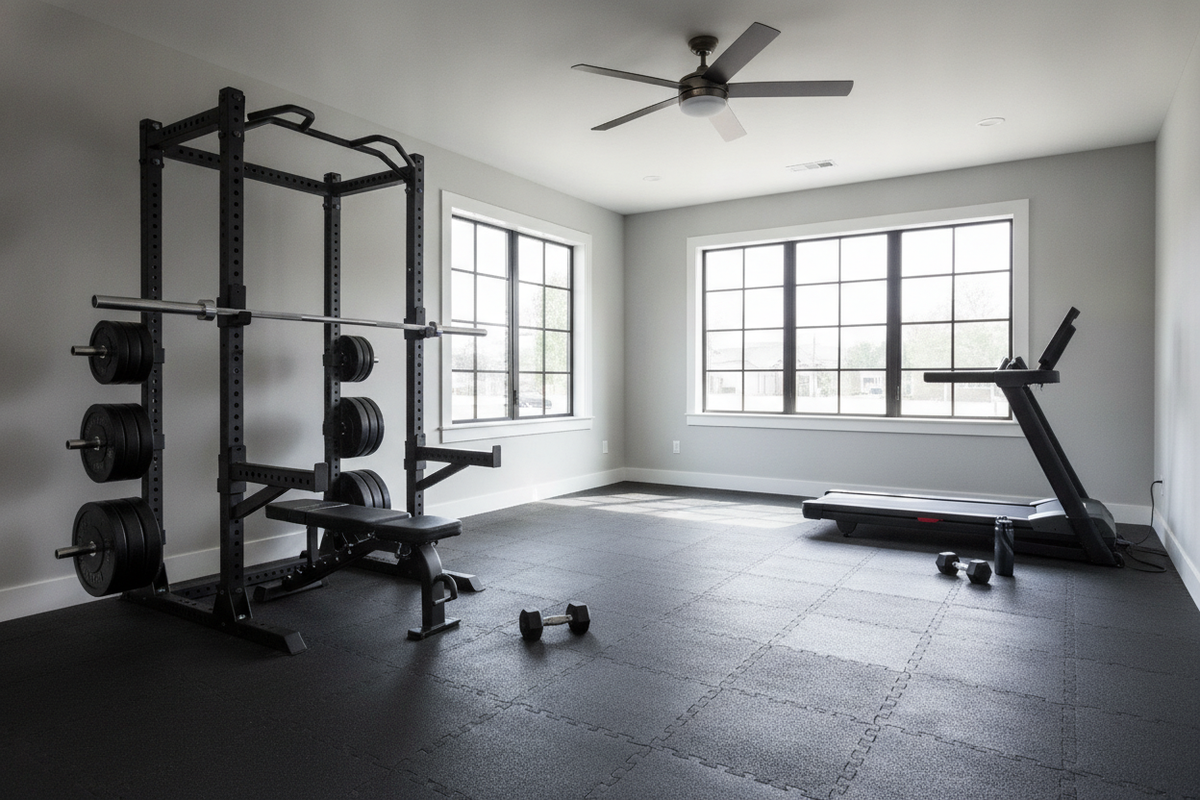
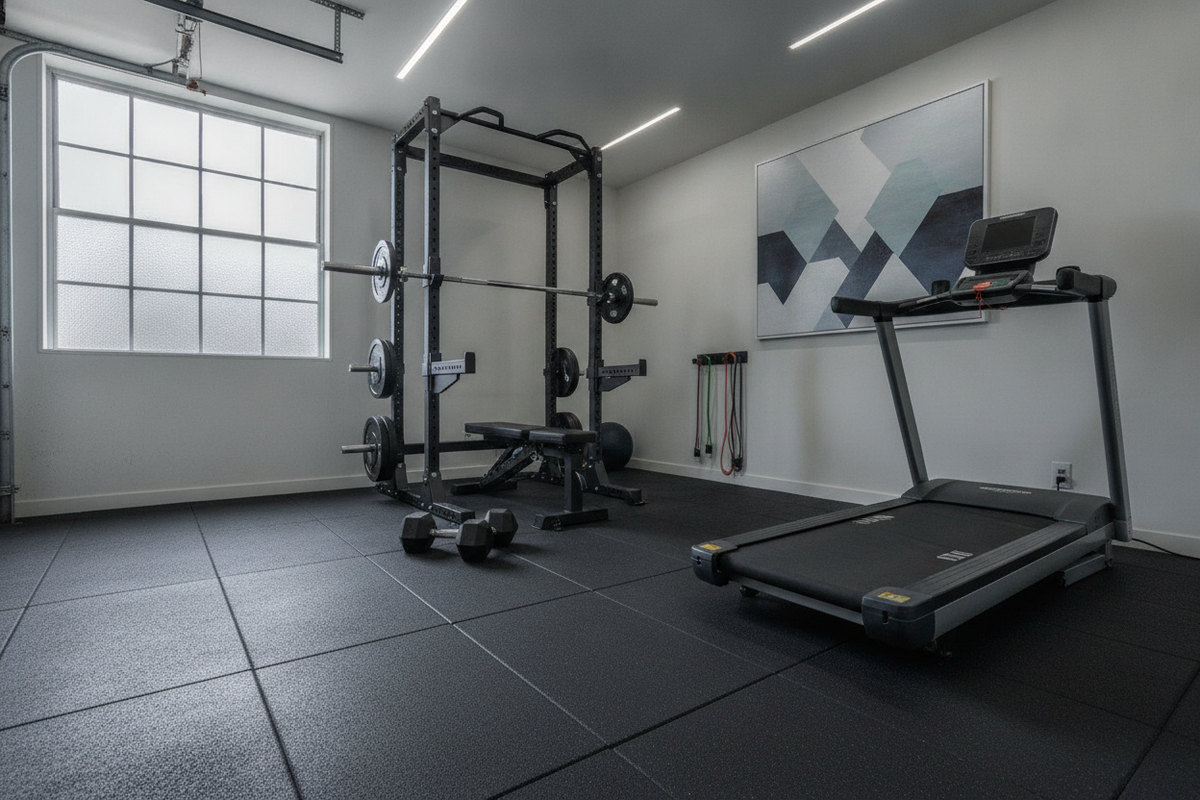
When selecting workout flooring, pay close attention to exercise mat thickness and material density. Proper thickness provides essential shock absorption that dampens joint impact during jump rope drills and quick direction changes. At the same time, the surface must provide adequate hardwood floor protection to prevent scratches, scuffs, and long-term subfloor damage caused by dropped equipment or continuous foot strikes.
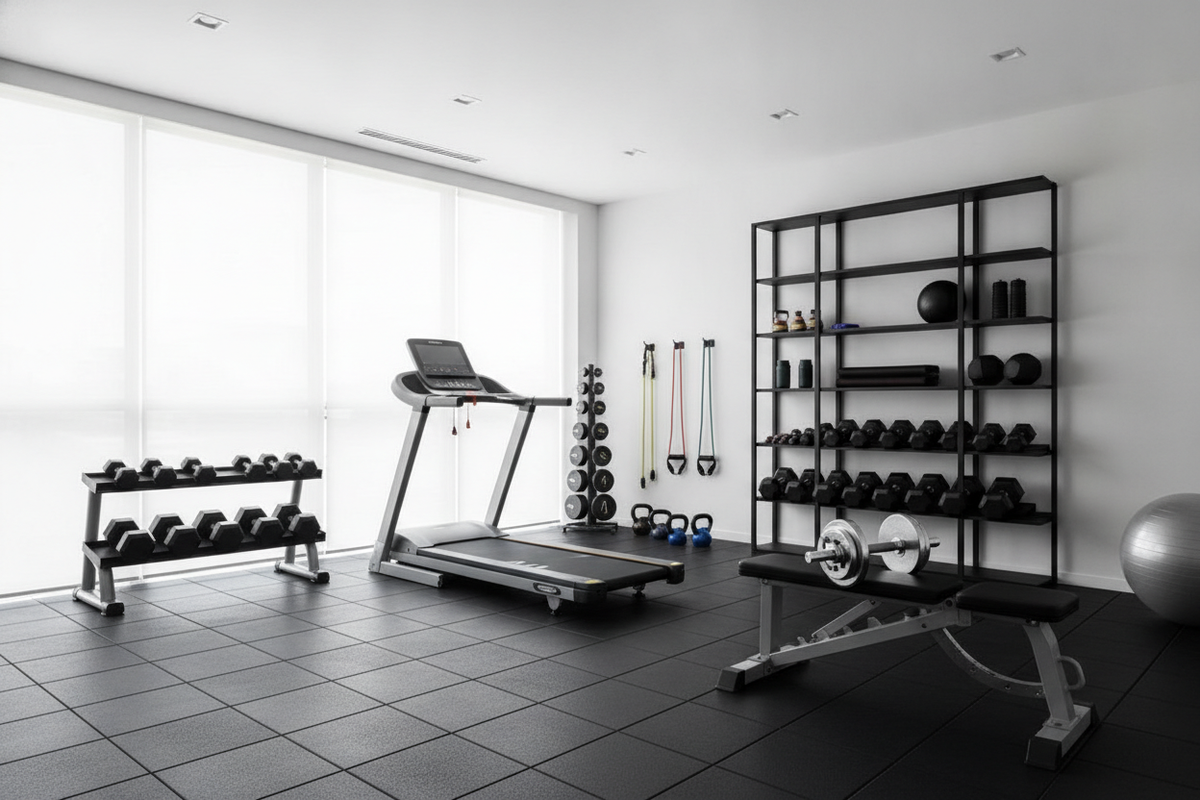
Using a spacious surface like a large exercise and gym mat gives you enough room to execute multi-directional drills without stepping off onto bare flooring. Additionally, choosing materials with inherent sweat resistance ensures that moisture remains on the surface for easy post-workout wipedowns rather than soaking into the floor beneath.
How Much Floor Space Do I Need for a Home Cardio Routine?
A clear floor area measuring at least six by eight feet provides adequate room clearance for most dynamic cardio movements. This perimeter ensures you can jump, lunge backward, and perform wide lateral shuffles without brushing against furniture or walls.
To set up an effective cardio area, consider the following layout tips:
- Clear vertical headroom: Verify overhead clearance for overhead reaches, jumping jacks, or skipping ropes, especially around light fixtures or ceiling fans.
- Base surface stability: Place your high-density mat on a flat, clean subfloor. If laying a mat over existing low-pile carpet, ensure the backing grips firmly to avoid shifting.
- Airflow and ventilation: Position a portable fan or set up near an operable window to maintain fresh airflow throughout vigorous intervals.
- Hydration and tech access: Keep water bottles and interval timers on a nearby sturdy shelf outside your immediate jump perimeter to prevent accidental tripping.
Practical Tips to Stay Consistent and Protect Your Joints
In our editorial review of home setups, the athletes who maintain their routines longest prioritize surface comfort and pacing adjustments early on. Supporting your conditioning with sensible training practices keeps motivation high.
First, always wear supportive athletic shoes even when working out at home. Training barefoot on hard surfaces during repetitive jumping can increase stress on the arches and Achilles tendons. Second, build volume progressively; resist the urge to jump into maximum daily intervals right away. Finally, keep your workout zone clean by wiping down your mat after sweaty sessions, maintaining a fresh, welcoming space that makes sticking to your cardio weight loss plan straightforward and rewarding.