Cardio After Lifting Fat Loss: Routine and Floor Setup
Using cardio after lifting fat loss routines is one of the most practical approaches to structuring an effective home workout. When individuals combine strength work with cardiovascular training in a single block of time, the order of those activities dictates energy levels, movement quality, and overall session productivity. Prioritizing lifting preserves muscular output for demanding lifts before turning to aerobic movement to support total caloric expenditure.
A successful combination of weight training and conditioning also places unique demands on your training environment. Shifting from heavy barbells or dumbbells to running, cycling, or jumping rope requires appropriate space management, dependable surface traction, and resilient flooring to protect both the user and the floor underneath.
Why Place Cardio After Lifting for Fat Loss?
Strength workouts require precise coordination, peak neural drive, and rapid force production. When you begin a training session with complex compound lifts such as squats, presses, and deadlifts, you rely heavily on readily available muscle glycogen stores to sustain high-tension contractions. Exhausting those reserves on a treadmill or exercise bike prior to lifting can compromise form, diminish strength output, and elevate the risk of technical breakdown under load.
By placing aerobic exercise at the tail end of your session, you dedicate your freshest physical capacity to resistance training. Once your strength sets are complete, your body has already drawn upon its primary energy pathways, making low-intensity steady-state or controlled interval cardio an efficient tool for extending daily energy use without sacrificing lifting technique. Those interested in detailed session organization can explore our guide to burning fat lifting weights for additional layout insights.
Does Doing Cardio After Weights Burn More Fat Than Doing It Before?
Doing cardio after weights helps you burn more fat primarily by preserving high exercise intensity during strength work while shifting your aerobic efforts into a state where immediate carbohydrate stores are already depleted. When you complete demanding resistance sets first, the body utilizes accessible glycogen stores to fuel intense muscular effort. Transitioning directly into cardio encourages the body to rely more heavily on stored fatty acids to sustain steady-state aerobic output.
Beyond substrate utilization, this sequencing supports greater overall caloric expenditure across the entire workout. Completing high-effort lifts while fresh enables higher training volume and heavier loads, which keeps metabolic demand elevated long after the session finishes. For a deeper perspective on training balance, check out our article comparing weight training and cardio.
Running After Lifting to Burn Fat vs Low-Impact Options
Choosing between running after lifting to burn fat and turning to lower-impact alternatives depends largely on lower body fatigue and joint comfort. While running after weight training for fat loss offers convenience and high energy expenditure, it also exposes tired ankles, knees, and hips to continuous repetitive impact. If your lifting session featured heavy squats, lunges, or deadlifts, running may amplify joint impact and lead to sloppy foot strikes.
Many home gym athletes find that moderate alternatives provide the desired conditioning benefit without excessive structural strain:
- Incline walking: Walking at an elevated incline on a treadmill elevates heart rate and caloric burn while eliminating high-impact foot strikes.
- Stationary cycling: Utilizing an exercise bike eliminates ground-reaction forces entirely, offering smooth resistance that flushes tired leg muscles.
- Jump rope intervals: A jump rope delivers rapid cardiovascular stimulus in brief intervals, requiring minimal footprint while keeping impact on the forefeet.
- Rowing machines: Full-body rowing integrates pulling mechanics with steady aerobic output, distributing workload evenly across the upper and lower body.
Evaluating your weekly workload helps determine when running is appropriate and when lower-impact exercise offers better recovery. Readers can review our overview of cardio and weight splits to see how varied weekly structures compare.
Subfloor Protection and Rubber Gym Mat Setups for Dual Workouts
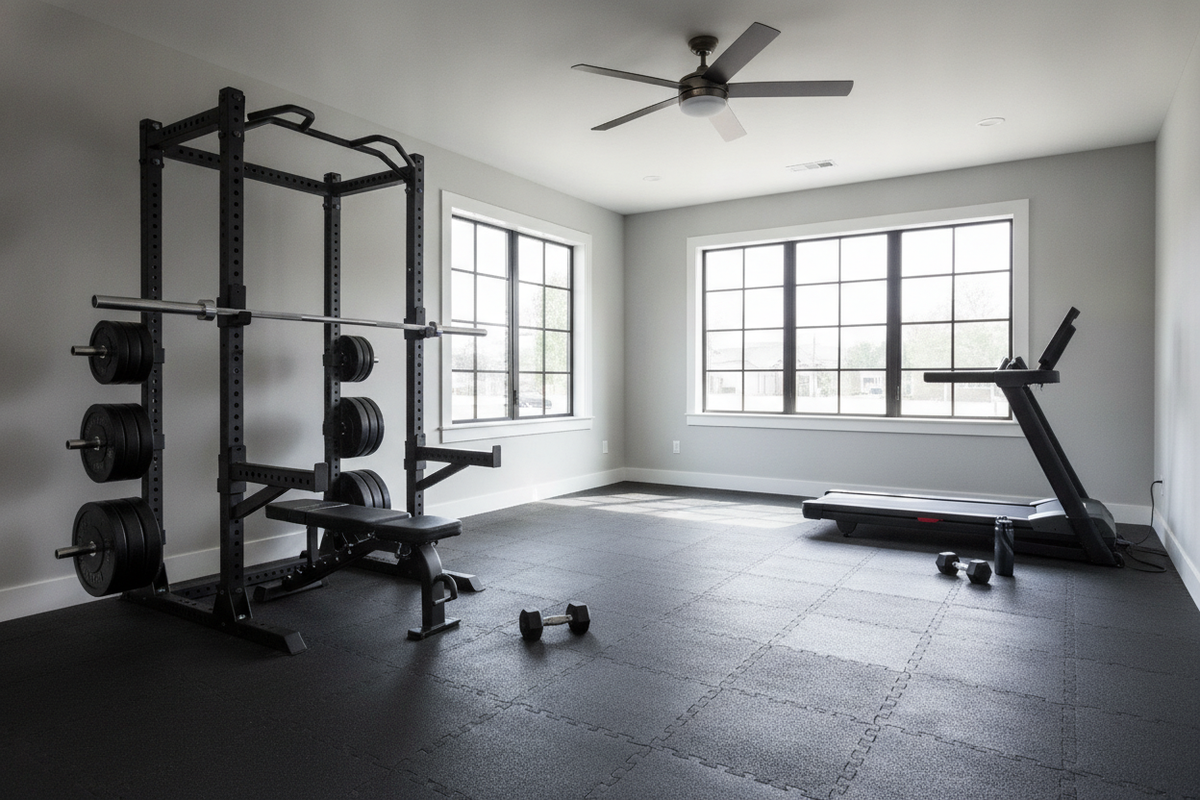
Combining heavy iron and cardio conditioning in one room requires flooring that balances stability with shock absorption. A heavy-duty rubber gym mat serves as the foundation for multi-use gym spaces. Pure lifting platforms often require dense, unyielding materials, whereas cardio drills require slight cushioning to spare joints during continuous movement. Quality rubber gym matting bridges this gap by remaining firm under loaded feet while dulling vibrational transfer through the room.
Underneath surface mats, subfloor protection is vital, especially when working over tile, hardwood, or unfinished concrete. Dropped dumbbells or kettlebells create concentrated point-load forces that can fracture rigid subfloors. Introducing high-density foam underlayment beneath perimeter-locked rubber creates a dual-layer buffer that disperses impact energy broadly. This setup also acts as an impermeable sweat barrier, preventing moisture from pooling beneath mats during extended conditioning blocks.
How Do I Protect My Floor When Switching Between Weights and Cardio?
You can protect your floor during hybrid training sessions by designating a dedicated impact zone with thick rubber matting for weight drops and keeping high-movement cardio lanes completely clear of loose gear. Transitioning rapidly from a bench or squat rack into bodyweight drills or running can lead to accidental kicks, scuffs, or displaced equipment if the floor is cluttered.
Consider these floor-preservation strategies when organizing your space:
- Anchor stationary equipment: Ensure cardio equipment sits squarely on equipment mats to stop vibration creep and surface gouging.
- Maintain surface traction: Keep towels nearby to wipe down high-sweat areas between lifting sets and cardio drills, preventing slick rubber surfaces.
- Store free weights immediately: Re-rack plates and place dumbbells on elevated stands so they do not dent unprotected flooring during rapid movement changes.
- Check underlayment seams: Regularly inspect mat joins to ensure moisture has not seeped through toward sensitive subfloors during intense workouts.
Arranging Space and Accessories for Clean Transitions
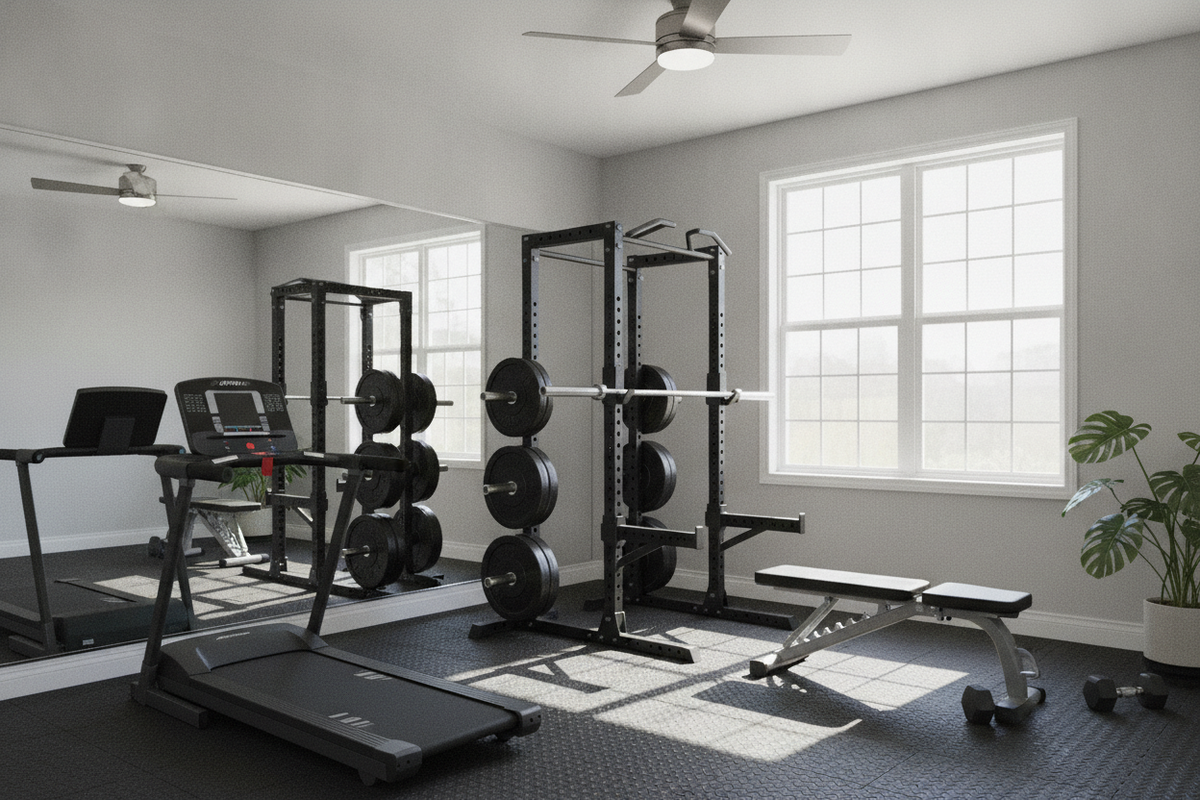
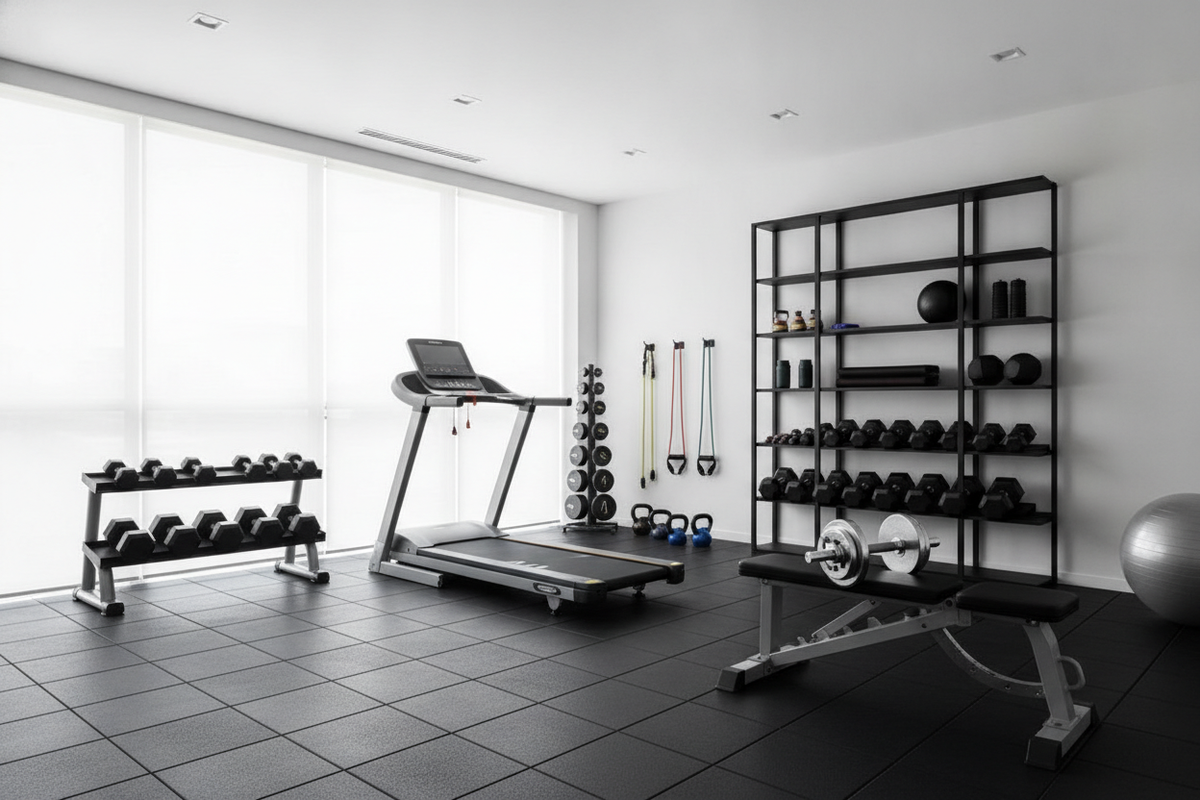
A well-organized home workout area prevents wasted time and maintains an elevated heart rate during hybrid workouts. Position heavy machinery from our weight lifting machines collection along outer walls or dedicated corners to maximize open floor space in the center of the room. This central area can then accommodate open mat conditioning, skipping, or dynamic warm-up movements without obstruction.
Organizing small gear with storage solutions from our strength training accessories catalog keeps bands, collars, and smaller weights off walking paths. A tidy room allows you to shift smoothly from lifting sets directly into your post-lifting cardio and subsequent cool-down routine, keeping sessions efficient, safe, and focused on consistent fat loss progression.