Can You Grow Glutes at Home? Workouts and Setup
A common question among fitness enthusiasts setting up home training spaces is straightforward: can you grow glutes at home without access to heavy commercial machines? The short answer is yes. Muscle growth depends on placing adequate physical demands on target fibers, taking joints through a purposeful range of motion, and consistently challenging your capacity over time. While dedicated gyms offer cable towers and heavy leg presses, home environments provide plenty of avenues to create the muscular tension needed for noticeable glute growth.
Achieving meaningful results outside a commercial gym requires an intentional approach to exercise selection, movement quality, and training conditions. When you understand how to challenge your glutes using bodyweight variations, resistance bands, or compact weights, home training becomes a reliable, long-term solution.
Can You Grow Glutes at Home with Just Bodyweight?
Yes, you can build muscle using only bodyweight exercises by selecting demanding single-leg movements, controlling your rep tempo, and training near muscular fatigue. The gluteus maximus, medius, and minimus respond to mechanical tension rather than the specific type of metal plate in your hands. When external load is minimal, you can increase tension by manipulating leverage and time under tension.
Relying purely on two-legged squats with bodyweight often yields diminishing returns because your body adapts quickly to moving its own mass across symmetrical stances. Transitioning to unilateral training changes this balance immediately. Movements that isolate one side force the hip musculature to stabilize the pelvis while driving hip extension. Controlling the lowering phase, pausing at the bottom of the movement, and working through a full range of motion can challenge the glute muscles deeply without requiring a single piece of iron.
High-Tension Exercises and Hip Thrusts for Home Workouts
Certain movement patterns stand out when training at home because they place direct resistance along the line of glute fiber contraction. If you want a structured breakdown of movements and weekly planning, exploring our guide to glute training form can help you organize a routine.
Key movements to prioritize in a living room or garage setup include:
- Hip thrusts and glute bridges: Elevated hip thrusts off a sturdy couch or workout bench deliver peak tension at full hip extension. You can perform them with both legs, progress to single-leg variations, or loop resistance bands above your knees to recruit the gluteus medius alongside the gluteus maximus.
- Bulgarian split squats: Placing the rear foot on an elevated platform shifts almost the entire workload onto the front leg. Angling the torso slightly forward places a deep stretch on the glute at the bottom of the descent.
- Single-leg deadlifts: Also known as unilateral Romanian deadlifts, these emphasize the hinge pattern, loading the glutes and hamstrings in a lengthened position while demanding balance and foot stability.
- Bodyweight lunges and reverse lunges: Stepping backward into a lunge allows you to maintain a vertical front shin and a forward hip hinge, placing tension squarely across the hip complex.
- Dumbbell squats: Holding a pair of compact dumbbells or a single heavy object in a goblet position allows you to add direct load to deep knee and hip bends at home.
How Do You Apply Progressive Overload Without Heavy Barbells?
You apply progressive overload without heavy barbells by increasing training volume, slowing your lifting tempo, reducing rest intervals, or advancing to more difficult exercise variations. The glute muscles do not count pounds on a bar; they adapt to accumulated stress. When adding physical weight is not an option, several reliable methods can continue driving muscle adaptations.
One straightforward technique is refining your rep tempo. Instead of dropping quickly through a squat or lunge, take three full seconds to descend, pause for one second at the deepest point of comfortable stretch, and push up with control. This deliberate pace eliminates momentum, prolongs mechanical tension, and stimulates muscle fibers without requiring heavier loads.
Another effective strategy is incorporating resistance bands. Adding a heavy loop band across your thighs during glute bridges or hip thrusts creates lateral tension that forces the hips to stabilize against inward collapse. Similarly, stepping up from standard bodyweight lunges to deficit lunges or single-leg elevated bridges increases the travel distance of the hip joint, generating more work per repetition.
Tracking Early Signs of Glute Development
Hypertrophy is a gradual process, but several practical markers show that your home workouts are producing results before physical size changes become obvious in the mirror. For a deeper look at physical indicators and milestone expectations, review our guide to tracking glute growth signs.
Early progress typically shows up as improved mind-muscle connection. When you first start training at home, your quadriceps or lower back might try to take over during hinge movements. As your technique improves, you will feel direct contraction and fatigue localized in the glutes during and after sets. You may also notice improved single-leg balance during Bulgarian split squats, greater ease holding lockout during hip thrusts, and the ability to complete more controlled repetitions before reaching fatigue.
Setting Up Your Home Workout Surface for Stability and Safety
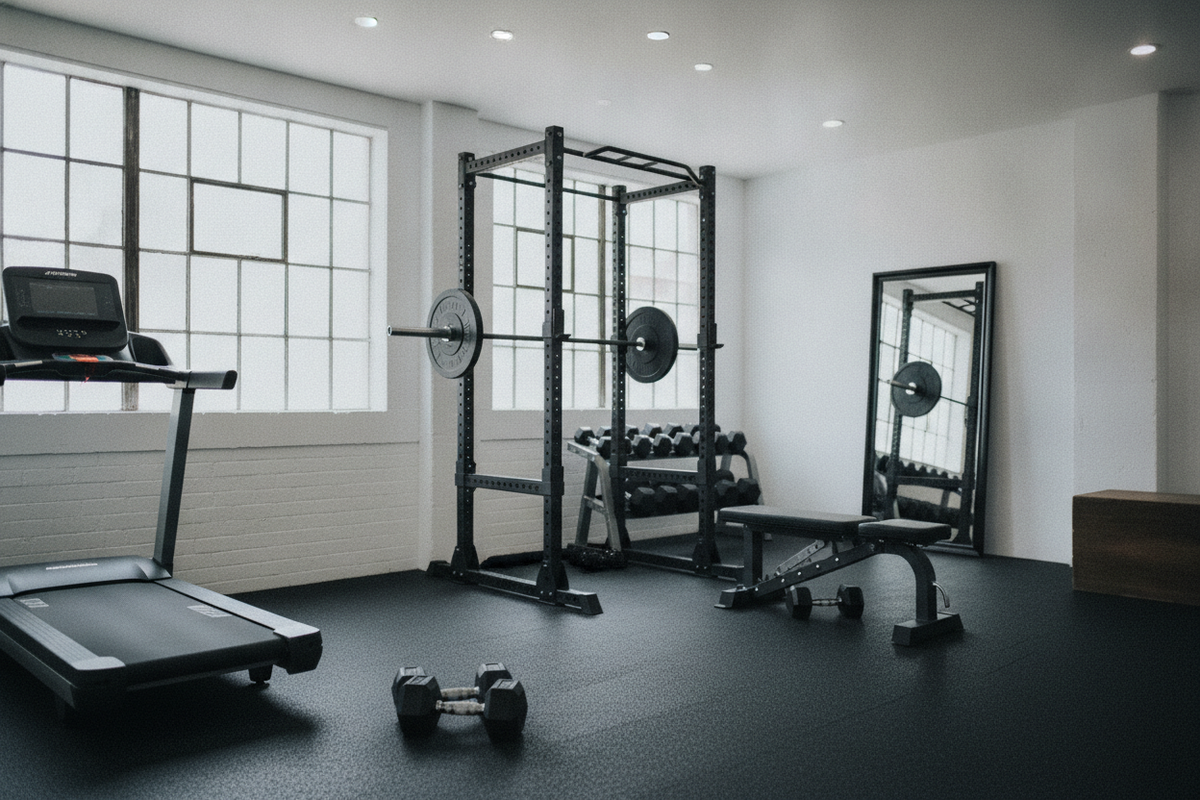
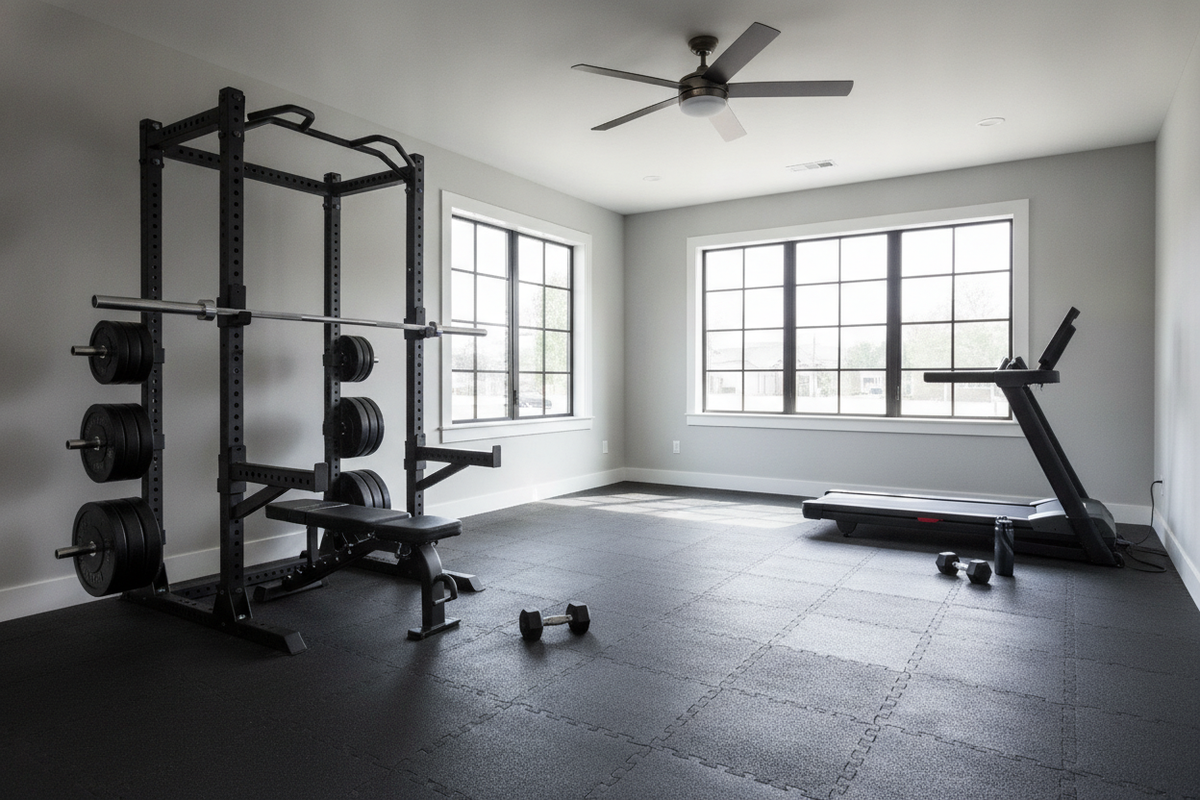
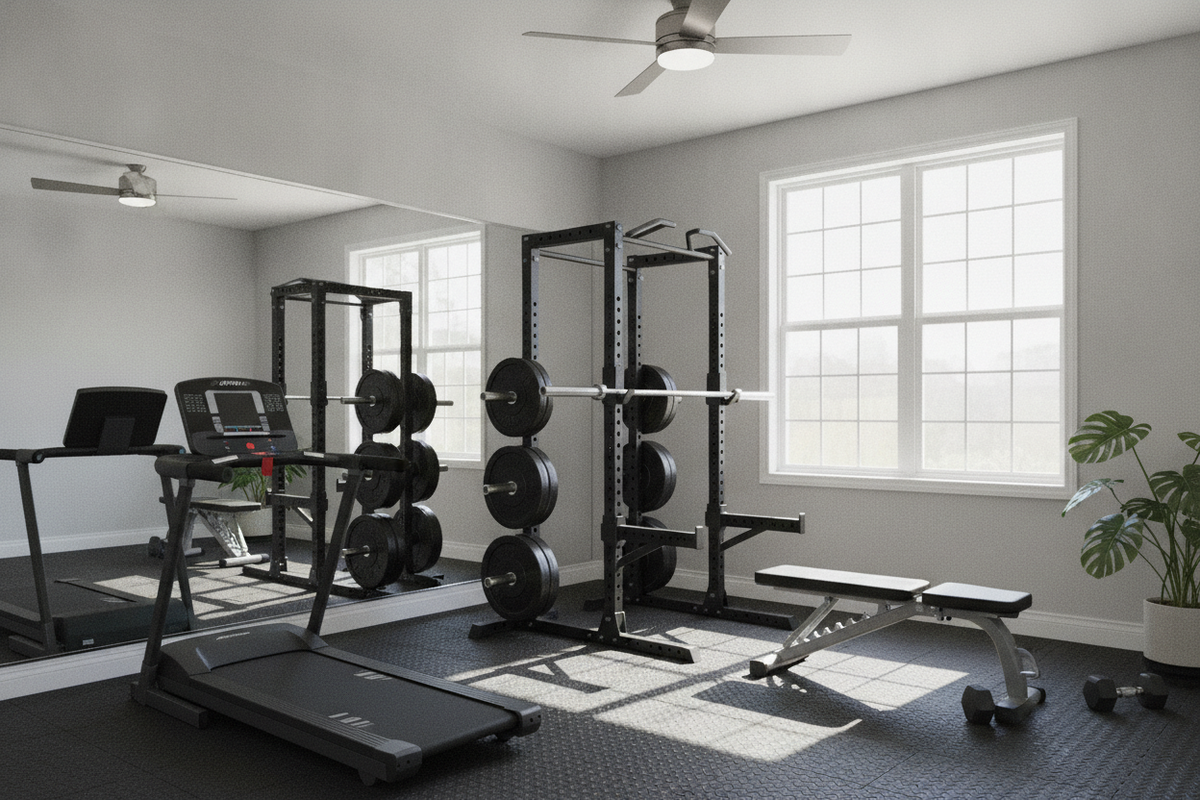
A frequently overlooked factor in successful home training is the floor surface underneath your feet. Glute workouts place significant demands on balance, traction, and joint comfort. Attempting heavy split squats or single-leg deadlifts on slippery hardwood, unstable rugs, or bare concrete can compromise your form and limit how hard you can push each set.
A dedicated, high-density non-slip workout mat provides the firm footing needed to drive through your heel and big toe during unilateral movements. In our experience editing home gym layouts, footwear traction paired with a stable floor surface makes an immediate difference in how confidently a lifter can balance during deep lunges.
Floor setup considerations for home glute training include:
- Traction and grip: Foot slippage during split squats or lateral band walks disrupts hip alignment and breaks focus. A textured, slip-resistant surface keeps feet anchored.
- Exercise mat cushioning: Floor-based glute bridges, kneeling kickbacks, and pelvic thrusts place direct pressure on your spine, tailbone, and knees. Dense padding protects contact points without being so soft that you lose balance.
- Subfloor protection: Setting down adjustable dumbbells or kettlebells between sets can scuff laminate or crack household tiles. A durable mat provides necessary subfloor protection for long-term home use.
By pairing proven exercise variations and systematic progression with a secure training floor, you can build glute strength and shape at home effectively and consistently.