7 Best Exercises to Build Glutes: Biomechanical Form, Weekly Programming, and Floor Staging
Developing strength and shape in the lower body requires a structured approach centered on anatomy, progressive loading, and proper movement execution. Rather than cycling through random training trends, selecting targeted exercises to build glutes allows you to load the musculature through multiple angles and force vectors. Whether your goal is athletic power, posture support, or hypertrophy, understanding how the gluteal complex responds to tension is the foundation of an effective program.
Biomechanical Fundamentals: How the Gluteus Maximus Generates Tension
The gluteus maximus is the largest muscle in the human body, serving as the primary driver of hip extension, external rotation, and posterior pelvic stabilization. To stimulate muscle fibers effectively, training must challenge the glutes across their entire operational range—both in the shortened position and the fully lengthened position.
Different movement vectors produce distinct tension curves:
- Horizontal Loading (Shortened Position Tension): Movements such as hip thrusts and glute bridges apply maximum mechanical tension when the hip reaches full extension at the top of the rep.
- Vertical Loading (Lengthened Position Tension): Exercises like Romanian deadlifts and deep squats generate high levels of passive and active tension when the glute fibers are stretched at the bottom of the movement.
- Abduction and Lateral Stabilization: Movements involving outward hip abduction recruit the gluteus medius and minimus, which stabilize the pelvis during unilateral lifts.
Understanding these distinct tension angles helps you choose glute exercises that actually build mass by pairing shortened-range thrusts with lengthened-range hinges and squats.
The 7 Best Exercises to Build Glutes
A well-rounded training plan incorporates both compound bilateral lifts and unilateral variations to ensure balanced strength development across both hips.
1. Barbell Hip Thrust
The barbell hip thrust places peak mechanical load right at full hip extension without loading the spine vertically. To perform the lift correctly, position your upper back across a stable bench, tuck your chin toward your chest, and place your feet flat on the floor at roughly shoulder width. Drive through your heels to extend your hips upward until your torso and thighs form a straight line, finishing with a posterior pelvic tilt to engage the glutes without arching the lumbar spine.
2. Romanian Deadlift (RDL)
The Romanian deadlift is a foundational hinge movement that challenges the glutes and hamstrings in the lengthened position. Stand with feet hip-width apart and hold a barbell or dumbbells in front of your thighs. Keeping a soft bend in the knees, initiate the movement by pushing your hips straight back as if trying to touch a wall behind you. Lower the weight while maintaining a neutral spine, feeling a deep stretch across the posterior chain, then drive the hips forward to return to standing.
3. Bulgarian Split Squat
This rear-foot elevated split squat places intense unilateral demand on the lead leg while eliminating balance assistance from the non-working side. To emphasize the glutes over the quadriceps, establish a slightly longer forward stance and lean your torso forward at a moderate angle. Lower your hips under control until the back knee approaches the floor, then press firmly through the whole foot of the lead leg to rise.
4. Deficit Reverse Lunge
By stepping backward off an elevated platform or weight plate, a deficit reverse lunge increases the range of motion at the hip joint. This extra depth forces the glute of the front leg to work through a deeper degree of hip flexion. Step back softly, drop your hips into a controlled descent, and drive through the front heel to return to the starting position.
5. Low-Bar Back Squat or Goblet Squat
Squat variations loaded with a barbell or kettlebell require deep hip and knee flexion. In a low-bar back squat, placing the bar slightly lower on the posterior deltoids allows for a greater forward torso lean, which recruits more hip extension drive out of the bottom of the squat. For home lifters working without a barbell rack, a heavy goblet squat provides a stable alternative for achieving full squat depth under control.
6. 45-Degree Hyperextension
When set up with a glute-biased focus, the 45-degree hyperextension delivers powerful tension in the shortened position. Adjust the thigh pad so it rests below the hip crease to allow unrestricted hip flexion. Flare your toes outward slightly, maintain a rounded upper back to minimize spinal erector involvement, and use the glutes to extend the hips until your body is aligned.
7. Cable or Banded Hip Abduction
Targeting the gluteus medius and minimus provides pelvic stability and contributes to upper-glute development. Using resistance bands or a low cable pulley, stand tall and sweep the working leg outward to the side in a controlled arc without tilting your torso sideways. Incorporating dedicated strength training accessories such as ankle straps and mini bands makes these isolation drills easy to integrate into warmups or finishers.
Common Glute Training Mistakes and Form Corrections
Even with the best exercises, improper execution can shift mechanical tension away from the glutes and onto the lower back or quads.
- Hyperextending the Lumbar Spine: On hip thrusts and back extensions, lifters often arch their lower back to achieve perceived range of motion. Instead, keep the ribs pulled down and focus on locking out purely through hip extension.
- Maintaining an Overly Upright Torso on Lunges: An upright spine directs primary loading onto the quads. Tilting the torso slightly forward over the working thigh during lunges and split squats significantly increases glute recruitment.
- Rushing the Eccentric Lowering Phase: Dropping rapidly through the negative portion of a deadlift or squat reduces muscle tension. Controlling the descent over two to three seconds maximizes fiber recruitment during the stretch.
- Inadequate Foot Grip and Stance Stability: Slipping feet during lunges or split squats degrade force transfer and compromise balance. Lifting on a grippy, firm surface ensures consistent power delivery.
Designing a Balanced Glute Training Routine and Weekly Split
To see consistent progress, organize your selected movements into a structured weekly schedule. Rather than packing every movement into a single marathon session, spreading volume across two dedicated lower-body or full-body workouts allows for higher movement quality and better recovery.
A balanced weekly routine can be structured around complementary movement pairings:
- Day 1 (Horizontal & Unilateral Focus): Barbell Hip Thrusts paired with Bulgarian Split Squats, followed by Cable Hip Abductions.
- Day 2 (Lengthened Hinge & Squat Focus): Romanian Deadlifts paired with Deficit Reverse Lunges or Goblet Squats, finished with 45-Degree Hyperextensions.
Focus on gradual progression over time by increasing resistance, improving range of motion, or refining movement control. For lifters working on long-term fitness goals, learning to build a sustainable exercise routine ensures steady progress without accumulating excessive systemic fatigue.
Home Gym Floor Staging and Equipment Stability for Glute Workouts
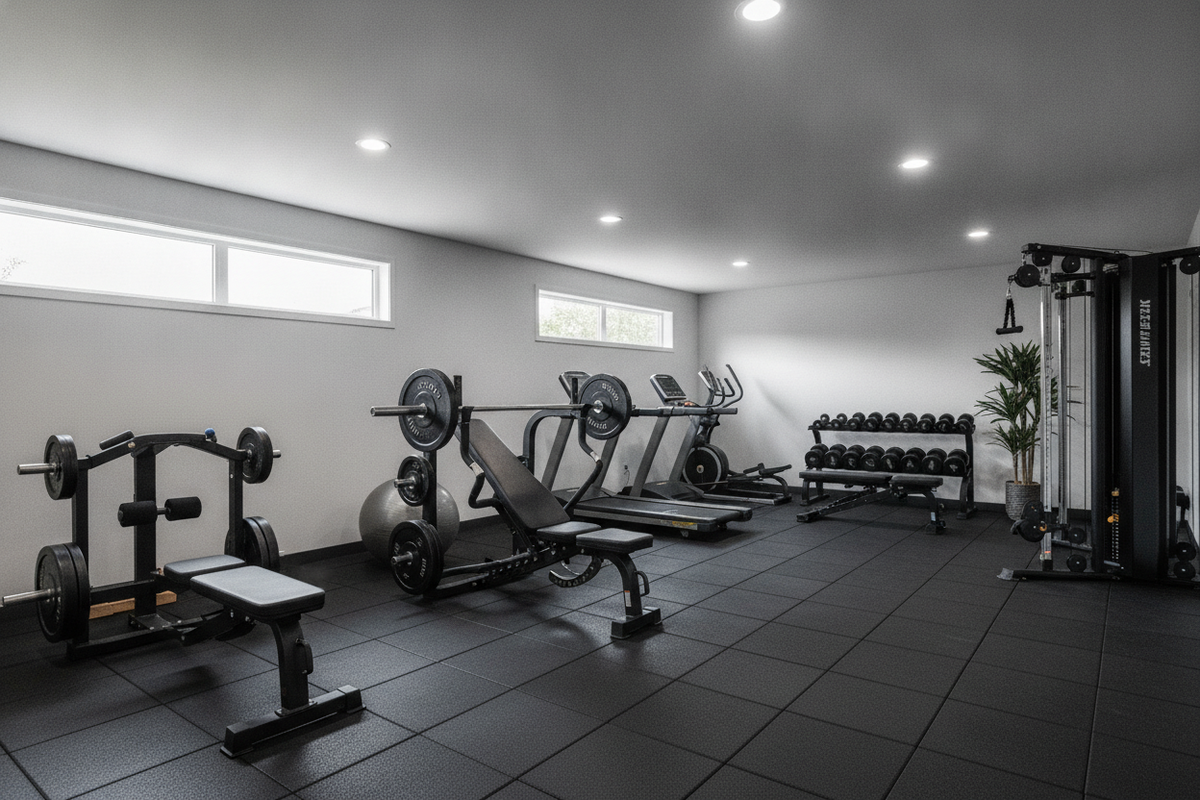
Heavy hip thrusts, dynamic lunges, and loaded hinges place substantial demands on your training floor. A bench pushed against an unpadded slick surface will easily slide backward during a heavy thrust lockout, disrupting form and risking joint strain.
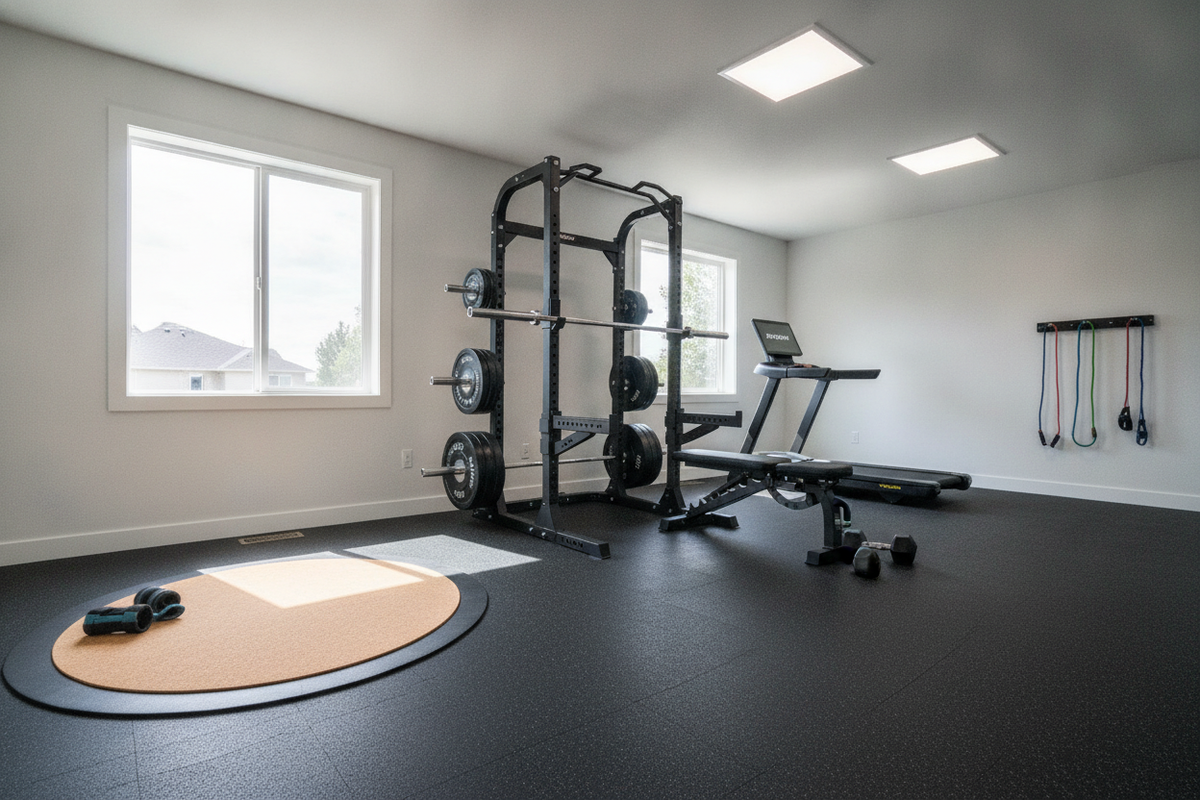
Setting up your training station over a dedicated high-density exercise mat provides crucial benefits for lower-body lifting:
- Bench and Footing Traction: A non-slip textured mat locks weight benches securely in place and prevents footwear from sliding during wide-stance squats and lunges.
- Subfloor and Equipment Protection: Dropping heavy dumbbells or resting a loaded barbell between sets can damage underlying hardwood or tile without durable protective flooring underneath.
- Joint Cushioning for Ground-Based Drills: Floor-based bridges, kneeling thrusts, and deep lunge touches require adequate surface padding to protect knees and hips from hard subfloors.
By combining biomechanically sound exercise choices with a stable, well-staged lifting area, you create an ideal environment for safe, long-term glute strength development.