7 Best Hip Friendly Leg Exercises: Biomechanical Cues, Joint-Sparing Form, and Home Mat Staging
Lower-body training often demands deep hip flexion, rapid pelvic tilting, and repetitive loading that can irritate sensitive hip joints or overwork anterior muscles. Finding effective hip friendly leg exercises allows lifters to build quad, glute, and hamstring strength without aggravating the front of the hip. By emphasizing posterior-chain recruitment, controlled ranges of motion, and stable floor support, you can maintain consistent progress in your home or commercial gym setup.
Understanding Hip Flexor Fatigue in Lower-Body Training
Traditional squats, lunges, and leg raises frequently push the hip joint into extreme flexion. When the pelvis tilts anteriorly under load, the psoas and rectus femoris work overtime to stabilize the trunk, often creating an uncomfortable pinching sensation at the front of the hip crease. Designing a routine around leg exercises that don't use hip flexors aggressively helps bypass this compression.
A sensible movement strategy prioritizes hip extension, pure knee flexion, and neutral pelvic alignment. By choosing exercises that reduce anterior shearing forces, you can stimulate target muscle groups effectively. Lifters looking for lower-stress alternatives can also consult a friendly leg exercise guide to balance spinal loading alongside joint-sparing lower-body mechanics.
7 Best Hip-Friendly Leg Exercises for Balanced Strength
The following movements emphasize muscular tension over extreme joint angles, making them ideal when building a sustainable workout for bad hips.
1. Barbell or Dumbbell Glute Bridges
Floor-based glute bridges place the hips in continuous support, allowing for full glute contraction without deep hip flexion at the bottom of the movement.
- Setup: Lie supine on a supportive workout surface with your knees bent at roughly 90 degrees and feet flat on the floor, shoulder-width apart.
- Execution: Drive through the midfoot and heels to elevate the pelvis until your torso and thighs form a straight line. Hold the top contraction for two seconds while keeping your ribcage tucked down to prevent lumbar hyperextension.
- Hip-Sparing Cue: Avoid dropping your hips all the way into resting flexion between reps; maintain light glute tension throughout the set.
2. High-Foot-Position Leg Presses
Standard leg press setups can force the knees directly into the chest, pinching the anterior hip capsule. Elevating foot placement on the sled shifts loading toward the glutes and hamstrings while opening the hip angle.
- Setup: Position your feet near the top edge of the sled with a moderate outward toe flare.
- Execution: Lower the sled smoothly, stopping before your lower back rounds off the back pad or your thighs compress your ribcage. Press upward through your full foot.
- Hip-Sparing Cue: Limit the bottom depth to a point where your pelvis remains firmly anchored against the seat.
3. Romanian Deadlifts with Controlled Hip Hinge
The Romanian deadlift is one of the premier hip friendly exercises for posterior chain development because it emphasizes a horizontal hip displacement rather than vertical joint compression.
- Setup: Stand with a hip-width stance, holding dumbbells or a barbell with an overhand grip. Maintain a slight, fixed bend in the knees.
- Execution: Hinge at the hips by pushing your glutes straight backward toward the wall behind you, keeping the bar path close to your shins. Return to standing by contracting the glutes and hamstrings.
- Hip-Sparing Cue: Stop the descent once your hips stop traveling backward to prevent unnecessary lumbar flexion.
4. Prone or Swiss Ball Hamstring Curls
Prone machine curls or stability ball leg curls isolate the hamstrings through pure knee flexion, completely eliminating hip flexor drive during the concentric phase.
- Setup: Lie prone on a padded leg curl bench or supine on a floor mat with your heels resting on a Swiss ball.
- Execution: Pull your heels toward your glutes by flexing the knees. Maintain a neutral spine and resist the urge to arch the lower back.
- Hip-Sparing Cue: Squeeze the glutes lightly before initiating the curl to lock the hips in extension.
5. Supported High Step-Ups with a Forward Torso Lean
Step-ups can sometimes irritate hips if the trailing leg pushes off aggressively. Adjusting the angle shifts the work entirely to the working leg's posterior chain and quadriceps.
- Setup: Place one foot flat on a stable box or bench set around knee height. Lean your torso slightly forward to align your center of mass over the working foot.
- Execution: Drive through the front heel to rise onto the platform without bouncing off the back toes. Lower yourself slowly under control.
- Hip-Sparing Cue: Keep the non-working foot passive to avoid firing the trailing hip flexors. Combining this with lateral work from a hips leg exercise guide helps build complete hip stability.
6. Isometric High-Angle Wall Sits
When dynamic knee flexion causes hip discomfort, isometric holds allow you to challenge the quadriceps without continuous joint friction.
- Setup: Lean your back flat against a sturdy wall and slide down until your thighs are slightly above parallel to the floor.
- Execution: Press your heels firmly into the ground, engaging the quadriceps while keeping your head, upper back, and sacrum against the wall. Hold for 30 to 45 seconds.
- Hip-Sparing Cue: Stay slightly above a 90-degree hip angle to minimize anterior capsule compression.
7. Standing and Seated Calf Raises
Calf training adds volume to the lower legs with zero hip flexor involvement, ensuring comprehensive development across the kinetic chain.
- Setup: Stand on the edge of a step or sit at a seated calf machine with the balls of your feet supported.
- Execution: Lower your heels below the step for a gentle calf stretch, then press through the balls of your feet into full plantarflexion.
- Hip-Sparing Cue: Maintain an upright posture without leaning forward or tilting the pelvis.
Programming a Hip-Conscious Lower-Body Routine
Structuring a routine around leg exercises for bad hips involves managing exercise selection, volume, and recovery. Rather than pushing through high-impact fatigue patterns described in an intense leg workout that guide, a joint-conscious approach relies on steady, controlled tempos.
- Warm-Up: Begin with gentle glute activation (such as side-lying clamshells or glute bridges) to ensure the posterior chain fires before loaded movements.
- Movement Order: Place bilateral compound hinge exercises early in the session when neuromuscular control is highest, followed by supported unilateral work and isometrics.
- Repetition Range: Target moderate repetition brackets (8 to 15 reps) to accumulate training volume without needing maximal spinal or hip loads.
Home Gym Floor Staging and Joint Protection Blueprints
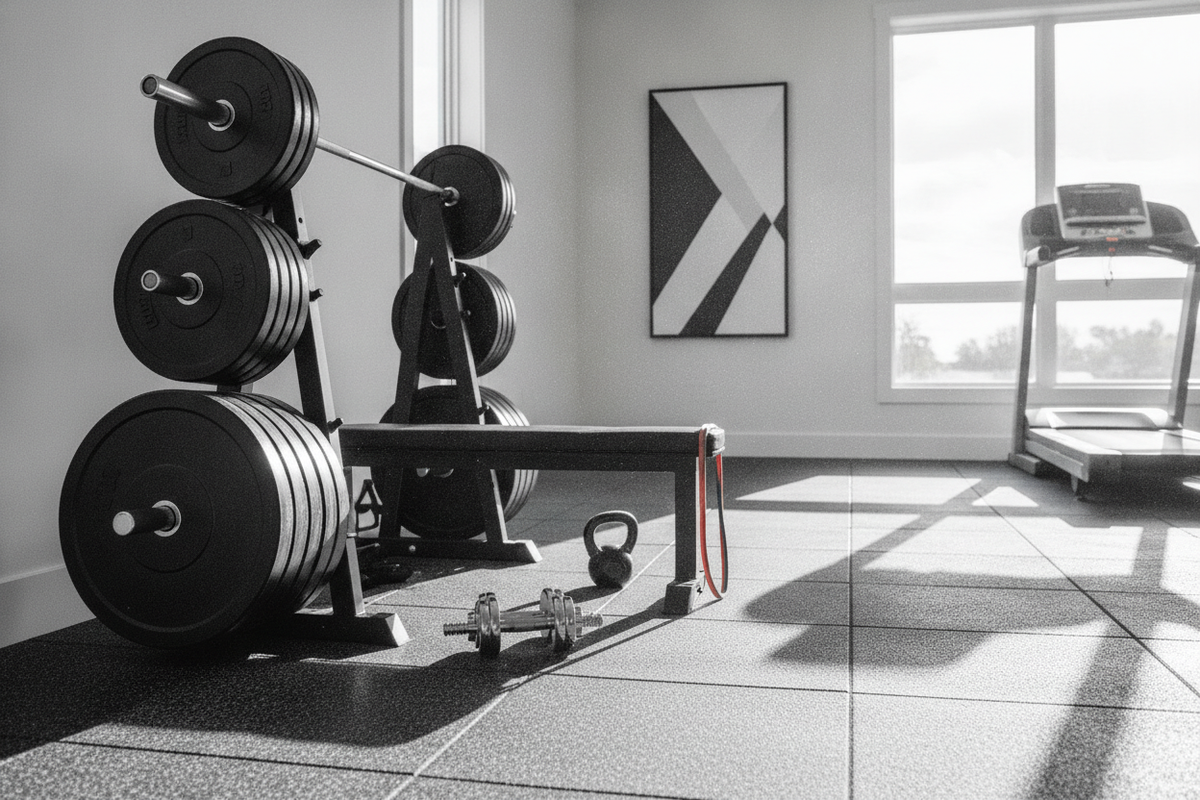
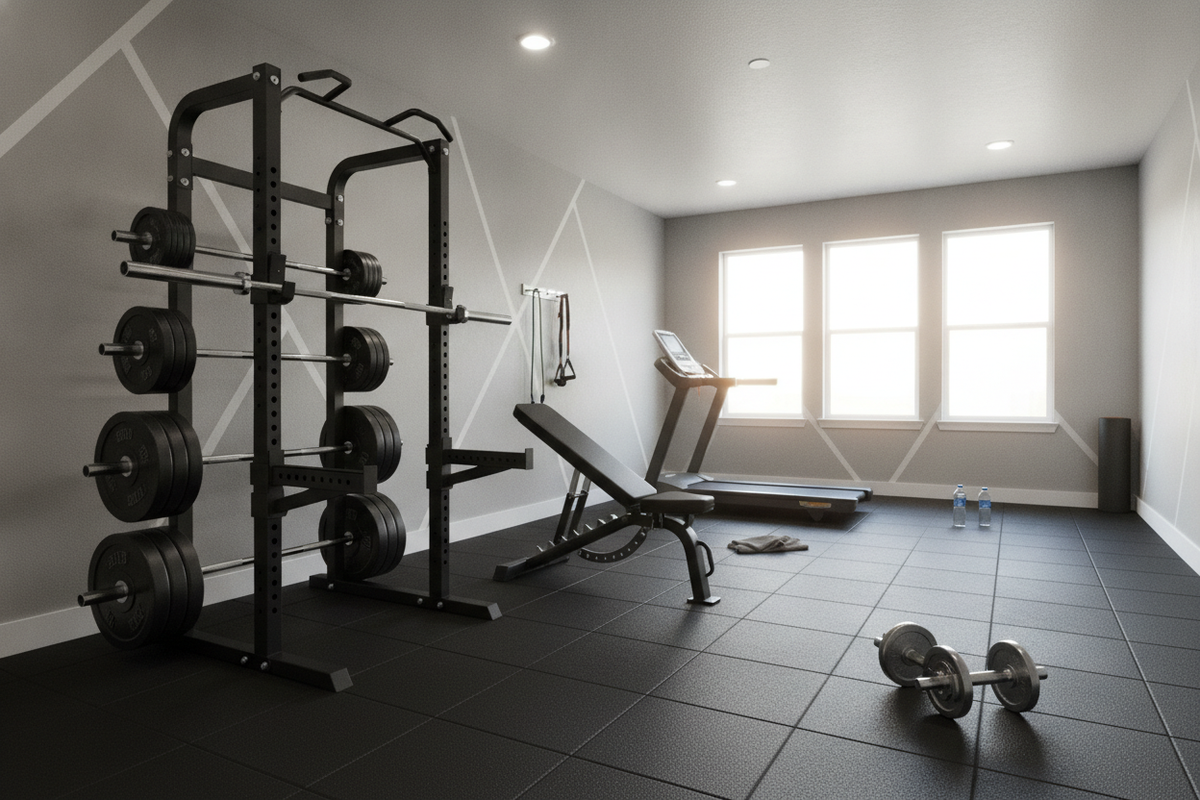
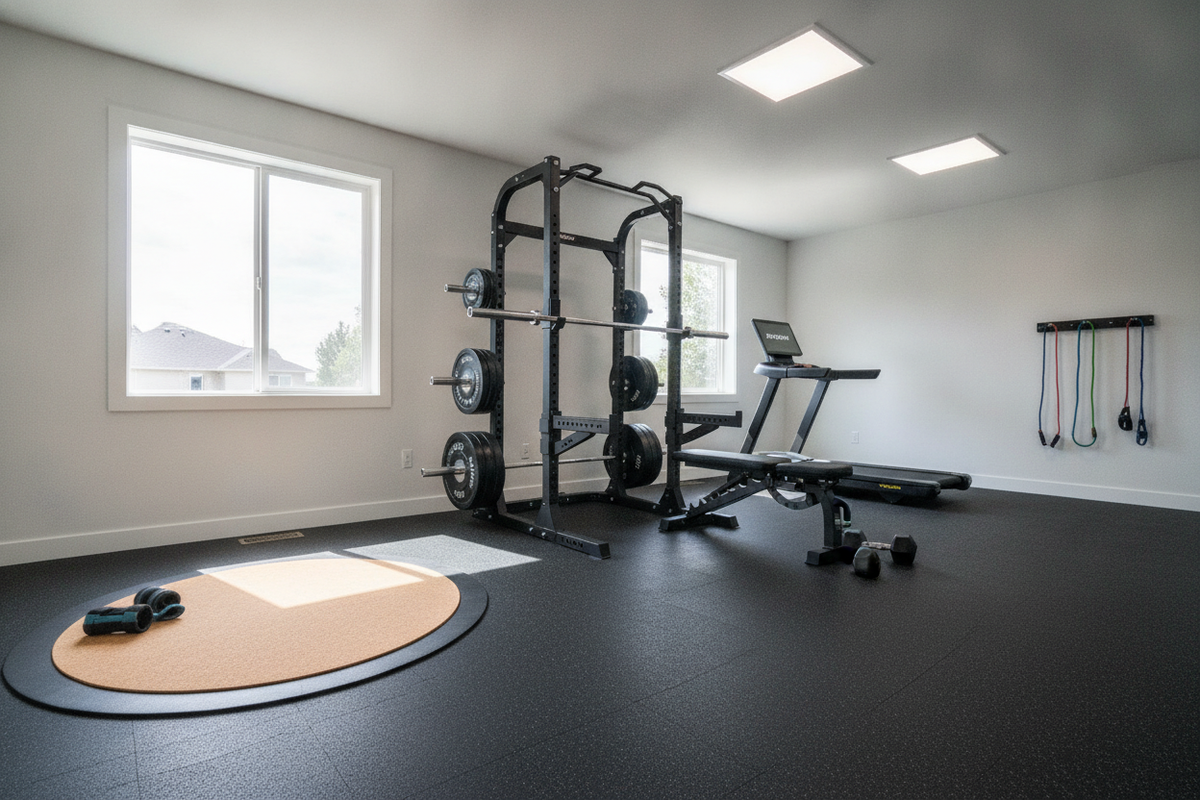
Exercising on hard, unyielding floors can transmit shock and cause discomfort during kneeling, bridging, or step-up movements. Equipping your workout area with a dedicated high-density workout product provides the firm footing and cushioning needed for floor-based training.
When selecting flooring for hip-conscious routines, prioritize high-density material that does not bottom out under body weight. A textured, non-slip surface ensures your feet remain anchored during heavy bridge drives and hinge patterns, keeping your pelvis balanced and your hips protected across every session.