7 Best Exercises for Outer Thighs: Movement Mechanics and Joint Staging
Developing strength across the lateral hip complex requires deliberate movement selection that targets the muscles responsible for abduction, external rotation, and pelvic stabilization. Whether your goal is to support squat mechanics, maintain level hips during running, or build balanced lower-body musculature, integrating dedicated movements for the outer thighs creates a resilient foundation for movement in every plane.
Understanding Outer Thigh Anatomy and Functional Hip Abduction
The region commonly referred to as the outer thigh is driven primarily by the lateral hip musculature, including the gluteus medius, gluteus minimus, and the tensor fasciae latae (TFL). These muscles originate along the ilium of the pelvis and insert onto the greater trochanter of the femur. Together, they execute hip abduction—moving the leg outward away from the midline of the body—while providing essential counter-rotational stability during single-leg stance.
When walking, running, or lunging, the lateral hip muscles of the stance leg contract to keep the opposite side of the pelvis from dropping. Without consistent training, the body frequently compensates by shifting dynamic loads into the lower back or allowing the knees to collapse inward under tension. For deeper insights into targeted side-body conditioning, exploring a comprehensive outer thigh workout guide can help align movement intent with structural balance.
7 Best Exercises for Outer Thigh Strength and Stability
A well-rounded lateral hip routine includes floor-based isolated contractions, banded tension work, and standing multi-planar movement patterns. The following seven exercises address outer thigh strength from multiple angles and force vectors.
1. Side-Lying Hip Abduction with Neutral Pelvic Tilt
Side-lying leg raises isolate the gluteus medius by removing ground contact demands from the moving limb. Laying on a dense exercise mat for home workouts protects the hip bone and lower trochanter against firm subfloors while allowing clean hip articulation.
- Setup: Lie on your side with the bottom leg slightly bent for balance and the top leg fully extended in line with your torso.
- Execution: Keep the top foot slightly internally rotated with the toes angled toward the floor. Raise the leg smoothly upward without rolling your hips backward, pause briefly at the top of the contraction, and lower under control.
- Key Cue: Avoid kicking forward into hip flexion, which shifts the work away from the lateral glute and into the hip flexors.
2. Clamshell with Progressive Band Tension
The clamshell targets the posterior fibers of the gluteus medius along with the deep external rotators of the hip. Adding a mini-loop resistance band above the knees scales the tension across the entire range of motion.
- Setup: Lie on your side with your hips flexed slightly and knees bent to roughly right angles, keeping your heels glued together.
- Execution: While keeping the pelvis stacked vertically, open the top knee upward against the resistance band, keeping the inner edges of the feet in contact.
- Key Cue: Place your top hand on the front of your hip crest to ensure the pelvis remains stationary rather than rocking backward during the lift.
3. Quadruped Fire Hydrant and Lateral Leg Extension
Performing hip abduction from an all-fours quadruped position challenges core anti-rotation stability while recruiting both the moving and stabilizing hips simultaneously.
- Setup: Position yourself on hands and knees with wrists under shoulders and knees beneath hips on a cushioned surface.
- Execution: Keeping the knee bent, lift one leg directly out to the side until the thigh is parallel with the floor. For an added challenge, extend the leg straight out at the apex before bending it back and lowering under control.
- Key Cue: Maintain equal weight distribution through both hands so your torso does not tilt away from the moving leg.
4. Standing Lateral Banded Walk
Banded lateral walks, often termed monster walks, create constant tension across the outer thighs while training the body to manage lateral ground reaction forces in an athletic stance.
- Setup: Place a resistance band around your ankles or just above your knees, hinge back slightly at the hips, and soften the knees.
- Execution: Step laterally with the lead foot, planting through the mid-foot, then follow with the trailing leg while keeping tension on the band throughout the step.
- Key Cue: Keep your feet parallel and avoid dragging your trailing foot or letting your knees cave inward as you step.
5. Curtsy Lunge with Controlled Eccentric Deceleration
The curtsy lunge places the lead hip into relative adduction and internal rotation, demanding high eccentric engagement from the outer hip to control the descent before driving back to standing.
- Setup: Stand tall with feet hip-width apart, holding a light dumbbell or working with bodyweight.
- Execution: Step one foot diagonally back behind the lead leg, lowering your hips until the front thigh is nearly parallel to the floor, then press through the front heel to return.
- Key Cue: Keep the front knee tracking directly over the second toe rather than letting it twist inward.
6. Side Plank with Top-Leg Abduction
This advanced compound movement challenges the bottom hip to sustain static isometric stability while the top hip performs dynamic abduction against gravity.
- Setup: Set up in a side elbow plank with your elbow directly beneath your shoulder and your feet stacked.
- Execution: While bracing your core and holding your hips high, raise the top leg toward the ceiling without sagging at the waist.
- Key Cue: If balancing on the feet feels too unstable, modify by bending the bottom knee to the floor while lifting the top straight leg.
7. Lateral Goblet Squat and Slide Step
The lateral goblet squat combines deep loaded knee flexion on one side with active lateral hip abduction and adductor stretch on the opposite side, building well-rounded lower-body control.
- Setup: Hold a kettlebell or dumbbell close to your chest in a wide stance.
- Execution: Shift your weight to one side, sitting your hips back and down over that heel while keeping the trailing leg straight and both feet flat on the floor.
- Key Cue: Drive through the working heel to return to center, focusing on engaging the side glute to initiate the ascent.
Programming Outer Thigh Workouts for Hypertrophy and Stability
To build consistent strength and definition in the lateral hips, structure your training around deliberate tempo and varied movement planes. Incorporating structured lateral hip and pelvic stability routines into lower-body training days helps prevent muscular imbalances between the anterior quads and the posterolateral hip chain.
A practical training framework includes:
- Warm-Up and Activation: Use low-load floor movements, such as clamshells and side-lying abductions, for moderate repetitions to activate neural drive before heavy squats or hinges.
- Compound Integration: Place loaded standing movements, such as curtsy lunges or lateral squats, early in your workout when joint stabilizers are fresh.
- Dynamic Finishers: Conclude sessions with continuous-tension banded lateral walks or quadruped variations to thoroughly fatigue the stabilizing fibers.
Home Gym Floor Staging and Joint Cushioning Strategies
Floor-based outer thigh exercises place direct, concentrated pressure on the greater trochanter, outer knees, and elbows. Training on thin, unsupportive surfaces often leads to discomfort that cuts sets short before muscular fatigue is achieved.
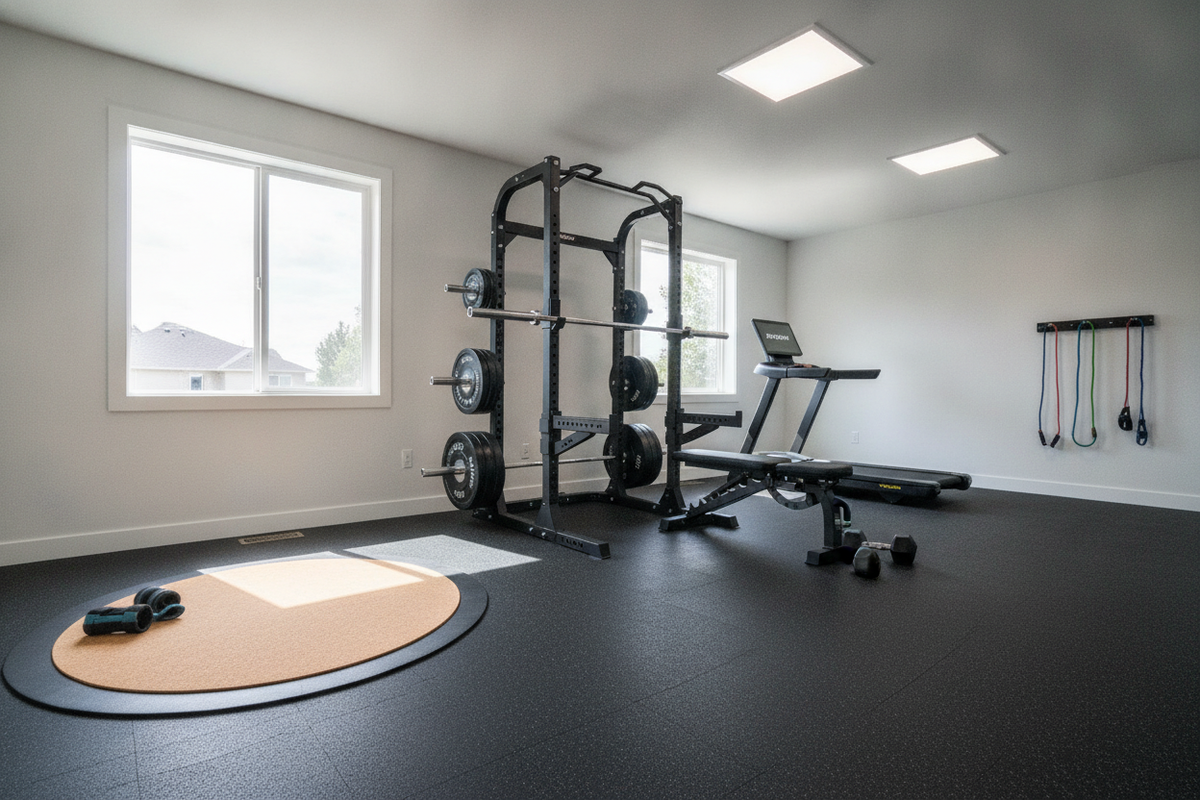
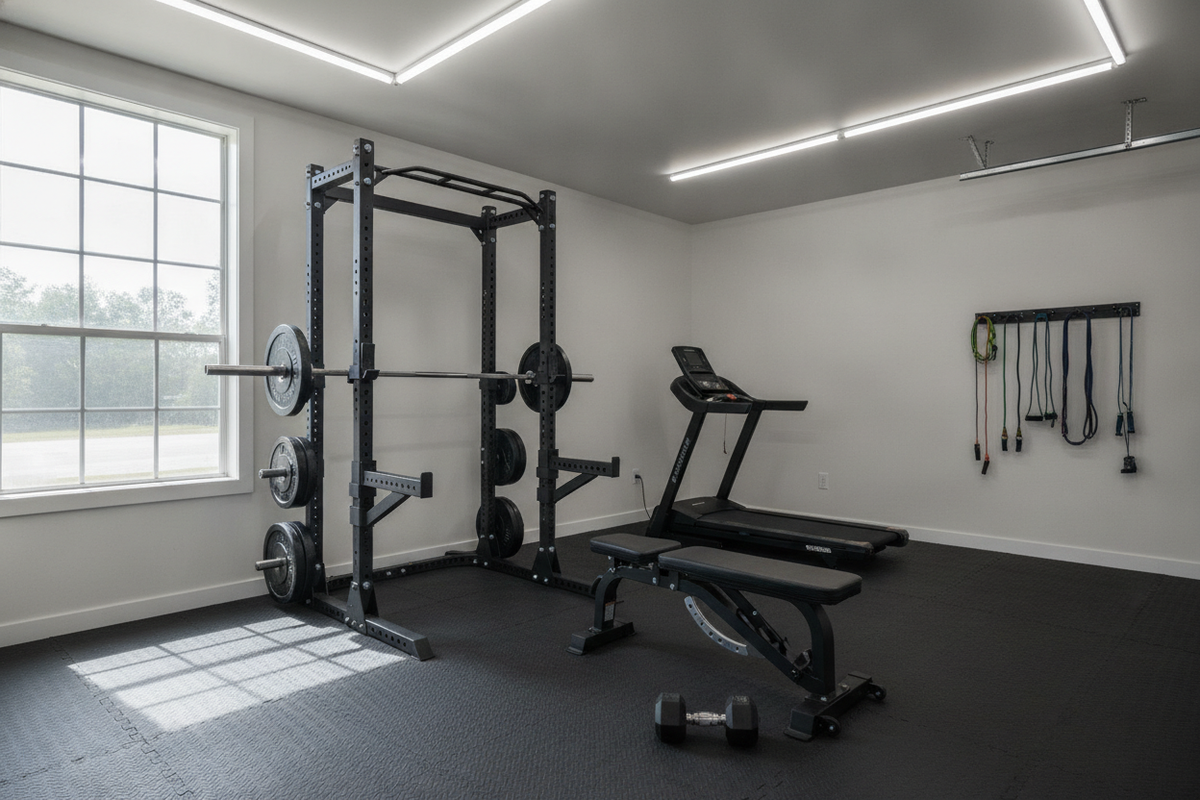
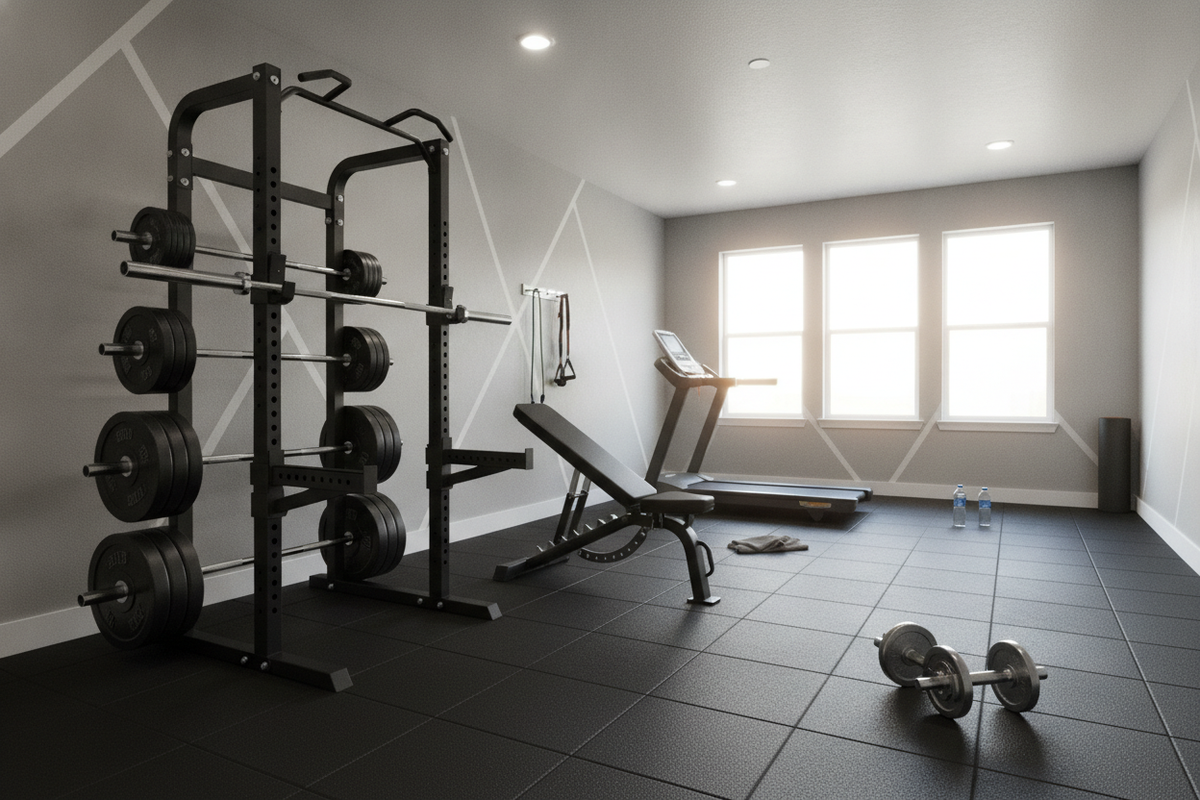
Setting up large protective home gym flooring ensures you have sufficient surface area for wide lateral steps, dynamic lunges, and cushioned side-lying drills. High-density padding distributes body weight across sensitive contact points while protecting underlying hardwood or tile from dropped bands and hand weights. A stable, non-slip textured base also prevents footwear from shifting during sudden lateral transitions, allowing you to focus entirely on clean hip mechanics.
Frequently Asked Questions About Outer Thigh Training
How often should I train my outer thighs?
Targeting the lateral hip muscles two to three times per week as part of a balanced lower-body or full-body program provides adequate stimulus for strength and muscle retention while allowing sufficient recovery between sessions.
Why do my hip bones hurt during side-lying leg raises?
Discomfort along the side of the hip during floor exercises usually stems from hard contact between the greater trochanter and the floor. Shifting your pelvis slightly forward or backward and using a high-density, supportive exercise mat resolves this localized pressure.
Can I train outer thighs effectively using only bodyweight?
Yes. Bodyweight movements performed with strict tempo, isometric holds, and high volume can effectively build muscular endurance and stability. Adding mini resistance bands or light dumbbells offers progressive overload as your strength advances.