7 Core Benefits of Body Building: Physical Resilience, Movement Integrity, and Home Gym Staging
Understanding the Complete Benefits of Body Building
Bodybuilding is often associated primarily with stage aesthetics, but its underlying principles offer extensive functional advantages for athletes and home lifters alike. At its core, hypertrophy-oriented resistance training focuses on deliberate execution: controlled eccentric tempos, targeted tension across specific muscle groups, progressive mechanical overload, and balanced muscular development. When approached methodically, the benefits of body building extend far beyond visual symmetry, serving as a structural framework for physical durability, motor coordination, and sustainable training habits.
Establishing a regular hypertrophy routine cultivates physical preparedness by teaching lifters how to stabilize loads throughout complete ranges of motion. Whether using free weights, cables, or selectorized stations, practicing focused muscle contraction builds a foundation of movement competence that supports everyday physical tasks and long-term athletic longevity.
1. Enhanced Musculoskeletal Resilience and Joint Support
A primary mechanical advantage of progressive resistance training is the structural reinforcement of connective tissues. Controlled loading encourages adaptation not just within contractile muscle fibers, but across tendons, ligaments, and joint capsules. By moving weights through full, pain-free ranges of motion, lifters encourage synovial fluid circulation and reinforce the connective structures that support major joints like the knees, hips, and shoulders.
Unlike chaotic, high-impact movements, traditional bodybuilding exercises emphasize repeatable movement tracks and stable execution. This steady application of tension helps distribute stress predictably across the musculoskeletal system, reinforcing surrounding musculature to better absorb incidental mechanical loads during daily activity.
2. Postural Integrity and Kinetic Balance
Sedentary routines and desk-bound work patterns often lead to postural imbalances, such as internally rotated shoulders, anterior pelvic tilt, and weakened spinal stabilizers. A well-structured bodybuilding protocol addresses these issues by programming complementary volume across anterior and posterior muscle chains.
By intentionally balancing horizontal pressing with horizontal rowing, and pairing knee-dominant patterns with posterior chain hinge work, lifters can realign their kinetic chain. Incorporating structured lower body volume, such as smart leg training strategies, reinforces the glutes, hamstrings, and spinal erectors. This balance helps maintain an upright carriage, improves seated posture, and stabilizes the torso during both stationary and dynamic tasks.
3. Neuromuscular Efficiency and Mind-Muscle Connection
Hypertrophy training places a high premium on the intentional recruitment of target muscle groups, often referred to as the mind-muscle connection. Rather than merely moving a weight from point A to point B through momentum, bodybuilding requires conscious motor control, stabilizing secondary joints while driving movement through primary movers.
This deliberate focus enhances neuromuscular pathway coordination. Over time, lifters develop greater kinesthetic awareness—an accurate perception of joint angles, balance points, and muscular engagement. This refined motor control directly transfers to safer lifting technique and cleaner execution across complex multi-joint exercises.
4. Functional Work Capacity and Daily Physical Stamina
Bodybuilding programming typically utilizes moderate repetition ranges combined with structured rest intervals. This pattern trains local muscular endurance, anaerobic capacity, and overall systemic stamina. Over repeated sessions, working muscles adapt to clear metabolic byproducts more efficiently and sustain mechanical output under continuous tension.
Developing this work capacity builds a practical physical reserve for demanding manual tasks. Utilizing a comprehensive blueprint for lower body growth strengthens the prime movers responsible for carrying, lifting, and ascending stairs, turning baseline strength into functional, real-world stamina.
5. Mental Discipline, Focus, and Routine Consistency
The progression model inherent to bodybuilding demands consistency, patience, and precise record-keeping. Because muscular adaptation occurs incrementally over extended periods, success depends on adhering to programmed splits, managing recovery intervals, and methodically tracking weight and repetition totals.
This structured environment fosters cognitive discipline. Establishing a dedicated training schedule encourages routine adherence, time management, and focused attention during working sets. The practice of executing controlled, challenging sets reinforces psychological focus, providing a reliable routine that can ground a lifter's daily schedule.
6. Metabolic Conditioning Through Lean Mass Accretion
Skeletal muscle serves as active tissue requiring continuous energy to maintain, repair, and contract. As lifters gradually build lean mass through progressive resistance training, overall resting energy requirements naturally adjust to support this tissue density.
In addition to baseline maintenance, the recovery process following demanding hypertrophy sessions involves muscular repair and glycogen replenishment. This ongoing physiological turnover supports efficient nutrient management within the body, making consistent bodybuilding training an effective foundation for sustainable physical conditioning.
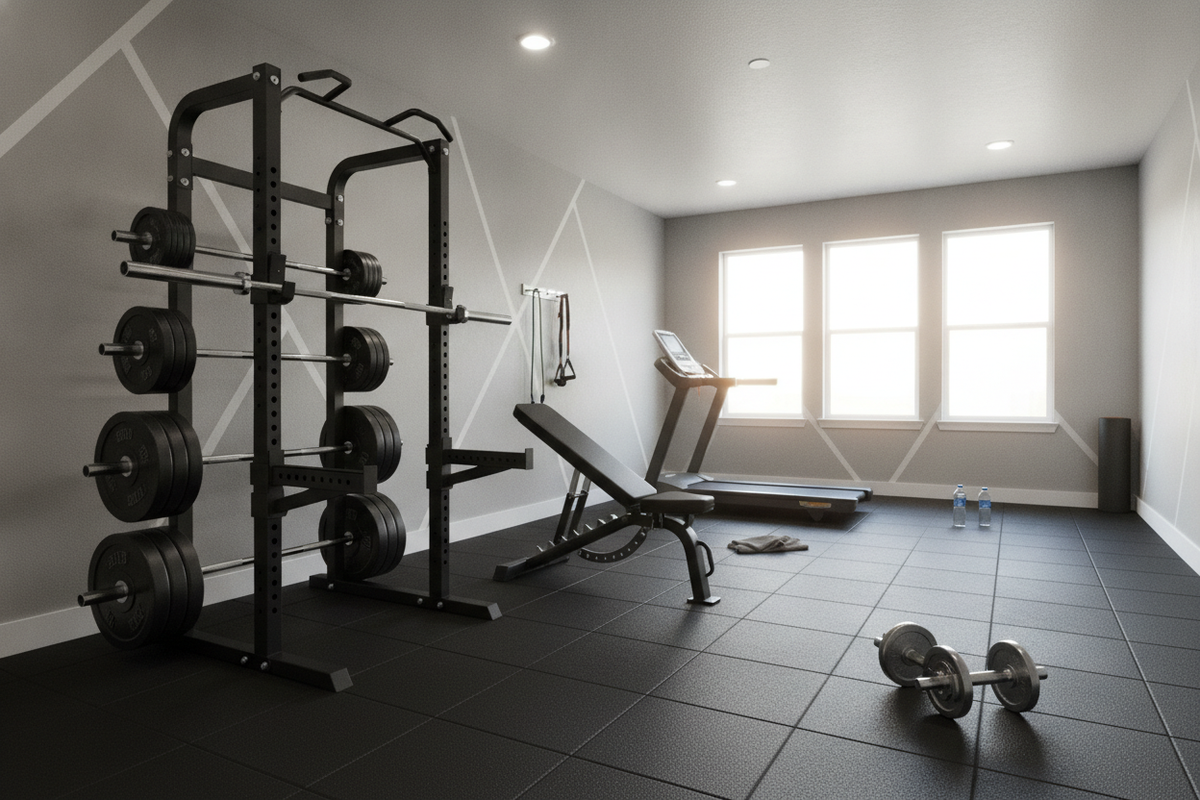
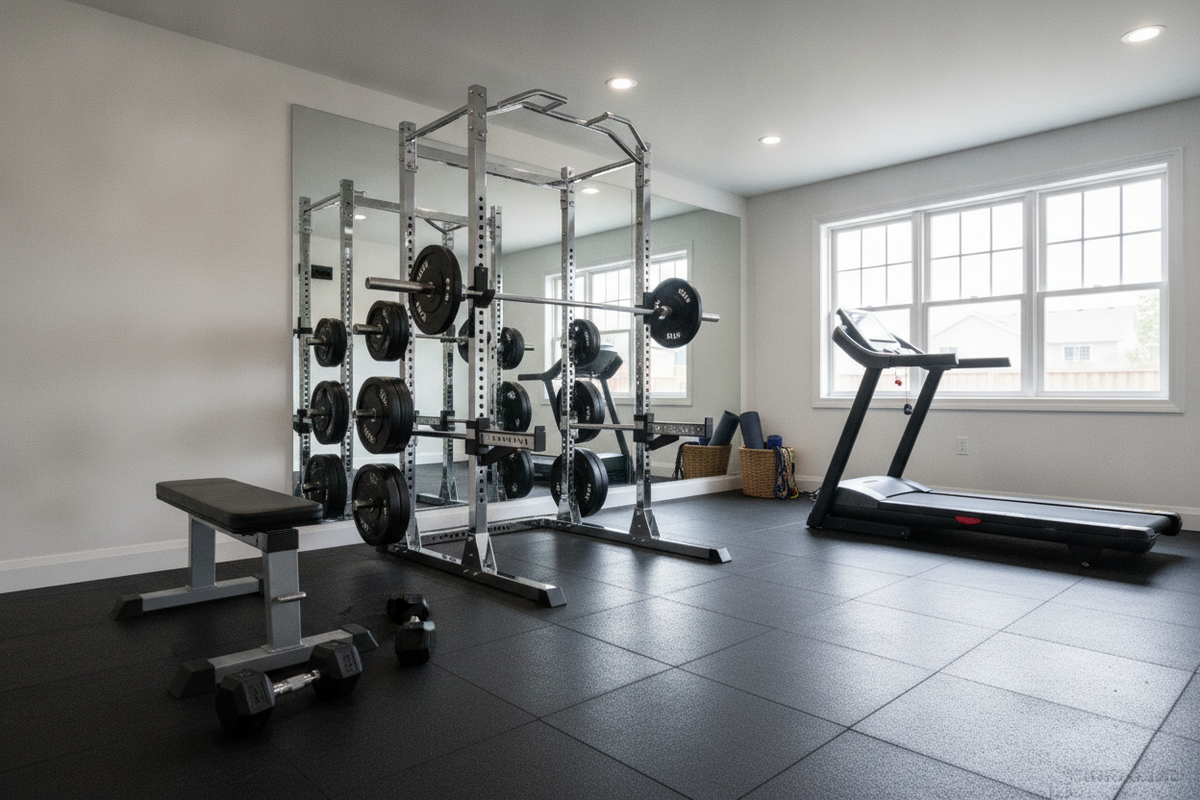
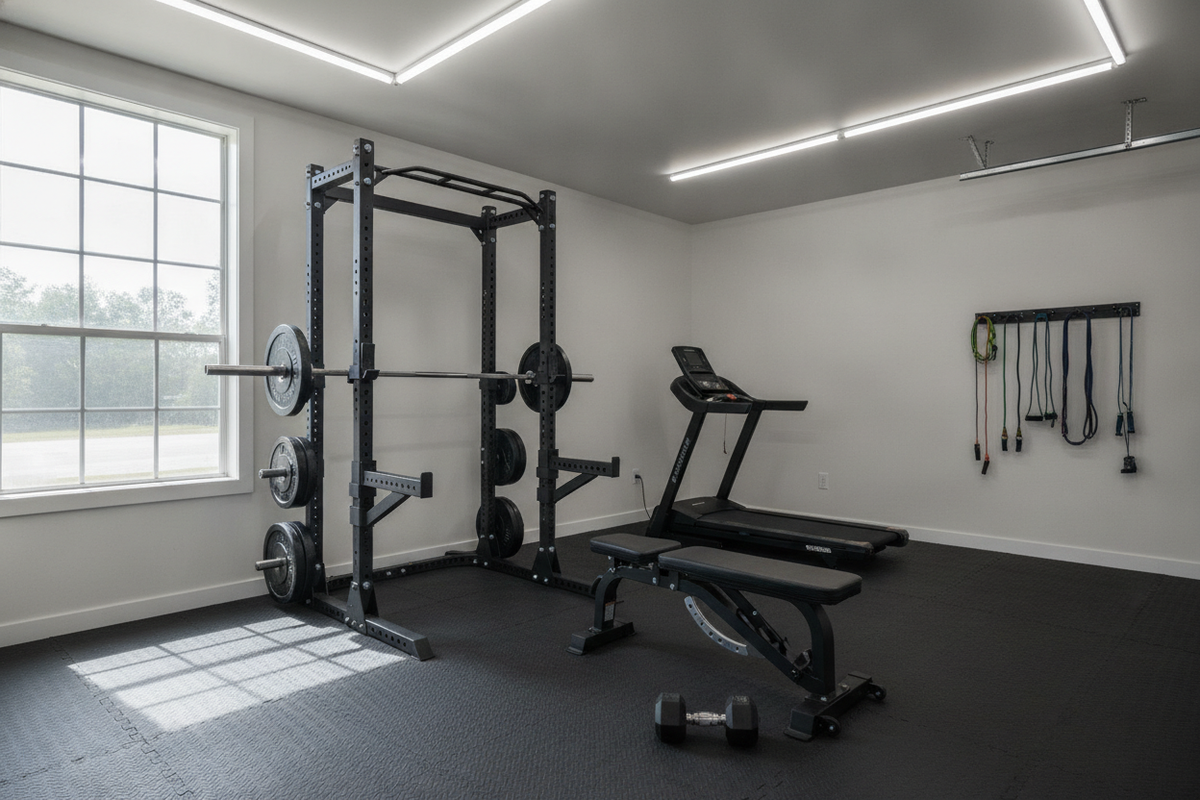
7. Safe Home Staging: Flooring, Subfloor Protection, and Equipment Layout
Realizing the full physical benefits of body building at home requires an environment designed for heavy, repetitive loading. Staging a dedicated training space demands careful attention to floor protection, equipment placement, and structural support.
- High-Density Rubber Flooring: Install dense rubber mats or interlocking tiles with adequate thickness over concrete or plywood subfloors. Heavy vulcanized rubber absorbs point-load impacts from dumbbells and prevents structural cracking in underlying floors.
- Stable Equipment Footing: Benches, power racks, and upper body workout machines for home require a firm, non-compressible surface. Soft foam matting compresses unevenly under heavy loads, compromising stability during heavy presses and squats.
- Designated Drop and Loading Zones: Position plate trees and dumbbell racks directly over reinforced flooring sections, leaving clear transit paths between stations to prevent tripping hazards during fatiguing sets.
- Acoustic and Vibration Dampening: Dense rubber surfaces help dissipate kinetic energy, reducing mechanical vibration and noise transmission through residential floor framing during heavy training sessions.
Maintaining Your Hypertrophy Training Floor and Gear
To preserve equipment longevity and ensure training safety, implement a regular maintenance protocol for your home training floor and structural hardware:
- Regular Surface Cleaning: Sweep away dust and chalk debris regularly. Clean rubber mats using a neutral pH cleaner and a damp mop to maintain surface traction without degrading the rubber binder material.
- Seam and Tile Inspection: Periodically check interlocking mat seams and taped joints to ensure tiles have not separated under lateral foot pressure, preventing lip hazards during heavy lifts.
- Hardware and Fastener Checks: Inspect frame bolts, cable pulleys, and bench adjustment pins every few weeks, tightening any hardware loosened by recurring vibration.
- Moisture Management: In garage or basement setups, maintain proper ventilation to prevent moisture accumulation beneath rubber mats, protecting both the subfloor and equipment frames from corrosion.