7 Targeted Exercises for Bum Lift: Biomechanical Form, Muscle Mechanics, and Home Floor Staging
Understanding the Glute Anatomy: Which Muscles Lift the Buttocks?
When athletes and lifters ask how to lift your bum with exercise, the conversation begins with muscular anatomy rather than superficial spot-reduction myths. Can exercise lift buttocks naturally? The answer is grounded in progressive muscular hypertrophy. Resistance training builds the underlying muscle bellies of the posterior chain, increasing fullness, firming tissue, and creating the structural illusion of a higher gluteal fold.
To design an effective regimen of exercises for bum lift development, you must target all three primary gluteal muscles:
- Gluteus Maximus: The largest muscle in the human body, responsible for powerful hip extension and external rotation. Building the gluteus maximus creates vertical projection and the supportive lower base of the glute shelf.
- Gluteus Medius: Located along the upper lateral side of the pelvis, this muscle handles hip abduction and stabilizes the pelvis during single-leg actions. Hypertrophy here builds the upper outer shelf.
- Gluteus Minimus: Situated beneath the medius, working synergistically to stabilize the hip joint and assist in rotation.
When mapping your lower-body training split, consult our comprehensive which exercise muscles guide to ensure balanced quad, hamstring, and glute distribution across your weekly sessions.
Biomechanics of the Bum Lift: Tension Vectors and Range of Motion
Finding the best bum lifting exercise requires understanding force vectors. Glute muscles respond to three distinct loading patterns:
- Shortened Position Loading (Anteroposterior Vector): Movements where peak tension occurs when the hip is fully extended, such as hip thrusts and glute bridges.
- Lengthened Position Loading (Axial Vector): Movements where peak tension occurs during deep hip flexion and stretch, such as Romanian deadlifts and deficit lunges.
- Lateral Abduction (Frontal Plane Vector): Movements that challenge hip abduction, such as banded walks and cable kickbacks, targeting the upper glute shelf.
For additional variations on hip extension mechanics, review our complementary booty lift exercise guide to refine your movement selection.
7 Effective Bum Lifting Exercises for Strength and Definition
Here is a complete lineup of structural bum lifting exercises designed to challenge every angle of the gluteal complex.
1. Barbell Hip Thrusts (Shortened Position Gluteus Maximus Peak)
The barbell hip thrust places maximum mechanical tension on the gluteus maximus at full hip extension without loading the spine axially.
- Execution: Rest your upper back across a sturdy bench. Place a padded barbell directly over your hip crease. Position your feet flat on the floor, roughly shoulder-width apart. Drive through your heels, rotating your pelvis into a slight posterior tilt at the top lockout.
- Cue: Keep your chin tucked toward your chest to prevent lumbar hyperextension.
2. Deficit Reverse Lunges (Lengthened Range Tension)
By stepping backward from an elevated platform or weight plate, you increase hip flexion at the bottom of the movement, stretching the glute fibers under load.
- Execution: Stand on a low platform. Step back with one leg, sinking your back knee toward the floor while hinging your torso forward at a slight angle over your lead thigh. Push firmly through the lead heel to return to the start.
- Cue: Maintain a forward torso angle to keep the load situated on the glute rather than shifting entirely to the quadriceps.
3. Romanian Deadlifts (Posterior Chain Hinge Mechanics)
The Romanian deadlift emphasizes deep eccentric loading across the hamstrings and the lower gluteal fold.
- Execution: Stand upright holding a barbell or pair of heavy dumbbells. Soften your knees and push your hips backward as if touching a wall behind you. Lower the weight along your shins while maintaining a rigid, neutral spine. Reverse the motion by driving the hips forward.
- Cue: Focus on horizontal hip displacement rather than vertical bending.
4. Bulgarian Split Squats with Forward Torso Pitch
The rear-foot-elevated split squat isolates one leg at a time, removing pelvic compensation and building single-leg stability.
- Execution: Rest the laces of your rear foot on a bench. Step your lead foot forward into a lunge stance. Descend under control while allowing your torso to lean forward slightly. Drive through the front midfoot and heel to rise.
- Cue: Keep your lead knee stacked over your midfoot rather than driving it far past your toes if glute bias is your primary objective.
5. Frog Pumps and Glute Bridges (High Repetition Burnout)
Frog pumps place the hips into external rotation and abduction while performing hip extension, encouraging peak contraction without heavy loading.
- Execution: Lie supine on a firm exercise mat. Bring the soles of your feet together in a butterfly position. Drive your hips upward while squeezing your glutes tightly at the apex.
- Cue: Use this movement as a high-repetition finisher to flush the glute muscles with metabolic tension.
6. Standing Hip Extensions (Targeted Upper Glute Activation)
Using a cable machine or resistance band, standing hip extensions isolate the glute without taxing the lower back.
- Execution: Secure a cuff around your ankle. Hinge forward slightly against an anchor post. Extend your leg backward in an arc, focusing purely on glute contraction rather than swinging through the lower spine.
- Cue: Hold the peak contraction for a brief pause on every repetition.
7. Resisted Lateral Walks (Gluteus Medius Shelf Stabilization)
Banded lateral walks isolate the gluteus medius and minimus, providing the foundational stability needed for heavy bilateral lifting.
- Execution: Place a resistance band around your feet or just above your ankles. Assume a quarter-squat athletic stance. Take controlled lateral steps without letting your knees collapse inward.
- Cue: Maintain continuous tension on the band throughout the entire working set.
Floor Staging and Joint Protection: Mat Density, Grip, and Bench Anchoring
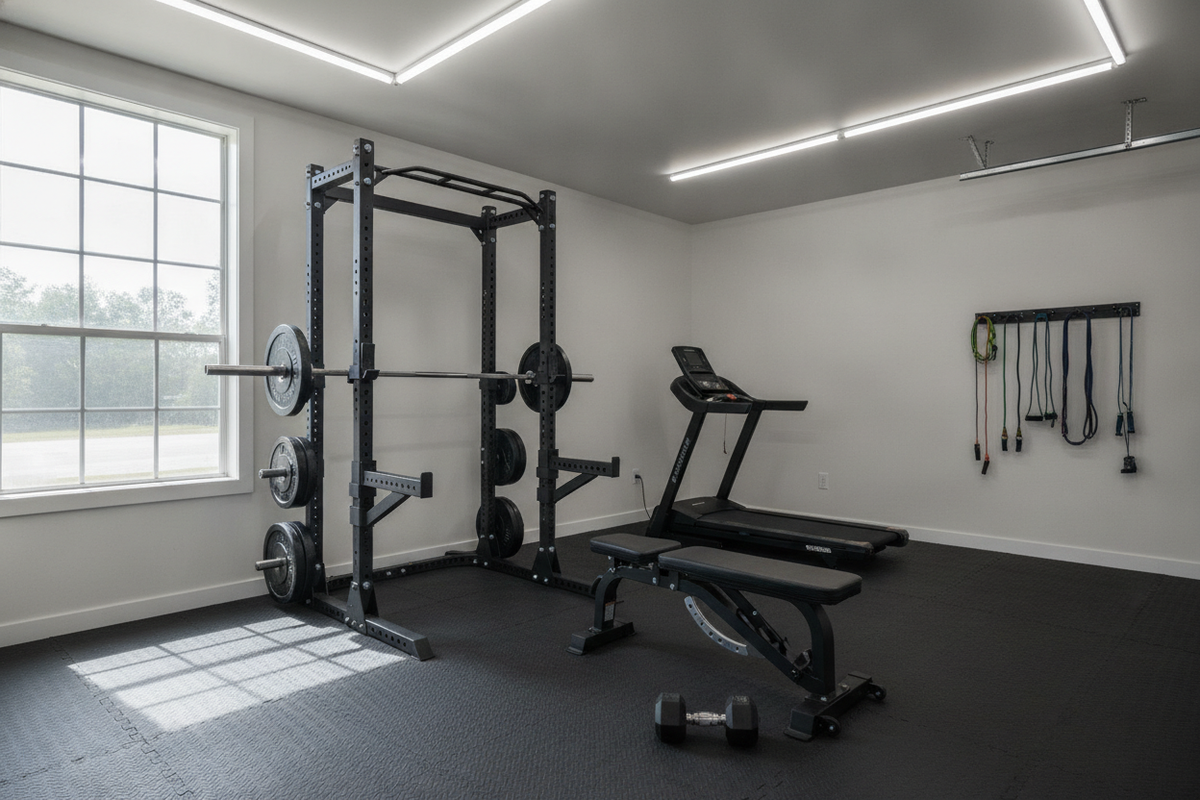
Executing heavy hip thrusts, kneeling kickbacks, and single-leg lunges requires careful attention to your training surface. Floor slippage during a barbell thrust can cause a bench to slide backward, shifting shear forces directly into the lumbar spine.
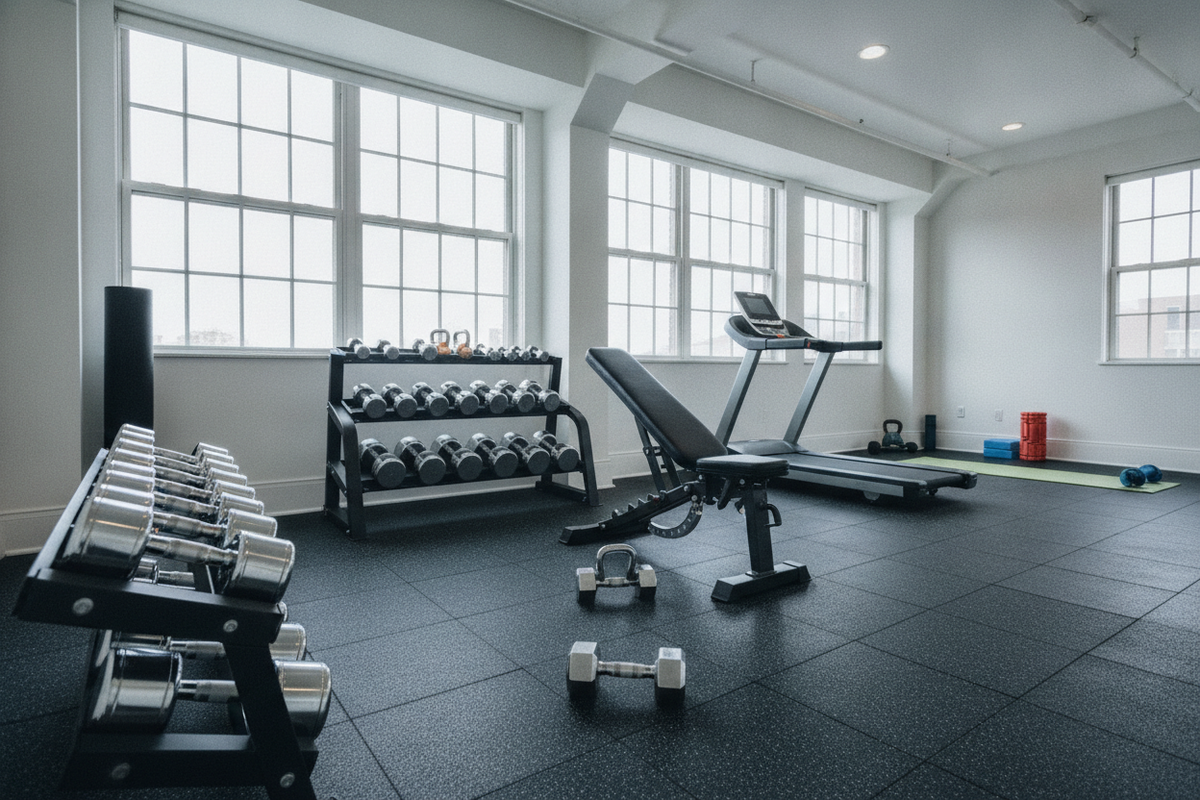
Selecting the right density and non-slip surface from a dedicated exercise collection safeguards your joints and floors. Look for high-density, closed-cell materials that will not compress completely under heavy barbells or bench feet. Dense padding also protects the patellar tendon during high-volume kneeling hip thrusts and kickback variations.
Programming Principles: Frequency, Progressive Overload, and Recovery
For sustainable muscle development, train the glutes across two to three dedicated sessions per week. A balanced weekly program includes:
- Primary Compound Day: Heavy barbell hip thrusts and Romanian deadlifts in moderate repetition brackets.
- Unilateral and Accessory Day: Bulgarian split squats, deficit lunges, and standing cable kickbacks.
- Volume and Burnout Work: Frog pumps and banded lateral walks performed at the end of sessions.
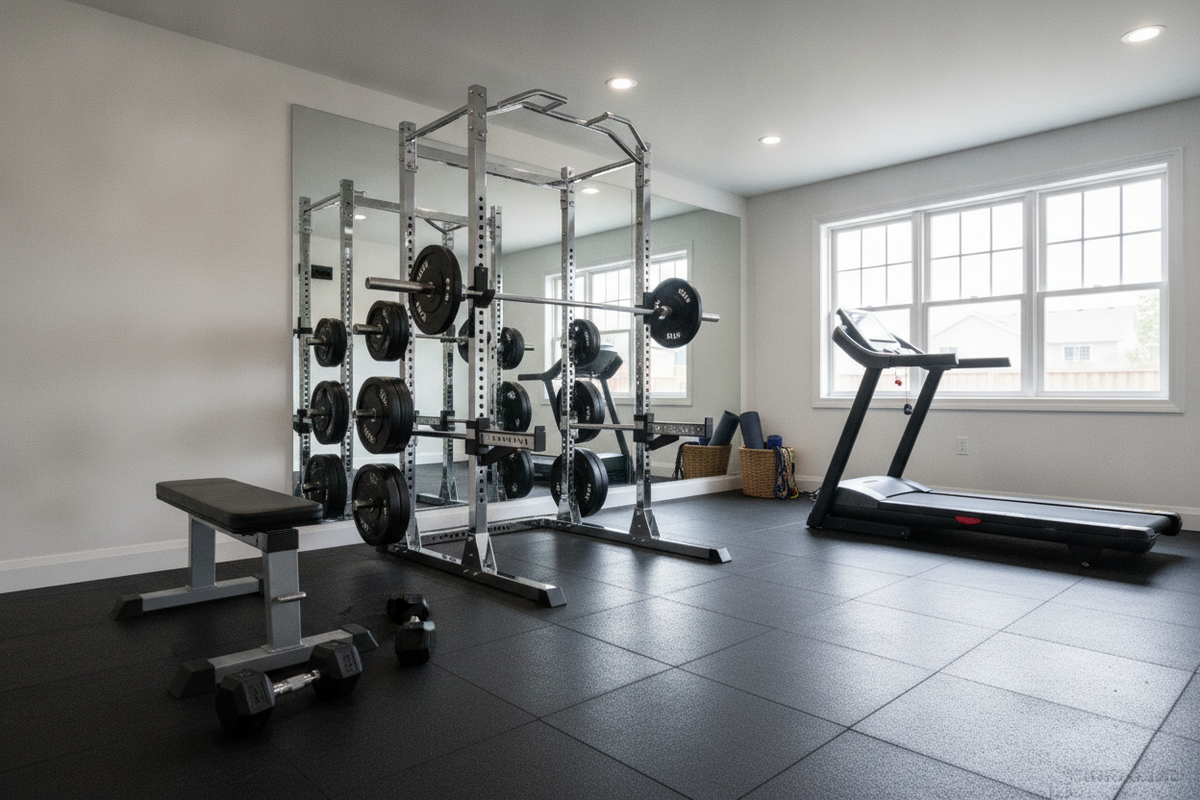
For dynamic multi-angle lower-body circuits requiring ample room and stability, a heavy-duty large area workout surface such as a dedicated exercise product provides sufficient perimeter coverage for wide-stance deadlifts and walking lunges.
Common Form Mistakes That Steal Tension from the Glutes
Avoid these common mechanical errors to maximize muscle recruitment and protect your joints:
- Hyperextending the Lower Back: Arching the lumbar spine at the top of a hip thrust or deadlift shifts load off the glutes and strains spinal erectors.
- Under-utilizing the Lengthened Range: Cutting squats and lunges short prevents full glute fiber recruitment under stretch.
- Unstable Footing on Hard Floors: Slippery wood or smooth concrete undermines force transfer and encourages compensatory movement patterns.
Ensure complete multi-directional footing and prevent foot slippage with an expansive training mat from our exercise collection to keep your stance secure through every rep.