The Blueprint to Building Bigger Legs: Understanding Which Exercises Hit Which Muscles
Walking into the gym on leg day can feel overwhelming. You see rows of machines, squat racks, and dumbbells, but connecting specific movements to the actual anatomy often gets lost in the noise. Many lifters just go through the motions, doing a few sets of squats and maybe some leg presses, assuming that covers everything. But to build a balanced, powerful lower body, you need a deeper understanding of leg exercises and what muscles they work. It isn't just about moving weight from point A to point B; it is about intention and understanding biomechanics.
I learned this the hard way during my first few years of training. I was obsessed with heavy squats, thinking they were the cure-all for leg development. While my quads grew, my hamstrings and glutes lagged significantly. This imbalance eventually led to lower back pain and knee issues because my posterior chain couldn't support the load my quads were moving. Once I started incorporating specific leg exercises for different muscles and balancing my routine, not only did the pain vanish, but my physique looked complete for the first time. You have to look at the legs as a system of pulleys and levers, not just one big slab of meat.
Breaking Down the Major Leg Muscles to Workout
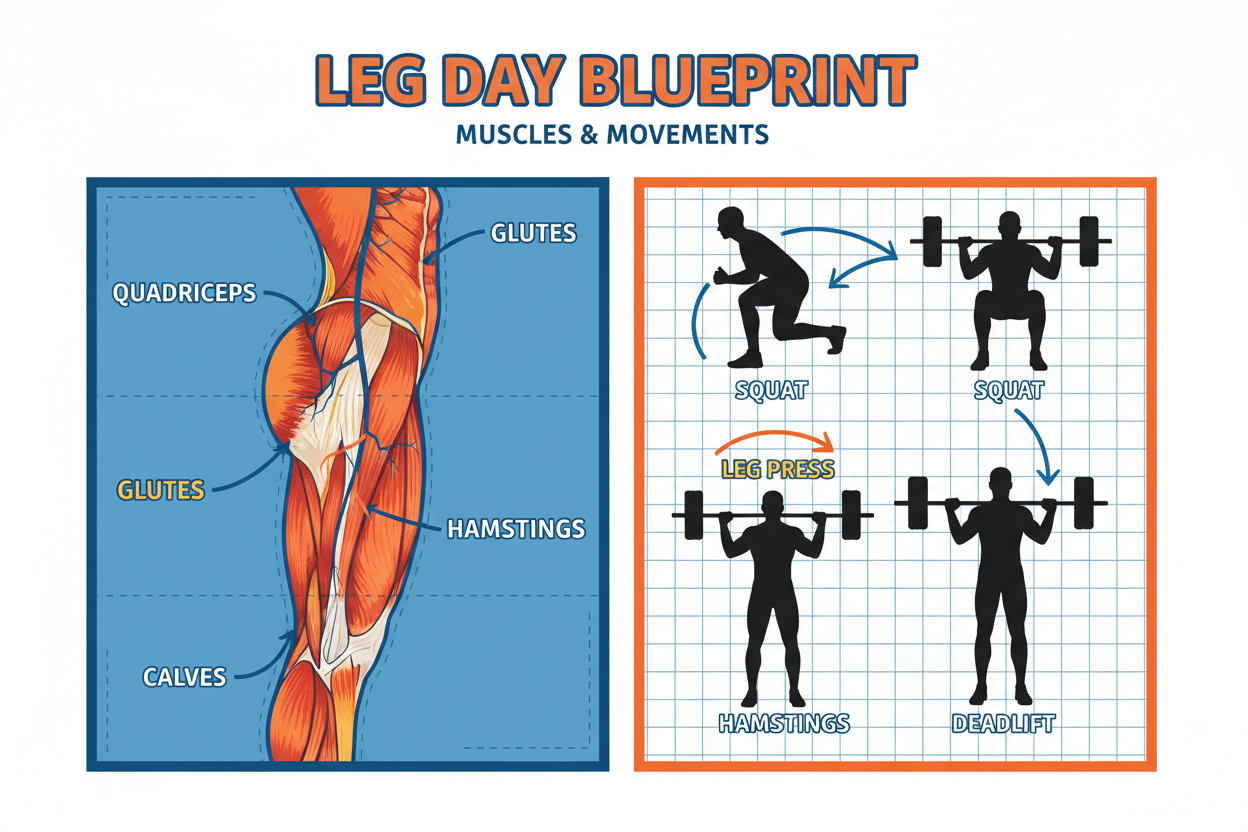
Before grabbing a barbell, you need to map out the terrain. The lower body muscle groups to workout are generally divided into the anterior chain (front) and the posterior chain (back). The primary players are the Quadriceps, Hamstrings, Glutes, and Calves. However, within these groups, there are nuances. For instance, the hamstrings have different heads, and the calves are made up of two distinct muscles. Knowing the different parts of leg muscles to workout allows you to troubleshoot weak points.
If you ignore one area, you limit your overall strength potential. Your quads extend the knee, while your hamstrings flex the knee and extend the hip. Your glutes are the powerhouse for hip extension, and your calves handle ankle mobility and stability. A proper routine targets all these functions.
The Quadriceps: Front Thigh Dominance
The quads are usually the most visible muscle group and the primary focus for many. They consist of four muscles: the rectus femoris, vastus lateralis, vastus medialis (the teardrop), and vastus intermedius. When looking for leg exercises for each muscle in this group, you generally want movements that involve significant knee flexion.
Barbell Back Squat
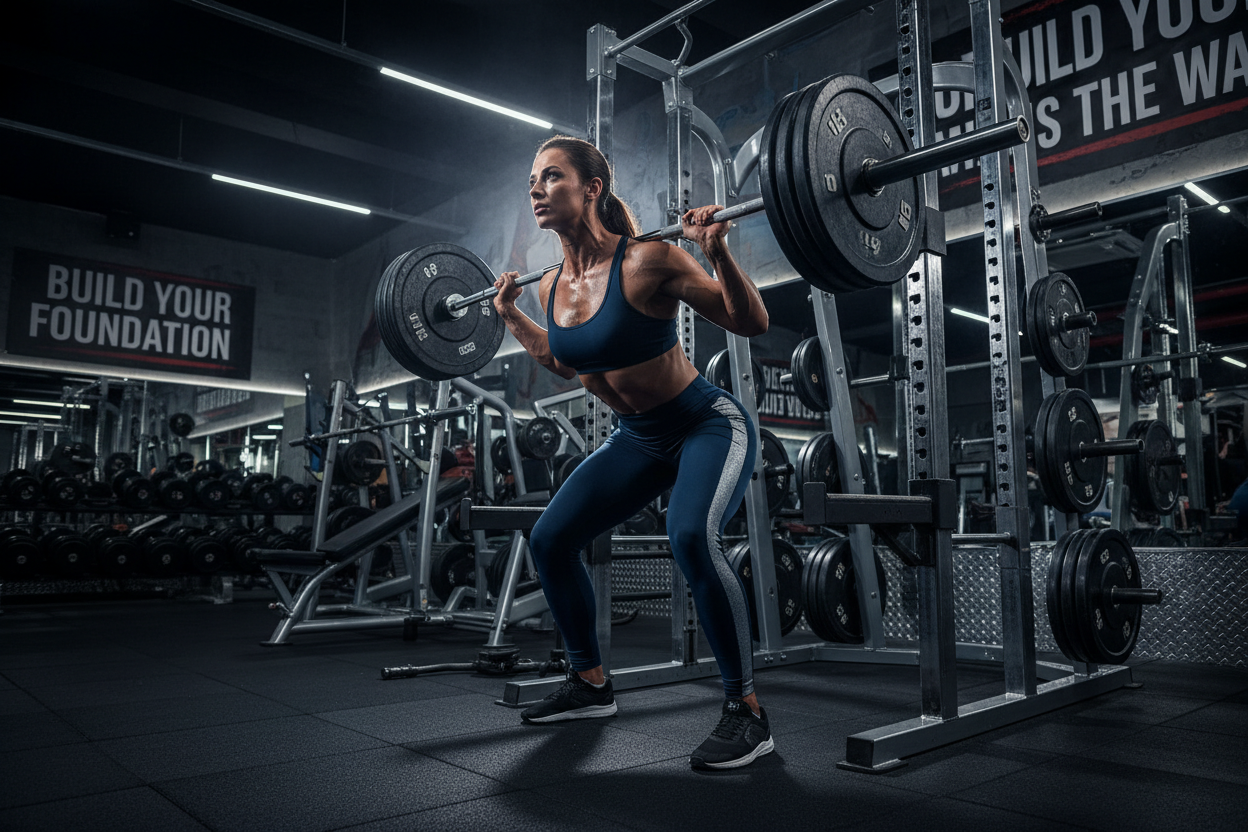
The squat is often called the king of exercises for a reason. It hits the entire lower body, but it is primarily a quad-dominant movement, especially high-bar variations. While it recruits the glutes and adductors, the load is heavily placed on the quads to extend the knee coming out of the hole.
Leg Extensions
Compound movements are great, but for pure isolation, the leg extension is unmatched. This is the only exercise that fully isolates the rectus femoris. If you are looking to carve out detail and separate the leg workout parts, this machine is essential. Keep the movement controlled; kicking the weight up uses momentum, not muscle.
Bulgarian Split Squats
This unilateral exercise is brutal but effective. It forces each leg to work independently, fixing imbalances. By keeping your torso upright, you place the majority of the tension on the quads. Leaning forward shifts some focus to the glutes, making it a versatile tool in your arsenal.
The Posterior Chain: Hamstrings and Glutes
Most people neglect the back of their legs because they can't see them in the mirror. This is a mistake. The hamstrings and glutes are responsible for explosive power and posture. When planning leg workouts and what muscles they work, the posterior chain usually requires just as much volume as the quads.
Romanian Deadlifts (RDLs)
The RDL is the gold standard for hamstring development. Unlike a conventional deadlift, the RDL starts from the top and focuses on the eccentric (lowering) portion of the lift. This stretches the hamstrings under load. It also works the glutes heavily at the lockout. If you want thick, hanging hamstrings, this is the movement.
Leg Curls (Seated and Lying)
While RDLs work the hamstrings at the hip joint, leg curls work them at the knee joint. You need both for complete development. The seated leg curl actually places the hamstrings in a more stretched position compared to the lying version, making it slightly superior for hypertrophy (muscle growth) according to recent biomechanics research.
Hip Thrusts
For pure glute isolation, the hip thrust reigns supreme. Squats and lunges hit the glutes, but the tension drops off at the top of the movement. Hip thrusts keep the tension highest when the glutes are fully shortened (contracted). This is one of the best lower body muscle groups to workout if you want to improve your lockout strength on other lifts.
The Calves and Adductors: The Details Matter
A complete look requires attention to the smaller details. The calves are split into the gastrocnemius and the soleus. The adductors (inner thigh) contribute significantly to leg size and squat stability.
For the calves, the angle of the knee dictates which muscle does the work. Standing calf raises target the gastrocnemius, which is the large, heart-shaped muscle visible when the leg is straight. Seated calf raises target the soleus, which lies underneath. You cannot build impressive lower legs without doing both variations.
The adductors are often worked indirectly during deep squats, but dedicated work like the adductor machine or Copenhagen planks can prevent groin strains and add mass to the inner thigh, making the legs look wider from the front.
Structuring Your Leg Workout Parts
You shouldn't try to do every single exercise listed here in one session unless you have immense endurance. Instead, structure your week to cover these bases. You might have a quad-focused day and a hamstring/glute-focused day. This allows you to hit leg exercises for different muscles with maximum intensity without burning out.
For a balanced single session, try this hierarchy:
- Compound Squat Variation: (Quads/Glutes)
- Hip Hinge Variation: (Hamstrings/Glutes)
- Unilateral Movement: (Quads/Stabilizers)
- Isolation Movement: (Leg Extensions or Curls)
- Calf Work: (Soleus/Gastrocnemius)
Understanding the anatomy transforms your training from guessing to engineering. When you know exactly which leg exercises and what muscles they work, you can visualize the contraction, improve your mind-muscle connection, and build a lower body that is as functional as it is aesthetic.
Frequently Asked Questions
How often should I train my legs for maximum growth?
For most natural lifters, training legs twice a week is optimal. This frequency allows you to split the volume between quad-dominant and hamstring-dominant days, ensuring you can hit the major leg muscles to workout with enough intensity while allowing for sufficient recovery time between sessions.
Why do I feel squats in my back more than my legs?
This usually indicates a form breakdown or a weak core. If you lean too far forward, the load shifts from your legs to your lower back. Work on ankle mobility to stay more upright, or switch to Goblet Squats or Front Squats, which force a vertical torso and place more emphasis on the leg workout parts rather than the spine.
Are machines or free weights better for leg development?
Both tools have their place. Free weights (squats, lunges) are superior for overall strength, stabilizer recruitment, and systemic stress. Machines (leg press, extensions) offer stability that allows you to take specific lower body muscle groups to workout to absolute failure safely without worrying about balance.