Build Legs Without Pain: The Guide to Back-Friendly Leg Exercises
If you have ever winced while unracking a barbell or felt that sharp, familiar twinge in your lumbar spine at the bottom of a squat, you know the frustration. You want to train hard, but your anatomy seems to be fighting against you. The good news is that heavy spinal loading is not a prerequisite for hypertrophy. You can build massive quads and hamstrings using back-friendly leg exercises that spare your spine while torching your legs.
Key Takeaways: The Best Movements for Your Spine
If you are in a rush, here is the quick summary of exercises that minimize spinal compression while maximizing muscle stimulation:
- Belt Squats: Removes axial loading entirely by placing weight on the hips.
- Bulgarian Split Squats: Reduces load requirement significantly while challenging stability.
- Chest-Supported Hack Squats: Provides back support to prevent lumbar rounding.
- Seated Leg Curls: Isolates hamstrings without requiring a hip hinge that stresses the lower back.
- Goblet Squats: The front-loaded position acts as a counterbalance, forcing an upright torso.
The Science: Why Traditional Squats Hurt
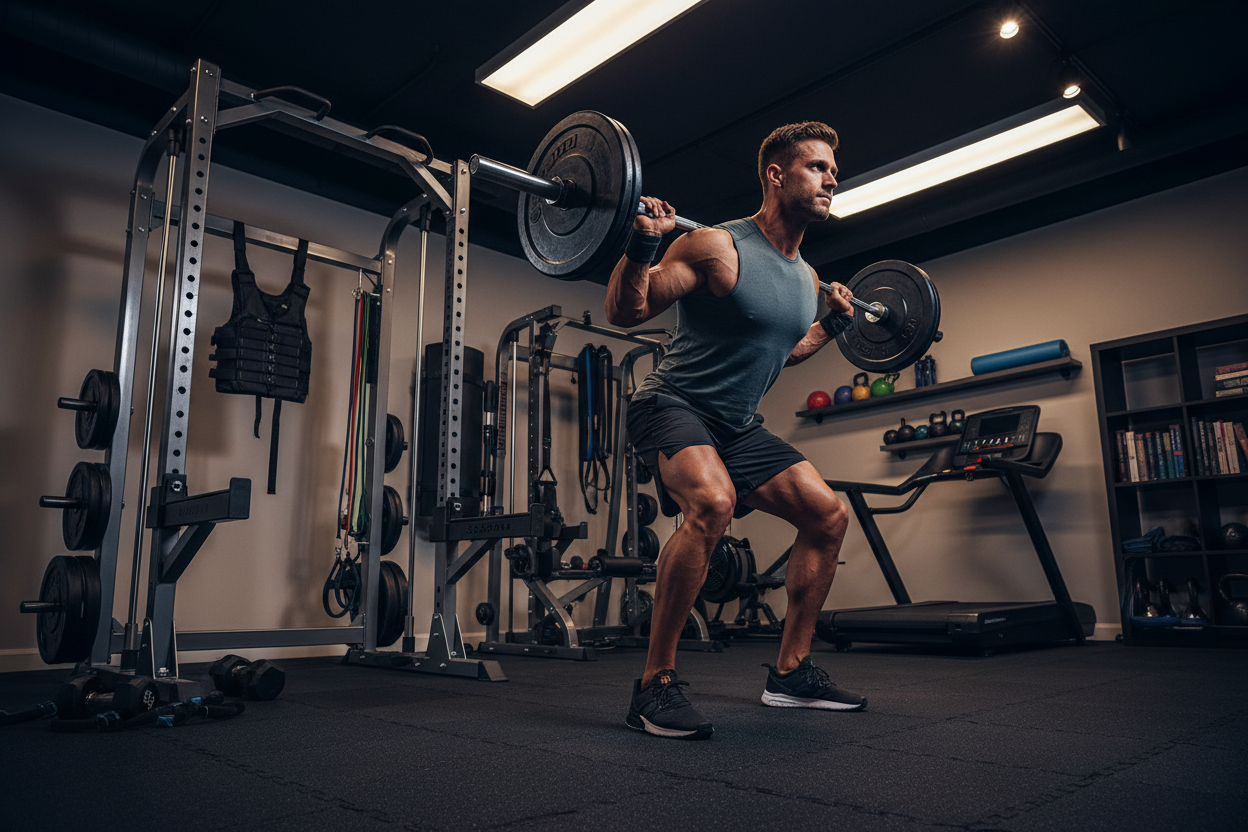
To fix the problem, we have to understand the mechanics. The traditional back squat places the load on your traps. This creates what we call axial loading—a vertical compression force acting down your spine.
If your core isn't firing perfectly, or if you have limited hip mobility, your lower back compensates. This creates shear force (sliding force) on the discs, particularly L4 and L5. A back friendly leg workout isn't just about lifting lighter; it is about changing where that force enters your body.
The King of Relief: The Belt Squat
If your gym has a belt squat machine (often called a Pit Shark), use it. This is arguably the most effective movement for a lower back-friendly leg workout.
By attaching the weight to a belt around your waist, the load bypasses your spine entirely. It hangs directly off your hips. You get all the knee flexion and hip extension of a heavy squat, but your spine remains completely unloaded. You can take this to absolute failure without fear of your back collapsing before your legs do.
Unilateral Training: The Bulgarian Split Squat
Most lifters hate these, but they are essential for longevity. Because you are training one leg at a time, you don't need 300 pounds on your back to get a training stimulus. 50-pound dumbbells will feel heavy.
The Setup Matters
Keep your torso slightly leaned forward but rigid. This engages the glutes and keeps the lumbar spine neutral. If you stay too upright, you might hyperextend the lower back. Focus on driving through the heel of the front foot. This is a staple in any lower back friendly leg workout because the stability demand protects you from going too heavy too soon.
Machine Work: Leg Press & Hack Squat Nuances
Machines are not a cop-out; they are tools for isolation. However, the leg press can be a trap if performed incorrectly.
The "Butt Wink" Danger
On a leg press, if you bring your knees too close to your chest, your pelvis tucks under (posterior pelvic tilt). This rounds your lower back against the pad while it's under heavy load, which is a recipe for a herniation. Stop the rep before your hips lift off the pad. Range of motion is great, but not at the expense of your discs.
My Training Log: Real Talk
I shifted to a strictly back-friendly routine about three years ago after an MRI confirmed a bulge at L5-S1. I remember the first time I tried to replicate a heavy squat day using just dumbbells and a belt squat setup. I was skeptical.
The specific thing nobody tells you about belt squats is the bruising. I didn't have a padded belt, just a standard dipping belt. When I loaded up four plates, the chain dug into my hip pointers so hard I had to wrap a gym towel around my waist just to finish the set. It was uncomfortable on the skin, sure, but the moment I finished the set, I waited for that familiar, dull throbbing in my lower back... and it never came. I walked out of the gym with a relentless quad pump and zero spinal fatigue. That was the moment I realized I didn't need a barbell on my traps to grow.
Conclusion
You do not need to be a powerlifter to have strong legs. By shifting your focus to exercises that reduce axial loading, you ensure that your muscles fail before your joints do. Swap out the barbell for a few weeks, focus on intensity with these variations, and watch your legs grow without the nagging pain.
Frequently Asked Questions
Can I ever barbell squat again if I have back pain?
It depends on the severity of the injury. For many, a temporary break using a back friendly leg workout allows the inflammation to subside. Once healed, you can reintroduce squats with a focus on perfect bracing and hip mobility, though many lifters find they prefer the alternatives long-term.
Is the leg extension machine safe for the lower back?
Yes, leg extensions are generally very safe for the back because the seated position supports the spine and the load is placed distally on the shins. It is an excellent isolation movement to pre-exhaust the quads before moving to compound movements.
How often should I train legs if I have back issues?
You can stick to a standard frequency (1-2 times per week). However, because you are removing the systemic fatigue that comes with heavy spinal loading, you might actually find you recover faster. Monitor your soreness and adjust volume accordingly.