7 Best Glute Exercise Machines: Gym Equipment Mechanics, Biomechanical Cues, and Floor Mat Staging
Understanding Machine-Based Glute Training: Mechanics and Fixed Resistance Paths
Glute training has expanded considerably beyond standard barbell squats and deadlifts. Utilizing dedicated glute exercise machines allows lifters to guide resistance along structured movement paths. Machine designs offer consistent tension throughout the active range of motion, removing many of the balance and setup constraints inherent to barbell and dumbbell variations.
Isolation Versus Compound Movement Trajectories
Compound lower-body movements distribute muscular effort across the quadriceps, adductors, hamstrings, and lower back. Dedicated glute gym equipment helps focus mechanical leverage around the hip hinge and hip abduction pathways. By guiding hip extension, abduction, or external rotation along a fixed or semi-fixed axis, specialized stations permit focused effort without placing heavy stabilization demands on secondary muscle groups.
Stabilization Demands and Joint Sparing Advantages
Free weights require continuous balance and trunk stabilization. When training under fatigue, form can shift unintentionally. Machine-based stations establish external stability through integrated back pads, chest supports, and contoured pivot arms. Similar to principles outlined in our comprehensive exercise gym equipment guide, understanding mechanical leverage helps optimize lifting form while minimizing unnecessary spinal strain.
7 Best Glute Exercise Machines for Lower-Body Development
1. Dedicated Hip Thrust Machine
The dedicated hip thrust machine is designed to streamline horizontal hip extension setups. By incorporating a padded lap belt or pivoting resistance arm, the machine supports smooth loading across the hips without the logistical challenge of balancing an Olympic barbell across the pelvis. The fixed back pad stabilizes the upper torso, helping the lifter focus on driving through the heels and establishing full hip extension at the top of each repetition.
2. 45-Degree Hyperextension Station (Glute-Biased Setup)
While frequently used for lumbar conditioning, the 45-degree hyperextension bench can be adjusted for glute-focused training. Setting the thigh support pad slightly below the hip crease allows uninhibited hip flexion. Turning the toes outward slightly and maintaining a soft upper-body curve helps direct the primary extension effort through the posterior chain rather than the lower back.
3. Seated Hip Abductor Machine
The seated hip abductor machine targets hip abduction along a seated transverse plane. Adjusting the backrest angle modifies the resistance feel: an upright torso position focuses tension across the upper hip, while leaning slightly forward can alter the line of pull across the outer gluteal region. Maintaining a controlled tempo during both the outward drive and the return phase ensures consistent muscular engagement.
4. Standing Cable Station (Kickbacks and Pull-Throughs)
Cable columns offer versatile resistance trajectories using ankle cuffs, straight bars, or rope handles. Standing cable kickbacks provide continuous tension throughout hip extension, while cable pull-throughs reinforce the fundamental hip hinge movement pattern. The smooth resistance profile of a pulley system challenges muscles evenly across the extended and contracted positions.
5. Angled Leg Press (High and Wide Foot Placement)
The standard 45-degree leg press can be adapted to emphasize posterior chain involvement through deliberate foot positioning. Placing the feet higher and wider on the sled platform increases hip flexion at the bottom of the movement while moderating knee forward travel, shifting mechanical loading toward the hips and glutes.
6. Pendulum Squat Machine
The pendulum squat features a curved counterbalanced arc that moves with the lifter during descent. This rotational path facilitates comfortable hip depth at the bottom of the movement. By placing the feet forward on the platform, lifters can emphasize hip flexion while remaining securely supported by the padded backrest and shoulder pads.
7. Standing Glute Kickback Machine
The standing glute kickback machine stabilizes the torso against chest and forearm pads while a single leg presses against a padded roller or foot pedal. This guided linear or pendulum path promotes direct posterior hip drive while reducing the tendency to rotate through the pelvis or lower back.
Biomechanical Alignment and Movement Execution Cues
Hip Hinge and Pelvic Positioning Under Load
Proper pelvic alignment is essential when training with glute exercise machines. Maintaining a neutral to slightly tucked pelvis at full extension helps focus muscular tension through the hips while avoiding compensatory hyperextension of the lumbar spine. Lifters should focus on initiating movement strictly through the hip joint rather than rocking the torso or shifting the ribcage.
Controlling Concentric Drive and Eccentric Return
Maximizing machine effectiveness requires deliberate tempo control. Drive smoothly through the concentric phase without relying on momentum or swinging weight stacks. Pausing briefly at full contraction reinforces positioning, followed by a controlled, resisted eccentric return to keep tension steady across every repetition.
Gym Equipment Staging, Floor Protection, and Stability Considerations
Distributing Concentrated Footplate and Frame Pressure
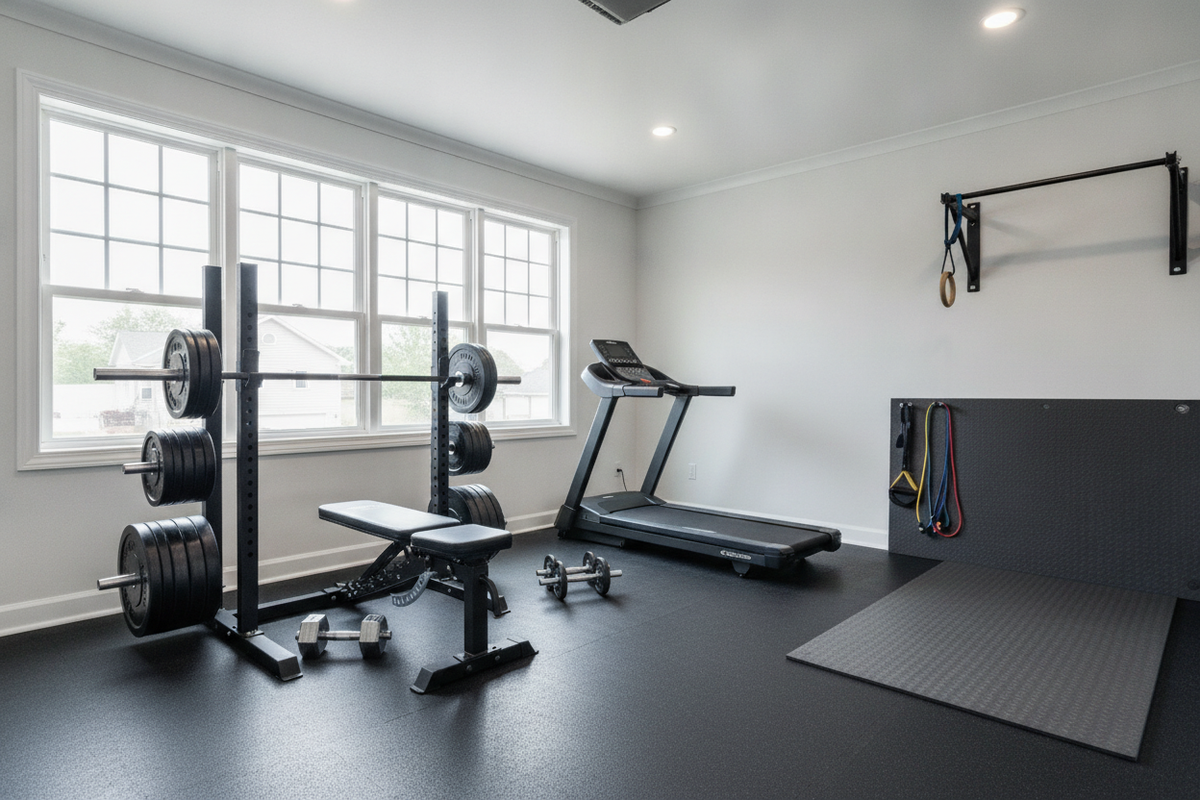
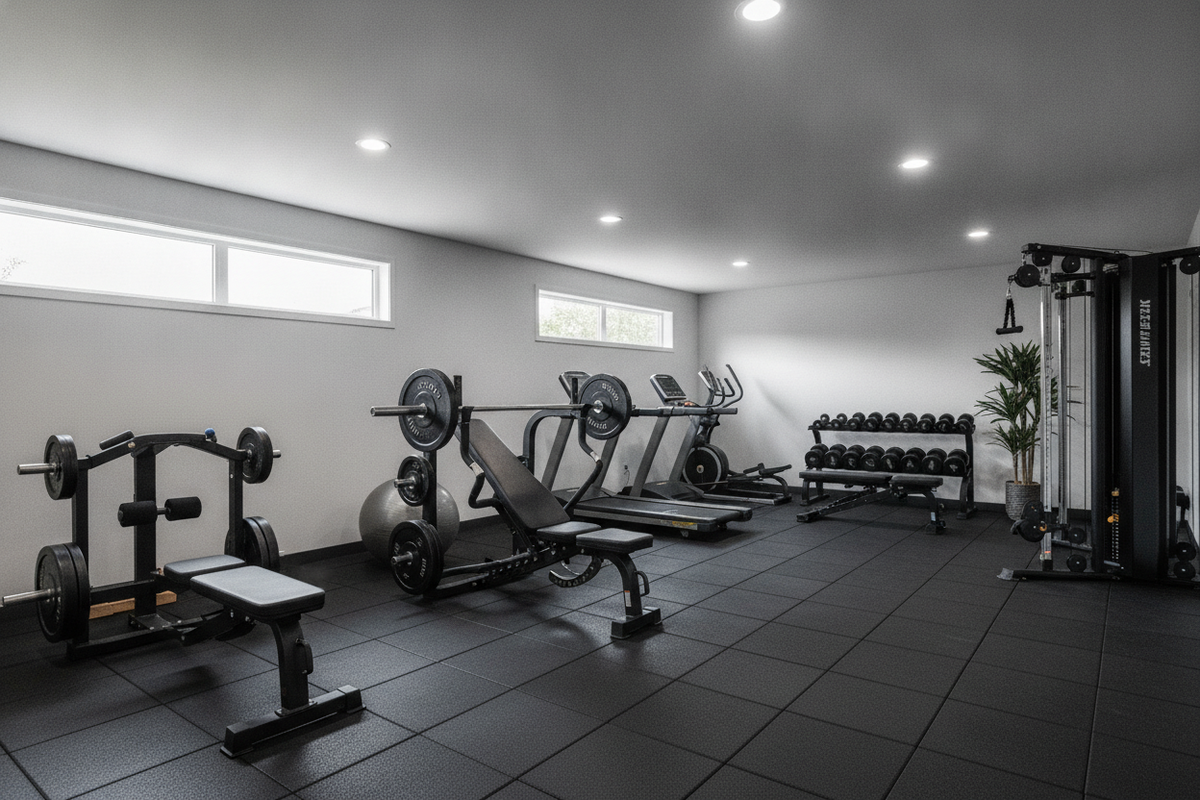
Heavy plate-loaded and selectorized machines exert high point loads through small steel feet and frame contact points. Over time, these concentrated forces can mark, dent, or scratch concrete, tile, or hardwood floors. When staging multi-station setups or heavy equipment, utilizing heavy-duty protection from the exercise gym collection helps protect subflooring and prevents equipment from shifting during vigorous sets.
Lifters planning dedicated home workout spaces can review our practical gym exercise equipment guide for foundational layout strategies, spatial clearance planning, and structural considerations.
Traction Requirements for Standing Cable and Plate-Loaded Stations
Standing exercises like cable kickbacks, belt squats, and pull-throughs require steady foot anchoring against lateral and shear forces. Positioning a durable exercise gym product beneath standing cable stations provides non-slip foot traction during heavy hip hinges, preventing footing slippage during high-effort sets.
Integrating Glute Machines into a Balanced Lower-Body Routine
Progressive Loading and Session Frequency
Glute machines can be integrated into lower-body training split across multiple weekly sessions. Combining one heavy compound machine, such as a hip thrust station or high-foot leg press, with an isolation station, such as a cable kickback or seated abductor, provides comprehensive loading across varied angles and planes of motion.
Complementary Mat-Based Mobility and Warm-Up Drills
Before loading heavy machines, dedicating time on an exercise mat to dynamic mobility drills prepares the hips for full ranges of motion. Exercises such as bodyweight glute bridges, dynamic hip flexor stretches, and quadruped leg lifts help activate movement pathways and promote fluid joint articulation throughout machine-based training sessions.