Butt Squeeze Exercise: Form Cues and Floor Setup
Long hours spent sitting behind a desk or commuting can leave the posterior chain feeling unresponsive. When you sit for extended periods, the gluteal muscles remain in a lengthened, relaxed state while the hip flexors tighten. Over time, this makes it difficult to recruit the hips effectively during daily chores or heavier athletic training. Introducing the butt squeeze exercise—an intentional isometric contraction—helps re-establish neuromuscular pathways so you can recruit your hips on demand.
Understanding the Butt Squeeze Exercise and Glute Activation
An isometric glute contraction involves clamping the muscle fibers tightly without changing the angle of your joints. Unlike explosive movements, isometric holds emphasize deliberate mind-muscle connection. When performing gluteal squeezes, the goal is to fire both the superficial gluteus maximus and supporting deep stabilizers without relying on momentum.
In fitness and rehabilitation contexts such as physical therapy, deliberate contractions are often used to address dormant hip muscles. When individuals struggle to engage their hips during squats or stair climbing, practicing static tension helps remind the nervous system how to activate those motor units. Practicing on a firm, supportive cushioned exercise mat provides a dedicated training zone where you can focus entirely on muscular recruitment without distracting floor discomfort.
How to Perform the Standing Glute Squeeze with Feet Shoulder Width Apart
The standing glute squeeze is the most accessible variation because you can do it anywhere throughout the workday. However, performing it effectively requires strict attention to pelvic position.
- Set your stance: Stand tall with your feet shoulder width apart or slightly narrower, pointing your toes straight ahead or turned out slightly.
- Align the pelvis: Avoid arching your lower back. Draw your belly button gently inward toward your spine to brace your midsection.
- Initiate the contraction: Squeeze both butt cheeks inward toward the midline as hard as comfortably possible, imagining you are holding a coin between them.
- Control the top position: Keep your upper back relaxed and shoulders down. Do not thrust your hips excessively forward; rather, think of tucking the tailbone slightly underneath to create full hip extension.
- Breathe continuously: Hold the maximum contraction for several steady breaths, then fully relax before beginning the next repetition.
If you notice one side contracting more weakly than the other—for example, if the left side feels sluggish—place your palms directly against your glutes to physically feel the tissue firming up under tension.
Floor Variations: Bilateral Bridges and Isometric Butt Squeeze Workouts
While standing holds are convenient, floor positions place your hips in direct opposition to gravity, creating stronger sensory feedback.
Standard Bilateral Bridges
Among mat movements, bilateral bridges are the gold standard for developing active hip extension strength. Lie flat on your back with your knees shoulder width apart and your heels planted firmly on your mat. Before your hips leave the floor, draw your ribs down and brace your core. Drive through your heels to raise your pelvis until your torso and thighs form a straight line. At the apex, execute a forceful glute squeeze and hold for five to ten seconds before lowering slowly.
Glute Bridge with an Object Squeeze
To further challenge the pelvic stabilizers and the gluteus medius, place a light foam block, yoga block, or small soft ball between your thighs. As you lift into the bridge, press inward against the object while simultaneously squeezing the glutes. This dual action engages the inner thighs alongside the primary hip extensors, reinforcing pelvic stability. For additional mat-based variations, explore our bedtime butt workout glute guide to integrate evening mobility work into your schedule.
Single Leg Bridge Holds
Once two-leg holds feel stable, progress to alternating legs or testing your single leg bridge endurance. By elevating one foot off the mat, the working hip must produce all the stabilizing force. This unilateral focus prevents the dominant side from compensating and highlights subtle discrepancies between your left and right hip extensors.
Gluteal Squeezes Compared: Can Static Holds Build Muscle and Gluteal Girth?
A common question is whether a simple isometric butt squeeze workout can significantly build muscle or increase gluteal girth. When we look at gluteal squeezes compared to heavy dynamic resistance training, their primary functions differ:
- Neuromuscular recruitment: Static squeezes excel at teaching your brain to recruit dormant motor units, improving baseline tone and readiness.
- Hypertrophy demands: True muscular growth and expanding girth measurements generally require progressive overload across a full range of motion, featuring weighted compound lifts, deep eccentric loading, and metabolic stress.
- Athletic transfer: While isometric holds support joint stability, explosive performance markers like vertical jump and broad jump power require rapid dynamic force production, often developed through loaded squats, hinges, and plyometrics.
In short, isometric glute squeezes serve as an indispensable primer rather than a total replacement for progressive resistance. For those seeking structured hypertrophy progressions alongside floor work, our detailed glute training guide outlines how to blend foundation exercises with loaded resistance movements.
Benefits, Daily Practice, and Common Pitfalls to Avoid
Practicing isometric squeezes daily can improve posture and support lower-body mechanics during running or walking. Many people experiencing discomfort around the knees, including issues like patellofemoral pain, discover that strengthening the hip stabilizers helps keep the knees tracking properly over the toes.
However, avoid these common technical mistakes:
- Hyperextending the lower back: Trying to squeeze harder by arching your lumbar spine shifts tension away from the glutes and strains the lower back. Keep the pelvis neutral and the abdominal wall braced.
- Holding your breath: Clamping your airway increases intra-abdominal pressure unnecessarily. Focus on slow, diaphragmatic breathing throughout each hold.
- Overusing the hamstrings: If your hamstrings cramp during bridge holds, bring your feet slightly closer to your hips to direct the load back into the gluteal muscles.
Home Gym Floor Setup for Safe Bridge Holds and Daily Squeezes
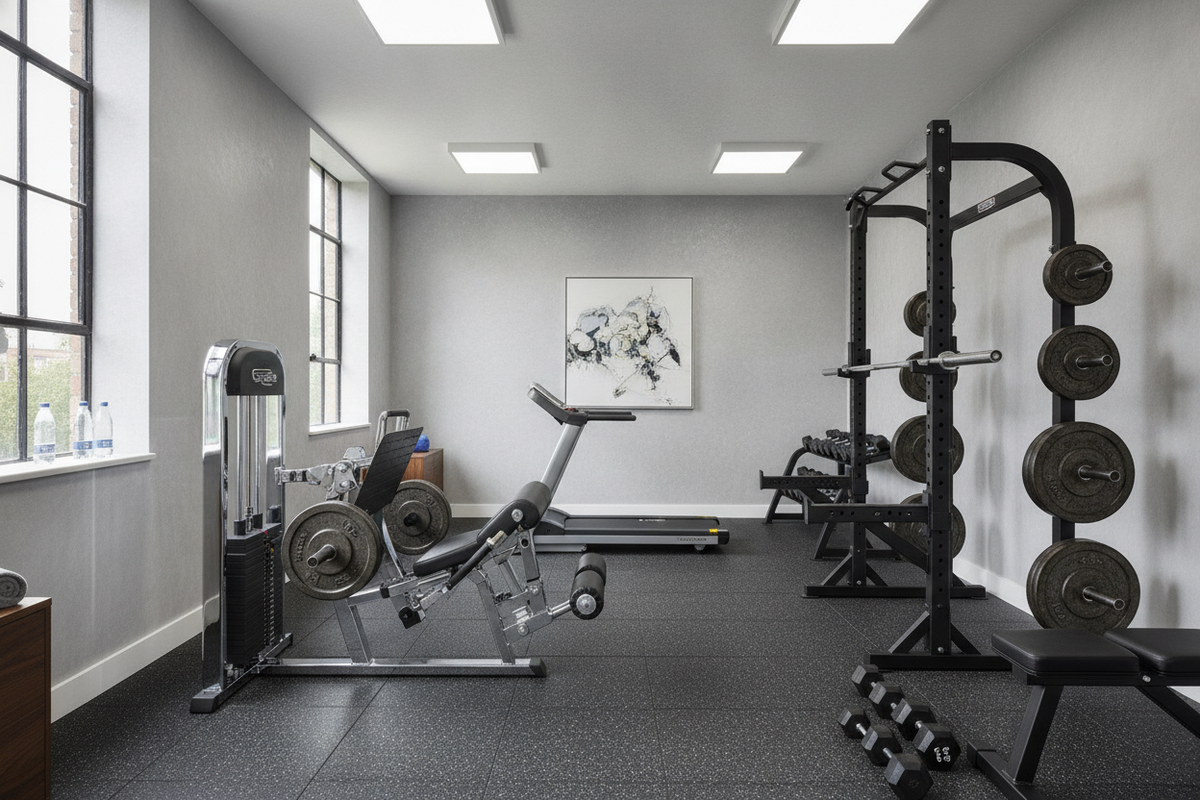
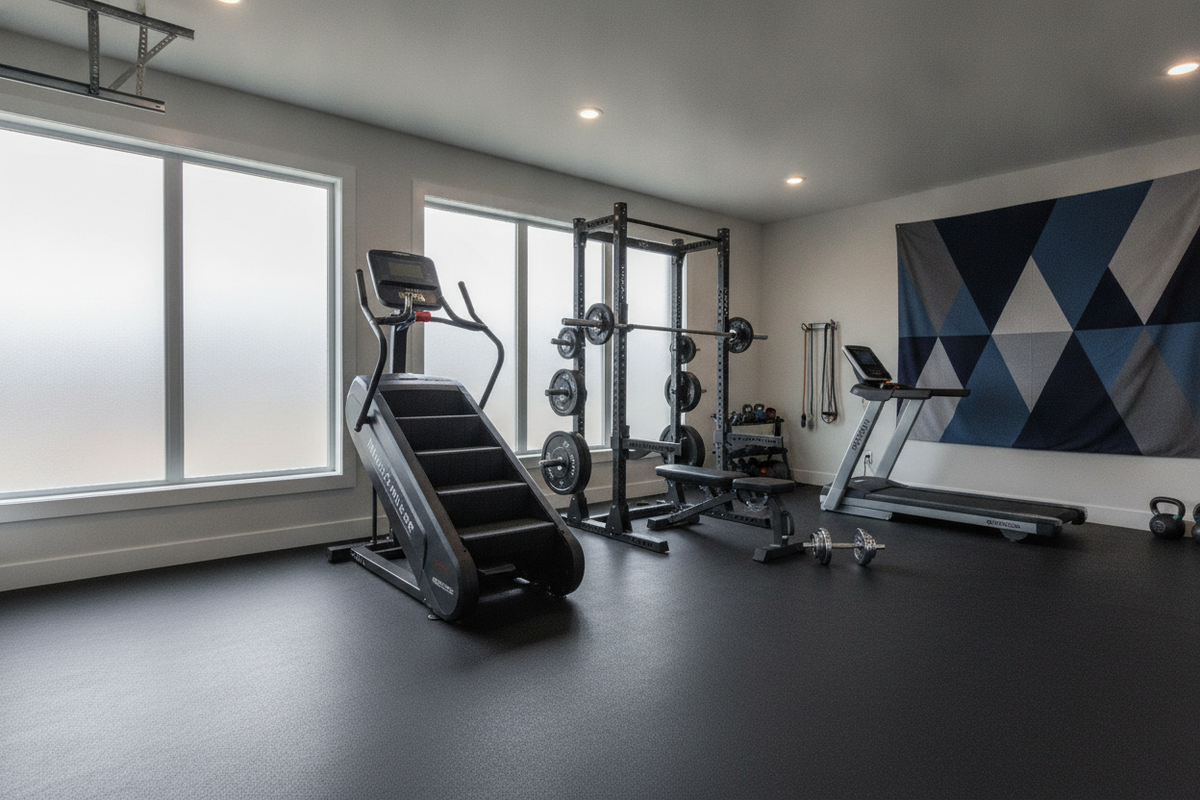
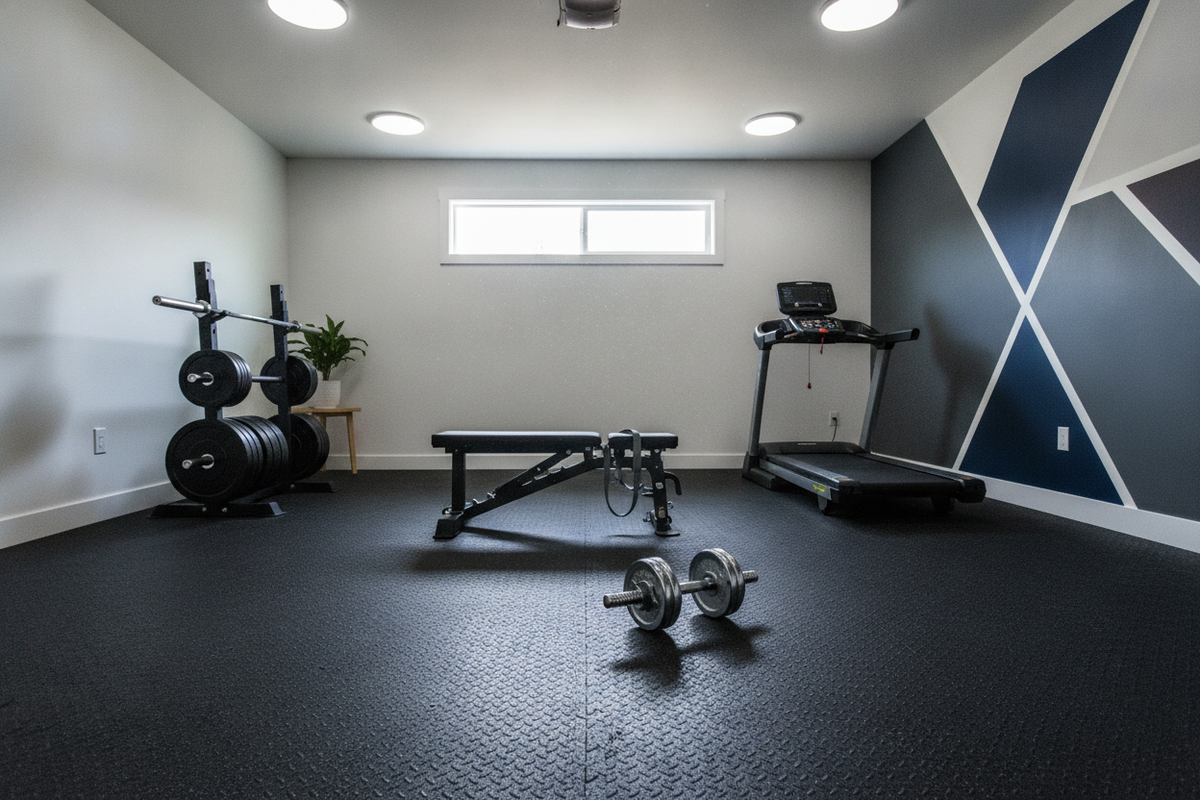
Floor-based isometric training requires a reliable foundation. Practicing bridges, single-leg holds, and pelvic tilts on hard tile or hardwood floors can cause uncomfortable pressure points along the sacrum, spine, and heels. Conversely, overly soft shag carpets can slip or bunch beneath your feet, disrupting your balance.
A high-density floor surface such as a spacious workout mat provides the firm cushioning needed to protect your joints while delivering dependable foot traction. When performing isometric holds, your feet must grip the floor securely without sliding outward as you press into hip extension. Equipping your workout space with resilient, non-slip flooring ensures you can focus entirely on intense muscular contractions and proper alignment across every rep.