Big Butt Workout Blueprint: Strategic Glute Hypertrophy, Multi-Vector Movements, and Floor Stability
Biomechanical Foundations of an Effective Big Butt Workout
Developing significant glute hypertrophy requires a structured strategy grounded in biomechanics rather than random exercise selection. The gluteal complex consists of the gluteus maximus, gluteus medius, and gluteus minimus. To stimulate all three portions effectively, a comprehensive big butt workout must challenge the musculature across varying resistance profiles and hip angles.
Mechanical tension remains the primary driver of muscular development. When structuring good workouts to make your bum bigger, training should target the glutes through three distinct loading mechanics: stretched-position movements where tension is highest at the bottom of the range of motion, contracted-position exercises where load peaks at full hip extension, and lateral movements that isolate abduction. For broader training principles on posterior development, refer to our good butt workout guide.
Core Movement Vectors: Best Exercises to Make Your Buttocks Bigger
An effective routine organizes movements into clear movement vectors: sagittal-plane hip hinges, horizontal hip extensions, vertical squats, and frontal-plane abductions. Selecting the best exercises to make your buttocks bigger means choosing movements that allow progressive overload without shifting excessive tension to the lower back or quadriceps. Reviewing our good exercise butt guide provides further perspective on balancing power and control during lower-body mechanics.
When looking for an exercise to plump booty contours, prioritizing multi-joint compound lifts alongside focused isolation drills ensures both deep muscular fatigue and full regional activation.
Stretched-Position Builders: Romanian Deadlifts and Deep Squats
Movements that load the glutes in a lengthened state produce powerful mechanical tension. Romanian deadlifts (RDLs), Bulgarian split squats, and deep goblet squats place peak load on the muscle fibers while they are fully stretched.
- Romanian Deadlifts: Maintain a soft bend in the knees, initiate the movement by pushing the hips back, and keep the torso rigid. The range of motion stops where the hips can no longer travel backward.
- Bulgarian Split Squats: Set a forward torso lean to increase hip flexion and recruit the gluteus maximus rather than overloading the quadriceps.
- Deep Squats: Descend below parallel if mobility allows, pausing briefly to eliminate elastic momentum and maximize glute recruitment from the bottom position.
Integrating these plump booty exercises builds density across the lower posterior chain while reinforcing hip hinge integrity.
Peak Contraction Drivers: Hip Thrusts and Glute Bridges
Horizontal hip extension movements represent the cornerstone of any targeted booty plump workout. Unlike vertical squats, hip thrusts maintain high mechanical tension at full lockout.
- Barbell or Dumbbell Hip Thrusts: Position the upper back against a stable bench just below the shoulder blades. Drive through the heels, keeping the chin tucked and pelvis posteriorly tilted at the top to prevent lower-back hyperextension.
- Single-Leg Glute Bridges: Excellent for eliminating strength asymmetries between sides while emphasizing peak contraction without heavy loading.
- Frog Pumps: Bring the soles of the feet together to emphasize outer glute fiber engagement at terminal hip extension.
Home Training Floor Setup: Stability, Traction, and Cushioning
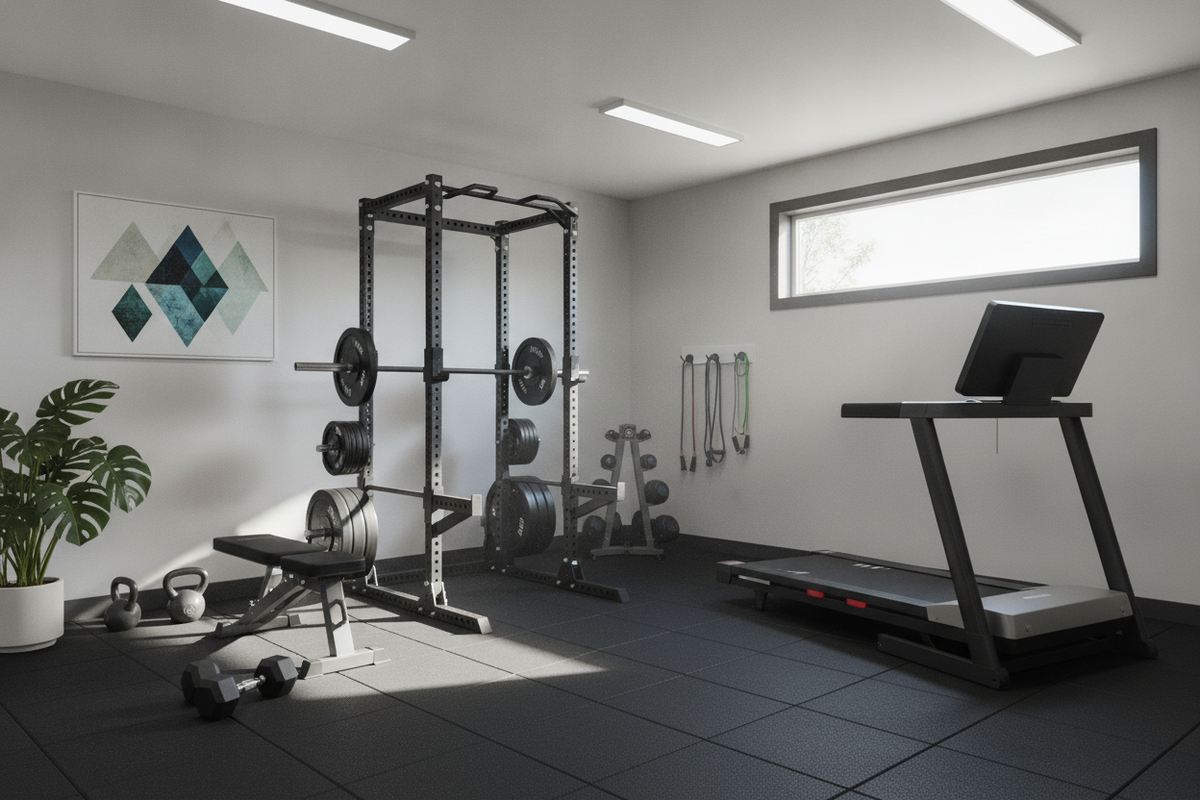
Executing heavy hip hinges, lunges, and floor bridges requires a dedicated, slip-resistant surface. Standard carpet or hard tile surfaces can introduce unwanted instability during unilateral movements or cause joint discomfort during floor-based variations. Utilizing a large, high-density exercise workout product provides the firm base necessary to anchor feet during explosive thrusts and deep lunges.
When performing Bulgarian split squats or walking lunges, traction ensures the lead foot grips firmly, preventing micro-slips that disrupt balance and reduce force transfer. Furthermore, dedicated padding protects knees during kneeling hip abductions, quad-ped kickbacks, and bench-adjacent floor setups.
Structured Booty Plump Workout Routines for Home Spaces
Consistency and systematic progression govern long-term glute growth. Structuring your weekly program into dedicated lower-body sessions allows adequate recovery between intense bouts. Equipping your home gym with tools from a complete exercise collection ensures your space is prepared for multi-directional footwork and weighted barbell work.
Below is a sample two-day training structure designed for home strength setups:
Session A: Lengthening and Heavy Loading
- Warm-Up: Glute bridges, bodyweight hinges, and lateral band walks.
- Dumbbell Romanian Deadlifts: 4 sets of 8 to 10 repetitions, focusing on a controlled 3-second eccentric descent.
- Barbell or Heavy Dumbbell Hip Thrusts: 4 sets of 10 to 12 repetitions with a 2-second hold at top extension.
- Bulgarian Split Squats: 3 sets of 10 to 12 repetitions per leg.
- Kneeling Fire Hydrants: 3 sets of 15 repetitions per leg to finish.
Session B: Unilateral Stability and Contraction Volume
- Warm-Up: Quadruped hip extensions and dynamic leg swings.
- Goblet Squats (Elevated Heels optional): 4 sets of 10 to 12 repetitions.
- Single-Leg Romanian Deadlifts: 3 sets of 10 repetitions per leg.
- Walking Lunges: 3 sets of 16 total paces with torso slightly angled forward.
- Side-Lying Clamshells or Banded Abductions: 3 sets of 20 repetitions.
Mat Maintenance and Space Optimization for Heavy Glute Training
High-intensity lower-body workouts generate sweat and require equipment drops or heavy dumbbell placement. Maintaining a clean training surface preserves both the equipment and the surrounding subfloor. Pairing your routine with a durable exercise workout product ensures your workout zone remains hygienic and resilient.
Wipe down your exercise mat with a mild soap-and-water solution after heavy sessions to eliminate sweat buildup and maintain surface grip. Avoid placing sharp edges directly onto soft foam, and store weights on designated racks when not in use to keep your movement zone clear for wide-stance exercises.