Easy Butt Workout: 8 Bedtime Glute Exercises, Movement Form, and Floor Mat Setup
Why an Evening Glute Activation Routine Matters
Spending prolonged hours seated throughout the day often leads to underactive gluteal muscles and tightened hip flexors. Performing an easy butt workout in the evening offers an accessible way to re-engage the posterior chain, restore functional hip alignment, and unwind physical tension before going to sleep. Unlike high-intensity training sessions that raise core body temperature and elevate heart rates, a low-impact glute routine relies on controlled, floor-based movements that maintain calm breathing while encouraging muscular awareness.
Integrating gentle glute work into your nightly wind-down routine helps balance the physical demands of daily sitting. For those seeking broader muscle development strategies, exploring an in-depth butt workout glute guide provides valuable context on how low-impact activation complements comprehensive strength routines. When structured properly, easy glute workouts at home support hip stability without requiring external weights or high-impact jumping.
Essential Biomechanics for Gentle At-Home Butt Exercises
Executing easy at home exercises for buttocks requires strict attention to pelvic positioning and spinal neutrality. Because many floor-based movements involve kneeling or lying down, the lower back can easily compensate if the gluteal muscles are not actively engaged.
- Pelvic Neutrality: Avoid excessive lumbar arching (anterior pelvic tilt) during hip extensions. Maintain a subtle posterior pelvic tilt or flat lumbar position to isolate the gluteus maximus.
- Core Bracing: Lightly draw the navel toward the spine to stabilize the torso, preventing trunk rotation during unilateral leg movements.
- Controlled Tempo: Prioritize slow, deliberate contractions with brief pauses at the top of each movement rather than using momentum.
- Joint Cushioning: Support pressure points such as knees, hips, and wrists with a dedicated high-density surface to prevent joint strain on hard floors.
8 Easy Butt Exercises to Do Before Bed
These eight floor exercises focus on activating the gluteus maximus, gluteus medius, and gluteus minimus. Perform each movement with steady control, pairing continuous breathing with smooth contractions. For a structured look at progressive movement selections, consult our detailed butt workout glute guide.
1. Glute Bridge Holds and Pulses
Lie flat on your back with knees bent and feet planted flat on the floor, hip-width apart. Drive through your heels to lift your hips until your thighs, pelvis, and torso form a straight line. Squeeze your glutes at the peak of the lift without hyperextending your lower back. Incorporate small, controlled pulses at the top of the extension to sustain glute engagement before lowering slowly.
2. Quadruped Donkey Kicks
Begin on hands and knees with your wrists beneath your shoulders and your knees beneath your hips. Keeping your working knee bent at a right angle and your foot flexed, drive your heel upward toward the ceiling until your thigh aligns with your torso. Focus on moving entirely from the hip joint while keeping your lower back stable and level.
3. Side-Lying Clamshells
Lie on your side with your knees bent at roughly right angles and your feet stacked together. Keeping your heels touching and your pelvis perpendicular to the floor, rotate your top knee upward. This rotational movement targets the gluteus medius, which plays a central role in lateral hip stability.
4. Quadruped Fire Hydrants
From an all-fours tabletop position, lift one leg out to the side while maintaining the bend in your knee. Lift only as high as your hip mobility allows without shifting your torso or tilting your pelvis. Lower your leg with deliberate control to complete each repetition.
5. Prone Frog Pumps
Lie face down with your forehead resting on your crossed arms. Bend your knees, press the soles of your feet firmly together, and open your knees slightly outward. Squeeze your glutes to lift your thighs slightly off the mat, focusing all effort on the gluteus maximus before lowering back down smoothly.
6. Side-Lying Straight Leg Raises
Lie on your side with your bottom leg slightly bent for balance and your top leg fully extended. Keep your top foot flexed and toes pointing forward or slightly downward. Elevate the top leg upward along the lateral plane, pause at the peak, and slowly descend without letting the hip roll backward.
7. Kneeling Glute Kickbacks
Position yourself in a tabletop stance. Extend one leg straight behind you with your toes lightly touching the mat. Lift the straight leg upward until it is parallel to the floor, concentrating on squeezing the glute at the top of the extension. Avoid swinging the leg to protect the lumbar spine.
8. Supine Single-Leg Bridge Taps
Lie on your back, bend one knee with the foot flat, and extend the opposite leg straight out or toward the ceiling. Press through the grounded heel to raise your hips into a single-leg bridge. Lower your hips until they lightly tap the mat, then immediately press back upward to build unilateral balance and hip control.
Staging Your Bedroom Training Surface: Comfort and Joint Support
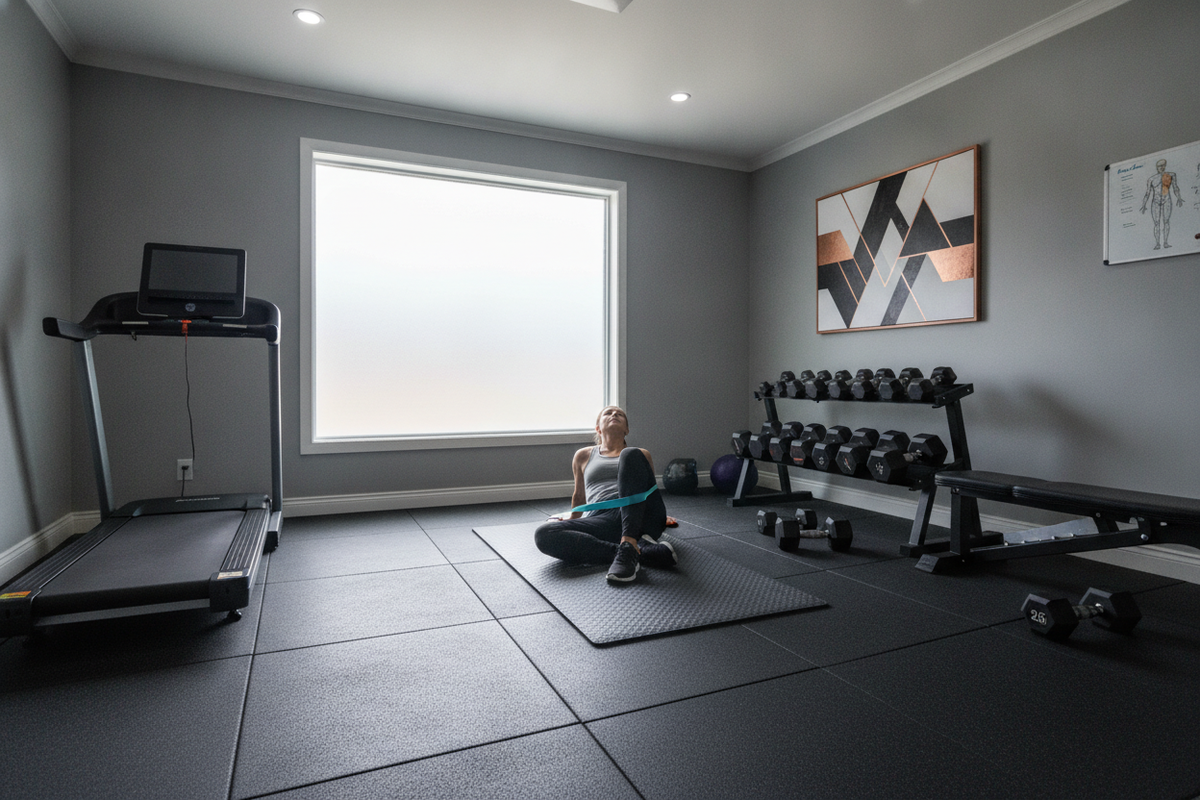
Floor-based exercises place repetitive pressure on the knees, elbows, wrists, and hip bones. Practicing directly on bare hardwood or thin carpet can cause discomfort, leading to poor form or premature fatigue. Setting up a dedicated, non-slip workout product provides the shock absorption and traction necessary for stable bodyweight training.
A spacious, high-density exercise mat shields your joints during kneeling exercises like donkey kicks and fire hydrants while also protecting bedroom flooring from scuffs. Ensure your mat lies completely flat and offers sufficient grip on both sides so it stays anchored during side-lying and bridge movements.
Structuring Your Nighttime Routine: Tempo, Volume, and Wind-Down
To keep your evening workout relaxing and restorative, keep your volume moderate and avoid working to absolute muscular failure. A balanced structure includes:
- Circuit Format: Complete 10 to 15 controlled repetitions of each exercise, performing 1 to 2 sets per movement.
- Pacing: Use a continuous cadence—two seconds lifting, a brief pause at peak contraction, and two seconds returning.
- Breathing: Inhale during the eccentric (lowering) phase and exhale during the concentric (lifting) effort.
- Transition to Rest: Conclude the session with gentle child's pose and supine figure-four stretches to release the hips before bedtime.
For additional exercise routines, scheduling formats, and home gym planning advice, browse our comprehensive workout resource.
Mat Care and Bedroom Fitness Space Maintenance
Keeping your floor mat clean ensures your bedroom environment remains fresh and conducive to rest. After completing your evening exercises, wipe down the mat surface with a damp microfiber cloth and a mild, non-abrasive cleaner to remove sweat and dust. Allow the mat to air-dry completely before rolling it up or sliding it under furniture.
Store your mat in a dry area away from direct radiators or heat vents to preserve its material integrity. Maintaining an organized, clean workout surface makes it effortless to unroll your mat for consistent, enjoyable evening movement.