Gluteus Isometric Exercises: Static Strength Holds, Form Mechanics, and Floor Mat Staging
Biomechanical Foundations of Gluteus Isometric Exercises
Static muscle actions offer a distinct stimulus for posterior chain training. When performing gluteus isometric exercises, the muscle fibers develop tension without lengthening or shortening, and the joint angle remains fixed throughout the duration of the contraction. This mechanics profile allows lifters and home trainees to build muscular control, target specific portions of a movement arc, and recruit high-threshold motor units without the continuous friction or shear forces associated with high-repetition dynamic training.
Utilizing an isometric for glutes routine creates prolonged intramuscular pressure and steady recruitment across the gluteus maximus, gluteus medius, and gluteus minimus. Because the hip joint does not cycle through flexion and extension cycles during a static hold, the nervous system can focus entirely on maximal voluntary contraction, steady pelvic alignment, and core bracing. For individuals managing joint fatigue or seeking deliberate neuromuscular activation before heavy compound lifts, static holds provide a stable, controlled foundation for posterior chain development.
Essential Isometric Glute Max Exercises and Movement Form
Targeting the gluteus maximus through static positions requires intentional cueing to prevent the lumbar spine and hamstrings from dominating the effort. The following isometric glute max exercises isolate hip extension mechanics while maintaining a neutral spine:
- Isometric Glute Bridge Hold: Lie supine on a supportive floor surface with knees bent and feet flat on the floor, roughly hip-width apart. Drive through the heels to elevate the hips until the thighs and torso form a straight line. Hold the peak contraction without hyperextending the lower back, ensuring the pelvis remains neutral and the glutes stay actively engaged.
- Wall Drive Single-Leg Hold: Stand facing a sturdy wall, lift one knee to hip height, and press the lifted knee forward into the wall while driving the grounded leg firmly into the floor. Squeeze the glute of the standing leg to resist rotation and maintain an upright torso.
- Elevated Hip Thrust Pause: Rest the upper back across a stable bench or platform. Drive the hips upward into full hip extension and maintain a steady hold at the top position, tucking the chin slightly and keeping the ribcage down to focus work directly on the glutes.
- Quadruped Kickback Static Hold: From a tabletop position on hands and knees, extend one leg backward and upward until the hip reaches extension. Maintain the position while resisting lower back arching, engaging the core to keep the pelvis square to the floor.
For trainees integrating these holds into broader training splits, referencing a comprehensive glutes exercise guide helps balance static holds with complementary movement patterns.
Multi-Planar Holds for Gluteus Medius and Minimous Stability
While the gluteus maximus produces primary hip extension, the smaller gluteal muscles—the medius and minimus—are essential for hip abduction, internal and external rotation, and lateral pelvic leveling. Training these muscles with static contractions reinforces hip stability during single-leg tasks, walking, and running mechanics.
Effective abductor-focused isometric variations include:
- Side Plank with Isometric Abduction: Set up in a forearm side plank with the body aligned from head to heels. Lift the top leg into abduction and maintain the elevated position, keeping the toes pointed forward rather than upward to keep tension on the gluteus medius.
- Isometric Clamshell Hold: Lie on your side with knees bent at a comfortable angle. Open the top knee while keeping the feet together, pausing and sustaining tension at the end range of motion without rolling the pelvis backward.
- Standing Lateral Wall Press: Stand sideways next to a wall. Lift the leg nearest the wall and press the outside of the knee into the wall surface. The grounded standing leg must work isometrically to stabilize the pelvis while the active leg pushes outwards.
Reviewing a detailed glute exercise guide offers helpful context on how lateral hip stability ties into overall posterior chain balance.
Structuring Isometric Hold Protocols for Home Workouts
Integrating gluteus isometric exercises into a home fitness plan depends on the desired training outcome. Static holds can serve as preparation, standalone low-impact training, or post-workout muscular burnout sequences.
- Pre-Workout Activation: Perform brief holds of moderate intensity before squats, deadlifts, or athletic conditioning. Holding positions for moderate durations helps establish mind-muscle connection and prepares the hip complex for load.
- Standalone Low-Impact Sessions: Pair static glute bridges, wall presses, and side plank holds into structured circuits. This protocol provides muscular work without loading the spine or stressing knee joints.
- Post-Workout Finishers: Conclude a lower-body session with prolonged peak-contraction holds, sustaining continuous tension until form begins to break down.
Trainees looking to combine bodyweight static holds with resistance equipment can consult an exercise glutes guide to explore how tension curves shift between free holds and loaded machines.
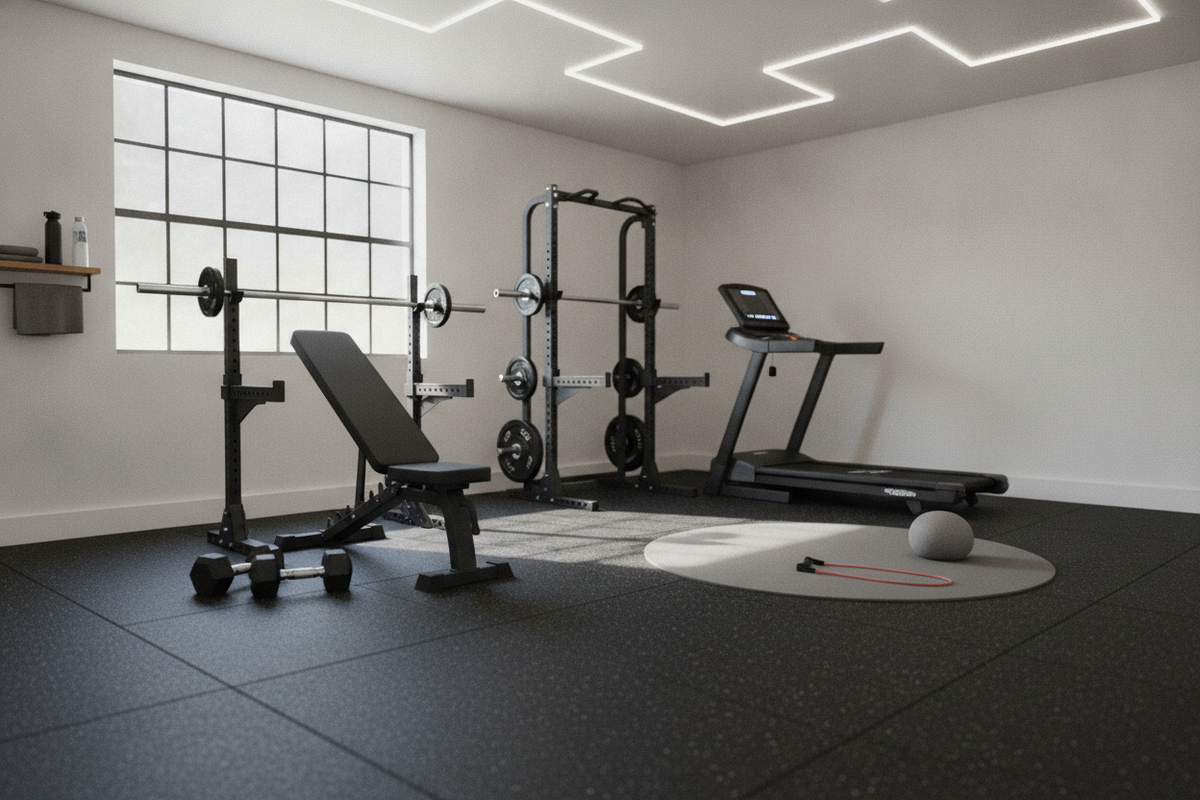
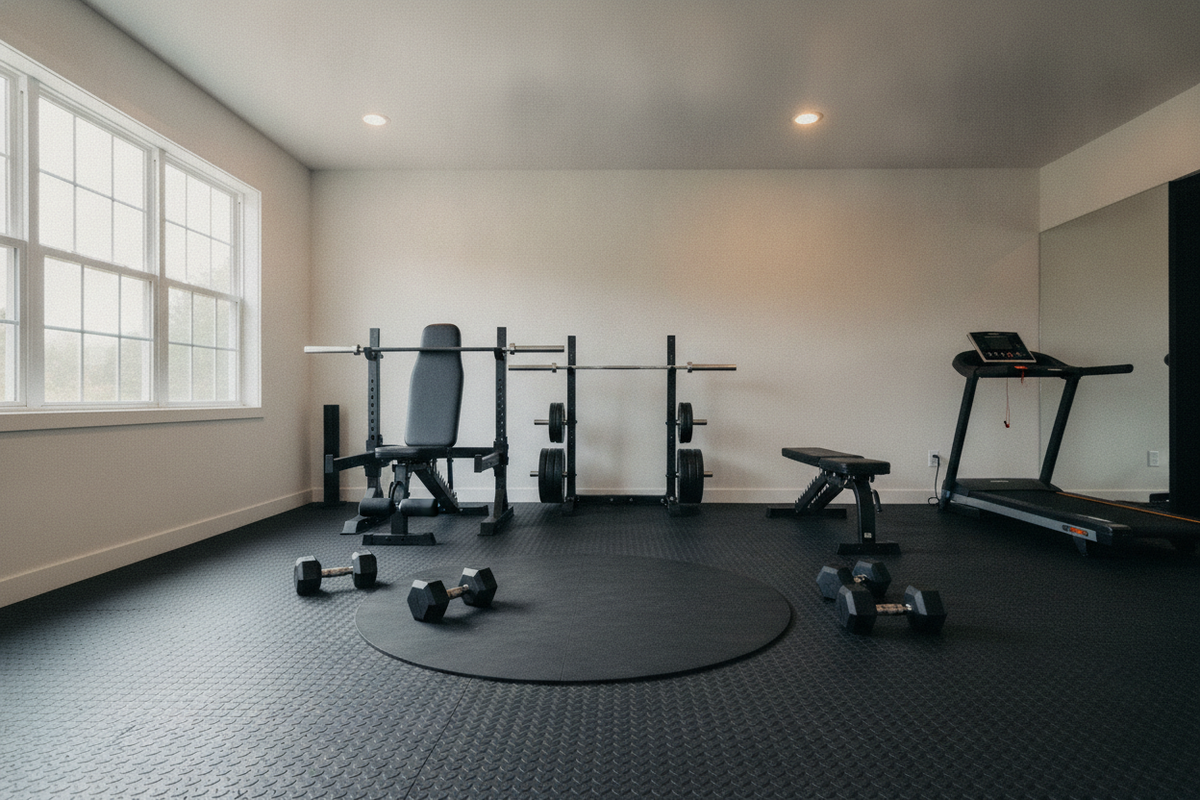
Home Gym Floor Mat Staging and Joint Protection
Floor-based isometric holds place direct pressure on contact points such as the elbows, knees, heels, and spine. Staging an effective floor area ensures that discomfort does not distract from muscle recruitment or compromise joint alignment.
When selecting and positioning an exercise mat for static glute work, consider the following layout factors:
- High-Density Cushioning: Matting should offer sufficient density to absorb pressure under the sacrum during bridge holds and under the knees during quadruped positions, preventing direct contact with hard subfloors.
- Traction and Anti-Slip Texture: Bridge holds and single-leg wall drives require strong ground purchase. A non-slip surface prevents the heels from sliding forward during maximum hip drive, preserving optimal joint angles.
- Sufficient Mat Dimensions: An adequately sized workout mat provides enough space for transitioning seamlessly between supine bridges, side planks, and standing wall presses without stepping off the padded surface.
- Mat Maintenance: Regular surface wipe-downs with mild cleaners help maintain mat grip and prevent sweat accumulation during intense static hold sequences.