Cable Exercises for Legs and Glutes: The Definitive Guide 2024
You walk into the gym, and it’s the usual story. The squat racks are taken, the leg press is occupied, and you have limited time. Most people turn around and skip leg day, but you don't have to. There is a piece of equipment sitting empty that offers constant tension and incredible hypertrophy potential.
We are talking about cable exercises for legs and glutes. Often relegated to upper body isolation work, the cable machine is actually a powerhouse for lower body development. Whether you are working with a functional trainer or a standard tower, cables allow you to manipulate force vectors in ways free weights simply cannot.
Key Takeaways
- Constant Tension: Unlike free weights where tension drops at the top of the movement, cables provide resistance through the entire range of motion.
- Safety Profile: Cable pulls for legs reduce spinal compression compared to heavy barbell squats, making them ideal for lifters with back issues.
- Unilateral Focus: They are perfect for correcting imbalances through single-leg movements like lunges and kickbacks.
- Versatility: A full cable only leg workout is entirely possible and effective for hypertrophy.
Why the Cable Machine Wins for Lower Body
Gravity only pulls one way: down. When you use dumbbells or barbells, the resistance is vertical. However, muscles don't always work vertically. The glutes, for example, function best with horizontal loading (think hip thrusts).
This is where dual adjustable pulley leg exercises shine. You can set the line of pull to match the muscle fibers exactly. This creates a "mind-muscle connection" that is often hard to achieve with heavy static weights.
Developing the Quads with Cables
Many lifters struggle to isolate their quadriceps without engaging their lower back. Cable exercises for quads solve this by shifting the load.
The Cable Front Squat
Attach a straight bar or rope to the bottom pulley. Hold it at chest height and squat. Because the weight is pulling you forward, you are forced to lean back slightly. This vertical shin angle puts massive stress directly on the quads, similar to a sissy squat but safer.
Terminal Knee Extensions (TKE)
This is a staple in physical therapy, but it is also a killer finisher for a quad cable workout. By attaching a cuff above the knee and extending the leg against resistance, you target the VMO (the teardrop muscle) specifically. It’s a detail movement that refines the look of the leg.
Building the Posterior Chain: Glutes and Hamstrings
If you want to grow your backside, you need to move weight horizontally. A booty workout cable machine routine is superior to dumbbells here because the cable pulls your hips back, creating a deep stretch.
Cable Pull-Throughs
If you do one movement, make it this one. Stand facing away from the machine with the rope attachment between your legs. Hinge at the hips until you feel a deep stretch in the hamstrings, then snap the hips forward. This mimics the kettlebell swing but with controlled tension.
Cable Kickbacks
When looking for a specific glute workout using cable machine setups, the kickback is king. The trick is to keep your torso parallel to the floor. Don't arch your back. Drive the heel back and up. This isolates the glute max without recruiting the lower back.
Hamstring Curls
Lying leg curls are great, but standing hamstring exercises on cable machine setups allow for unilateral training. Use an ankle cuff. Keep your thigh vertical and curl your heel to your glute. The peak contraction here is intense because the cable tries to pull your foot away from you constantly.
The Power of Unilateral Training
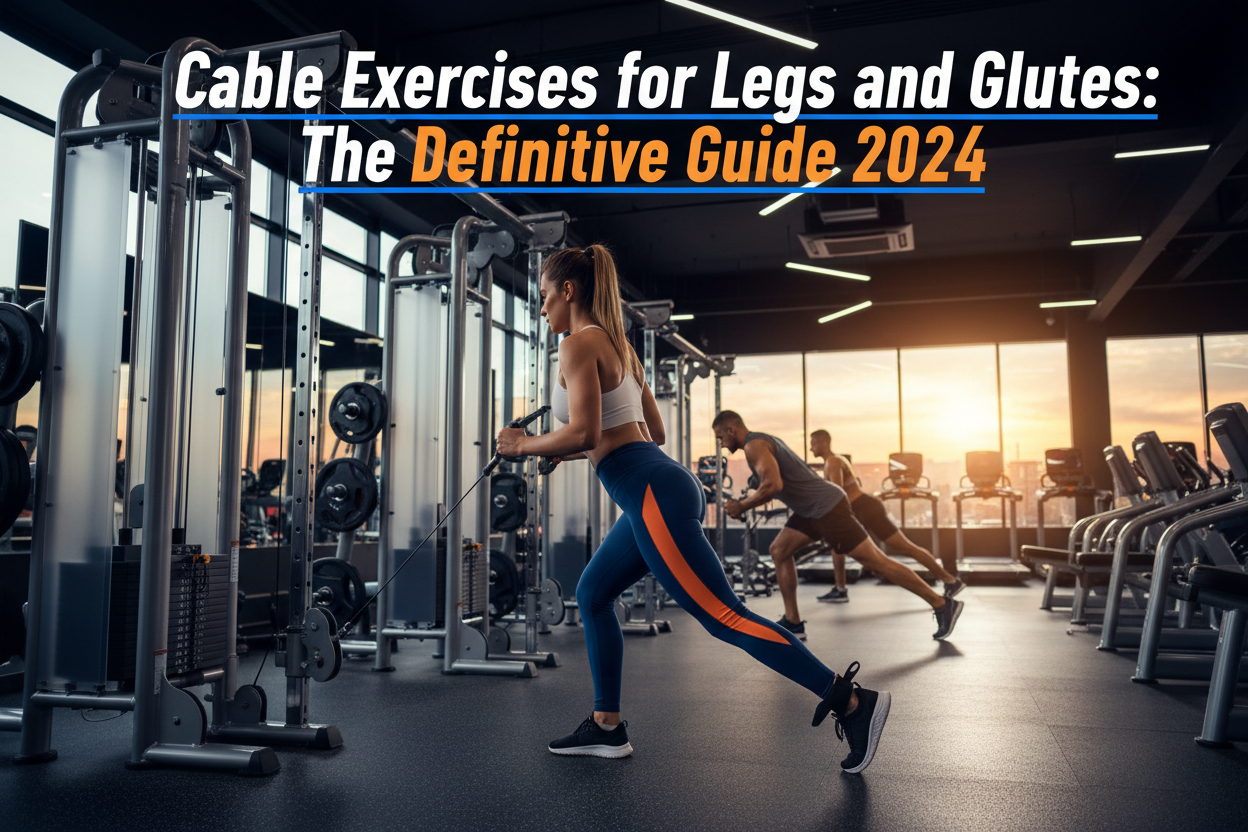
Single-leg work is non-negotiable for a balanced physique. Lunges with cable machine setups offer a unique challenge. Unlike a dumbbell lunge where gravity pushes you down, a cable lunge pulls you toward the stack.
Your core and stabilizers have to work overtime to keep you upright. This functional stress translates to better athletic performance and stronger lifts elsewhere.
Sample Cable Only Leg Workout
Stuck with just a functional trainer? Here is how to structure a session using quad exercises with cable machine versatility alongside glute work.
- A1. Cable Goblet Squats: 4 sets of 12 reps (Focus on depth).
- B1. Cable Pull-Throughs: 4 sets of 15 reps (Focus on the stretch).
- C1. Cable Reverse Lunges: 3 sets of 10 reps per leg.
- D1. Single-Leg Cable Deadlifts: 3 sets of 12 reps per leg.
- E1. Cable Kickbacks: 2 sets of 20 reps (Burnout finisher).
Conclusion
You don't need a squat rack to build an impressive lower body. By utilizing cable exercises for legs and glutes, you gain the benefit of constant tension and improved joint safety. Next time the gym is packed, head to the pulley station. You might find you get a better workout there anyway.
Frequently Asked Questions
How to use dual adjustable pulley for glutes effectively?
To use a dual adjustable pulley for glutes, set the pulleys to the lowest position. Use ankle cuffs for movements like kickbacks or abduction. The key is to position yourself far enough away so the weight stack doesn't touch down between reps, ensuring the muscle stays under tension for the entire set.
Can I build mass with a cable only leg workout?
Yes, absolutely. Muscle growth (hypertrophy) occurs through mechanical tension and metabolic stress. Cables provide excellent mechanical tension. As long as you are applying progressive overload—increasing the weight or reps over time—your legs will grow just as they would with free weights.
Are quad exercises with cable machine setups safe for knees?
Generally, yes. Quad exercises cable machine variations often place less shear force on the knee joint compared to heavy leg extensions or barbell squats. The fluid motion of the cable allows for a more natural joint path, making it a great option for those rehabbing injuries or dealing with chronic knee pain.