8 Exercises to Help You Lose Weight: Movement Mechanics, Weekly Splits, and Home Floor Staging
Core Biomechanics: How to Lose Weight Effectively with Exercise
When structuring a training routine to lose weight exercise programming should prioritize multi-joint compound movements over isolated muscle drills. Compound exercises recruit large muscle groups across multiple kinetic chains simultaneously. This multi-joint activation increases systemic physical demand and promotes sustained metabolic output during and after training sessions.
Understanding how to lose weight effectively with exercise requires managing movement quality, intensity, and recovery. Pairing mechanical tension from resistance training with dynamic continuous movement creates an efficient training stimulus. You can review detailed movement comparisons in our exercise lose weight guide to understand how multi-planar exercises balance metabolic demand alongside muscular endurance.
8 Essential Exercises for High-Output Weight Loss Training
Selecting the right for lose weight exercises involves combining resistance training, core stabilization, and lateral agility drills. These eight movements provide a comprehensive foundation for home workouts.
1. Dumbbell Thrusters (Squat to Overhead Press)
Dumbbell thrusters integrate a front squat with an overhead press into a seamless fluid pattern. Start with dumbbells resting at shoulder height, feet shoulder-width apart. Lower into a full squat while keeping the chest upright, then drive forcefully through the midfoot to stand. Transfer the momentum from your lower body directly into pressing the weights overhead until your arms reach full extension.
2. High-Plank Mountain Climbers
Mountain climbers challenge anterior core stability while maintaining a steady cardiovascular tempo. Set up in a rigid high-plank position with hands stacked directly beneath your shoulders. Drive one knee toward the chest without allowing the hips to pike or sag, alternating legs in a controlled, rhythmic cadence. Maintain continuous abdominal bracing to stabilize the lumbar spine throughout the set.
3. Hip-Hinge Kettlebell Swings
The kettlebell swing is an explosive posterior chain movement centered on the hip hinge. Stand with feet slightly wider than shoulder-width, softening the knees while hinging back at the hips. Drive the hips forward forcefully to project the kettlebell upward to chest level. Power comes exclusively from glute and hamstring extension rather than lifting with the shoulders or arms.
4. Step-Back Burpee Complexes
Step-back burpees offer a low-impact alternative to traditional drop burpees while preserving dynamic conditioning. From a standing position, place both hands firmly on the floor, step each foot back into a solid plank, perform a controlled push-up if desired, and step your feet back toward your hands before standing tall. This controlled variation reduces repetitive impact on the wrists and lower back.
5. Alternating Reverse Lunges with Torso Rotation
This unilateral movement builds single-leg balance and engages the core across the transverse plane. Step one foot backward into a lunge until both knees create right angles. Rotate your torso over the front leg while keeping the pelvis squared forward. Return to center and drive through the front heel to return to the starting position before switching sides.
6. Plank Jacks with Core Brace
Plank jacks combine isometric upper-body stabilization with lower-body abduction and adduction. Hold a forearm or high-plank position while jumping or stepping the feet out wide and back together. Focus on keeping the pelvis steady and parallel to the floor, preventing vertical bouncing during foot transitions.
7. Dumbbell Renegade Rows
Renegade rows train horizontal pulling strength alongside anti-rotation core endurance. Position yourself in a push-up stance with each hand gripping a hex dumbbell resting on the floor. Row one dumbbell toward your hip while pressing firmly through the supporting arm and toes. Keep your hips level to resist rotational forces before alternating sides.
8. Lateral Skater Bounds
Skater bounds develop frontal plane power, lateral deceleration, and dynamic balance. Push off one foot laterally to leap to the opposite side, landing softly on the outside leg while allowing the trailing leg to sweep behind. Absorb the landing through the knee and hip before springing in the reverse direction.
Structuring a Daily Exercise to Lose Weight: Weekly Split Framework
Applying a daily exercise to lose weight schedule requires balancing high-output interval sessions with dedicated recovery days. Overtraining without sufficient rest can lead to fatigue and plateaus in progress. A structured weekly template might look like this:
- Monday: Full-body compound strength intervals (Thrusters, Lunges, Renegade Rows).
- Tuesday: Dynamic core conditioning and steady-state movement (Plank Jacks, Mountain Climbers).
- Wednesday: Active recovery, mobility work, and stretching.
- Thursday: Posterior chain and explosive conditioning (Kettlebell Swings, Skater Bounds).
- Friday: Total-body functional circuit integrating combined movement complexes.
- Saturday & Sunday: Low-intensity walking, recreational movement, and joint recovery.
For an in-depth look at periodizing varied movement styles across your week, explore our weight way lose guide.
Home Gym Staging: Floor Protection and Joint Cushioning
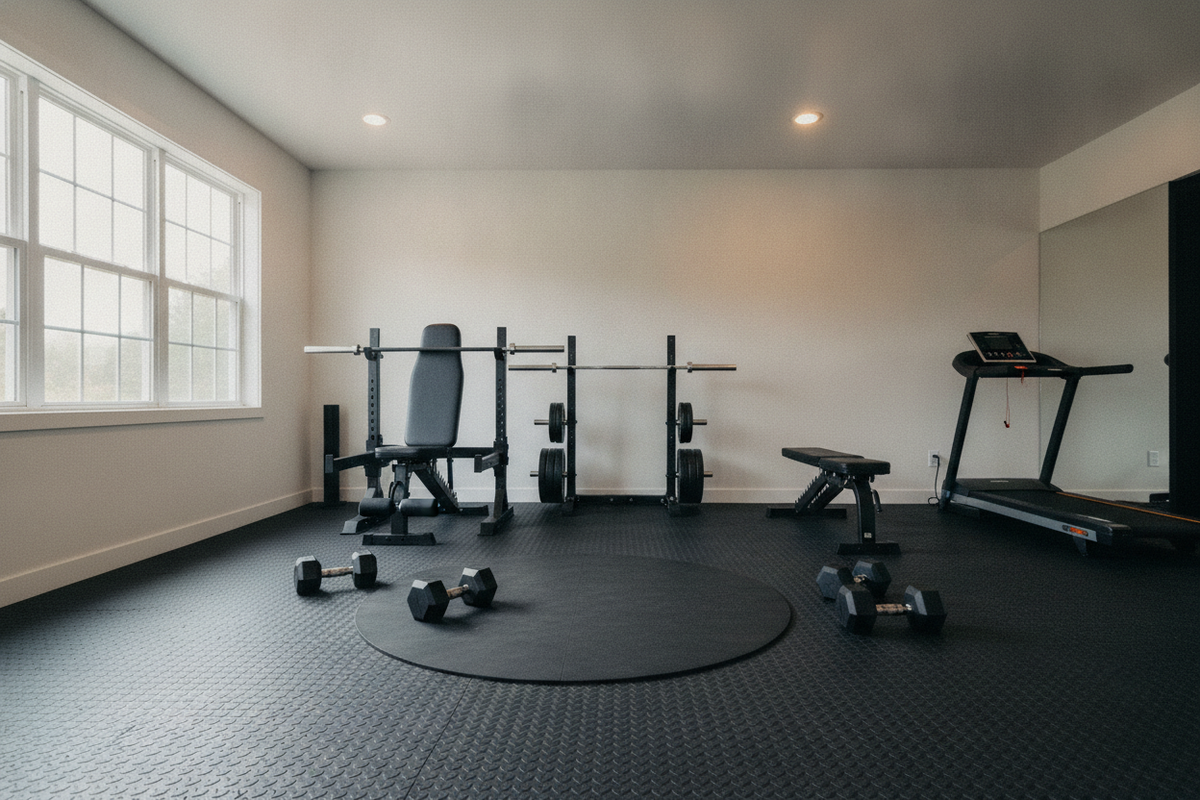
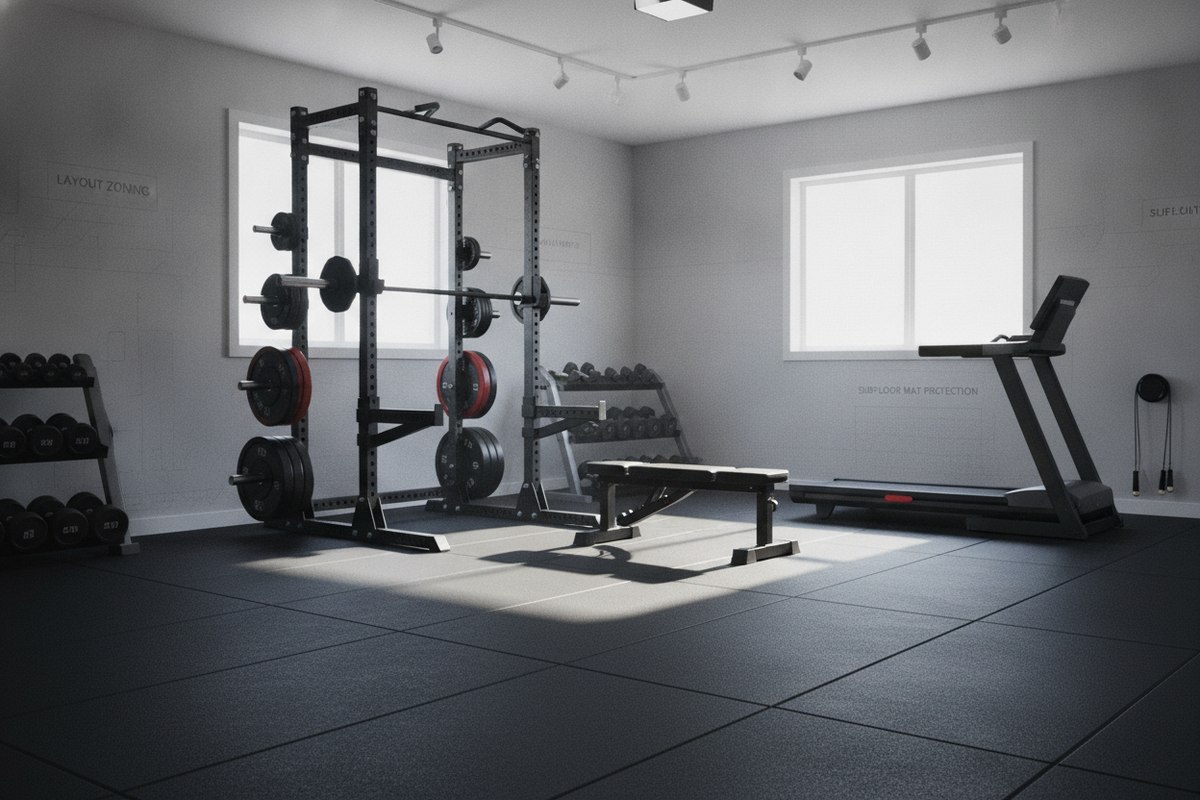
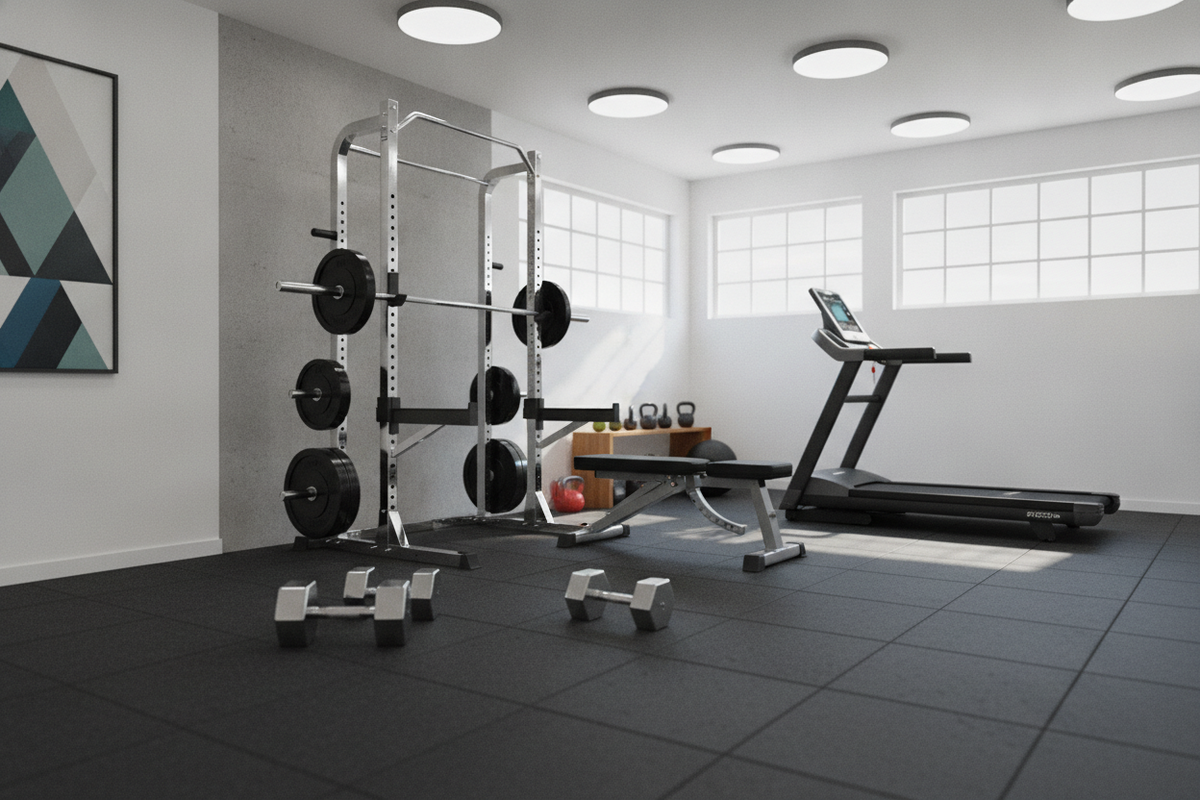
Conducting dynamic conditioning routines at home introduces unique equipment and surface demands. Explosive lateral bounds, heavy kettlebell swings, and high-frequency foot transitions place concentrated mechanical stress on domestic subfloors such as hardwood, tile, or laminate. Hard surfaces also reflect impact shock directly into the ankles, knees, and lumbar spine.
Setting up dedicated protective gym flooring creates a slip-resistant, cushioned boundary for intense workouts. Selecting a durable surface from an exercise collection helps absorb equipment impact and provides traction under dynamic footwork. For spacious training zones that accommodate wide lunges and lateral skater bounds, deploying an expansive format like a exercise product ensures you stay on a cushioned surface throughout the entire movement arc.
Mat Maintenance and Surface Care for High-Sweat Workouts
High-intensity workouts inevitably result in perspiration accumulation on your training surface. Keeping your exercise mat clean preserves surface grip and extends material lifespan:
- Wipe down the mat surface immediately following workouts using a soft microfiber cloth and a mild soap-and-water solution.
- Avoid harsh bleach-based cleaners or abrasive scrubbers that can degrade non-slip surface textures.
- Allow the mat to air dry completely before rolling or storing to prevent moisture entrapment.
- Store the mat rolled loosely with the textured side facing outward to maintain flat lay characteristics during use.