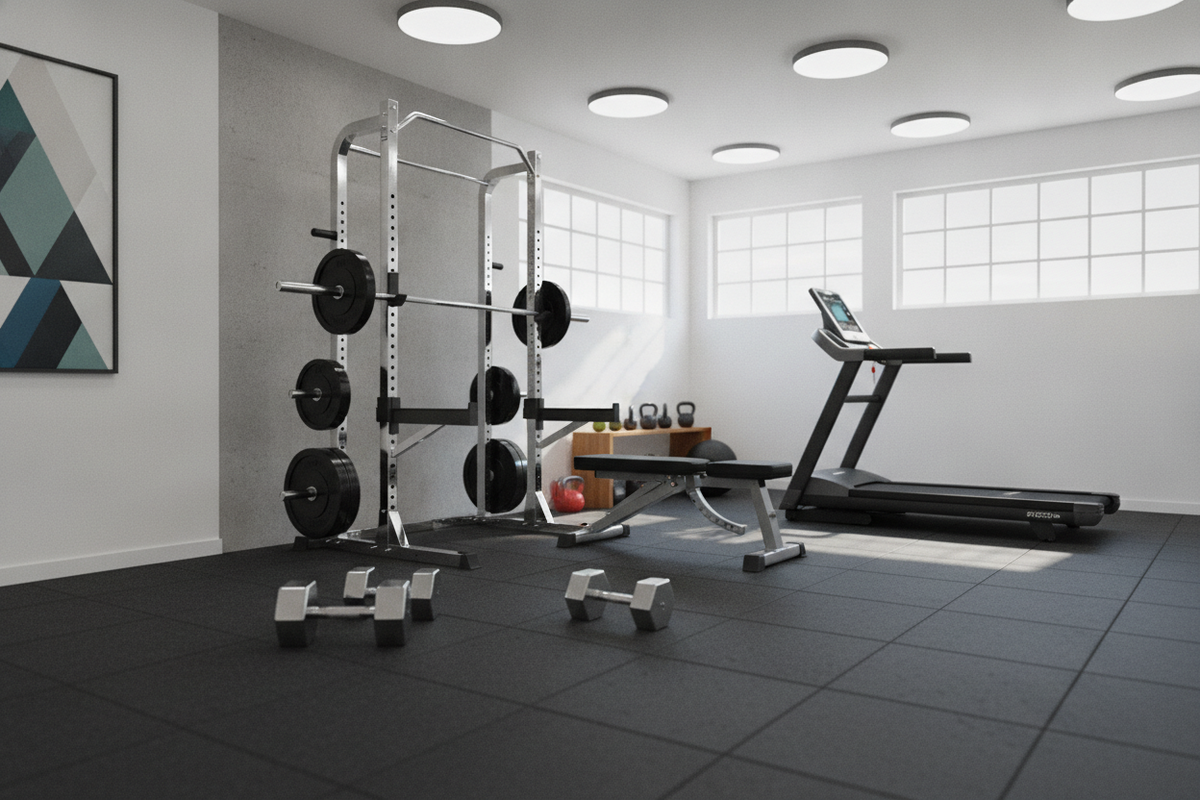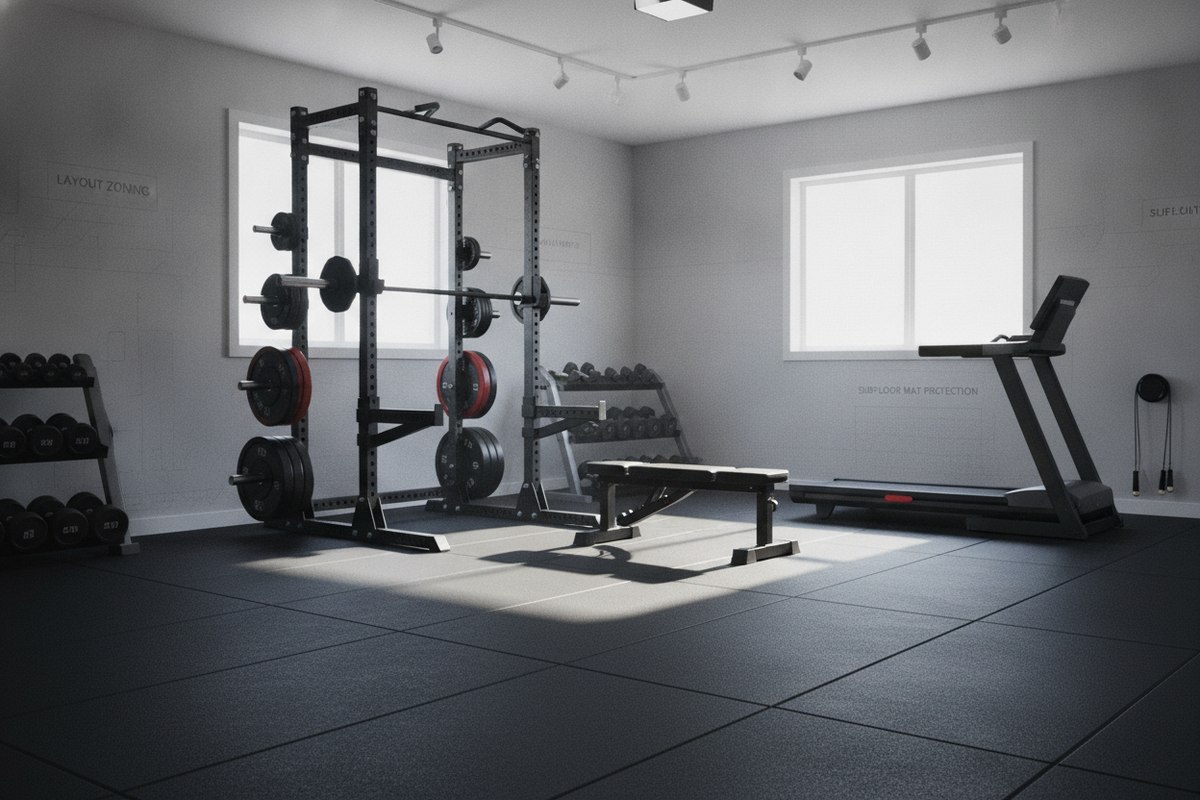
Weight Lifting Station Blueprint: Layout Zoning, Subfloor Mat Protection, and Training Station Setup
Introduction: The Role of a Dedicated Weight Lifting Station in Home Gyms
Establishing a designated weight lifting station provides structure, consistency, and spatial clarity to residential workout environments. Whether anchored in a garage, a spare room, or a dedicated basement zone, a central lifting area serves as the functional anchor for home strength development. Setting up a lifting footprint involves more than placing a rack against a wall; it requires balancing equipment geometry, barbell swing pathways, footing traction, and foundational floor resilience.
When a lifting area is properly organized, training flows smoothly from primary barbell work to targeted assistance exercises. A stable base minimizes equipment shifting, reduces excessive vibration transfer into structural framing, and protects both residential subfloors and fitness gear over years of consistent use.
Anatomy and Configurations of the Modern Weight Training Station
Modern strength spaces utilize diverse designs for a weight training station. Understanding how different structural footprints function helps athletes select equipment aligned with their spatial constraints and lifting goals.
- Integrated Power Cages: Enclosed four-post or six-post frames offer complete containment, integrated spotter pins, plate storage posts, and multi-grip overhead bars.
- Half Racks and Squat Stands: Open-front designs with smaller base footprints that allow unhindered overhead movement while retaining solid upright support for bar rests.
- Multi-Functional Gym Weight Station Frames: Modular units combining traditional uprights with plate-loaded pulleys, cable cross attachments, and dip stations for broad exercise variety.
For individuals exploring broad structural options for their training space, browsing a curated weight lifting collection provides a helpful reference for comparing footprint dimensions, attachment modularity, and upright formats.
Spatial Clearance, Footprint Planning, and Equipment Placement
A well-planned weight station gym requires adequate operational clearance beyond the static perimeter of the frame itself. Standard Olympic barbells require substantial lateral width, and lifters must comfortably load and unload weight plates on both ends without contacting drywall, support posts, or adjacent storage units.
Vertical clearance is equally critical. Pull-up bars, standing overhead presses, and high-pulley attachments demand ample headroom between the top crossmembers and the ceiling or overhead joists. Leaving dedicated clearance in front of the uprights provides space for bench transitions, barbell floor work, and spotting. For an in-depth purchasing and spatial overview, consult our comprehensive weight training guide before finalizing your floor plan.
Subfloor Protection: Layering High-Density Mats Under Heavy Stations
Ground preparation forms the bedrock of any reliable gym weight station. Heavy steel frames, loaded barbells, and repeated foot repositioning generate concentrated mechanical stress on residential subfloors, such as concrete slabs, plywood subflooring, or finished tile.
High-density rubber matting serves three distinct operational purposes beneath a lifting station:
- Point-Load Distribution: Dense rubber spreads the heavy static weight of the uprights and integrated weight stacks across a broader surface area, mitigating point depression on softer floor materials.
- Traction and Movement Stability: Textured surfaces provide consistent grip for lifting shoes, helping maintain solid footing during squats, deadlifts, and overhead presses without slipping.
- Vibration and Impact Buffering: Quality mat layers diffuse acoustic energy and mechanical shock, dampening vibrations that would otherwise travel into adjoining rooms.
Laying large-format, interlocking or seamless dense rubber mats creates a unified platform that keeps the frame level while preventing seam separation during dynamic movements. You can read our weight lifting gym guide to evaluate foundation preparation across different residential subfloors.
Movement Versatility: Structuring Compound Lifts and Accessory Work
A central lifting station should accommodate compound barbell movements alongside diverse accessory circuits. Structuring the station for fast transitions between movement patterns maximizes workout efficiency without cluttering the training area.
Key movement categories easily managed in a dedicated station include:
- Squat Variations and Overhead Presses: Utilizing adjustable J-hooks and safety spotters within or just outside the uprights.
- Bench Presses and Incline Work: Positioning an adjustable utility bench along the centerline of the platform for symmetric bar alignment.
- Platform Floor Work: Utilizing the open mat area immediately forward of the rack for deadlifts, barbell rows, and dynamic warm-ups.
Pairing your central frame with adaptable add-ons from a versatile training collection allows smooth transitions from heavy compound sets to targeted mobility and conditioning exercises without reconfiguring the entire room.
Station Care, Hardware Fastening, and Mat Maintenance Protocols
Regular maintenance ensures that a lifting station remains secure, clean, and structurally sound over extended training cycles. Because heavy dynamic movements place recurring torque on structural joints, establishing a periodic inspection checklist is recommended.
Key maintenance practices include:
- Fastener and Bolt Verification: Periodically inspect and tighten frame bolts, pull-up bar anchors, and safety spotter pins to eliminate unwanted sway or frame play.
- Mat Cleaning and Debris Removal: Sweep chalk dust, dirt, and ambient debris from mat surfaces regularly, followed by periodic wiping with mild, non-corrosive cleaning solutions to maintain natural rubber traction.
- Corrosion Prevention: Wipe down bare steel bars, guide rods, and frame uprights in humid environments like garages or basements to prevent moisture accumulation.
By establishing clear zoning, safeguarding your subfloor with high-density mats, and adhering to routine hardware checks, your lifting station will provide a dependable foundation for long-term strength training. Review our gym weight training guide for additional equipment selection and long-term maintenance frameworks.