Booty Workout at Home: Structured Glute Plan & Floor Staging
Core Mechanics of an Effective Booty Workout at Home
Executing an effective booty workout at home requires an understanding of how the gluteal muscle complex functions under bodyweight and minimal-equipment conditions. Without heavy barbell racks or dedicated gym selectorized machines, the stimulus must come from deliberate tension control, full active range of motion, and precise joint alignment. The glutes consist of three primary muscles: the gluteus maximus, gluteus medius, and gluteus minimus. The gluteus maximus is the primary engine of hip extension and external rotation, while the medius and minimus stabilize the pelvis and drive hip abduction.
A common obstacle during home training is reciprocal inhibition, where prolonged sitting keeps the hip flexors tight and reduces neurological recruitment of the glutes. Establishing a consistent warm-up protocol that targets muscle activation before loading is crucial. Slowing down the eccentric phase of each movement and holding peak contractions helps build a strong mind-muscle connection. By emphasizing muscle recruitment rather than rushing through momentum-driven repetitions, you ensure that the intended musculature performs the work rather than shifting load onto the lower back or quadriceps.
Essential Movements for Your At Home Booty Workout Plan
A comprehensive at home booty workout plan should target all planes of motion to ensure balanced development and functional pelvic stability. Floor-based drills provide an accessible foundation, allowing you to isolate hip extension and abduction without introducing balance limitations.
Glute Bridge and Hip Thrust Variations
The glute bridge serves as the cornerstone of home glute training. Performing this movement on the floor eliminates spinal shear while allowing full extension of the hip joint. To increase intensity without external weights, transition from bilateral bridges to single-leg glute bridges, elevated-foot variations, or extended isometric holds at the top of the movement. Elevating your upper back onto a stable couch or bench creates a greater range of motion for hip thrusts, maximizing time under tension at peak contraction.
Quadruped Kickbacks and Fire Hydrants
Floor-based quadruped movements isolate the gluteus maximus and medius while challenging core stability. When executing quadruped kickbacks, maintain a neutral lumbar spine and drive the heel upward through hip extension rather than arching the lower back. Fire hydrants and rainbow leg sweeps provide direct stimulation to the gluteus medius, encouraging hip abduction and lateral hip control without requiring specialized machines.
Unilateral Standing Patterns
Integrating unilateral standing drills into your booty workout plan at home builds functional strength and corrects strength imbalances between sides. Movements such as reverse lunges, Bulgarian split squats, and single-leg Romanian deadlifts emphasize hip flexion and extension while placing substantial demands on stabilizing muscles. Adjusting your torso angle slightly forward during lunges and split squats shifts mechanical tension directly onto the posterior chain.
Lateral Abductions and Band Work
Side-lying hip abductions, clamshells, and standing lateral steps target the upper glutes and deep hip rotators. Incorporating light resistance bands increases tension throughout the abduction arc, reinforcing knee tracking and hip stability for larger compound patterns.
Structuring Your Weekly Home Booty Workout Plan
Consistency and progressive overload determine the success of any home booty workout plan. Since home workouts often rely on bodyweight or light resistance, progression is achieved by manipulating training volume, rep ranges, movement tempo, and rest periods. For a comprehensive look at progressive loading protocols, you can consult our booty workout plan guide.
- Day 1: Hip Extension & Compound Focus – Glute bridges, Bulgarian split squats, and quadruped kickbacks focused on high-tension peak contractions.
- Day 2: Rest or Active Recovery – Light walking, core stability, and gentle hip mobility.
- Day 3: Abduction & Lateral Stability – Side-lying abductions, clamshells, lateral floor walks, and single-leg deadlifts.
- Day 4: Rest – Full recovery and hydration.
- Day 5: High-Density Posterior Chain – Elevating tempo, using 1.5-rep schemes on hip thrusts, and combining walking lunges with isometric bridge holds. Explore our workout plan guide for structuring density protocols.
- Days 6 & 7: Rest and Mobility – Floor stretching, foam rolling, and preparing for the next training cycle.
Flooring Setup and Joint Protection for Floor-Based Glute Training
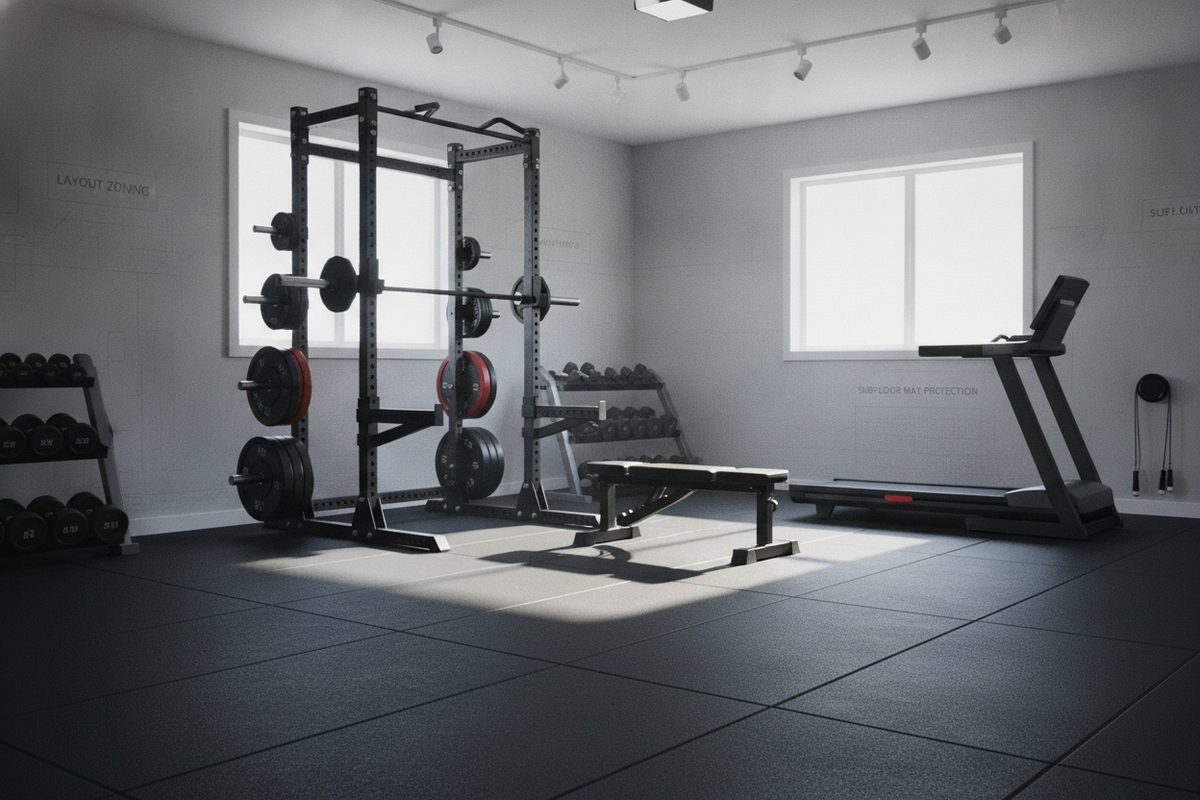
Floor-based exercises such as quadruped kickbacks, kneeling thrusts, and side planks place concentrated pressure directly on the patella, wrists, elbows, and hip bones. Practicing these movements on bare hardwood, laminate, or thin utility rugs can cause discomfort that distracts from proper muscle recruitment. A high-density, shock-absorbing workout product provides the necessary cushioning to support sensitive contact points during long sets.
Traction is equally critical during dynamic lower-body movements. Driving forcefully through the heels during glute bridges, thrusts, or lunges requires a surface with reliable grip. Inadequate traction causes foot sliding, which alters knee tracking and shifts tension away from the glutes. A dedicated large-format mat anchors your stance, protects residential subfloors from sweat and friction scuffs, and defines a clear, dedicated workout zone within your living space.
Mat Care, Cleaning, and Staging for Long-Term Home Training
Maintaining your home workout surface ensures ongoing traction and hygiene across repeated weekly sessions. Perspiration, body oils, and ambient dust naturally accumulate on floor mats during high-repetition conditioning, which can degrade surface grip over time.
- Wipe Down After Each Session: Use a damp microfiber cloth with a mild soap solution or dedicated mat cleaner to remove sweat without breaking down material elasticity.
- Allow Full Air Drying: Let the surface dry completely before rolling or stacking to prevent moisture buildup.
- Flat Staging: Roll out the mat several minutes before your session to ensure edges settle flat, eliminating tripping hazards during dynamic lunges.
- Avoid Harsh Solvents: Steer clear of bleach or abrasive scrubbers, which can compromise the textured non-slip surface.
For additional training frameworks, exercise libraries, and movement progressions, explore our comprehensive workout resource to support your home fitness routine.