8 Hip Mobility Exercises to Fix Tight Hips: Daily Protocol, Movement Mechanics, and Floor Mat Staging
Understanding Hip Joint Stiffness and Multi-Planar Movement
The hip is a multi-axial ball-and-socket joint designed for significant range of motion across multiple planes. Modern daily life, especially prolonged sitting and repetitive linear training, often restricts the joint capsule. When the hip complex loses rotational capacity, surrounding structures such as the lumbar spine and knees often compensate. To restore full function, a routine must target flexion, extension, internal rotation, external rotation, adduction, and abduction systematically.
A well-rounded sequence of 8 hip mobility exercises helps reinforce active control at end-range joint positions. Rather than relying solely on passive stretching, dynamic mobilization challenges neuromuscular control, tissue tolerance, and joint lubrication across varied movement angles.
The Foundation: Floor Mat Staging and Joint Protection
Executing ground-based mobility work requires a dedicated training surface that balances firm stability with joint cushioning. Hard floor surfaces can place uncomfortable direct pressure on the patella, ankles, and wrists during kneeling or quadruped drills. Conversely, excessively soft surfaces can destabilize the ankles and wrists during balance-demanding transitions.
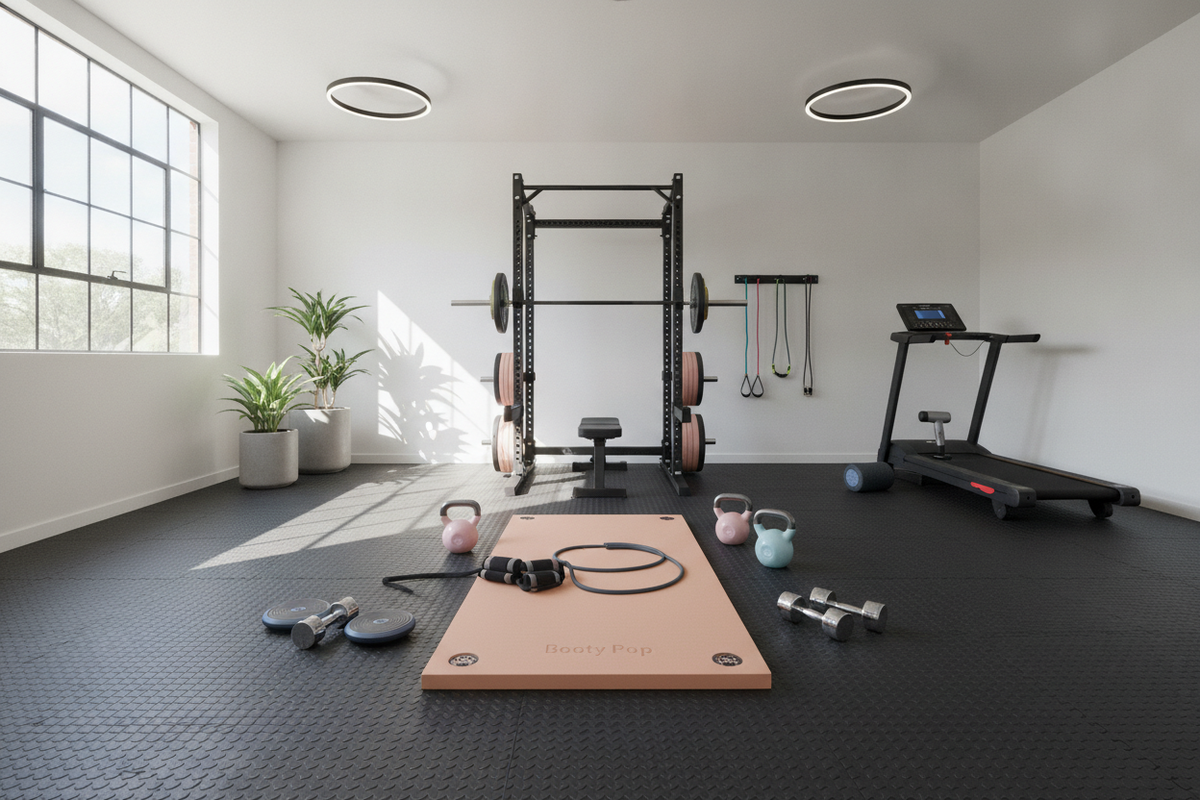
Using a dense, shock-absorbing large floor mat creates an expansive, non-slip boundary for dynamic ground flows. High-traction textured surfaces prevent feet and hands from slipping during wide stance transitions. For comprehensive movement sequences, reviewing a dedicated hip mobility exercise guide helps in understanding how floor space setup directly enhances exercise consistency and joint comfort.
The 8 Daily Hip Mobility Exercises Protocol
Practicing these 8 daily hip mobility exercises provides a progressive flow from seated and kneeling positions to upright, weight-bearing planes. Perform each exercise smoothly without forcing painful ranges.
1. 90/90 Hip Switch and Torso Fold
The 90/90 position directly addresses both internal and external hip rotation simultaneously. Sit on your mat with your lead leg bent at ninety degrees in front and your trail leg bent at ninety degrees to the side. Keep your spine neutral and fold your torso gently over the front shin to target external rotation. After holding briefly, transition dynamically by pivoting on your heels to reverse the leg orientation without relying heavily on your hands for support.
2. Half-Kneeling Hip Flexor Glide
This movement targets tight anterior hip structures, including the psoas and rectus femoris. Set up in a half-kneeling stance with the rear knee resting on a cushioned mat surface. Tuck the pelvis slightly into a posterior tilt to engage the glute on the kneeling side. Slowly glide forward into the front hip while maintaining an upright posture, avoiding hyperextension through the lower back.
3. Quadruped Hip CARs (Controlled Articular Rotations)
Controlled articular rotations encourage smooth movement throughout the entire joint capsule. Position yourself on all fours with hands under shoulders and knees under hips. Keeping the torso and pelvis level, lift one knee, bring it toward the chest into flexion, rotate it outward into abduction, drive the heel toward the ceiling into extension, and return smoothly to the start position. Repeat the motion in reverse.
4. Active Frog Stretch with Pelvic Tilts
The frog stretch targets deep adductors and inner hip capsule structures. Place both knees wide on a non-slip floor mat with your inner ankles and feet resting flat against the ground. Lower your forearms to the mat, shift your hips gently backward toward your heels until you feel a moderate stretch, and perform subtle anterior and posterior pelvic tilts to explore range at the inner hip.
5. Prone Pigeon Pose to Dynamic Reach
A classic drill for opening the deep lateral rotators and piriformis. From a plank or quadruped setup, bring one shin forward across the mat while extending the opposite leg straight back. Maintain square hips relative to the floor. Fold slightly over the front leg, then introduce active movement by gently reaching the opposite arm diagonally across the mat to increase functional lateral tension.
6. Deep Squat Pry with Thoracic Rotation
Deep squats integrate ankle dorsiflexion, hip abduction, and torso alignment. Stand with feet slightly wider than shoulder-width, lower into a full deep squat, and press your elbows against the insides of your knees. Use your elbows to gently pry the hips open while keeping your feet flat on the mat. Plant one hand on the floor and rotate your opposite arm toward the ceiling to integrate thoracic spine mobility.
7. Cossack Squat Side Glides
Cossack squats develop frontal-plane hip flexibility and single-leg strength. Begin in an extra-wide stance on a secure, non-slip mat surface. Shift your weight smoothly to one side, descending into a deep single-leg squat while keeping the opposite leg straight and rotating its toes upward. Keep your chest upright and glide smoothly across to the opposite side without standing fully between repetitions.
8. Supine Dynamic Figure-4 Glute Sweep
This drill provides posterior capsule decompression while the spine is supported against the floor. Lie flat on your back on a cushioned mat. Cross one ankle over the opposite knee to form a figure-four shape. Thread your hands through to clasp behind the supporting hamstring, gently drawing the legs toward your chest while actively pressing the crossed knee outward. Perform subtle side-to-side rocking motions to massage surrounding tissues.
Integrating Mobility with Strength and Full-Body Movement
Mobility drills are most effective when integrated alongside active lower-body training. Creating usable joint range allows for cleaner movement patterns during compound lifts like squats, deadlifts, and lunges. Pairing your mobility routine with a structured hip exercise guide ensures that newly opened ranges of motion are supported by muscular stability and active tension control.
Furthermore, hip mechanics directly influence movements throughout the kinetic chain. Combining lower-body drills with an upper-body or exercise mobility guide encourages balanced posture, spinal decompression, and coordinated full-body movement patterns.
Structuring Your Daily Mobility Workflow and Progression
Consistency is the primary driver of lasting tissue adaptations. Integrating 8 daily hip mobility drills into your regular schedule can be adjusted depending on the time of day:
- Morning Flow: Perform the floor-based sequence (drills 1 through 5) for 5 to 10 minutes to relieve morning joint stiffness.
- Pre-Workout Warmup: Emphasize dynamic, weight-bearing drills (drills 2, 6, and 7) prior to lifting or running to prime movement ranges.
- Post-Work Unwinding: Focus on gentle holds and deep breathing with supine and seated positions (drills 1, 4, and 8) to reverse the stiffness associated with all-day sitting.
Optimizing Your Home Mobility Zone and Mat Maintenance
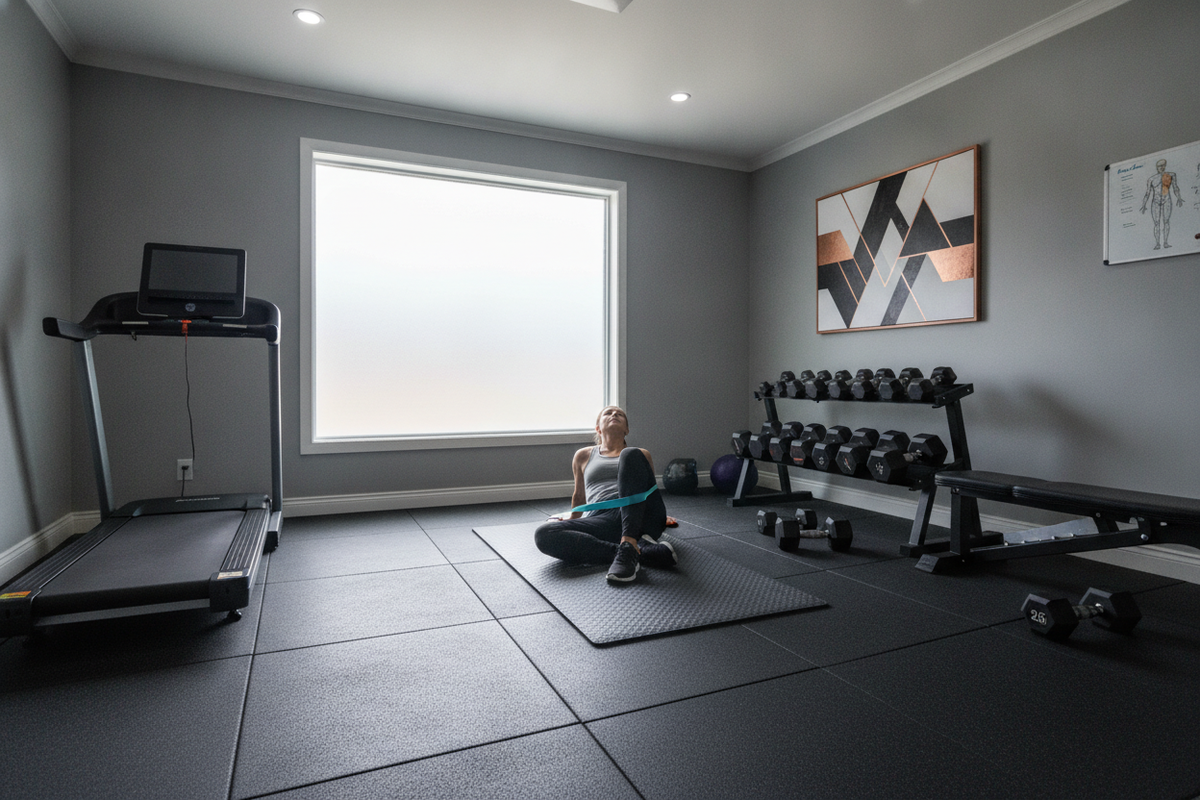
Establishing a dedicated floor zone encourages regular movement practice. When selecting a workout mat for mobility training, look for high-density materials that resist compression under concentrated points like knees, elbows, and heels. A textured underside helps keep the mat anchored to wood, tile, or carpet without shifting during dynamic transitional glides.
To maintain your mobility mat, wipe down the surface after each session using a damp cloth and mild soap solution. Allow the mat to air-dry completely before rolling or storing it flat. Keeping a clean, dedicated floor space clear of clutter makes it simple to complete your daily hip mobility drills consistently.