Booty Pop Workout Blueprint: Glute Activation Mechanics, Movement Sequencing, and Floor Mat Staging
A well-structured booty pop workout targets the posterior chain through coordinated hip extension, abduction, and external rotation. Combining floor-based isolation movements with upright dynamic patterns creates balanced tension across the gluteal muscle complex. Executing these exercises with proper biomechanics and adequate floor cushioning allows individuals to train consistently at home while protecting joints and flooring.
Biomechanics of the Booty Pop Workout: Target Musculature and Kinetic Alignment
Effective glute training requires engaging three distinct muscles: the gluteus maximus, gluteus medius, and gluteus minimus. The gluteus maximus represents the primary mover during hip extension and backward leg drives, contributing significantly to shape and power. Meanwhile, the gluteus medius and minimus manage hip abduction, lateral stability, and pelvis alignment during dynamic lower-body movements.
A balanced booty poppin workout incorporates multi-planar loading. Sagittal plane movements like hip thrusts and kickbacks drive vertical and horizontal hip extension. Frontal and transverse plane exercises, such as lateral band walks and curtsy lunges, activate the stabilizing musculature along the hip border. Maintaining a neutral spine and pelvic posture throughout each repetition ensures the work remains focused on the glutes rather than placing unnecessary strain on the lumbar area.
Core Booty Pop Exercise Variations and Technique Cues
Organizing movements into clear categories simplifies technique mastery and helps build an effective lower-body routine.
Quadruped Kickbacks and Donkey Kicks for Peak Contraction
Starting on hands and knees isolates the hip without demanding complex upright balance. To execute a controlled donkey kick, establish a tabletop position with wrists aligned beneath shoulders and knees under hips. Keep the moving knee bent at a right angle while driving the heel toward the ceiling using pure glute engagement. Avoid overarching the lower back at the top of the stroke. Setting up over a supportive surface from a durable exercise mat collection provides firm knee and wrist cushioning during repetitive ground drills.
Supine Hip Bridges and Thrust Progressions
Lying supine on an exercise mat allows for direct gluteus maximus isolation through hip extension. Place feet flat on the floor, roughly shoulder-width apart, with heels positioned close enough to lightly graze with fingertips. Drive through the heels while tucking the pelvis slightly to achieve a full glute squeeze at the top of the bridge. Progressions can include single-leg variations, elevated shoulders, or pausing at peak contraction to increase time under tension.
Upright Dynamic Movements: Curtsy Lunges and Lateral Walks
Standing exercises introduce functional loading and challenge the hip abductors. For curtsy lunges, step one leg back and across behind the supporting leg, lowering the hips until the front thigh sits parallel to the ground. This movement emphasizes the upper and outer glute shelf. Pair curtsy lunges with banded lateral walks to keep continuous tension on the gluteus medius across the entire set.
Structuring Booty Popping Workouts: Sequencing, Volume, and Progression
To maximize results from booty popping workouts, organize routines into three clear phases: activation, primary loading, and metabolic burnout.
- Warm-Up & Activation: Begin with bodyweight glute bridges, clamshells, and bird-dogs to establish mind-muscle connection.
- Primary Strength Sets: Progress to loaded hip thrusts, curtsy lunges, or weighted kickbacks for focused volume. For detailed movement sequences, explore our lower-body booty workout guide.
- Burnout Finishers: Conclude with continuous bodyweight donkey kicks, pulse bridges, or lateral step-outs to fatigue remaining muscle fibers.
As movements become easier over time, apply progressive overload by adding resistance loops, increasing training tempo, or adapting home workout exercises with dumbbells and tempo pauses.
Home Gym Floor Setup: Joint Cushioning and Subfloor Protection
Floor-intensive glute routines place continuous pressure on contact points such as the knees, elbows, and hips. Hardwood, laminate, and concrete subfloors can create uncomfortable pressure points during quadruped and kneeling drills. A dedicated high-density mat disperses body weight evenly, ensuring comfort during extended workout sessions.
Dynamic standing exercises like jumping squats, lateral lunges, and curtsy variations also generate lateral friction. A large home workout mat creates a broad, non-slip boundary that accommodates wide stance transitions while shielding home flooring from equipment scuffs and sweat accumulation.
Equipment Staging and Mat Maintenance for Lower-Body Zones
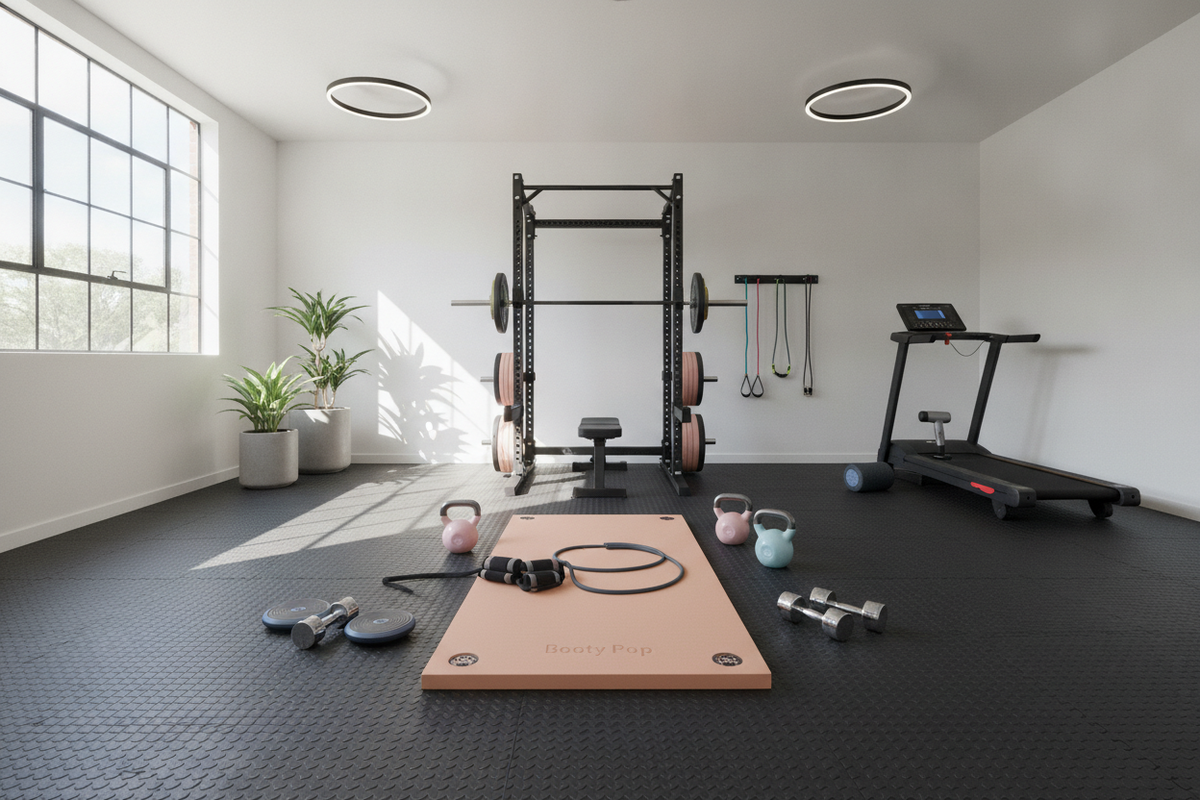
Setting up an orderly workout area streamlines transitions between floor drills and upright movements. Keep resistance loop bands, ankle weights, and dumbbells positioned just along the mat perimeter to prevent tripping hazards during dynamic sets.
To keep the workout surface grippy and hygienic, wipe down the mat after each session with a mild soap-and-water solution or gentle fitness mat cleaner. Allowing the surface to dry completely before rolling or storing maintains material integrity and non-slip traction for future lower-body workouts.