A Practical Blueprint for Resistance Strength Training: Form, Gear Selection, and Gym Floor Safety
Executing a consistent resistance strength training routine offers a practical method for developing muscular endurance, joint stability, and total-body functional capacity. Whether training in a commercial facility or building a personal setup at home, understanding the mechanical forces at play allows lifters to select suitable equipment and arrange their workout zones effectively. Biomechanical efficiency begins at the surface level, where proper foot placement and solid ground contact anchor every repetition.
A well-structured training space requires more than just weights and bands; it relies on stable flooring, clear layout zoning, and an understanding of how external loads interact with both the body and the room. For a deeper look at coordinating gear for structured progress, review our strength resistance training guide.
Understanding Resistance Strength Training: Biomechanics and Core Principles
At its foundation, resistance training relies on applying an external load against skeletal muscle contraction. This external stimulus prompts the neuromuscular system to adapt, recruiting motor units to produce controlled force through specific joint angles. Applying resistance across balanced movement planes helps establish symmetrical muscular tension throughout the body.
Mechanical Tension and Movement Patterns
Human movement can be organized into fundamental archetypes: the squat, hip hinge, horizontal push, horizontal pull, vertical push, vertical pull, and loaded carry. When resistance is applied to these archetypes, muscles experience mechanical tension throughout both concentric shortening and eccentric lengthening phases. Maintaining control through the full range of motion promotes balanced joint loading and steady muscular engagement.
How to Do Resistance Training Safely Across Experience Levels
Understanding how to do resistance training starts with mastering unweighted or lightly loaded movement mechanics before adding external volume. Lifters often benefit from establishing consistent posture, maintaining neutral spine positioning, and controlling movement tempo. Rushing through repetitions can compromise form, whereas deliberate pacing emphasizes stability and controlled eccentric deceleration.
Selecting Modalities: Weight Resistance Training vs. Elastic and Machine Systems
Different training tools alter the resistance curve experienced by active muscle groups. Selecting the appropriate balance between free weights, resistance bands, and stationary systems depends on training goals, available space, and personal preferences.
Free Weights and Dynamic Loads
Weight resistance training utilizing barbells, dumbbells, and kettlebells requires the lifter to stabilize the load across three dimensions. Free weights allow natural joint tracking, making them versatile tools for compound lifts. To compare the distinct advantages of open-chain loading against guided apparatuses, explore our weight resistance training guide.
Machines and Guided Resistance Mechanisms
Fixed-path machines and selectorized cable stations guide movement along predetermined paths, isolating targeted muscle groups without demanding extensive balance stabilization. For lifters seeking dedicated leg presses, hack squats, or extension setups, browsing a specialized strength collection provides equipment suited for controlled, focused movements.
- Free Weights: Maximize stabilizing muscle activation and multi-planar control.
- Resistance Bands: Provide accommodating resistance that increases as the material stretches.
- Selectorized Machines: Offer stable paths of motion for isolated muscular work.
- Cable Systems: Deliver constant tension across varied angles and pulling lines.
Essential Exercise Archetypes in Strength & Resistance Training
Creating a balanced strength & resistance training regimen involves combining multi-joint compound lifts with focused accessory drills. Coordinating upper and lower body movements maintains structural symmetry across major muscle groups. To evaluate which tools match your long-term athletic goals, consult our comprehensive strength weight training guide.
Lower Body Foundations: Squats, Hinges, and Unilateral Steps
Lower-body strength is anchored by double-leg and single-leg exercises that distribute forces through the hips, knees, and ankles:
- Squat Variations: Target the quadriceps, glutes, and core bracing mechanisms while demanding ankle and hip mobility.
- Hip Hinges: Emphasize the posterior chain, including hamstrings, gluteal complexes, and spinal erectors, through controlled hip flexion.
- Unilateral Lunges and Step-Ups: Address bilateral strength discrepancies while improving hip stabilization and balance.
Upper Body Structure: Presses, Rows, and Overhead Control
Upper-body movements balance pushing and pulling forces across both horizontal and vertical planes. Horizontal presses and push-ups develop the chest, anterior shoulders, and triceps, while horizontal rows build mid-back thickness and support scapular retraction. Vertical presses and overhead carries challenge shoulder stability and upward scapular rotation, counterbalanced by lat pulldowns and pull-ups that engage the latissimus dorsi.
Home Gym Staging: Flooring Use Cases, Subfloor Protection, and Equipment Zoning
Setting up a functional training space requires careful attention to the underlying surface. Dropped weights, high point loads from heavy racks, and dynamic footwork can damage residential subfloors if appropriate protective layers are absent.
Floor Traction and Joint Cushioning Under Heavy Loads
High-density rubber gym flooring serves multiple structural purposes in a home gym:
- Surface Grip: Non-slip textures provide secure foot placement during heavy squats, deadlifts, and lateral movements.
- Subfloor Defense: Resilient mats distribute point loads from equipment legs and absorb impact energy from dropped plates.
- Joint Cushioning: Matting offers a balanced base that provides firm support for lifting while moderating shock during dynamic drills.
Complementing durable flooring with items from our strength training collection helps maintain an organized and efficient workout space.
Equipment Placement and Room Protection Strategy
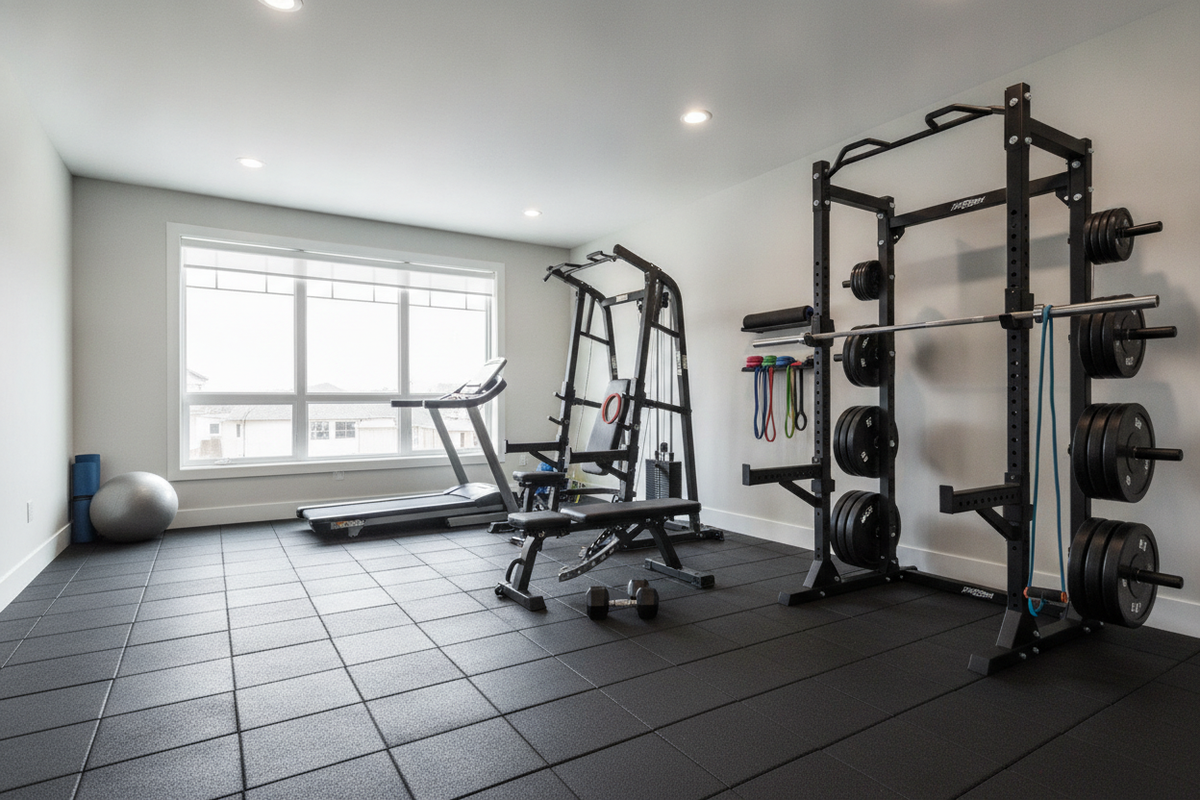
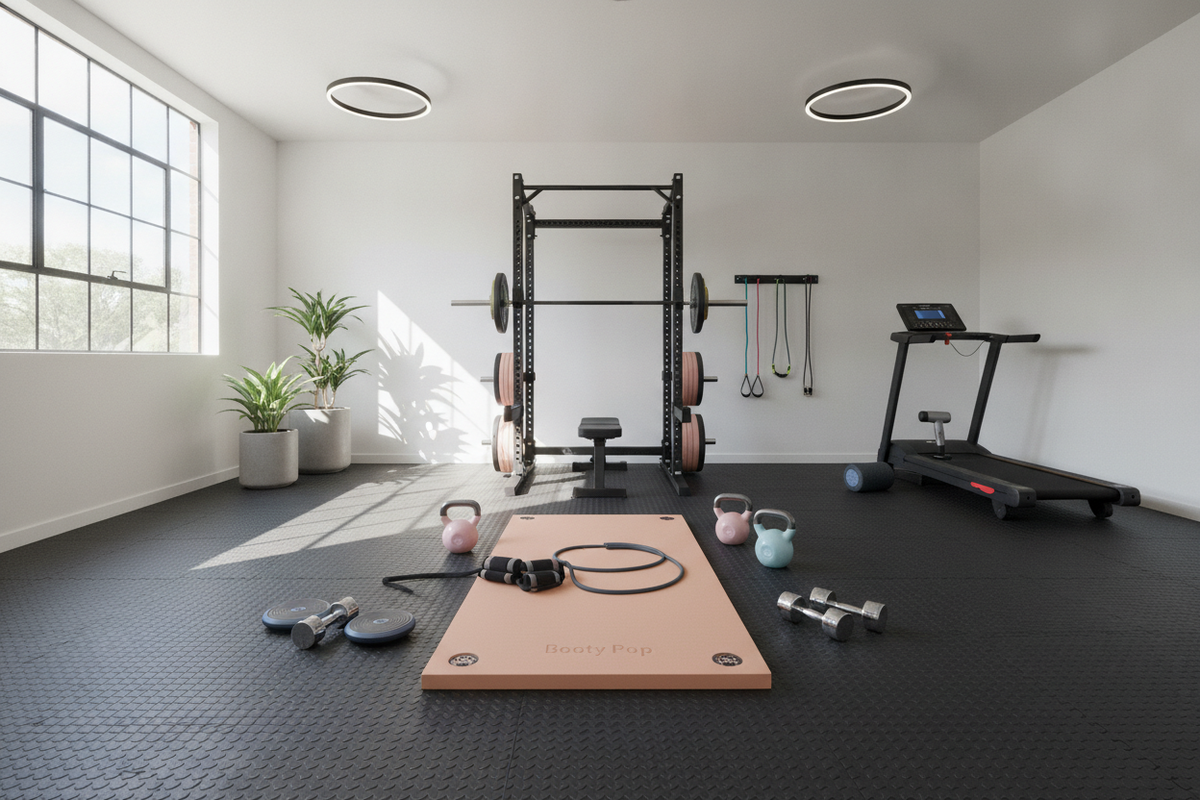
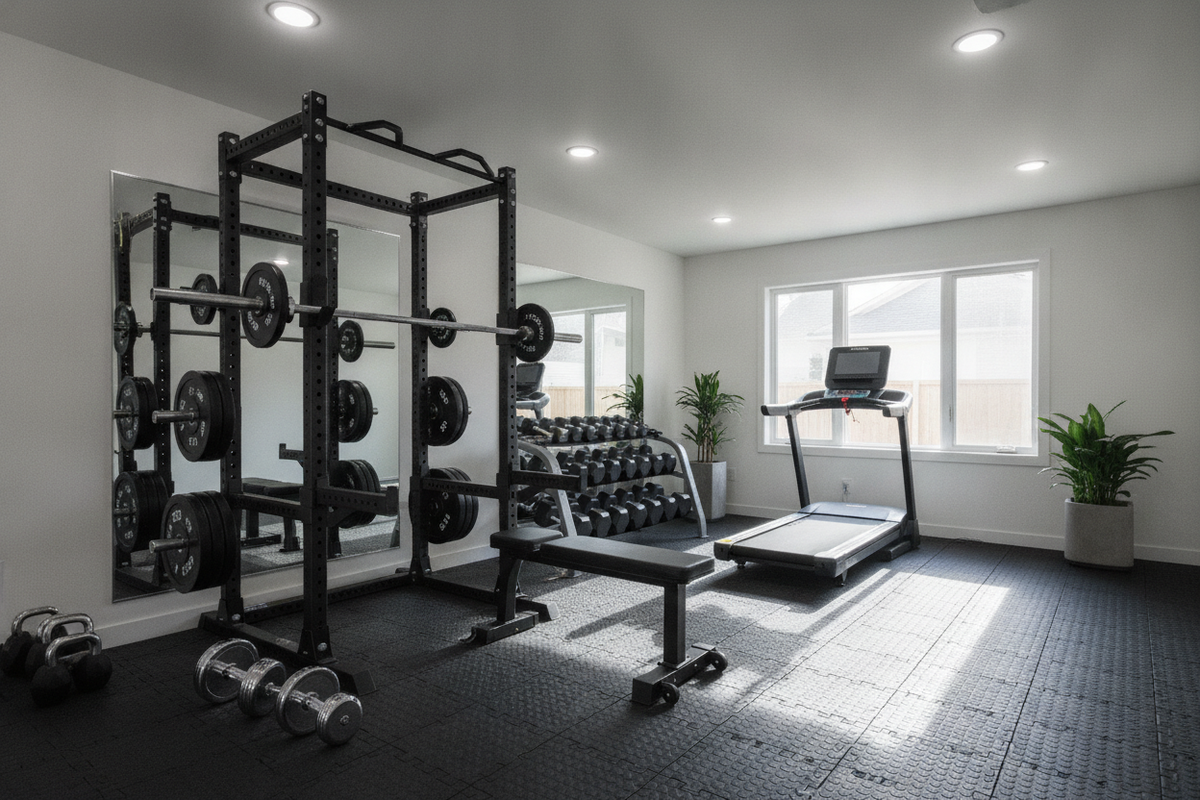
Organizing a training room into distinct functional zones enhances workflow and safety. Heavy stationary units, such as power racks and weight storage trees, should sit along perimeter load-bearing walls or dedicated platform areas. Maintaining a central open zone lined with protective matting accommodates dynamic kettlebell swings, dumbbell lunges, and elastic band exercises without spatial interference.
Mat Care and Equipment Maintenance for Long-Term Safety
Preserving gym flooring and training hardware requires simple, regular maintenance routines. Routine upkeep keeps surfaces clean, hygienic, and structurally sound over extended periods of regular use.
- Dry Debris Removal: Sweep or vacuum rubber surfaces regularly to remove dust, chalk, and grit that can erode traction.
- Mild Surface Cleaning: Wipe down mats using neutral-pH cleaners and damp mops, avoiding harsh petroleum-based solvents that degrade rubber compounds.
- Hardware Inspection: Check rack bolts, cable attachments, and dumbbell collars periodically to verify tight, secure fittings.
- Accessory Storage: Keep resistance bands and loose attachments off the main walking area to avoid trip hazards and premature wear.