Weak Glutes Exercises: Activation Protocols, Progressive Strength Frameworks, and Home Floor Staging
Understanding Glute Underactivity: Mechanics and Common Patterns
Glute underactivity often develops when prolonged seated postures position the hips in continuous flexion. In this position, the anterior hip structures remain shortened while the primary posterior drivers—the gluteus maximus, gluteus medius, and gluteus minimus—remain relatively slack and mechanically unloaded. Over time, this passive state can diminish the nervous system's efficiency in recruiting these muscle fibers during everyday locomotion and compound strength exercises. For an in-depth breakdown of how lifestyle factors influence neuromuscular recruitment, explore our strengthen weak glutes guide.
When the gluteal complex fails to engage predictably, the body naturally relies on synergistic muscle groups to accomplish hip extension, abduction, and external rotation. The lumbar erectors and hamstrings frequently take on excessive mechanical strain to compensate for an underactive gluteus maximus, while the tensor fasciae latae (TFL) and adductors often compensate for an underactive gluteus medius. Correcting these patterns requires deliberate, low-load weak glute exercises that re-establish localized muscular awareness before progressing to heavy dynamic loading.
Foundational Floor-Based Activation Drills for Weak Glutes
Floor-based exercises provide a low-threshold environment where external balance demands are minimized, allowing lifters to focus entirely on isolating specific hip musculature. Integrating these activation drills into warm-up routines helps prime the target muscles to fire during more complex functional patterns. For additional cues on isolating hip muscles without unwanted lower-body strain, review our exercise glute fix guide.
- Supine Glute Bridge: Lie flat on your back with your knees bent and feet planted flat on the floor, spaced hip-width apart. Brace your abdominal wall to prevent the lower back from overarching, then drive through your mid-foot and heels to elevate the pelvis until hips, knees, and shoulders form a straight line. Pause briefly at the top to emphasize terminal hip extension through the gluteus maximus.
- Side-Lying Clamshell: Recline on your side with hips and knees stacked at moderate flexion. Keeping the feet together, rotate the top knee upward by engaging the gluteus medius while ensuring the pelvis does not roll backward. Maintain controlled tempo on both the lifting and lowering phases.
- Quadruped Hip Extension: Position yourself on all fours with wrists below shoulders and knees below hips. Keeping the knee bent at a right angle, extend one hip upward toward the ceiling, driving the sole of the foot skyward. Focus on initiating the movement entirely from the glute rather than tilting the lumbar spine.
- Side-Lying Straight Leg Raise: Lie on your side with the bottom leg slightly bent for stability and the top leg fully extended. Slightly internally rotate the top foot so the heel leads upward, then raise the leg upward in the frontal plane to directly target the abductor fibers.
Progressive Standing Movements: Building Multi-Planar Hip Strength
Once floor-based activation establishes reliable muscular recruitment, transitioning to standing and loaded multi-planar movements builds functional resilience. Standing exercises challenge the glutes to stabilize the pelvis against gravity, ground reaction forces, and lateral displacement. Lifters looking to translate these mechanics into heavier compound lifts can consult our fix weak exercise guide.
- Lateral Resistance Band Walks: Place a looped mini-band around the ankles or above the knees. Assume an athletic partial-squat stance with a braced core and neutral spine. Step laterally while maintaining continuous outward tension against the band, ensuring the trailing foot controls its return step without collapsing inward.
- Split Squats and Reverse Lunges: Step one foot backward into a staggered stance. Lower the rear knee toward the floor while maintaining a slight forward torso lean to keep the mechanical load centered across the front hip and gluteus maximus. Drive through the front heel to return upright.
- Supported Single-Leg Romanian Deadlifts: Balance on one leg while lightly resting a hand on a sturdy wall or rack for balance. Hinge backward at the hips, allowing the torso to lower as the non-working leg extends straight behind. Drive the working hip forward to return to standing, maximizing posterior chain tension.
- Goblet Box Squats: Hold a moderate weight at chest level and sit back toward a sturdy box or bench. Maintain active knee tracking over the toes, lightly touch the bench without relaxing the core, and drive through the floor to stand.
How to Fix Weak Glutes: Weekly Progression and Adaptation Principles
Addressing underactive glutes requires a consistent progression model rather than abrupt loading spikes. When considering how to strengthen weak glutes, training frequency and movement quality take precedence over excessive resistance. For an expanded overview of structuring weekly volume and progressive overload, see our glutes exercise guide.
A structured approach generally divides training into distinct functional phases:
- Phase 1: Isolated Activation (Weeks 1 to 2): Perform unweighted, high-repetition floor drills daily or prior to lower-body training sessions. The objective is establishing clear mind-muscle connection and eliminating compensation from the hamstrings and lower back.
- Phase 2: Loaded Multi-Planar Integration (Weeks 3 to 4): Introduce light resistance bands, dumbbells, and unilateral standing drills into workout routines two to three times per week. Emphasize tempo, full range of motion, and isometric holds at peak contraction.
- Phase 3: Dynamic Compound Strength (Week 5 and Beyond): Progressively integrate compound hinges, squats, and dynamic carries into primary strength programming while maintaining brief activation drills as standard warm-up protocols.
Understanding how long to strengthen weak glutes depends on individual consistency, baseline movement patterns, and regular training frequency. Most individuals observe noticeable improvements in recruitment and positional stability within several weeks of disciplined practice, while structural strength adaptations continue to accumulate over months of progressive overload.
Movement Compensations and Biomechanical Form Checks
When executing weak glutes exercises, it is crucial to recognize and correct common biomechanical faults that divert tension away from the intended target areas:
- Lumbar Hyperextension: In bridging and quadruped movements, lifters often arch the lower back excessively to simulate greater range of motion. Keep the ribcage pulled down and the core actively braced to ensure movement occurs purely at the hip joint.
- Knee Valgus (Inward Knee Collapse): During squats, lunges, and lateral walks, the knees may collapse inward due to insufficient gluteus medius tension. Cue yourself to spread the floor with your feet and track your knees in line with your second and third toes.
- Pelvic Tilting in Unilateral Drills: In single-leg hinges and side raises, the non-working hip often rotates upward or drops downward. Keep the pelvis square and level relative to the floor throughout each repetition.
- Hamstring Dominance: If you feel bridges predominantly in the back of the thighs rather than the glutes, adjust your foot placement slightly closer to the hips or push through the heels while actively relaxing the calves and hamstrings.
Optimizing Your Home Gym Ground Setup for Glute Training
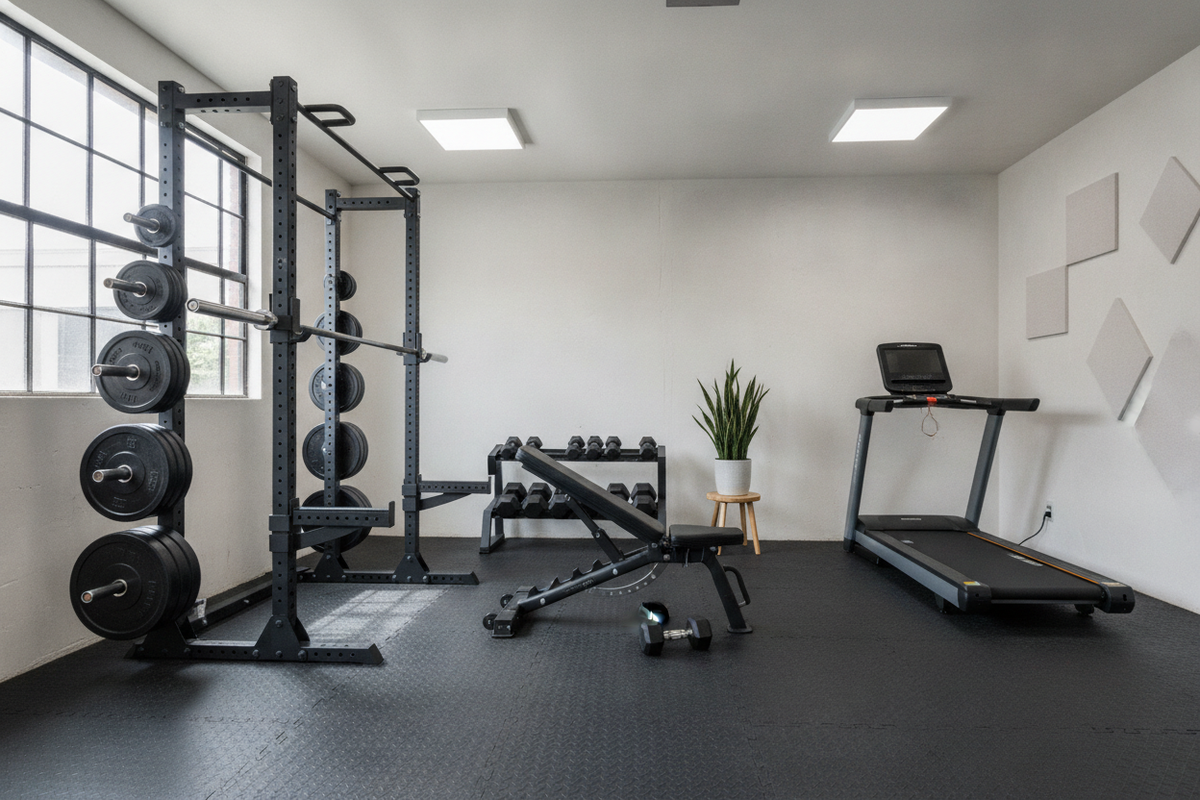
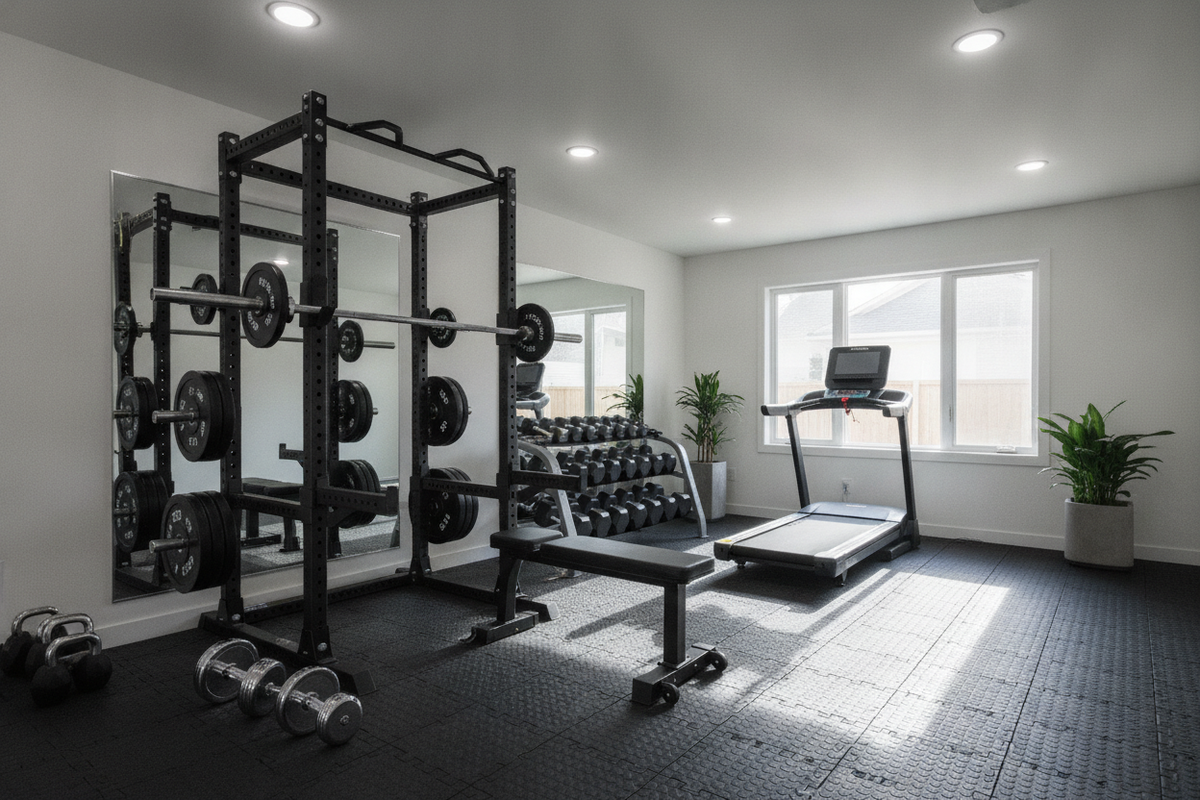
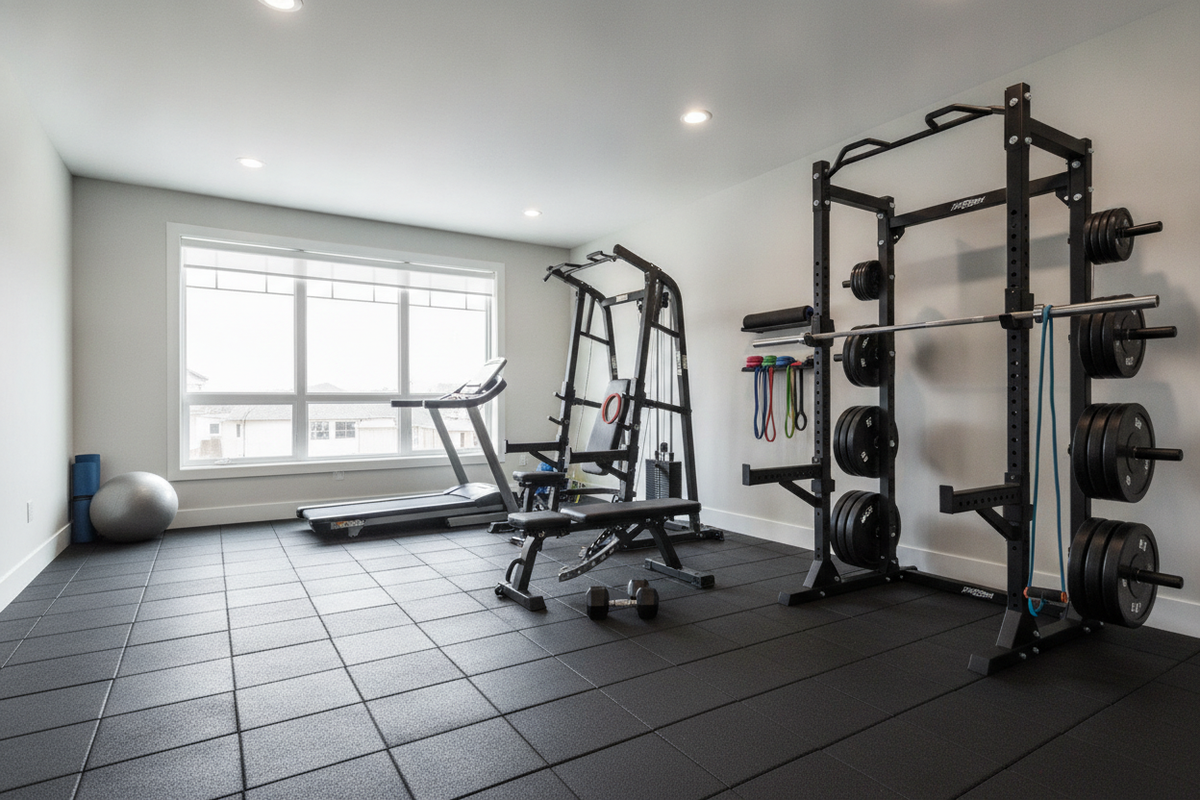
A safe, comfortable ground setup is essential for maintaining consistency with floor activation and standing hip drills. Because many foundational weak glute exercises require kneeling, side-lying, or planting hands and elbows on the floor, high-density exercise mats provide the necessary cushioning to protect sensitive contact points like the knees, hips, and wrists.
For dynamic standing drills such as lateral band walks and split squats, a firm, non-slip mat surface prevents footing slippage and allows stable lateral force transfer without shifting underfoot. Low-density or overly soft surfaces can compress unevenly, destabilizing the ankle and altering knee tracking during loaded movements. Selecting a durable, textured mat with adequate floor grip ensures your training surface remains secure across all planes of motion.
To maintain your exercise mats over time, wipe them down periodically with a mild soap-and-water solution and allow them to air dry completely before rolling or storing. Keeping your training area organized and properly cushioned creates an inviting, supportive environment for daily glute activation and long-term strength development.