Workout Schedule for Cardio and Strength: 7-Day Hybrid Blueprint, Split Sequencing, and Home Floor Setup
Principles of Structuring a Cardio and Strength Training Schedule
Designing a sustainable hybrid routine requires a clear understanding of how resistance training and cardiovascular exercise interact. Combining heavy compound movements with aerobic conditioning demands thoughtful planning so that neither discipline compromises the quality of the other. By organizing training stimulus throughout the week, home athletes can develop both muscular strength and cardiovascular stamina while managing central nervous system fatigue.
Training Interference and Energy System Management
When resistance work and high-output cardiovascular sessions are placed too close together, residual muscular fatigue can limit strength output, while systemic exhaustion can diminish aerobic performance. Managing these demands involves separating high-intensity lifting blocks from strenuous interval work. Allowing sufficient time between intense bouts gives muscle tissue and connective structures adequate opportunity to recover, keeping movement mechanics clean across all sessions.
Intra-Session Sequencing: Weights Before Cardio vs. Split Sessions
If both modalities must occur within a single training session, prioritizing resistance training before cardiovascular work is generally the standard approach. Lifting weights requires high neural drive, balance, and precision. Performing heavy lifts while fresh reduces the likelihood of technical breakdown. Following resistance work with moderate aerobic conditioning allows you to accumulate cardiovascular volume without diminishing strength performance. Alternatively, splitting modalities into separate morning and evening sessions can further reduce session-to-session interference.
The 7-Day Hybrid Split: Weekly Workout Plan for Cardio and Strength
A well-balanced weekly framework alternates between focused lifting days, dedicated conditioning intervals, and lower-intensity aerobic work. This structure provides a balanced stimulus without overloading specific joint structures on consecutive days.
- Day 1: Upper Body Strength + Low-Intensity Steady-State Cardio
- Day 2: Lower Body Strength Focus
- Day 3: High-Intensity Metabolic Conditioning
- Day 4: Active Recovery, Mobility, and Core Work
- Day 5: Full Body Strength Circuit
- Day 6: Steady-State Zone Conditioning or Tempo Work
- Day 7: Complete Rest
Upper and Lower Resistance Blocks with Low-Impact Conditioning
Separating the week into dedicated upper and lower resistance blocks allows targeted muscle groups to work with appropriate training loads. Lower-body days place substantial demands on the hips, knees, and ankles. Integrating dedicated equipment from a strength collection can help isolate key lower-body movement patterns with stable mechanics. Following these lifting blocks with low-impact cardio, such as steady cycling or incline walking, promotes blood flow without adding unnecessary plyometric stress to loaded joints.
Metabolic Conditioning and High-Intensity Hybrid Sessions
Mid-week sessions offer an opportunity to blend resistance tools with high-tempo conditioning. Implementing a structured cardio strength workout guide provides an efficient framework for pairing dumbbell complexes with sustained heart-rate intervals. For shorter, high-density training blocks, following a workout strength cardio guide helps athletes organize ladder intervals and multi-joint movements into concise, repeatable circuits.
Active Recovery, Mobility, and Rest Day Protocols
Consistency in hybrid training depends on planned deload periods throughout the week. Active recovery sessions should focus on gentle range-of-motion drills, soft-tissue work, and unweighted mobility routines. Dedicating at least one full day to passive rest helps restore glycogen reserves, reduces systemic fatigue, and prepares the body for the upcoming training cycle.
Home Gym Ground Staging: Flooring Requirements for Hybrid Workouts
Hybrid training places distinct demands on your home gym surface. While static lifting requires a firm, unyielding base to support heavy loads, cardiovascular drills involve dynamic lateral cuts, rapid foot transitions, and repeated ground impacts.
Traction, Cushioning, and Lateral Stability
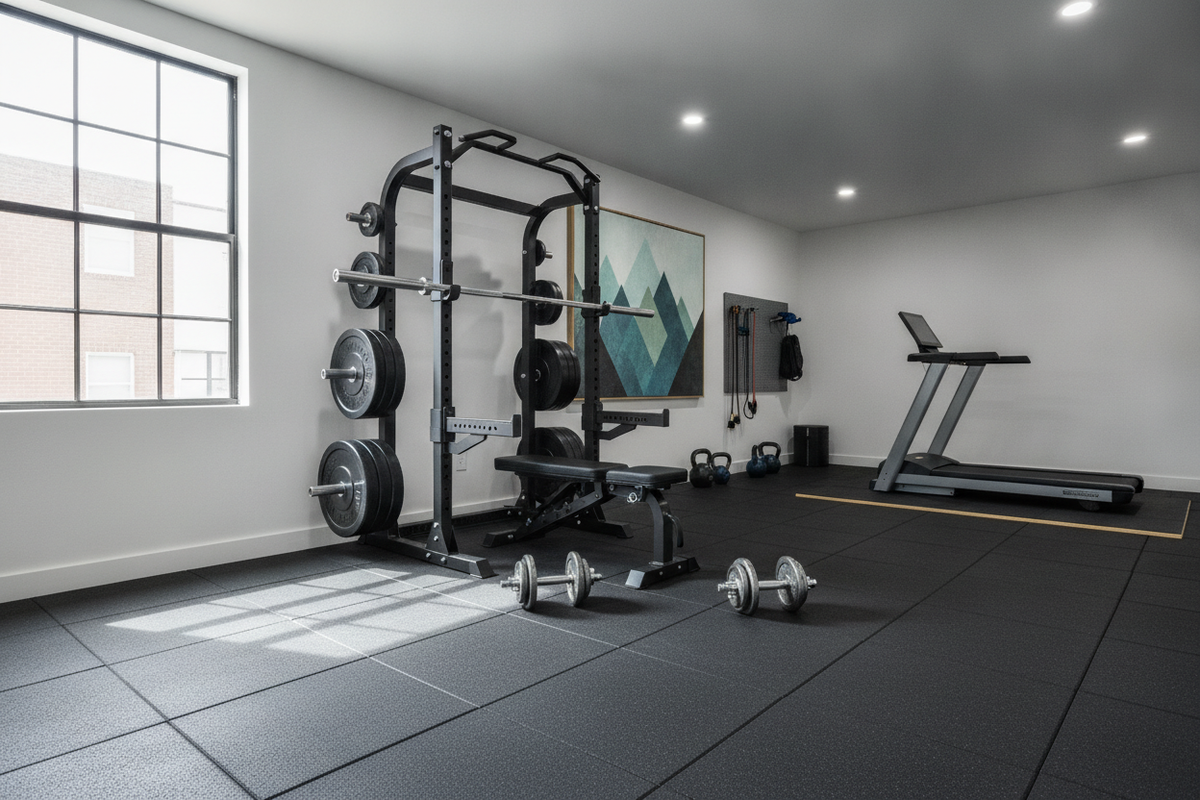
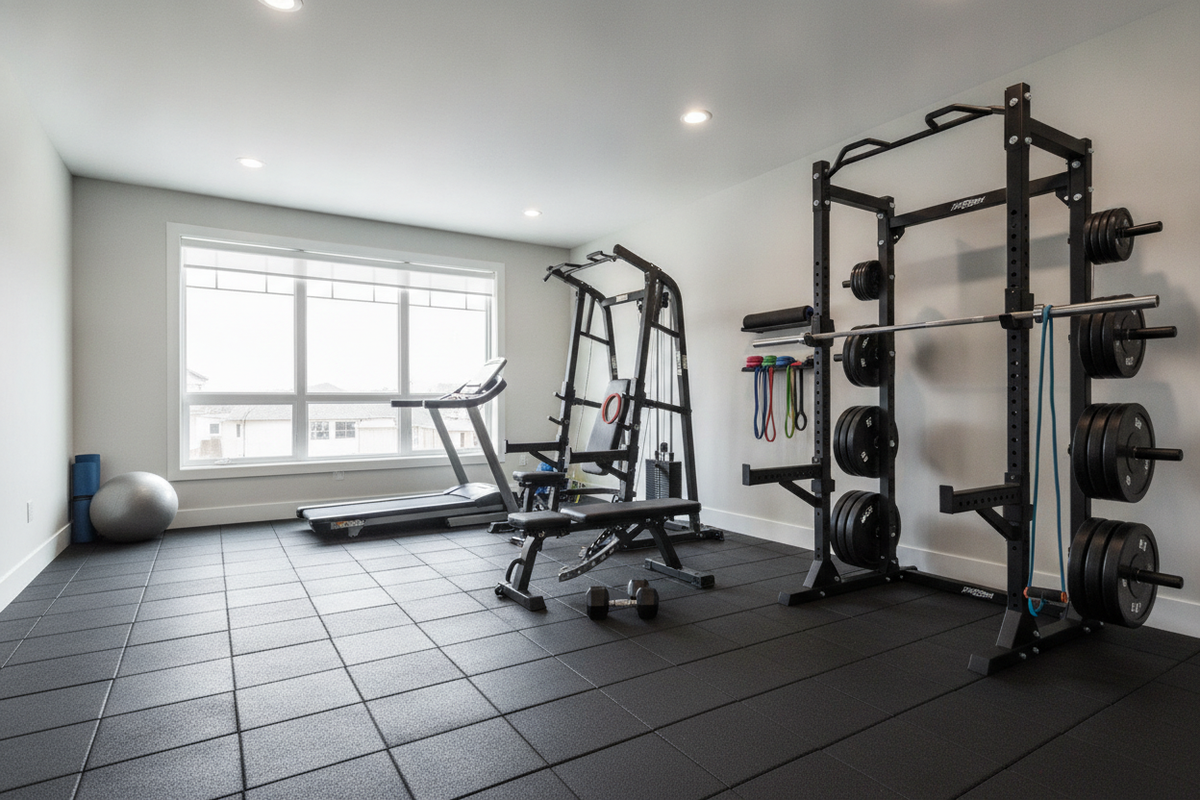
Flooring for hybrid training must deliver a secure balance between impact attenuation and surface firmness. A surface that is too soft can destabilize heavy squats and presses, while a bare concrete subfloor increases joint stress during high-tempo cardio intervals. Investing in a resilient large-format surface, such as a dedicated workout product, ensures stable footing during dynamic movements while protecting both the subfloor and dropped equipment.
Zone Layout: Seamless Transitions Between Weights and Cardio
Organizing your training space into functional zones eliminates wasted transition time between strength sets and conditioning intervals. Position free weights, benches, and items from your strength training collection along one perimeter of the training mat, leaving the central surface unobstructed for agility drills, jump rope sets, or kettlebell swings. This staging maintains open movement corridors and keeps equipment organized during fast-paced circuits.
Optimizing Equipment Flow and Weekly Schedule Adjustments
Maintaining a hybrid workout routine requires regular adjustments based on recovery indicators and equipment care. Designing a flexible plan ensures long-term consistency and protects your training gear.
Managing Cumulative Fatigue and Auto-Regulation
Training volume should reflect your daily readiness. If accumulated fatigue from work or poor sleep affects movement quality, auto-regulation allows you to scale back conditioning intensity or reduce working sets during resistance exercises. Swapping an intense interval session for low-impact steady-state cardio keeps the routine intact while managing systemic stress.
Equipment Maintenance and Ground Protection Longevity
Hybrid training naturally increases ambient sweat and mat abrasion due to rapid footwear transitions and floor-based movements. Regularly wiping down rubber flooring with mild, non-abrasive cleaners prevents moisture buildup and maintains surface traction. Designating specific floor mats for high-traffic lifting zones preserves the integrity of your conditioning space, ensuring a clean, durable home gym setup year-round.