Leg Extension Strength Standards: How Much Can You Lift?
When programming isolation work for your quadriceps, finding reliable benchmarks can be tricky. Unlike barbell squats or deadlifts, which rely on free weights and uniform bars, machine-based movements introduce variables like pulley leverage, cam design, and friction. Even so, understanding general leg extension strength standards helps you measure progress, address muscular imbalances, and select effective working loads for your training goals.
Understanding Leg Extension Strength Standards
Strength benchmarks for isolation movements function differently than those for multi-joint lifts. While squats recruit the glutes, adductors, hamstrings, and lower back, the leg extension targets the quadriceps alone. As a result, working weights represent direct force output from the front of your thighs rather than combined full-body leverage.
For most lifters, tracking strength relative to body mass provides the cleanest evaluation. Here is how lifters generally progress across different experience brackets:
- Beginner: A lifter learning movement mechanics typically handles roughly a fraction of their bodyweight for clean sets. At this stage, prioritizing controlled repetitions over absolute load protects the patellar tendon while building basic neuromuscular coordination.
- Novice: Lifters with several months of consistent lower-body training often progress to working loads hovering around half their bodyweight for moderate repetition ranges.
- Intermediate: An athlete reaching the intermediate standard can usually complete controlled sets with resistance approaching their bodyweight or slightly above, demonstrating balanced quad development alongside other staple lower body strength machines.
- Advanced: An advanced lifter frequently commands loads exceeding their bodyweight for strict repetitions, maintaining smooth tension throughout the quadriceps without shifting their hips off the seat.
Because resistance profiles vary from one leg extension machine to another, these tiers serve as helpful guideposts rather than strict universal laws.
What Is a Good Leg Extension Weight?
Lifting questions often center around specific numbers on a weight stack or pin. Lifters regularly ask whether loads like 70 lbs, 120 lbs, or 200 lbs represent a good leg extension performance.
The answer depends heavily on your bodyweight, your repetition targets, and the mechanical advantages of the unit you use:
- 70 lbs to 90 lbs: For lightweight lifters or those newer to dedicated knee-extension training, handling 70 to 90 lbs for smooth sets of 10 to 15 reps represents solid baseline quadriceps strength.
- 120 lbs to 140 lbs: For an average-sized lifter at an intermediate level, working in the 120-lb to 140-lb range for controlled sets indicates balanced strength that complements heavy compound movements.
- 200 lbs and beyond: Moving 200 lbs or more with disciplined form and a full contraction reflects advanced leg extension strength, typically developed over years of dedicated training.
If you train on a plate-loaded leg extension machine setup, keep in mind that plate weight places direct torque on the lever arm without cable reduction. A 100-lb plate load on a direct pivot can feel noticeably heavier than a 100-lb setting on a multi-pulley selectorized commercial stack.
Is It Better to Go Heavy on Leg Extensions?
A frequent debate in strength training is whether to load the leg extension heavy for low repetitions or use lighter resistance for higher-volume sets. While heavy singles and triples are standard on squats or a leg press, the knee extension is an open-kinetic-chain movement where the resistance acts at the ankle, transferring shear force directly across the knee joint.
Because of this joint dynamic, most strength coaches and physique athletes favor moderate loads performed for 8 to 15 repetitions with strict form. This approach maximizes localized quadriceps fatigue and metabolic stress while minimizing abrupt joint strain. Pairing this targeted isolation work with foundational lower-body movements like compound bodyweight squat strength routines builds both joint resilience and balanced leg power.
Key Factors That Alter Leg Extension Numbers
If you switch gyms or upgrade your home gym equipment, you might notice that the weight you used yesterday suddenly feels far too heavy or surprisingly light. Several mechanical factors explain these discrepancies:
- Cam Shape: Cam-driven units alter resistance throughout the arc of motion. A cam designed to increase load at full knee extension challenges the quadriceps where they are mechanically weakest, naturally reducing the total weight you can handle.
- Cable Pulleys: Selectorized stacks often utilize 2:1 or even 4:1 pulley ratios. A 150-lb pin setting on a 2:1 pulley machine requires approximately 75 lbs of actual force to lift, whereas a direct 1:1 system requires the full nominal load.
- Pad Lever Arm Length: Adjusting the shin pad further down your lower legs increases the moment arm. This makes the identical weight stack feel significantly heavier against your quads than if the pad sits closer to your mid-shin.
- Plate-Loaded vs. Stack: A dedicated leg extension and curl machine using free-weight sleeves provides constant gravitational resistance, while selectorized weight stacks can incur cable friction that slightly alters both the concentric and eccentric phases.
Proper Form and Machine Setup for Reliable Standards
Testing your quadriceps strength accurately requires consistent execution. Cheating the movement by using torso momentum or cutting the range of motion inflates the numbers on the stack without building real strength. Use this checklist to establish repeatable standards:
- Align the Pivot Axis: Adjust the backrest so that the machine's primary pivot point aligns directly with the lateral joint line of your knees. Misalignment places unwanted torque on your ligaments and alters the resistance curve.
- Set the Shin Pad: Position the lower pad comfortably against your lower shins, just above the ankles. Avoid letting the pad rest directly on your feet or shifting up onto your mid-shin during movement.
- Anchor Your Pelvis: Firmly grip the machine handles located beside the seat. Pulling upward and back against these handles locks your hips and glutes firmly into the seat pad, preventing your pelvis from rising as the set gets difficult.
- Control the Full Range: Begin smoothly from the starting position without kicking or violently jerking the stack. Extend through a full range of motion until your knees reach full extension, pause briefly to emphasize quad recruitment, and lower the weight under control over two to three seconds.
Home Gym Placement, Floor Traction, and Equipment Care
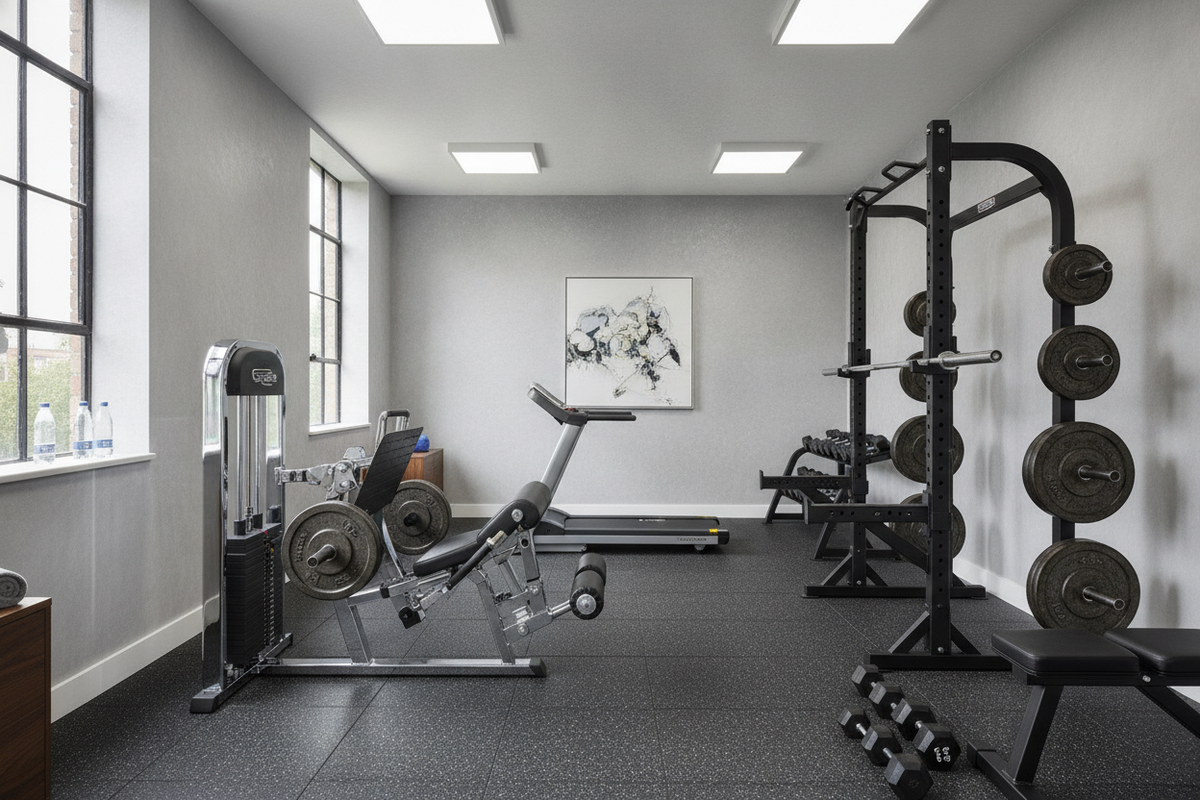
When incorporating dedicated lower-body units into a home gym, stability is paramount. A leg extension machine subjected to heavy plate loading or dynamic leg drives can shift, rock, or mar underlying concrete or subflooring if not seated on a firm foundation.
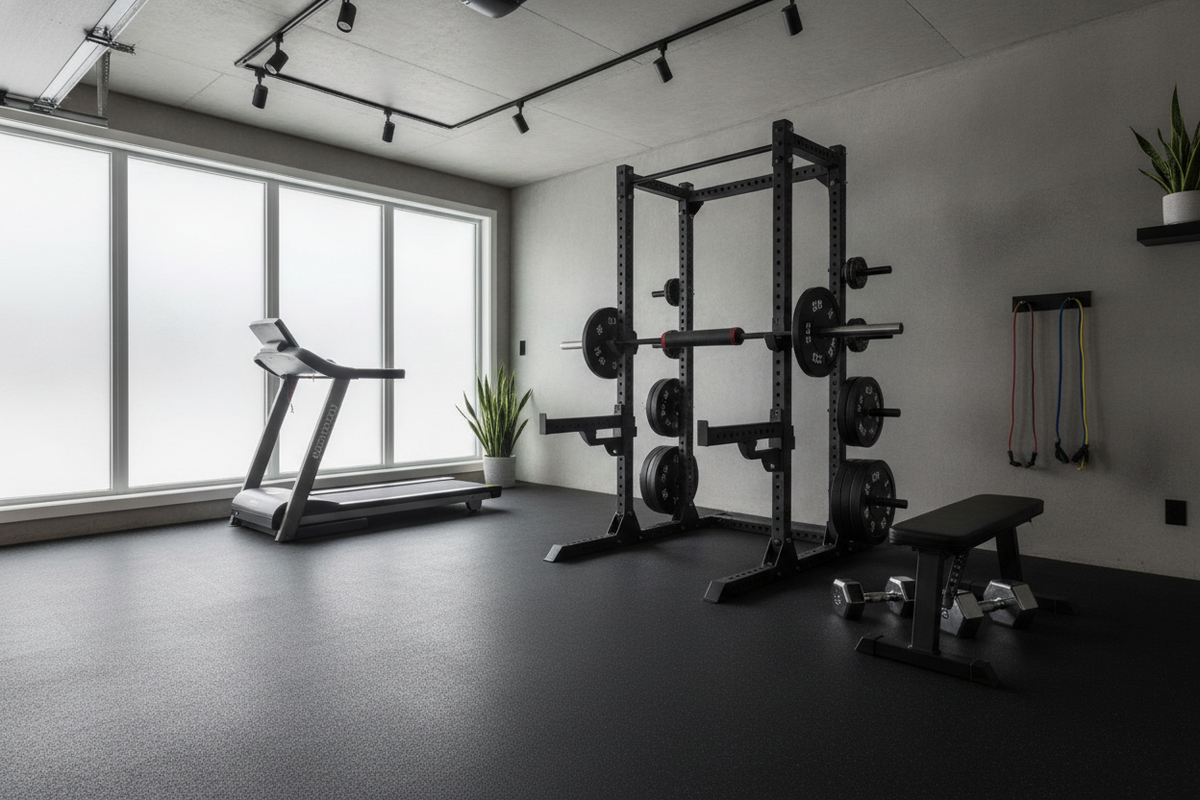
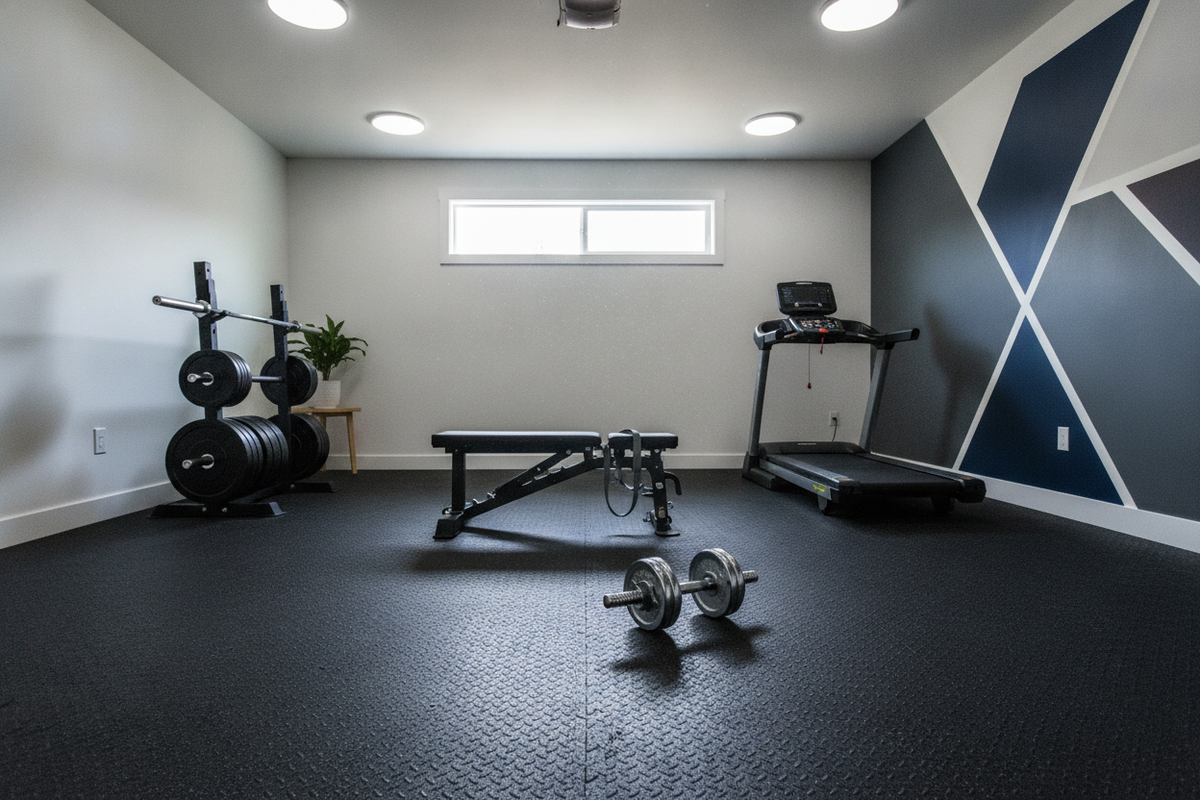
Placing your machine on high-density rubber gym flooring serves several critical functions. Thick rubber matting absorbs frame vibrations, dampens the thud of weight plates or selectorized stacks settling between reps, and provides non-slip traction under your feet when entering or exiting the unit. Additionally, a level, non-yielding rubber surface ensures that the machine frame remains square under load, preventing uneven wear on bushings, bearings, and cables over long training cycles.
By standardizing your machine settings, prioritizing controlled repetitions over ego lifting, and building on a stable flooring base, you can use leg extension strength standards as a reliable measuring tool for long-term lower-body development.