Does the StairMaster Tone Your Legs? What to Expect
Does the StairMaster Tone Your Legs?
Stepping onto a rotating staircase is one of the most demanding cardio workouts available in modern fitness centers. If you are wondering whether the machine produces real lower body definition, the short answer is yes. Continuous stair climbing directly challenges your major leg muscles by requiring you to lift your entire body weight vertically against gravity with every single step. Unlike flat-surface walking or coasting on a stationary bike, climbing stairs forces continuous concentric contraction across the hips, thighs, and lower legs.
However, understanding how the machine changes your physique requires looking at what muscle toning actually involves. Toning is the visible result of two distinct physiological factors: developing muscular endurance and firmness in the underlying muscle groups, paired with reducing excess body fat so those muscles are clearly visible. A stair climber serves both goals simultaneously. It functions as a hybrid between steady cardiovascular training and low-load, high-repetition muscular endurance work.
When performed consistently, a stairmaster workout elevates your heart rate to support calorie burn while keeping your quads, hamstrings, glutes, and calves under constant tension. If your primary goal is to shape firmer thighs and a lifted backside, regular stair climbing can produce noticeable improvements over time without requiring complicated equipment setups.
How Stair Climbers Target Glutes, Thighs, and Calves
Every step on a revolving staircase requires a coordinated sequence of joint actions. Your hips flex and extend, your knees drive forward and straighten, and your ankles stabilize and push off. This chain of movement ensures that no single muscle group in your legs works in isolation.
Quadriceps and Gluteal Muscles
Your quadriceps, which consist of four muscles along the front of the thigh, act as the primary engine for extending the knee joint during the ascent. As you step onto a higher tread and press downward, your quads contract forcefully to elevate your torso. This makes stair climbing exceptionally effective for building muscular endurance along the front of the legs.
At the same time, your gluteus maximus—the largest muscle in your posterior chain—drives hip extension. When you push down through your heel to propel your body upward, your glutes contract to lock out the hip. By focusing on taking deliberate, deep steps rather than hurried, shallow hops, you significantly increase the tension placed on the glutes and upper hamstrings. For athletes who want to balance climbing with other targeted modalities, reviewing a guide on cardio for toning legs can help you integrate diverse movements across your training week.
Hamstrings and Lower Leg Muscles
While the quads and glutes handle the heavy lifting, your hamstrings provide vital knee stabilization during each step. They assist in pulling your leg through the stepping cycle and control hip movement as you transition between stairs.
Lower down, your calves contract with every push-off. The gastrocnemius and soleus muscles in the calf flex the ankle to help push your foot away from the tread. The stabilizing muscles around your ankles and shins also work continuously to maintain balance on the moving steps. This constant low-level activation builds muscular endurance and creates a firmer, more defined appearance throughout the lower leg.
Calorie Burn, Fat Loss, and Lean Muscle Definition
A common point of confusion among gym-goers is whether stair climbers build bulky muscle or simply burn off excess energy. The reality lies between these two extremes. Stair climbing does not build massive muscle size in the way heavy resistance training does, but it does create dense, functional muscle tone while supporting overall fat loss.
Muscular Endurance Versus Heavy Resistance Training
To build large muscle volume, your body generally requires progressive overload using heavy external weights, such as a barbell back squat, hip thrust, or leg press. These heavy compound lifts recruit fast-twitch muscle fibers designed for short bursts of maximal strength. A stepping machine, by contrast, challenges your slow-twitch muscle fibers through hundreds or thousands of continuous repetitions against your own body weight.
This endurance-focused stimulus causes the muscles to become firmer, denser, and far more fatigue-resistant. Because you are constantly moving against gravity, the legs experience more continuous tension than they would during outdoor flat running or elliptical workouts. If you already practice dedicated lifting sessions, consulting a cardio and muscle workout plan ensures your aerobic conditioning supports your strength progress rather than exhausting your legs before your next squat day.
The Role of Caloric Expenditure
Muscle definition cannot be fully revealed without shedding the layer of subcutaneous body fat covering the muscle tissue. Because stepping machines demand tremendous work from large muscle groups, they require your heart and lungs to work hard throughout the session. This high energy demand leads to significant burning calories during and after the workout.
When combined with a balanced, calorie-conscious nutrition plan, this elevated calorie burn helps you lose weight gradually. As body fat levels decrease across the entire body, the underlying muscle shape in your quads, hamstrings, and calves becomes visible, creating the firm, sculpted appearance commonly described as toned legs.
Form and Posture Cues That Maximize Muscle Engagement
How you stand and move on the machine dictates which muscles do the work. Poor posture can take the workload off your legs and place unwanted stress on your joints, blunting your fitness results.
Avoiding the Handrail Slouch
The single most widespread error on stair climbers is leaning heavily on the side handles or console. Trainees frequently rest their forearms on the handrails, hunch their shoulders forward, and support a significant portion of their upper body weight with their arms. Doing this reduces the mechanical load placed on your lower body, effectively transforming a challenging climb into an easy jog while burning fewer calories.
To maximize lower body activation, use the handrails only for light balance with your fingertips, or let your arms swing naturally once you feel steady. Keep your chest open, your shoulders relaxed away from your ears, and your torso held tall. Maintaining a very slight forward hinge from your hips—not from your lower back—places the glutes in a prime position to extend the hip fully during each step.
Core Muscle and Foot Strike Awareness
Your core muscles play a key role in stabilizing your pelvis on moving treads. When you climb with an upright spine, your deep abdominal wall, transverse abdominis, and lower back posture muscles contract rhythmically to prevent your hips from swaying excessively from side to side.
Pay close attention to foot placement as well. Stepping solely on your toes overemphasizes the calves and can lead to tight Achilles tendons or unnecessary knee strain. Instead, plant your entire foot flatly onto the step and drive down through your midfoot and heel. This full-foot contact ensures your glutes and hamstrings take their fair share of the load rather than leaving the quads and calves to do all the work alone.
Structuring an Exercise Routine for Aerobic Fitness and Tone
Consistency and progressive variation are essential for transforming lower body tone. Depending on your current conditioning level, you can organize your stair workouts into steady-state sessions, interval training, or a combination of both across the week.
Steady-State Aerobic Climbing
For individuals building foundational stamina, steady-state climbing provides great cardiovascular health benefits. In this format, you select a moderate, sustainable speed and maintain it continuously for twenty to thirty-five minutes. Your breathing will be deep, your heart will pump oxygen rich blood steadily to your legs, and your leg muscles will build durable aerobic fitness.
Steady sessions are ideal for recovery days or as a low-impact substitute for outdoor running. They allow you to focus strictly on foot placement, breathing rhythm, and posture without the sudden fatigue spikes that cause form breakdowns.
High-Intensity Intervals and Step Variations
Once you are comfortable with steady pacing, interval training introduces brief periods of faster step speeds alternating with slower recovery intervals. For example, you might climb at a challenging pace for sixty seconds, followed by ninety seconds at a slow pace to bring your heart rate down, repeating the cycle for fifteen to twenty minutes.
Some trainees also incorporate variations such as taking steps two at a time or practicing slow crossover steps where you carefully step across to target hip stabilizers. If you choose to skip steps, reduce the speed significantly to maintain control and ensure you push entirely through the leading heel. Exploring a comprehensive training resource hub can give you additional structural ideas for organizing weekly splits that balance stepping sessions with mobility and recovery work.
Recovery, Bone Health, and Home Gym Setup
Because stair climbing is a continuous weight bearing exercise, it provides benefits that extend beyond surface-level toning. The repeated impact of stepping against gravity stimulates bone density and strengthens the connective tissues surrounding the ankles, knees, and hips. However, reaping these long-term benefits requires mindful recovery habits and proper setup.
In my experience reviewing cardiovascular equipment, trainees often underestimate how much tightness stair climbing can produce in the hip flexors and calves if mobility work is neglected. After completing a workout, spend five to ten minutes stretching your hip flexors, quadriceps, hamstrings, and calf muscles. Gentle static stretching restores resting muscle length and reduces post-workout stiffness.
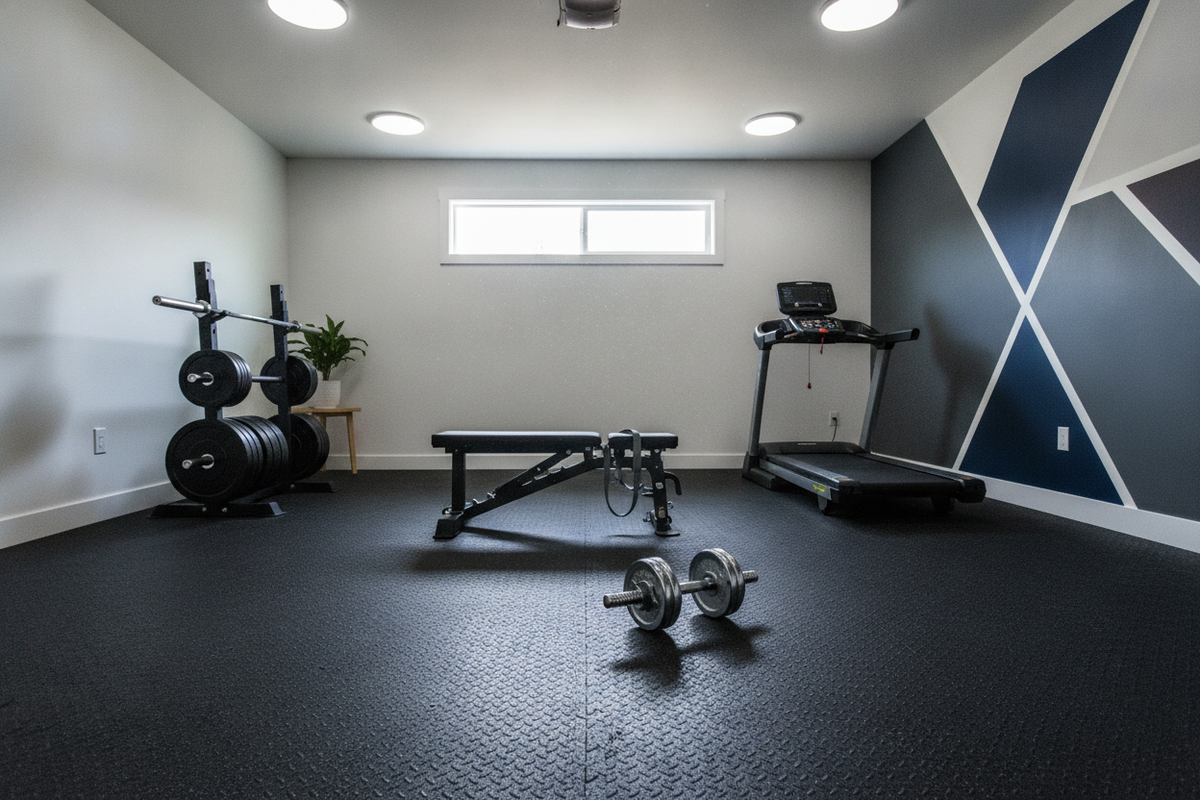
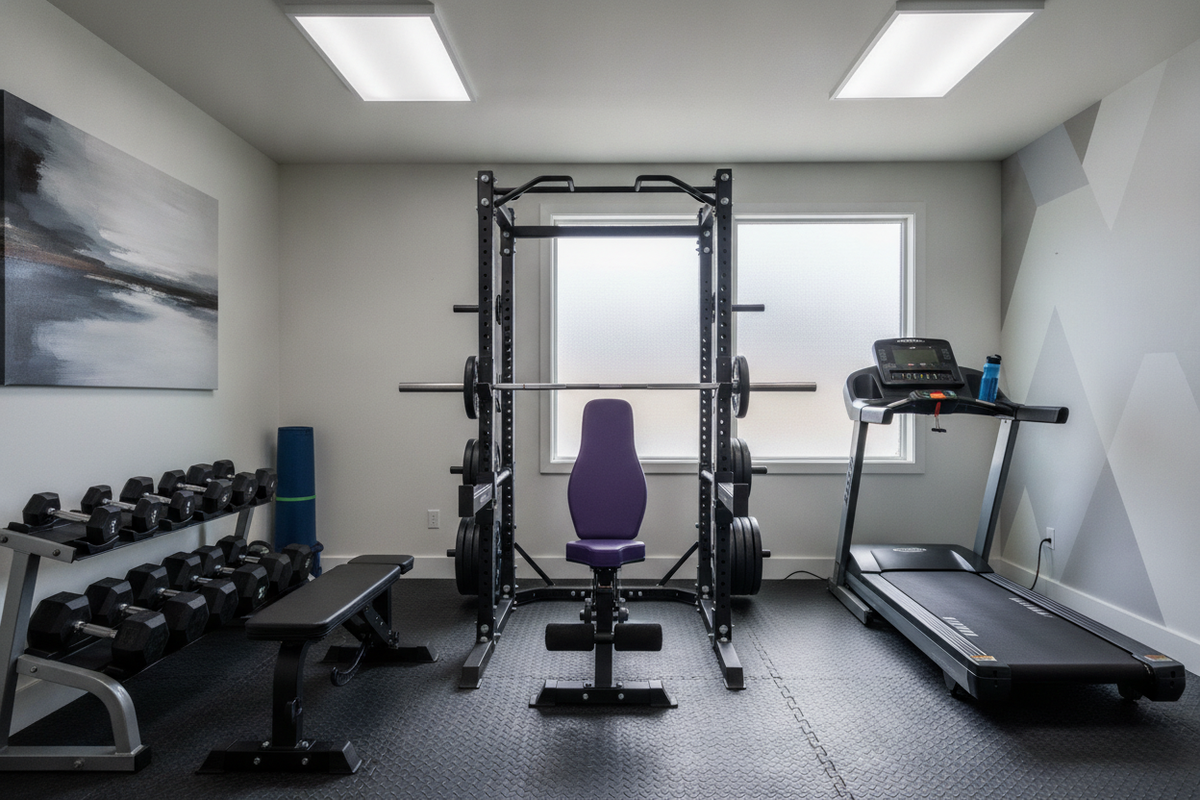
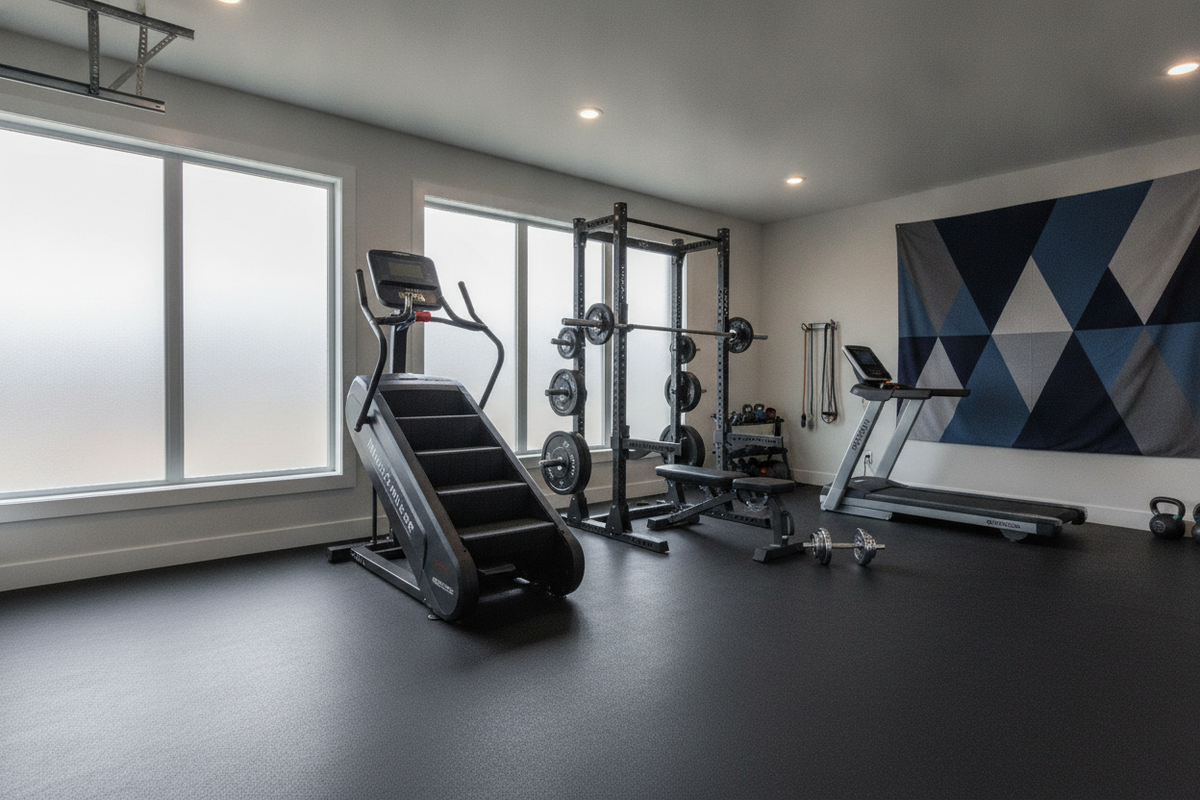
If you use a stepping machine in a home gym or garage training space, floor preparation matters just as much as machine maintenance. Stepping machines are heavy, tall, and concentrate substantial physical force onto a small footprint. Placing your equipment on dense rubber flooring shields your subfloor from vibration, reduces operational noise, and prevents the machine from shifting during vigorous intervals. Using a dedicated large home workout mat nearby also gives you a clean, cushioned surface to complete your pre-climb warm-ups, bodyweight lunges, and post-session lower body stretches comfortably.
By maintaining upright posture, pressing through the whole foot, and balancing your climbing routines with proper rest and nutrition, the StairMaster can serve as an exceptionally powerful tool for sculpting toned, capable legs.