Building Your Perfect Home Gym: The Equipment That Actually Matters
Setting up a home gym doesn't mean you need to recreate a commercial fitness center in your garage. The truth is, you can build an incredibly effective workout space with just a handful of carefully chosen pieces. After spending years bouncing between expensive gym memberships and eventually converting my spare bedroom into a functional training area, I've learned that quality beats quantity every single time.
The best equipment for a home gym starts with adjustable dumbbells. These compact powerhouses replace an entire rack of weights while taking up minimal floor space. A good set ranges from 5 to 50 pounds per dumbbell, giving you enough resistance for everything from shoulder raises to heavy chest presses. I initially bought individual pairs and quickly ran out of room—switching to adjustable dumbbells freed up half my workout area and actually saved money in the long run.
A quality adjustable bench comes next on any serious home gym list of equipment. This single piece transforms your workout possibilities, enabling incline presses, decline movements, step-ups, and countless bodyweight exercises. Look for a bench that adjusts to multiple angles and can support at least 600 pounds when you factor in your body weight plus whatever you're lifting. The stability makes all the difference during heavy sets.
The Foundation of Strength Training
Resistance bands deserve more credit than they typically receive. These unassuming loops of rubber provide variable resistance that actually increases as you stretch them—something weights can't replicate. They're perfect for warm-ups, rehabilitation work, and adding resistance to bodyweight movements. A complete set with different resistance levels costs less than a single month at most gyms, yet they'll last for years if you store them properly away from direct sunlight.
What is the best equipment for a home gym if you're serious about building strength? A power rack or squat stand answers that question definitively. This framework gives you the safety and versatility to perform squats, bench presses, overhead presses, and pull-ups without a spotter. The adjustable safety bars mean you can push yourself on heavy lifts without risking injury. Yes, it's an investment, but it's the piece that truly unlocks barbell training at home.
An Olympic barbell and weight plates complete your strength training setup. The standard 45-pound barbell with a 7-foot length accommodates all major compound movements. Start with bumper plates if possible—they're designed to be dropped safely and protect your floors. You don't need 500 pounds of weight immediately. Beginning with 300 pounds total gives you plenty of room to progress for the first year or two.
Cardio Without the Bulk
Good equipment for home gym cardio doesn't have to dominate your space. A jump rope delivers intense cardiovascular work in a package that fits in a drawer. It's the same tool professional boxers rely on for conditioning, and it costs about as much as a single smoothie from a juice bar. The learning curve is real, but even clumsy jumping gets your heart rate up quickly.
If you have room and budget for a cardio machine, consider what you'll actually use. Treadmills work for runners who need to train regardless of weather. Rowing machines provide full-body cardio and fold up for storage. Stationary bikes go easy on your joints while still delivering serious workouts. I chose a concept rower because it engages my entire body and slides under my bed when I'm done—your choice should match your preferences and space constraints.
The Extras That Enhance Everything
A thick exercise mat protects your floors and provides cushioning for floor work, stretching, and core exercises. Yoga mats are too thin for most strength training—look for something at least half an inch thick. I use mine for everything from deadlifts to cool-down stretches, and it's taken a beating for three years without showing significant wear.
Kettlebells add a different training stimulus than dumbbells. The offset weight distribution challenges your grip and core stability differently. A single 35-pound kettlebell for men or 20-pound for women opens up hundreds of exercises, from swings to Turkish get-ups. They're not essential on day one, but they're a worthy addition once you've mastered the basics.
Foam rollers and massage balls might seem like luxury items, but they're actually recovery tools that keep you training consistently. Spending ten minutes rolling out tight muscles prevents the minor aches from becoming workout-ending injuries. I ignored recovery work for years until a stubborn hip issue forced me to take it seriously—now it's as much a part of my routine as the lifting itself.
Smart Storage Solutions
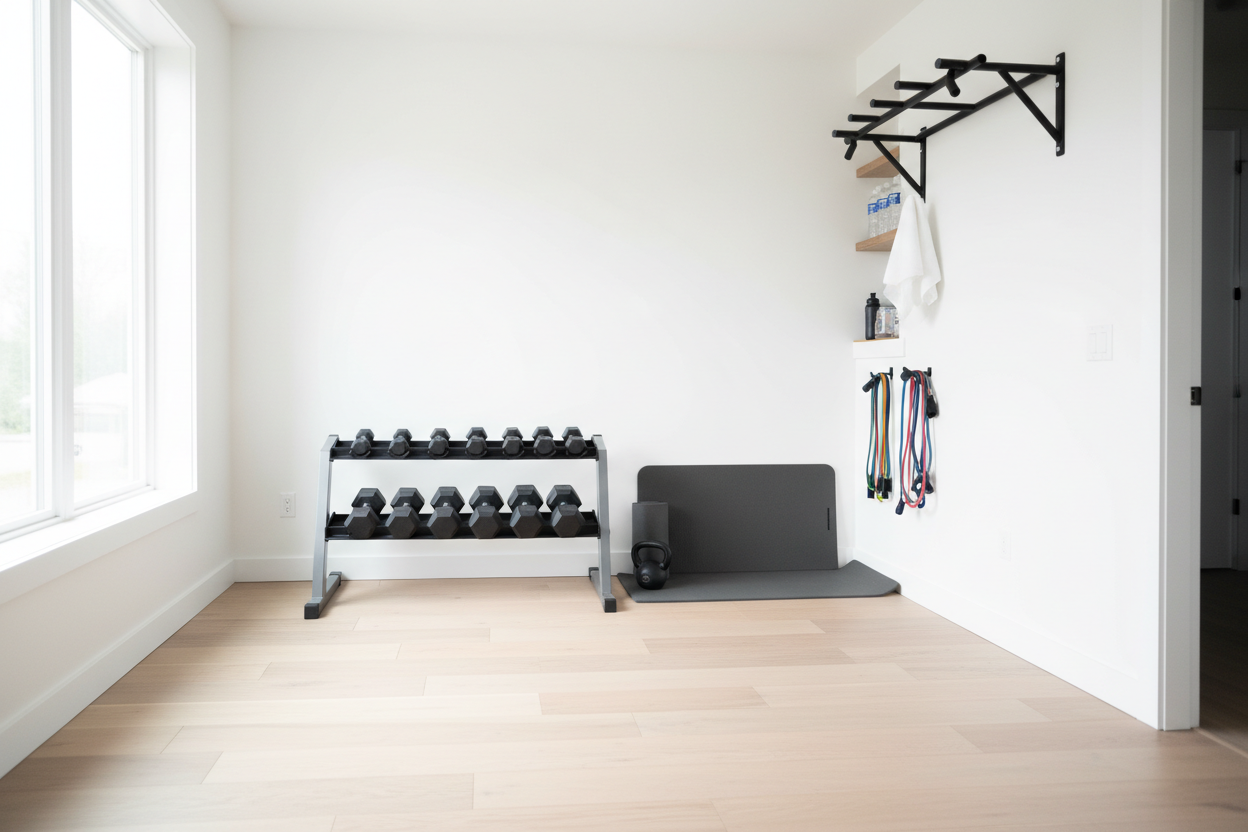
Organization matters more than you'd think. Wall-mounted plate holders keep weights off the floor and prevent tripping hazards. Dumbbell racks protect your equipment and make it easy to grab what you need quickly. Even simple hooks for resistance bands and jump ropes maintain order in your space. A cluttered gym becomes a gym you avoid using.
Mirrors aren't vanity—they're form-checking tools. A full-length mirror lets you monitor your technique during squats, deadlifts, and presses. Proper form prevents injuries and ensures you're actually working the muscles you're targeting. Position mirrors where you can see yourself during major lifts without having to turn your head.
Building Your List Strategically
You don't need everything at once. Start with adjustable dumbbells, a bench, and resistance bands. That combination covers probably 80% of effective exercises. Add the power rack and barbell when you're ready to progress beyond dumbbell weights. Introduce cardio equipment based on your actual preferences, not what you think you should do.
Quality matters more than having every possible piece. One excellent adjustable dumbbell set beats a dozen cheap fixed-weight pairs that break after six months. A sturdy power rack that'll last decades trumps a wobbly version that makes you nervous during heavy squats. Buy once, cry once—then enjoy years of reliable training.
The best home gym grows with you. What works for a beginner differs from what an intermediate lifter needs. Adjustable equipment and versatile pieces adapt as your strength and skills develop. That's why adjustable dumbbells and benches top every smart home gym list of equipment—they scale with your progress instead of becoming obsolete.
Your home gym should invite you to work out, not intimidate you with complexity or clutter. Keep it simple, keep it functional, and keep it organized. The equipment matters less than the consistency you bring to using it. A modest setup used five days a week beats an elaborate one that collects dust because it's overwhelming.
FAQ
How much space do I need for a functional home gym?
A 10x10 foot area provides enough room for most home gym setups. You can work with less if you choose compact, multi-purpose equipment like adjustable dumbbells and foldable benches. The key is having enough clearance to perform exercises safely without hitting walls or furniture.
Should I buy new or used gym equipment?
Used equipment often offers excellent value, especially for items like weight plates, barbells, and power racks that last decades. Inspect used items carefully for rust, cracks, or worn parts. Adjustable dumbbells and benches with moving parts are generally safer to buy new to ensure proper function and warranty coverage.
What's a reasonable budget for starting a home gym?
You can build a highly functional home gym for $500-$1000 with adjustable dumbbells, a quality bench, resistance bands, and a pull-up bar. Expanding to include a power rack and barbell set typically runs another $500-$1000. Buying strategically over time spreads the cost while letting you learn what equipment you'll actually use.