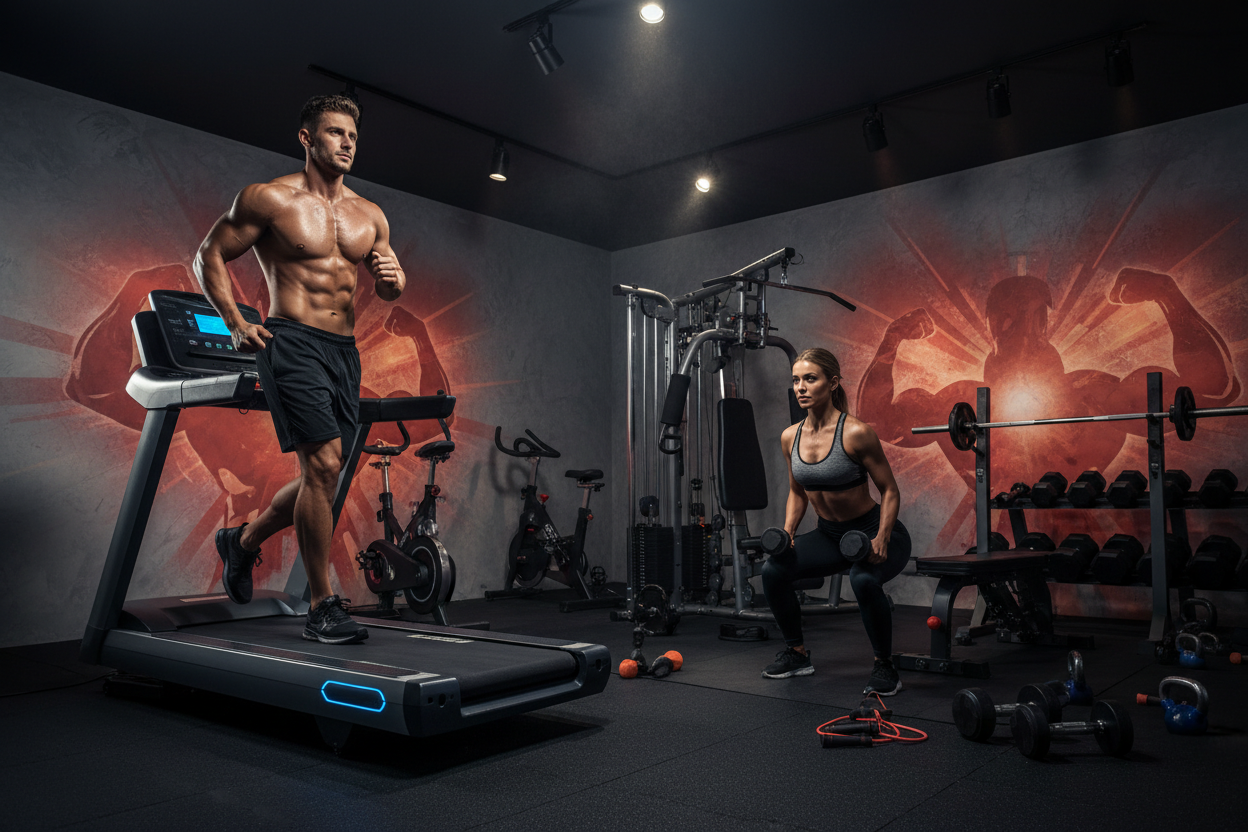
Treadmill and Home Gym Setups: What to Know First
Building the ultimate workout space often comes down to a classic dilemma: balancing heavy iron with reliable cardio. If you are trying to integrate a treadmill and home gym setup without making your garage or spare room feel like a crowded storage unit, you are not alone.
Whether you are dealing with limited square footage or trying to decide which cardio machine best complements your power rack, this guide will walk you through layout strategies, equipment selection, and how to get the most out of your hybrid training space.
Key Takeaways
- Space requirements: A standard treadmill requires roughly 30 square feet of floor space, plus an additional 6 feet of rear clearance for safety.
- Motor specs: Look for at least a 3.0 CHP motor if you plan on running regularly, rather than just walking.
- Placement strategy: Keep your treadmill away from chalk-heavy lifting zones to protect the sensitive motor components from dust.
- Versatility: Combining cardio and strength in one room allows for seamless transitions between heavy lifting and zone 2 recovery.
Maximizing Your Floor Plan
Integrating a treadmill into a strength-focused room requires strategic layout planning. You cannot just drop a heavy cardio machine next to a deadlift platform and hope for the best.
Garage vs. Spare Room Setups
In a garage gym, moisture and dust are your biggest enemies. If you are placing a treadmill near your squat rack, ensure you have proper ventilation and a dedicated equipment mat to prevent concrete dust from entering the motor hood. For spare bedrooms or basement setups, ceiling height becomes the critical factor. Most treadmill decks sit 8 to 14 inches off the floor. Add your height plus a few inches of vertical bounce, and a standard 8-foot ceiling can suddenly feel very cramped.
Choosing the Right Treadmill
Not all cardio machines are built to survive the harsh environment of a garage or basement gym. When shopping for a treadmill for home gym integration, long-term durability should always outrank fancy touchscreens.
Motor Power and Deck Durability
If you are a dedicated runner, prioritize a continuous horsepower (CHP) rating of 3.0 or higher. Walkers or light joggers can get away with 2.0 to 2.5 CHP. Additionally, look for a treadmill with robust deck cushioning and a weight capacity that exceeds your body weight by at least 50 pounds to reduce strain on the motor during heavy footfalls.
Hybrid Training Strategies
Having a treadmill just steps away from your dumbbells opens up a world of programming possibilities. You no longer have to choose between a lifting day and a cardio day.
Blending Cardio and Iron
A dedicated treadmill home gym allows for highly effective concurrent training. Try using your treadmill for a 10-minute Zone 2 warmup before hitting the rack. Alternatively, program high-intensity interval sprints on the treadmill immediately followed by kettlebell swings or dumbbell thrusters to maximize your metabolic conditioning.
From Our Gym: Honest Take
When I first set up my personal hybrid space, I positioned my treadmill directly across from my power rack. It looked great on day one, but I quickly learned a hard lesson about barbell chalk. The fine chalk dust from heavy deadlift sessions drifted directly into the treadmill's motor housing, causing the belt to stick and whine after just a few months.
I had to completely vacuum the motor compartment and move the treadmill to the opposite corner of my two-car garage, separated by a heavy-duty stall mat. The takeaway? Keep your cardio equipment at least 10 feet away from your chalk bucket. Also, while folding treadmills save space, I found that a heavy-duty, non-folding commercial unit provided a much more stable running experience for my 210-pound frame, even if it meant sacrificing some floor space.
Frequently Asked Questions
Is a treadmill a good addition to a home gym?
Absolutely. Adding a treadmill provides convenient, weather-proof cardiovascular training that perfectly complements a strength training routine, allowing for well-rounded fitness programming in a single space.
How much space do I need for a treadmill?
Most standard treadmills require a footprint of about 3 feet wide by 6 feet long. However, for safety reasons, you should always leave a minimum of 6 feet of unobstructed clearance directly behind the machine in case you slip.
Can I put a treadmill on a second floor?
Yes, but you need to consider the weight of the machine and the noise. Use a high-density, shock-absorbing equipment mat to dampen vibrations, and ensure your floor joists can comfortably support the combined weight of the heavy treadmill and the user.