Why Every Serious Home Gym Needs a Power Rack (And What You Can Actually Do With One)
When I first started getting serious about strength training, I was doing squats with dumbbells and feeling pretty chuffed with myself. Then a mate invited me to train at her home gym, and there it was—this imposing steel cage taking up half her garage. "That's my power rack," she said proudly. I'll be honest, I was intimidated. It looked like something only professional bodybuilders would use. Fast forward a few years, and I can't imagine training without one. It's genuinely been a game-changer for my fitness journey, and I'm going to tell you exactly why.
What Is a Power Rack Used For?
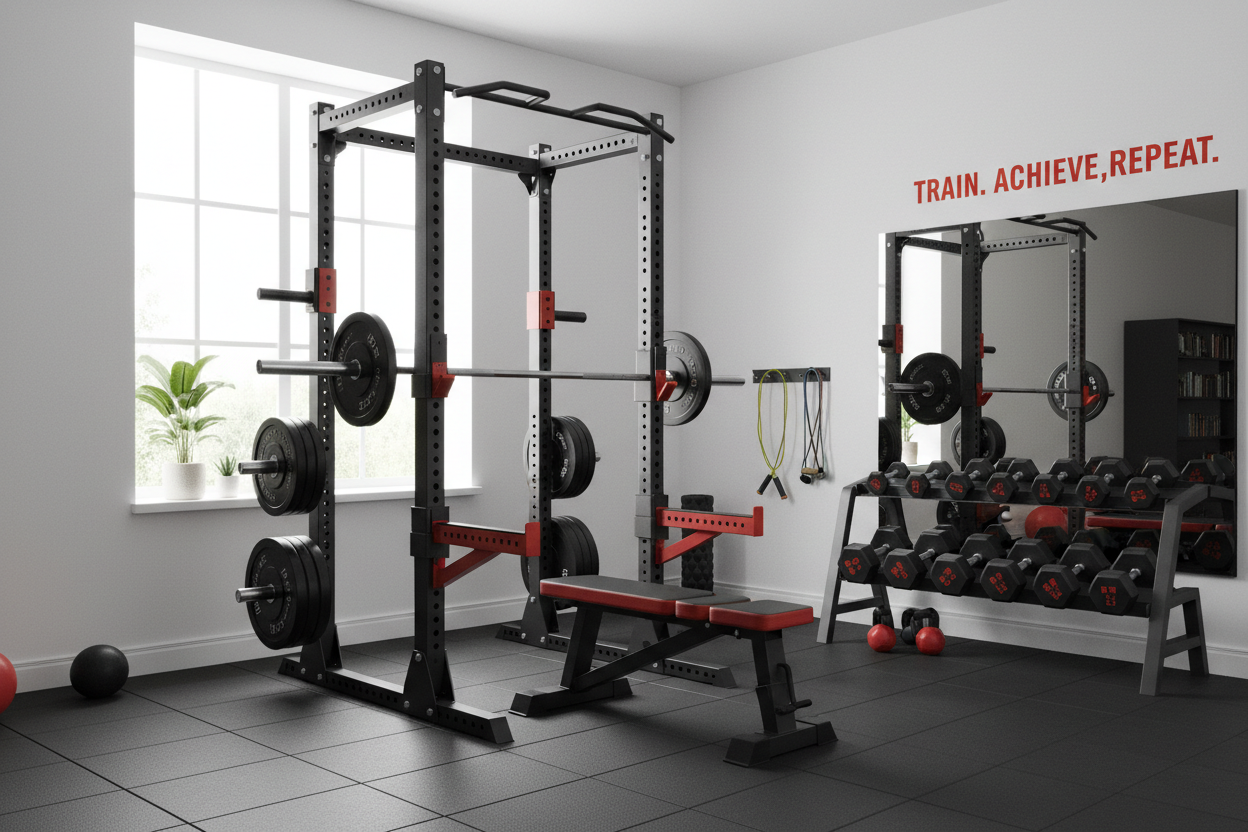
A power rack, sometimes called a squat rack or power cage, is essentially a four-posted steel frame with adjustable safety bars and hooks. At its core, it's designed to let you lift heavy weights safely—even when you're training alone. The beauty of a power rack is that it catches the barbell if you can't complete a lift, which means you can push yourself without needing a spotter standing by.
The primary purpose is safety, but that's just the beginning. Think of it as your personal training partner that never gets tired, never cancels, and is always there to catch you when you need it. The adjustable safety bars (sometimes called spotter arms or safety pins) can be set at different heights, so whether you're squatting, benching, or doing overhead presses, you've got a failsafe if things go wrong.
What Are Power Racks Used For? The Full Range
Here's where it gets exciting. When people ask what are power racks used for, they're often surprised to learn just how versatile this piece of equipment really is. It's not just about squats—though squats are brilliant and you'll be doing plenty of them.
Squats of Every Variety
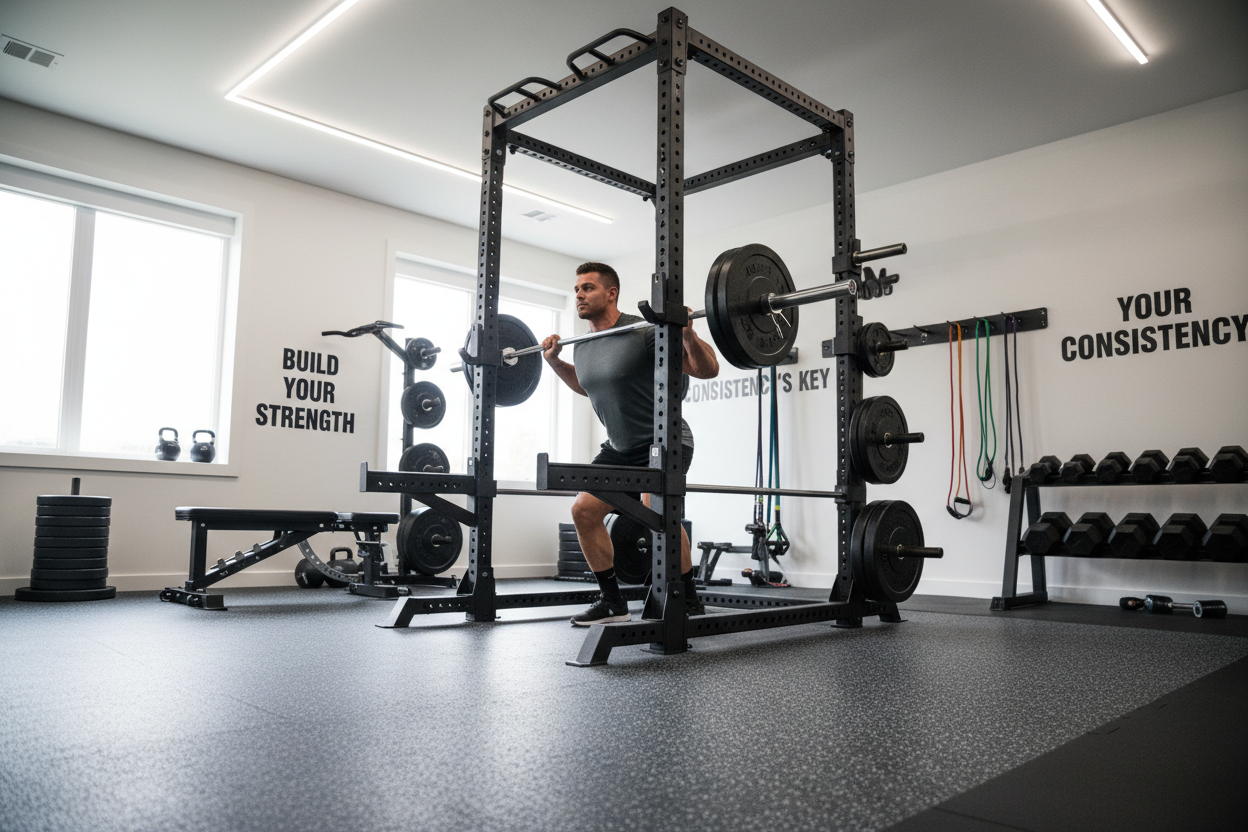
Obviously, squats are the star of the show. Back squats, front squats, box squats—you name it. The power rack lets you load up a barbell safely, step under it, and squat with confidence. I remember the first time I hit a new personal best on my back squat. I was nervous about the weight, but knowing those safety bars were there if I needed them gave me the courage to try. I didn't need them that day, but just having that security made all the difference mentally.
Bench Press Without the Fear
If you've ever been stuck under a barbell during a bench press, you'll know how scary it can be. With a power rack, you can bench press solo without that fear. Set the safety bars just below your chest level, and if you can't press the weight back up, you simply lower it onto the safeties. No panic, no embarrassment, no calling for help.
Overhead Pressing and Shoulder Work
Standing overhead presses, push presses, and even seated shoulder presses can all be done in a power rack. You can start the movement from the safety bars at shoulder height, which is much easier on your lower back than cleaning the weight up from the floor every single set.
Pull-Ups and Chin-Ups
Most power racks come with a pull-up bar across the top. This is fantastic for building upper body strength and working your back. When I started, I couldn't do a single pull-up. I used resistance bands looped over that bar to assist me, and gradually worked my way up. Now I can bang out sets of ten, and it feels absolutely brilliant.
Rack Pulls and Partial Movements
Want to work on your deadlift lockout? Set the safety bars at knee height and do rack pulls. This lets you overload the top portion of the movement and build serious strength. You can do partial squats, partial presses, and all sorts of specialized training that would be impossible or dangerous without a rack.
Dips and Additional Accessories
Many power racks come with dip attachments or can have them added. Dips are phenomenal for building triceps, chest, and shoulder strength. Some racks also accommodate landmine attachments, resistance band pegs, and other accessories that expand your training options even further.
Why Safety Matters More Than You Think
I know I keep banging on about safety, but it's genuinely crucial. When you're training at home or even in a gym during quiet hours, you might not always have someone around to spot you. The power rack eliminates that limitation. You can train hard, push your limits, and work on progressive overload without needing to hold back because you're worried about getting stuck under a barbell.
Progressive overload—gradually increasing the weight you lift over time—is essential for building strength and muscle. But you can only do it safely if you have the right equipment. A power rack gives you that freedom to push yourself week after week.
Space and Investment Considerations
I won't pretend a power rack is small or cheap. They take up a fair bit of floor space—usually about 4 feet by 4 feet minimum—and a decent one will set you back several hundred pounds. But here's how I look at it: a gym membership costs money every single month. A power rack is a one-time investment that you'll use for years, possibly decades.
When I bought mine, I calculated that it would pay for itself in about 18 months compared to my gym membership. Three years later, I'm still using it almost daily, and it's been worth every penny. Plus, there's something special about having your own space to train, your own equipment that you maintain, and the freedom to work out whenever you want—even if that's 6 AM on a Sunday in your pajamas.
Choosing the Right Power Rack
Not all power racks are created equal. Look for one with solid steel construction—at least 2-inch by 2-inch posts, though 3-inch by 3-inch is even better for stability. Check the weight capacity; it should be well above what you plan to lift. A 500-pound capacity might seem like overkill now, but you'd be surprised how quickly you progress.
Adjustable safety bars are non-negotiable. You want them to move in small increments (1-2 inches) so you can set them at exactly the right height for different exercises. J-hooks (where you rack the barbell) should be sturdy and preferably have some kind of protective coating so they don't damage your barbell over time.
Consider the height too. If you're tall or have low ceilings, measure carefully. You need enough clearance to do overhead presses and pull-ups comfortably.
Making the Most of Your Power Rack
Once you've got your power rack set up, the possibilities are genuinely endless. You can run full-body strength programs, focus on powerlifting, train for Olympic lifting (with some modifications), or just maintain general fitness. I use mine for everything from heavy squat sessions to bodyweight exercises when I'm feeling a bit run down and need something lighter.
The key is consistency. Having a power rack at home removes every excuse. No driving to the gym, no waiting for equipment, no feeling self-conscious about trying new exercises. It's just you, the iron, and your goals.
If you're serious about building strength, improving your physique, or just want the convenience and safety of training at home, a power rack is one of the best investments you can make. It's stood the test of time in gyms worldwide because it works. Simple as that.