Understanding Power Rack Specifications: The Key to Building a Safe and Functional Home Gym
Setting up a home gym can be one of the most liberating investments for anyone serious about strength training. Among the essential pieces of equipment, the power rack stands out as the cornerstone of safety, versatility, and performance. Knowing what to look for in power rack specifications ensures that you’re not just buying a bulky steel frame, but a piece of equipment that supports your training goals now and in the future.
Why Power Rack Specifications Matter
Power racks are designed to provide a safe environment for weightlifting, allowing users to perform squats, bench presses, and other compound movements without a spotter. However, not all racks are created equal. The power rack specs—including dimensions, steel gauge, weight capacity, and hole spacing—determine both the usability and durability of the equipment. Investing time in understanding these specifications reduces the risk of injury and ensures that the rack supports your workout style and physical space.
Key Power Rack Specifications to Consider
When choosing a rack, there are several essential parameters to evaluate. Each attribute affects the rack’s stability, safety, and compatibility with attachments. Below is a breakdown of the main power rack specifications that matter most.
1. Frame Dimensions and Height
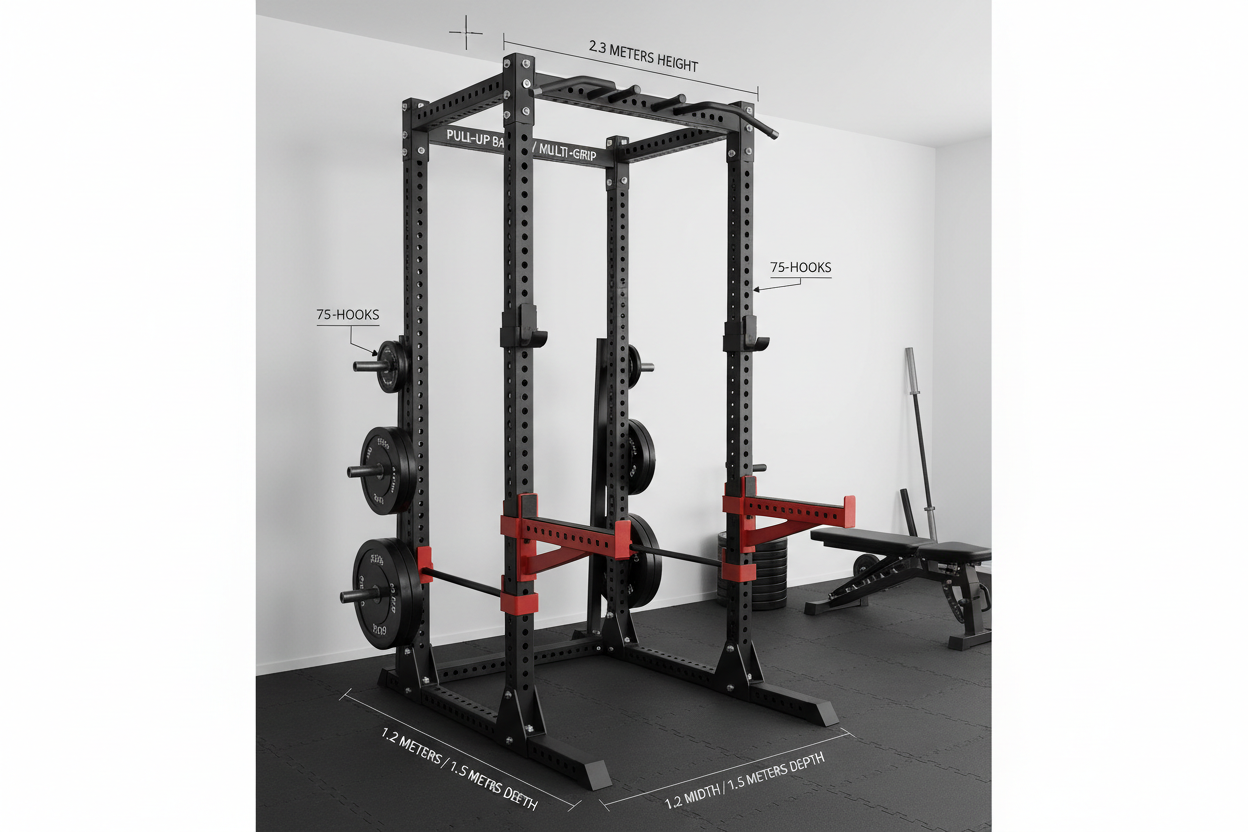
The rack’s footprint should fit comfortably in your workout space. Typical dimensions range from 47 to 52 inches in width, 70 to 90 inches in height, and 46 to 60 inches in depth. Taller racks offer the advantage of pull-up bars and greater range for overhead exercises, while shorter versions fit better in garages or basement setups. It’s also wise to leave at least a foot of clearance above the top of the rack for overhead work.
2. Steel Gauge and Construction
The structural integrity of a rack is defined by the steel gauge. Most high-quality racks use 11-gauge steel (approximately 3 mm thick) for commercial-grade durability. Some lighter-duty racks use 12- or 14-gauge steel, which may suffice for moderate loads but are less stable under heavy lifts. The more robust the frame, the less likely it will sway or flex, particularly under dynamic movements like rack pulls or band-resisted squats.
3. Weight Capacity
The load rating is among the most critical power rack specs for lifters who plan to perform heavy compound lifts. Entry-level models may support 500–700 pounds, while professional-grade racks often handle over 1,000 pounds. When evaluating this specification, consider not only current performance levels but long-term strength progression. A conservative rule of thumb is to choose a rack with at least 25% more capacity than your heaviest projected lift.
4. Hole Spacing and Compatibility
Hole spacing determines the precision with which you can adjust safety pins, J-hooks, and attachments. Standard spacing is around 2 inches, while Westside or laser-cut configurations provide 1-inch spacing in the bench area for finer control. This small detail can significantly influence exercise comfort and safety. Checking compatibility with accessory attachments—like dip bars, spotter arms, or pulley systems—ensures future expandability of your rack setup.
5. Type of Coating and Finish
Powder coating is a common protective layer that resists scratches and rust. Racks with durable finishes tend to have better long-term performance, especially if placed in non-climate-controlled environments. Some premium models feature textured coatings that reduce bar slippage and enhance grip on pull-up bars.
6. Rack Attachments and Accessories
Modern racks often act as modular systems. Attachments such as landmine holders, cable pulleys, or storage horns expand functionality without compromising safety. When comparing power rack specifications, confirm that the attachment points and hardware are standardized, allowing for easy customization from various manufacturers.
Practical Tips for Selecting the Right Rack
Before finalizing your purchase, assess your training goals. Strength athletes and powerlifters should prioritize load capacity and stability. Fitness enthusiasts interested in variety may focus on accessory compatibility. Always measure the available floor and ceiling space and consider installation clearance. Reading manufacturer-provided weight ratings and reviews from users who perform similar exercises provides meaningful insights that go beyond marketing claims.
Personal Experience and Lessons Learned
From personal experience, choosing my first power rack involved a steep learning curve. I initially underestimated the importance of internal working space, leading to cramped bench press sessions. After upgrading to a model with larger interior dimensions and 11-gauge steel, the difference in stability and comfort was immediately noticeable. The extra investment in better materials paid off, especially when I began lifting heavier loads. It reinforced the idea that accurate understanding of power rack specs eliminates guesswork and enhances training consistency.
Maintaining and Inspecting Your Power Rack
Even high-quality racks require routine maintenance. Check all bolts and fasteners periodically to ensure no movement or loosening occurs. Clean surfaces to remove moisture and chalk buildup, as these can lead to corrosion over time. When inspecting holes and safety pins, look for signs of metal fatigue or warping—issues often ignored until they compromise equipment integrity. Consistent upkeep not only prolongs the rack’s life span but also keeps workouts safe and productive.
Making Evidence-Based Decisions
Data from equipment testing and engineering standards confirm that proper steel gauge selection, welding quality, and precise hole spacing all contribute to overall rack reliability. Manufacturers that disclose detailed power rack specifications demonstrate transparency and quality control, allowing customers to make informed decisions. Avoid models with vague or missing specs, as these often signal cost-cutting in key structural areas.
Conclusion: Buying with Confidence
Understanding what the specifications mean and how they relate to your goals transforms shopping from guesswork into a confident decision-making process. Whether you’re building a compact home setup or equipping a larger gym, analyzing power rack specifications gives you the assurance that your investment supports performance, safety, and growth for years to come.