Best Way to Gain Upper Body Strength: Movement Vectors, Progressive Overload Frameworks, and Home Floor Staging
Developing structural muscular power requires more than random lifting sessions; finding the best way to gain upper body strength demands an organized balance of movement planes, systematic resistance increases, and a secure physical environment. Whether your goal is to press heavier loads overhead, build a broader back, or establish balanced joint stability, mastering multi-planar biomechanics is foundational. When paired with proper home lifting floor staging, structured programming creates a platform for repeatable, injury-resilient progress.
Core Movement Pillars for Upper Body Strength Architecture
The human upper torso is engineered to execute pushing and pulling forces across multiple directional planes. Relying excessively on a single plane—such as horizontal pressing while neglecting horizontal pulling—often leads to postural imbalance and stalled development. Establishing a balanced foundation across four core vectors creates the primary movement framework for long-term power development.
The Four-Vector Biomechanical Balance
A comprehensive upper body routine must distribute training volume across four essential movement pathways: horizontal push, horizontal pull, vertical push, and vertical pull. Organizing sessions around these complementary patterns ensures balanced recruitment across the pectorals, latissimus dorsi, anterior deltoids, rear deltoids, and trapezius muscles.
- Horizontal Push: Flat barbell bench presses, dumbbell bench presses, and push-up progressions that recruit the chest, anterior deltoids, and triceps.
- Horizontal Pull: Barbell bent-over rows, single-arm dumbbell rows, and chest-supported rows that target the rhomboids, latissimus dorsi, and posterior shoulder girdle.
- Vertical Push: Standing overhead presses, seated dumbbell shoulder presses, and landmine presses that engage the deltoids, upper chest, and triceps.
- Vertical Pull: Weighted pull-ups, chin-ups, and lat pulldowns that build lat width, biceps, and scapular depressors.
Equipping your training space with versatile free weights and racks from a dedicated strength collection makes it straightforward to cycle through these fundamental movement vectors during every training block.
Scapular Control and Joint Integrity
Every major pressing and pulling pattern depends on the stability of the shoulder blade against the rib cage. Before initiating a heavy horizontal press or row, active scapular positioning—retraction and slight depression—creates a firm platform against the lifting bench. Controlled scapular upward rotation during overhead presses allows the shoulder joint to move through a full range of motion without pinching surrounding tendons.
Progressive Overload Blueprints for Upper Body Development
Identifying the best way to get upper body strength requires understanding that muscle adaptation relies on mechanical tension accumulated over time. Without progressive overload, strength plateaus occur rapidly. Progressive overload can be introduced through load increases, repetition volume, tempo control, and reduced rest intervals.
Tension Accumulation and Repetition Strategies
Gaining absolute upper body strength is best achieved by working within compound rep ranges that challenge neuromuscular recruitment. Structuring heavy compound sets between three and six repetitions builds high levels of force production, while pairing them with accessory sets of eight to twelve repetitions enhances connective tissue resilience and hypertrophy. Emphasizing a slow, controlled eccentric (lowering) phase maintains muscle tension and improves control under heavy loads.
Managing Push-to-Pull Volume Ratios
A classic pitfall among home lifters is performing far more pressing volume than pulling volume. To maintain balanced shoulder mechanics and build functional power, target a 1:1 or even 1:1.5 push-to-pull volume ratio. Incorporating extra sets of face pulls, rear-delt flyes, and rowing variations balances high-volume pressing. Lifters seeking targeted programming can explore specialized articles such as an upper body strength guide to structure balanced chest and back sessions effectively.
Essential Compound Exercises for Maximum Strength
Focusing on multi-joint compound movements delivers the greatest neuromuscular stimulus per training session. These foundational exercises recruit multiple muscle groups simultaneously, establishing the best way to increase upper body strength efficiently.
Primary Pressing Patterns: Floor Press, Bench Press, and Overhead Press
The traditional flat bench press allows lifters to move the heaviest absolute loads for the chest and triceps. For lifters training without a spotter or those managing shoulder sensitivity, the dumbbell floor press serves as an exceptional alternative by limiting shoulder extension at the bottom of the movement. Standing overhead barbell presses build full-body core bracing alongside shoulder and upper-body power.
For individuals refining dumbbell-based routines, consulting a dedicated upper body strength guide provides valuable structural cues for grip width, elbow tuck angles, and movement control.
Primary Pulling Patterns: Heavy Rows, Pull-Up Progressions, and Face Pulls
Barbell bent-over rows and weighted pull-ups form the backbone of upper body pulling strength. While pull-ups build vertical pulling power and lat engagement, heavy rows reinforce the mid-back musculature necessary to keep the thoracic spine rigid during heavy deadlifts and squats. Face pulls and external rotations provide essential joint support by strengthening the rotator cuff and rear deltoids.
Home Training Architecture: Flooring, Traction, and Lifting Zone Staging
Executing heavy upper body lifts in a home gym environment demands thoughtful staging of equipment, subflooring, and foot traction. Creating a stable ground interface directly impacts how effectively a lifter transfers force from the floor into the bar.
Subfloor Protection and Heavy Dumbbell Management
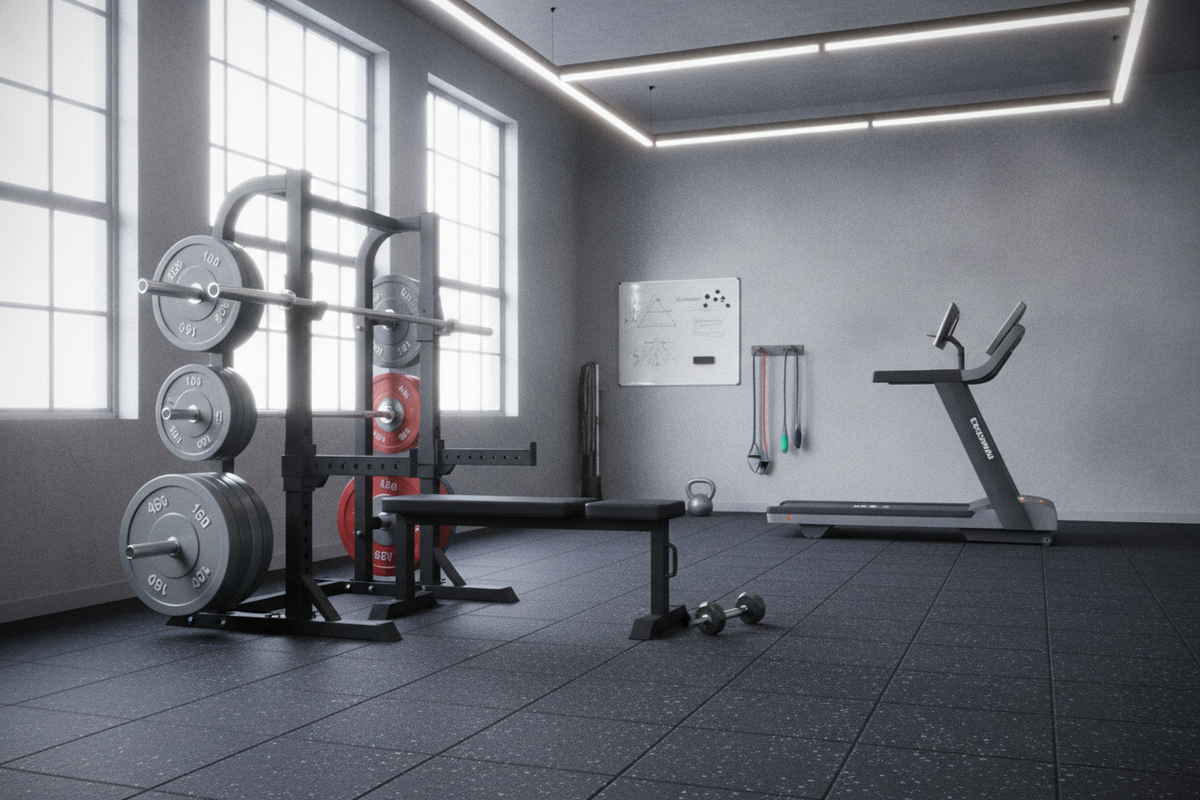
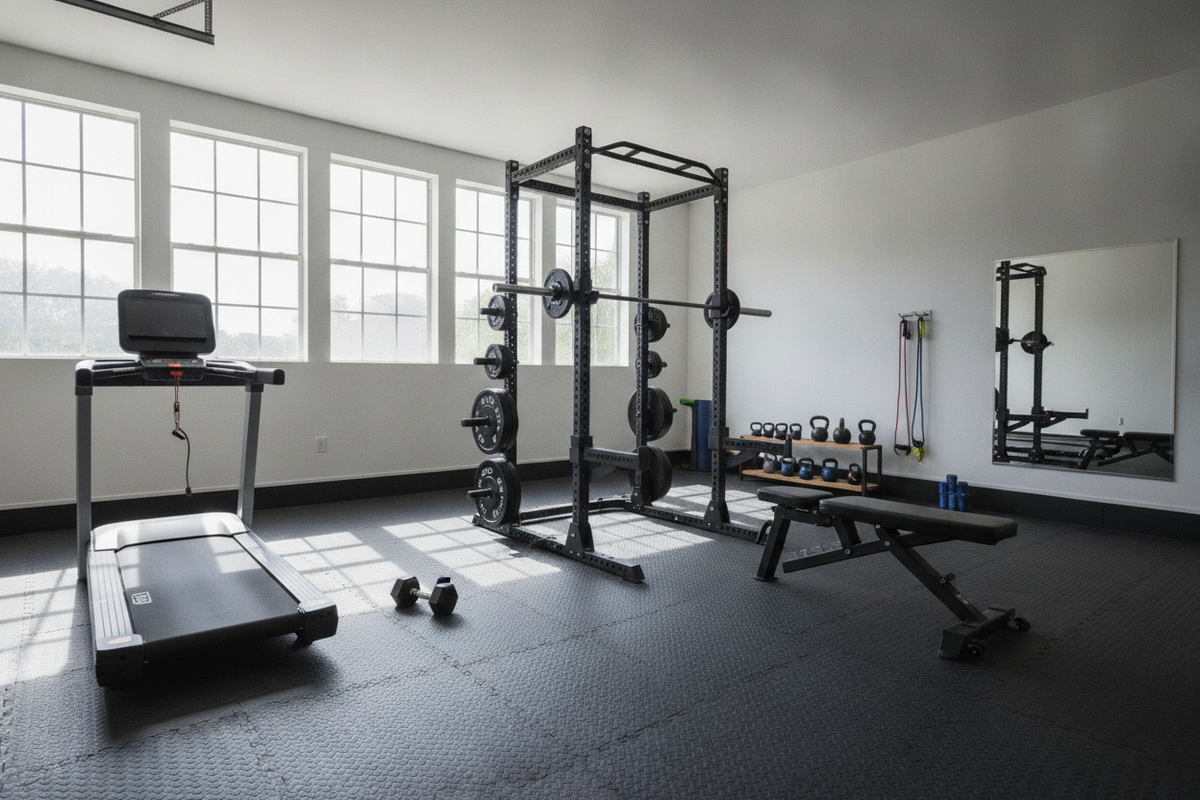
Heavy upper body sessions frequently involve handling dense dumbbells, kettlebells, and loaded barbells. Dropping or rapidly setting down heavy weights between intense working sets can crack underlying concrete, damage tile, or indent hardwood subfloors. Installing high-density rubber gym flooring absorbs impact energy, shields the subfloor, and dampens vibration throughout the living space.
Ground Reaction Force and Non-Slip Bench Anchoring
True upper body pressing power begins at the floor. In a proper bench press setup, the lifter drives their feet firmly into the ground to create full-body tension, a mechanism known as leg drive. A slick or uneven floor surface allows the bench or lifting shoes to slide, dissipating force and compromising setup rigidity. Textured, high-traction rubber mats anchor the bench legs securely and provide lifters with confident foot grip during heavy efforts.
Sustainable Long-Term Progression and Deload Frameworks
Strength progression is not strictly linear; sustained development requires scheduled periods of reduced intensity to allow tendons, ligaments, and the central nervous system to recover. Introducing a deload week every four to six weeks—by reducing total training volume while maintaining movement quality—prepares the body for subsequent loading cycles.
A well-rounded training regimen pairs upper body strength sessions with dedicated leg routines using equipment from a balanced body strength collection. Combining balanced movement vectors, progressive overload, structured recovery, and a secure flooring foundation delivers a reliable path toward continuous upper body strength.