Best Way to Gain Muscle: Hypertrophy Frameworks, Overload Blueprints, and Home Lifting Staging
Establishing the best way to gain muscle requires moving past sporadic lifting routines and adopting a structured approach that unifies mechanical stimulus, progressive training frameworks, nutritional support, and an optimized training environment. Whether your objective is to build lean density or pursue the best way to gain mass across major muscle groups, long-term hypertrophy relies on predictable, repeatable habits rather than extreme, unsustainable bursts of effort.
Core Pillars of Muscular Hypertrophy
Muscle tissue adapts when exposed to consistent mechanical demands that challenge its capacity. Understanding how your body responds to resistance allows you to select exercises and loading schemes that encourage adaptation efficiently.
Mechanical Tension and Movement Selection
At the center of hypertrophy is mechanical tension, which occurs when muscle fibers generate force to overcome an external load through a controlled range of motion. Selecting multi-joint compound exercises—such as squats, hinges, presses, and rows—engages substantial muscle mass simultaneously, creating a robust foundation for growth. Integrating foundational movement patterns for hypertrophy ensures balanced physical development across both upper and lower body segments.
Complementing free weights with guided equipment offers targeted stabilization, allowing lifters to train close to muscular fatigue while maintaining mechanical consistency. Reviewing a dedicated way build muscle guide helps determine when to transition between free barbells, dumbbells, and machine-based exercises to maximize training stimulus without excessive joint strain.
Progressive Overload Architecture
The best way to build muscle over extended periods is through progressive overload—systematically increasing the demands placed on the musculoskeletal system. This does not require adding substantial weight to the bar during every single workout. Overload can be applied through several manageable variables:
- Load Progression: Incrementally increasing external resistance while maintaining strict movement mechanics.
- Repetition Volume: Performing additional clean repetitions with a given training weight across working sets.
- Set Density: Adding an extra working set per movement pattern over a multi-week training block.
- Tempo and Control: Slowing eccentric phases to increase the time under tension for targeted muscle groups.
Structuring Your Weekly Training Blueprint
Organizing your training sessions into a predictable rhythm allows for adequate recovery between challenging workouts while maintaining the frequency needed to stimulate protein synthesis.
Movement Splits vs. Full-Body Frequency
Selecting the right training schedule depends on weekly availability, recovery capacity, and overall experience. Full-body routines distribute work across major muscle groups three days per week, making them highly effective for those establishing baseline lifting habits. Implementing structured initial training plans can provide the consistency needed during early training phases.
For lifters training four or more days per week, upper-and-lower splits or push-pull-legs frameworks allow for higher per-session volume on specific muscle groups while affording extended rest windows for recovering tissues. When developing lower-body size and strength, focusing on targeted lower-body muscle development ensures that quadriceps, hamstrings, and glutes receive dedicated attention across different joint angles.
Balancing Intensity, Volume, and Rest
A common pitfall when attempting to gain mass quickly is accumulating excessive fatigue that impairs workout quality. Managing training volume requires balancing challenging working sets with deliberate rest intervals between efforts. Allowing adequate rest between heavy compound sets helps restore muscular power, ensuring subsequent sets maintain high movement quality.
Cardiovascular conditioning also plays a supportive role in overall work capacity. Thoughtful conditioning integration alongside weight training supports baseline stamina without competing directly with hypertrophy goals when kept at moderate volumes.
Nutrition and Recovery Foundations for Mass Gain
Resistance training provides the stimulus for muscle adaptation, but actual tissue remodeling occurs during recovery windows supported by adequate nutrition and restorative rest.
Energy Surplus and Macronutrient Balance
To support new muscular tissue, the body generally operates best in a modest energy surplus. Supplying slightly more nutritional energy than daily baseline expenditures ensures that metabolic demands and cellular repair processes are fully fueled. Prioritizing consistent protein intake across multiple daily meals supplies the amino acids required for muscle protein synthesis, while complex carbohydrates fuel intense resistance workouts and replenish glycogen stores.
Sleep Quality and Rest Cycles
Sleep serves as the primary window for systemic physical recovery. Deep sleep phases support hormonal regulation and cellular tissue repair. Inadequate sleep or inconsistent rest intervals between intense lifting sessions can diminish workout performance, reduce training drive, and elevate accumulated fatigue. Structuring non-lifting rest days throughout the week ensures both the muscular and nervous systems recover fully between demanding training blocks.
Optimizing the Home Lifting Environment for Heavy Gains
Executing a long-term muscle-building routine at home requires a designated training space that supports stable movement mechanics, equipment protection, and overall focus.
Surface Stability and Subfloor Protection
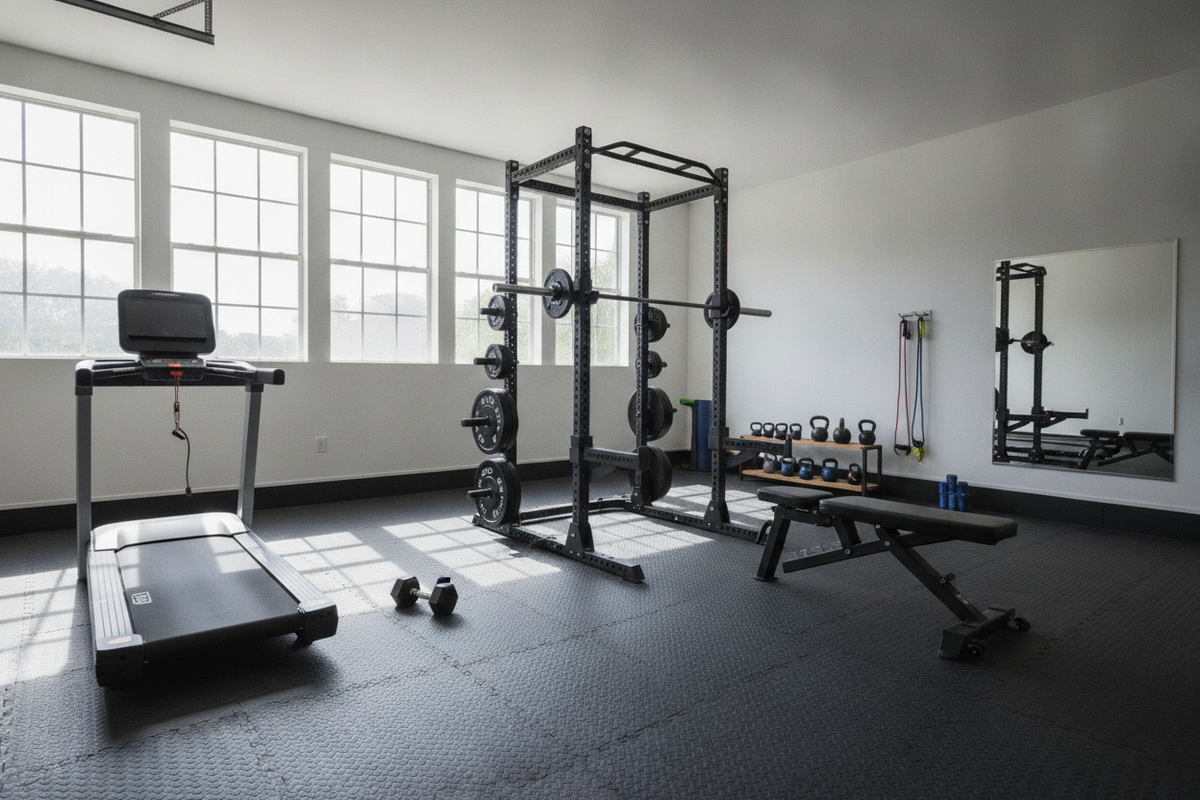
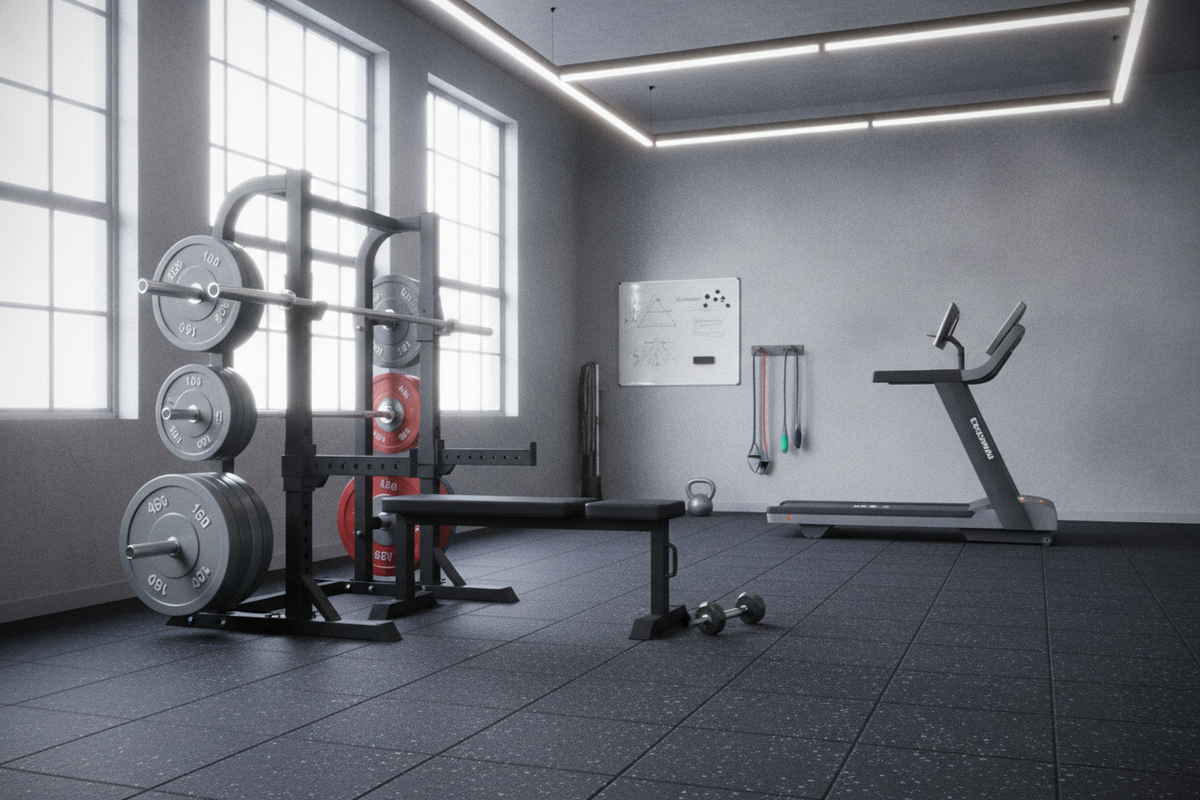
Heavy compound lifting—such as deadlifts, squats, and overhead presses—requires a firm, slip-resistant foundation. Standard residential flooring, such as hardwood or thin decorative tile, is vulnerable to impact damage and often fails to provide sufficient traction under heavy loads. Installing dense, non-slip rubber gym flooring creates a solid platform that distributes weight evenly across subfloors, reduces vibration transmission, and provides dependable footing during heavy lifts.
Equipment Staging and Lifting Zone Maintenance
Organizing your lifting area around primary movement zones streamlines training sessions and minimizes distractions. Keeping barbells, weight plates, and adjustable dumbbells securely racked and staged on resilient mats protects equipment finishes from premature wear while keeping the workout perimeter clear. A dedicated, well-arranged home lifting zone encourages consistent training execution, reinforcing the habits essential for sustained hypertrophy.