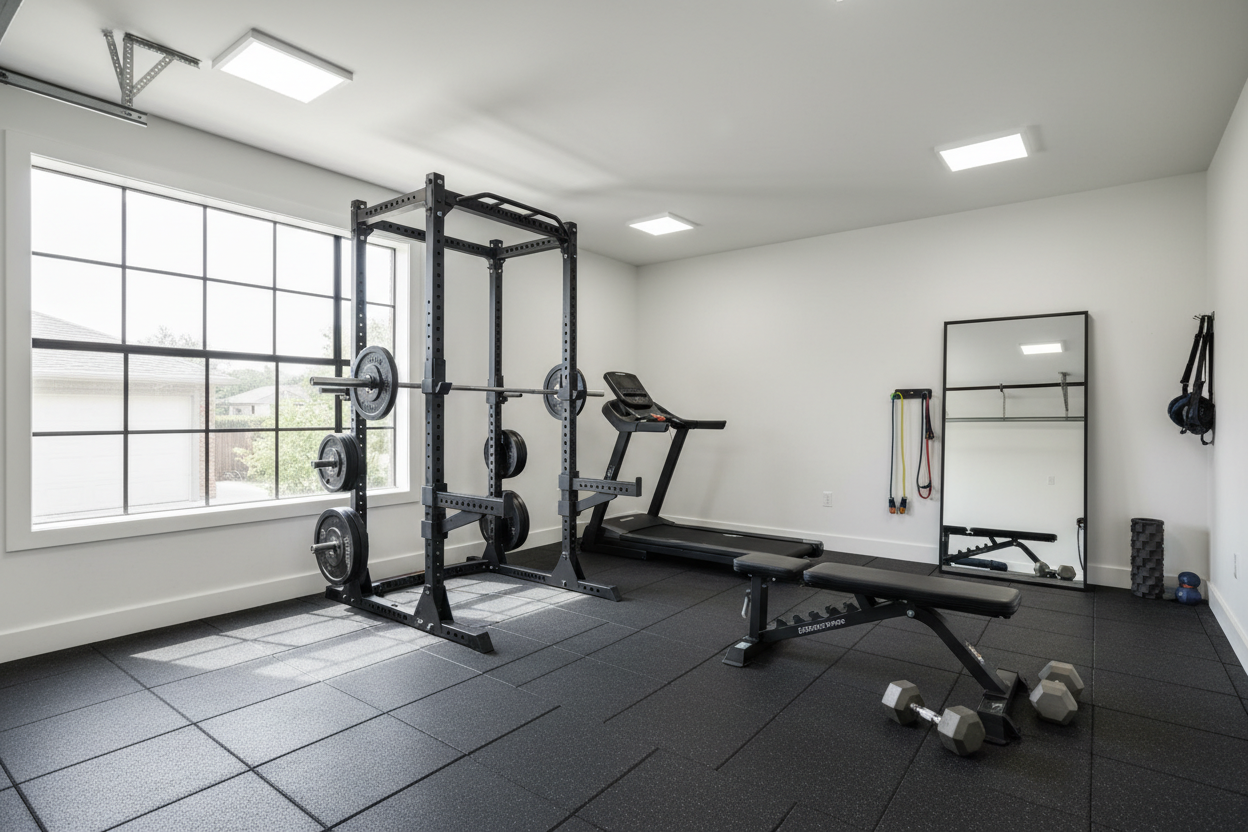
Beginners Workout to Build Muscle: The 5-Pattern Method
A few months ago, a new client named Mark showed up at my door. He was trying to get fit in his cramped 10x10 spare bedroom, armed with a pair of adjustable dumbbells and a lot of confusion. He had downloaded a pro bodybuilder's six-day split routine and was spending 45 minutes just doing bicep curls. He was sore, frustrated, and seeing zero growth. I told him what I tell every new lifter: put down the fitness magazines. If you want a beginners workout to build muscle, you need to stop thinking about individual body parts and start thinking about movement patterns.
When you are just starting out, your nervous system and muscles are highly responsive. You don't need five different angles for your chest. You need to master the basic ways the human body is designed to move. By focusing on five core patterns—squatting, hinging, pushing, pulling, and carrying—you stimulate maximum muscle fibers, protect your joints, and cut your workout time in half.
Quick Takeaways
- Ditch the 'bro splits' (chest day, back day) in favor of full-body movement patterns.
- Master five fundamental movements: Squat, Hinge, Push, Pull, and Carry.
- Train three days a week to allow for adequate nervous system recovery and muscle repair.
- Focus entirely on progressive overload—adding reps or weight slightly each week.
Why Traditional Splits Fail a Workout for Beginners to Gain Muscle
If you walk into any commercial gym, you will see guys dedicating an entire Tuesday to their shoulders. While that works for someone with five years of lifting experience and chemical assistance, it is a terrible workout for beginners to gain muscle. When you isolate a small muscle group, you limit the amount of weight you can lift and the hormonal response your body produces.
Furthermore, hitting a muscle group only once a week leaves potential growth on the table. Muscle protein synthesis—the process where your body builds new muscle tissue—peaks about 24 to 48 hours after a workout. If you only train your legs on Wednesday, they spend the other five days doing absolutely nothing. The movement pattern approach ensures you hit every major muscle group two to three times a week, keeping that growth signal turned on constantly.
The Core Patterns: A Beginners Workout to Build Muscle Safely
The beauty of this method is its simplicity. A proper building muscle plan for beginners does not require a spreadsheet of 30 different exercises. Instead, you build your routine by picking one exercise from each of the five movement categories per session. This guarantees balanced development. You won't end up with massive chest muscles and a weak back, which is a one-way ticket to shoulder impingement.
I have tested this exact framework with dozens of home gym clients using minimal equipment. Whether you have a full power rack or just a few kettlebells, these five patterns remain exactly the same.
Pattern 1: The Squat (Lower Body Push)
The squat pattern involves bending at the knees and hips simultaneously. It is your primary mass builder for the quadriceps and glutes. For new lifters, I never start with a heavy barbell on the back. It requires too much shoulder mobility and core stability, which usually aren't there yet.
Instead, we start with the Goblet Squat. Hold a single dumbbell or kettlebell vertically against your chest. This front-loaded position naturally forces your torso upright and engages your core. Aim for a weight around 15 to 25 pounds to start. If you don't have weights yet, mastering a bodyweight workout for legs using slow, controlled tempos is the best way to prime your joints for future heavy lifting.
Pattern 2: The Hinge (Posterior Chain)
While the squat is knee-dominant, the hinge is hip-dominant. Think Romanian deadlifts (RDLs), kettlebell swings, and glute bridges. This pattern targets your posterior chain: the hamstrings, glutes, and erector spinae (lower back muscles). Strengthening this chain is non-negotiable for a beginner workout to gain muscle.
To perform an RDL, hold two dumbbells in front of your thighs. Keep a soft bend in your knees and push your hips backward as if you are trying to shut a car door with your glutes. You should feel a deep stretch in your hamstrings. Do not pull with your lower back; drive your hips forward to stand back up. This single movement will add more thickness to your back and legs than dozens of machine leg curls.
Pattern 3: The Push Pattern (Upper Body)
Pushing movements are divided into horizontal (push-ups, bench presses) and vertical (overhead presses). They are responsible for building your chest, anterior deltoids, and triceps. For a home gym setup, floor presses with dumbbells are incredibly effective and much safer on the shoulders than a standard bench press.
When I set up my client Mark's gym, we used a set of 5-52.5 lb adjustable dumbbells. Honestly, the locking mechanism on adjustables can rattle a bit during heavy presses, which is a minor annoyance. But dropping them on a bare floor is a disaster waiting to happen. I always require clients to use a high-density 6X8Ft Exercise Mat. It provides the necessary grip for your feet during a heavy press and absorbs the shock if your grip fails on that last grueling rep.
Pattern 4: The Pull Pattern (Back & Biceps)
For every pushing exercise you do, you must do a pulling exercise. Most beginners neglect this, leading to the classic hunched-forward posture. Pulling movements like dumbbell rows, pull-ups, and lat pulldowns build a wide, thick back and naturally develop the biceps without the need for endless curling.
The single-arm dumbbell row is your best friend here. Brace one hand and one knee on a bench (or a sturdy chair). Grab a dumbbell with the other hand and pull it toward your hip, not your chest. Squeeze your shoulder blade at the top. This movement builds the lats and rhomboids, giving your torso that coveted V-taper.
Pattern 5: The Carry (Core & Total Body)
The loaded carry is the most underrated muscle builder in fitness. It is exactly what it sounds like: pick up heavy things and walk. Farmer's walks—holding a heavy dumbbell in each hand and walking 40 to 50 paces—force your entire core to stabilize, fry your grip, and build massive trap muscles.
I program carries at the end of every beginner session. Grab weights that feel uncomfortable after 20 seconds (usually 30-40 lbs per hand for adult males). Keep your chest tall, shoulders pulled back, and march. It builds practical, real-world strength better than any crunch ever could.
Structuring Your Beginner Workout Plan for Muscle Gain
Now we assemble the pieces. A proper beginner workout plan for muscle gain should be run three days a week on non-consecutive days (e.g., Monday, Wednesday, Friday). Each session will hit all five patterns. You will do 3 sets of 8 to 12 repetitions for each exercise, resting 90 seconds between sets.
A standard day looks like this: Goblet Squats (Squat), Dumbbell RDLs (Hinge), Dumbbell Floor Press (Push), Single-Arm Rows (Pull), and Farmer's Walks (Carry). It should take you about 45 minutes. If you are training at a commercial facility and feel intimidated by the free weight section, you can easily adapt this by using a machine-only workout program for beginners that mirrors these exact same five patterns.
Recovery Rules for a Beginner Mass Building Workout
You do not build muscle while you are lifting weights; you build muscle while you are recovering from lifting weights. If you ignore recovery, your beginner mass building workout is just a recipe for exhaustion. First, prioritize sleep. Aim for 7 to 9 hours a night. This is when your body releases the majority of its human growth hormone.
Second, you have to eat to grow. You need roughly 0.8 to 1 gram of protein per pound of body weight every day. If you weigh 170 pounds, you need about 150-170 grams of protein daily from sources like chicken, beef, eggs, and whey protein. Do not skip your rest days. If you are lifting heavy on Monday, your central nervous system needs Tuesday to reset.
Scaling Up: Beginner Gym Workout Male Muscle Building Progression
The final puzzle piece is progressive overload. If you lift 20-pound dumbbells for 3 sets of 10 every week for a year, your body will never change. To sustain beginner gym workout male muscle building progress, you must force the muscle to adapt to harder challenges.
Keep a logbook. If you hit 3 sets of 12 reps on your goblet squat with 30 pounds this week, you must grab the 35-pound dumbbell next week. Drop the reps back down to 8, and build your way back up to 12. Once you can comfortably execute these five patterns with heavy weights for six straight months, you will be ready to graduate to intermediate splits. When that time comes, check out our Workout Hub for your next programming step.
Frequently Asked Questions
How long until I see muscle growth?
Most beginners will feel stronger within the first two weeks due to neurological adaptations. Noticeable visual muscle growth typically takes 6 to 8 weeks of consistent training and eating in a slight caloric surplus.
Do I need to take supplements to gain muscle?
No. Supplements are just that—supplementary. Focus on eating whole foods first. A basic whey protein powder can be helpful if you struggle to hit your daily protein target, and creatine monohydrate is a safe, highly researched option for boosting strength, but neither is strictly mandatory.
Can I do cardio on my rest days?
Yes, light to moderate cardio like brisk walking or cycling is great for heart health and can actually aid recovery by promoting blood flow to sore muscles. Just avoid high-intensity interval training (HIIT) on rest days, as it can tax your nervous system and interfere with your lifting progression.