Benefits of Cardiovascular Exercise for Home Workouts
Understanding the full range of benefits of cardiovascular exercise is essential for anyone building a sustainable home workout habit. Whether your goal is to breeze through everyday tasks or complete intense conditioning sessions, cardiovascular exercise creates the physical stamina needed to move comfortably throughout your day. By elevating breathing and heart activity through sustained aerobic movement, you train your body to handle prolonged exertion with greater ease.
Many people find that establishing a daily cardio routine provides mental clarity alongside physical energy. When you commit to regular training, the compounding benefits of cardiovascular exercise help you maintain consistent energy levels without rapid burnout. To build this routine successfully at home, however, you must balance conditioning drills with proper space management and floor support.
What Are the Main Benefits of Cardiovascular Exercise?
The main benefits of cardiovascular exercise include greater physical stamina, more efficient cardiorespiratory endurance, and enhanced recovery between sets during broader fitness sessions. When you engage in steady aerobic conditioning, your lungs and circulation adapt to deliver oxygen to working muscles more smoothly, which keeps you feeling energized during work, errands, and recreational sports.
Another clear advantage is how conditioning supports everyday functional capacity. As your cardiorespiratory endurance expands, simple physical activities such as climbing stairs, carrying heavy groceries, or playing with children feel significantly less demanding. Furthermore, the sustained muscle activation from a balanced cardio workout promotes muscular endurance across large muscle groups, including your calves, quadriceps, glutes, and core.
Developing cardiorespiratory endurance also improves your training capacity across other disciplines. If you lift weights, a solid aerobic foundation speeds up your recovery between sets, allowing you to sustain training volume without early fatigue. For more on coordinating endurance work with strength days, consult our benefits of cardio and weight training guide.
Why Is Cardiovascular Endurance Important for Overall Fitness?
Cardiovascular endurance is important for overall fitness because it determines how long your body can sustain moderate to vigorous effort without excessive physical strain. Without adequate endurance, even basic calisthenics or brief movement circuits can quickly leave you winded and compromise your posture.
A strong aerobic conditioning base also balances out the physiological demands of strength-focused exercises. When you incorporate cardiovascular training into your weekly schedule, your muscles become more adept at clearing metabolic byproducts, helping you bounce back faster from hard training days. If you prefer sequencing your workouts intentionally, reviewing our guide on cardio after weights can help you decide how to balance endurance drills with lifting blocks.
Over time, the benefits of cardiovascular exercise extend to mental fortitude as well. Sustaining rhythmic movement for twenty to forty minutes teaches pacing, breath control, and focus. This mental resilience translates directly into better pacing during interval training and helps you approach difficult workouts with steady confidence.
Key Movements in Home Cardiovascular Training
Cardiovascular training at home does not require an overwhelming amount of specialized machinery. By rotating between low-impact sequences and higher-intensity drills, you can enjoy all the benefits of cardiovascular exercise right inside a living room, basement, or garage.
- Steady-state cardio: Continuous, moderate-intensity movement such as shadowboxing, step-ups, or brisk walking intervals. Steady-state cardio is gentle on your system while steadily expanding aerobic capacity.
- Bodyweight intervals: Alternating between high-tempo bodyweight intervals—like mountain climbers, high knees, and jumping jacks—and active rest periods. These bursts test your coordination while challenging your stamina.
- Jump rope drills: Adding jump rope drills into your training offers a time-efficient way to elevate cardiorespiratory endurance while sharpening lower-leg elasticity.
- Low-impact combinations: Movements like skater lunges, march-in-place variations, and controlled butt kicks provide the benefits of cardiovascular exercise while keeping joint impact minimal.
Rotating through these options prevents boredom and distributes physical stress across different movement planes. Whether you lean toward interval training or prefer steady-state cardio, keeping your movement diverse ensures you reap the comprehensive benefits of cardiovascular exercise week after week.
Subfloor Protection and Joint Comfort During Cardio
High-impact cardiovascular exercise involves repeated foot strikes, which transmit force upward through your ankles, knees, and hips while directing significant pressure onto your residential subfloors. Without adequate shock absorption, repeated jumping jacks, burpees, and jump rope drills can lead to uncomfortable joint impact and wear down hardwood or tile surfaces.
To safeguard your joints, installing resilient home gym flooring is one of the smartest investments you can make. A quality surface made with high-density foam cushions every landing, dispersing force evenly rather than rebounding it straight back into your joints. In my own home gym, stepping onto a cushioned surface made repeated jumping drills noticeably more comfortable from day one.
Beyond impact management, a non-slip workout surface provides vital traction and grip during dynamic lateral shuffles and quick transitions. Sweating during a strenuous cardio workout can turn bare wood, laminate, or vinyl into a slipping hazard. High-density padding paired with dependable traction and grip keeps your footing stable, letting you execute rapid bodyweight intervals without hesitation.
How Do You Protect Your Joints and Floors During Cardio Training?
You protect your joints and floors during cardio training by choosing an appropriate protective exercise mat that absorbs landing forces, prevents lateral sliding, and stops perspiration from reaching your subfloor. Selecting the proper matting establishes a dedicated footprint where you can jump, pivot, and run in place safely.
When outfitting a room for high-impact drills, size matters. A spacious option like our large exercise workout mat gives you ample room to move forward, backward, and side-to-side without constantly stepping off the edge. This seamless boundary prevents tripping and protects large sections of your floor from continuous impact.
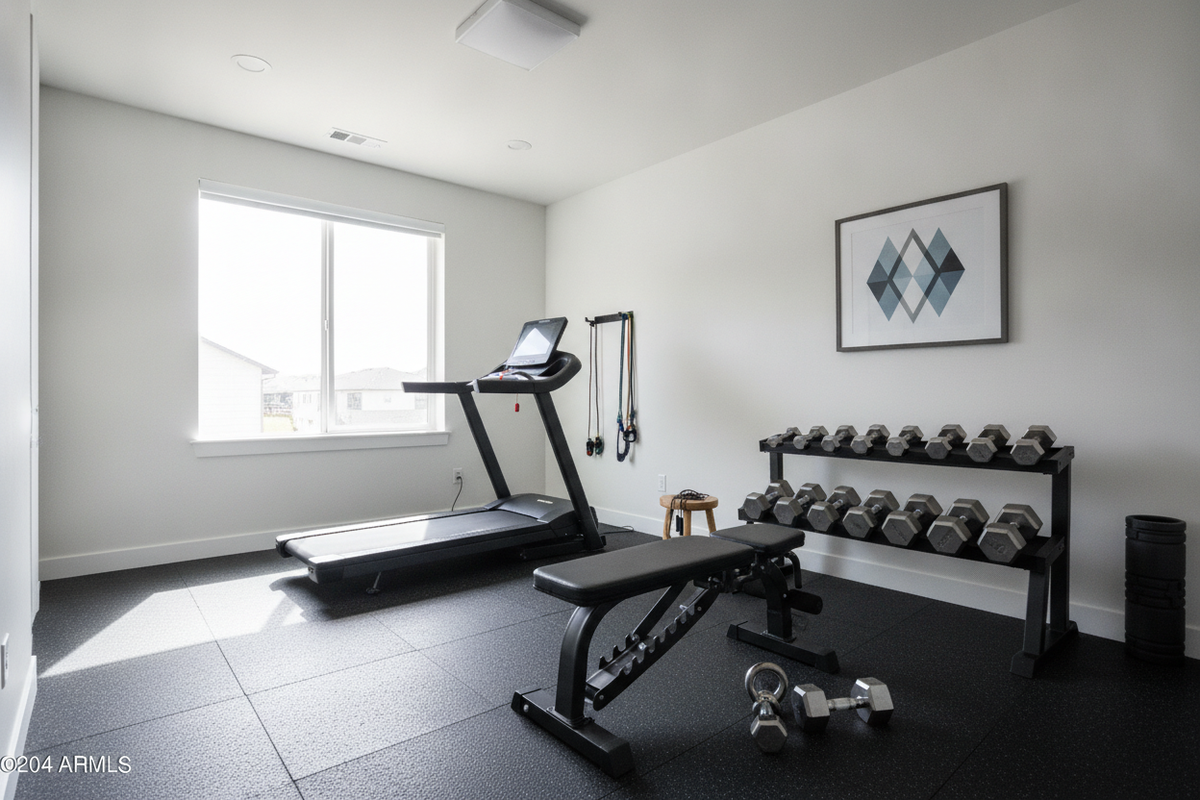
If your training relies on heavy equipment such as a stationary cycle, rower, or compact treadmill, cardio equipment placement requires specialized care. Placing a durable stationary bike mat beneath your machine dampens mechanical vibrations and prevents metal stabilizing feet from gouging hardwood or indenting carpet. Browsing our protective exercise mat collection can help you match mat dimensions and thicknesses to your specific exercise routine and room layout.
Equally critical is sweat resistance. Vigorous cardiovascular training naturally leads to heavy perspiration. Matting engineered with closed-cell surfaces resists moisture absorption, ensuring that sweat pools on top where it can be cleaned rather than soaking through to damage your subfloor protection layer or create unpleasant odors.
Maintaining Your Workout Surface for Long-Term Use
Consistent mat maintenance preserves the non-slip workout surface and ensures that your home gym flooring remains sanitary across every daily cardio routine. Because cardio workouts generate heat and sweat, wiping down surfaces after each session prevents the accumulation of grime and maintains surface grip.
- Daily wipe-downs: Use a soft microfiber cloth with warm water and mild, neutral soap after high-intensity intervals to remove surface salt and sweat.
- Avoid harsh abrasives: Steer clear of bleach, stiff-bristle brushes, or solvent-based cleaners that can erode the textured traction and grip of high-density foam surfaces.
- Thorough drying: Allow your protective exercise mat to dry fully before rolling it up or placing heavy items on top.
- Equipment checks: Periodically shift your stationary bike mat slightly during deep cleaning to check that moisture has not collected around the edges of your cardio gear.
By establishing steady cleaning habits alongside your daily cardio routine, you preserve the structural integrity and shock absorption of your mats. A clean, cushioned, and supportive workout zone empowers you to enjoy all the lasting benefits of cardiovascular exercise with peace of mind, year after year.