Are the Muscles Bodybuilders Build Actually Useful for You?
I remember staring at my reflection after a six-month hypertrophy block. I looked like I could bench a house, but I felt like a rusty gate. My t-shirts were tight in the right places, but I gassed out just carrying a 50lb bag of salt to the basement. The muscles bodybuilders prioritize are often built in silos, ignoring the way a human body actually moves through space.
If you are training in a garage or a spare bedroom, you have limited real estate and even more limited time. You can’t afford to waste forty minutes on 'arm day' if your goal is to be a capable, athletic human. We need to talk about why chasing a stage-ready physique often leaves you with a body that looks like a Ferrari but runs like a lawnmower.
Quick Takeaways
- Isolation-heavy training creates 'stiff' muscle that lacks real-world coordination.
- Compound movements offer a 3x better return on investment for home gym space.
- True athleticism requires an engine (cardio) to support the chassis (muscle).
- Functional strength comes from training movements, not just individual body parts.
The Trap of the Symmetrical Physique
There is a specific kind of vanity that comes with obsessing over every tiny bodybuilders muscle group. You start worrying about your rear delts being lagging or your lower lats not having enough 'sweep.' In a commercial gym with fifty machines, that’s a fun hobby. In a home gym, it’s a trap that leads to a rigid, unathletic body.
When you isolate muscles constantly, you teach them to fire in a vacuum. Real life doesn’t work that way. When you’re wrestling a 100lb dog or tossing a heavy bag of mulch, your nervous system needs to coordinate your ankles, hips, core, and shoulders simultaneously. Bodybuilding-style splits often break those links. You end up with a physique that looks incredible in a static mirror pose but moves with the grace of a Lego man.
I’ve seen guys with 18-inch arms struggle to do a single pull-up because they’ve spent years doing curls instead of moving their own body weight. Symmetry is great for a trophy, but it shouldn't come at the cost of being able to jump, sprint, or carry heavy things over long distances.
Why Your Garage Is not Built for Isolation
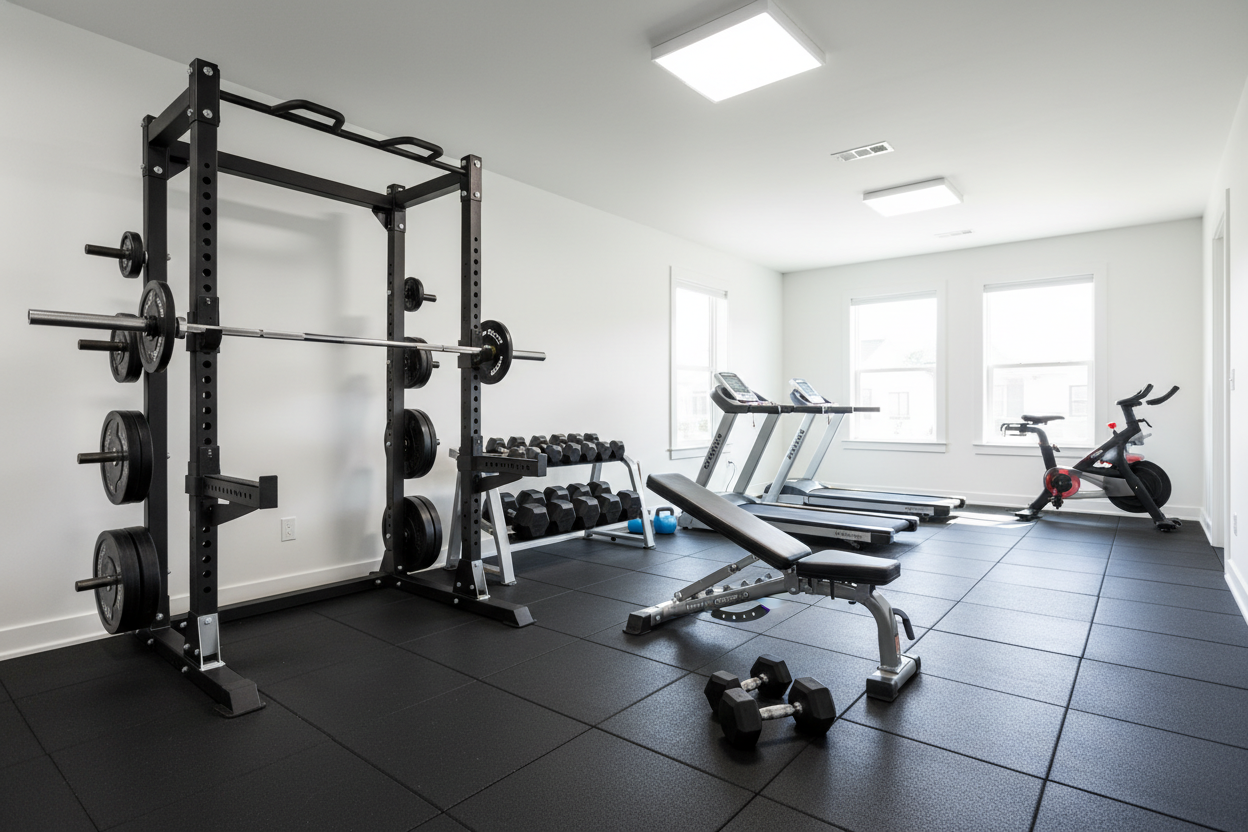
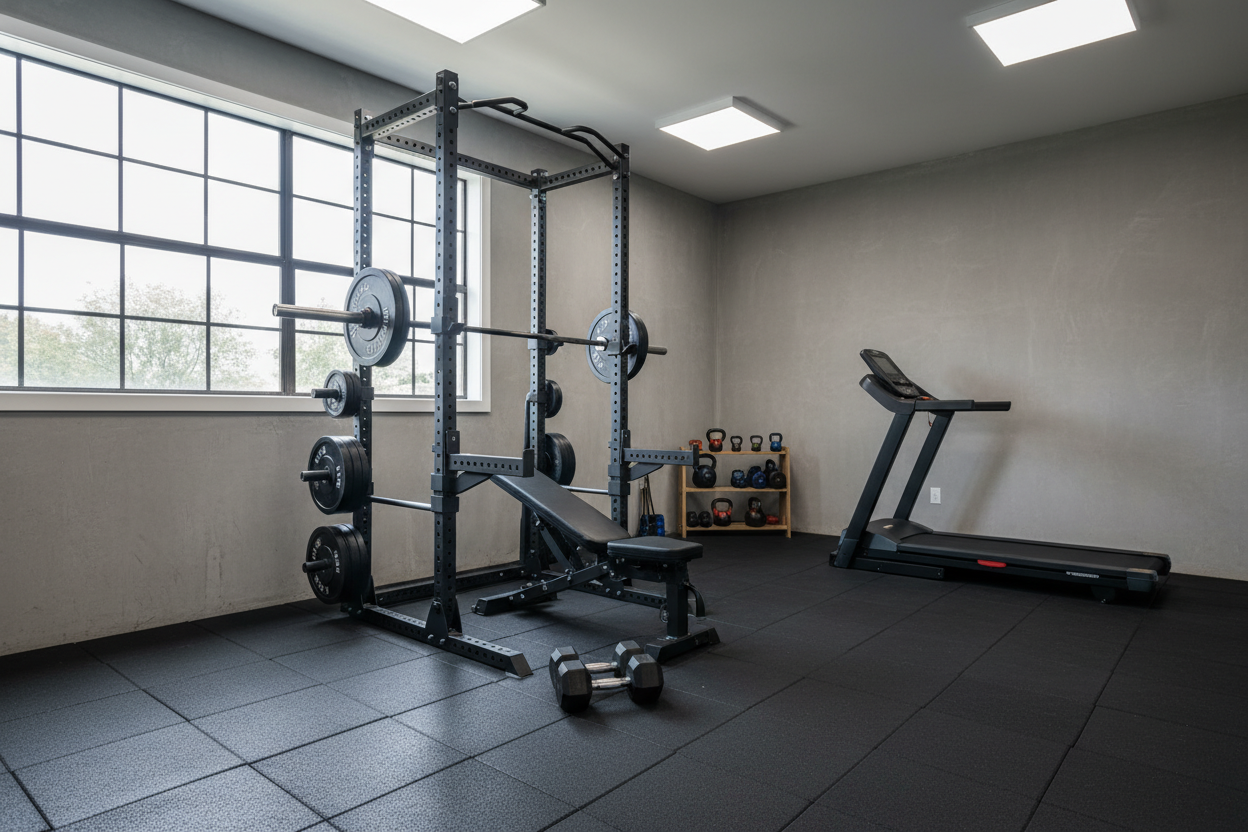
Let’s get practical about your gear. Most of us are working with a power rack, a barbell, and maybe a pair of adjustable dumbbells like the PowerBlocks or Ironmasters. Trying to hit the lateral head of the triceps with surgical precision using a 45lb barbell is a fool’s errand. It’s awkward, it’s hard on the elbows, and it’s a poor use of your 60-minute training window.
Bodybuilding requires machines to safely push muscles to failure without the stabilizer muscles giving out. In your garage, the stabilizers are the point. A heavy overhead press will build bigger shoulders than a lateral raise machine ever could, while also forcing your core to stay rigid under load. You get more bang for your buck by focusing on the 'big rocks'—squats, hinges, pushes, and pulls.
If you’re trying to replicate a 20-machine commercial gym circuit in a 10x10 space, you’re going to end up frustrated. Focus on the movements that require the most coordination and the most weight. Your physique will follow your performance, and your joints will thank you for not trying to force unnatural angles with a straight bar.
Bridging the Gap Between Size and Athleticism
If you want to look like you lift but actually be able to move, you have to break out of the slow, plodding bodybuilding mindset. I’m talking about metabolic conditioning. Instead of sitting on a bench for three minutes between sets of bicep curls, try pairing a heavy compound lift with a functional movement that keeps your heart rate spiked.
I like using dumbbells or kettlebells to bridge this gap. You can follow up a heavy set of squats with a metabolic weight loss routine that uses moderate weights for high reps. This keeps the muscle-building stimulus high while forcing your cardiovascular system to keep up. It’s about building 'dense' muscle that doesn't quit when the rep count goes into double digits.
This approach prevents the 'stiffness' associated with traditional bodybuilding. By moving through different planes of motion under load, you maintain your mobility. You aren't just building a bigger bicep; you’re building a more resilient human machine that can handle a hike just as easily as a heavy deadlift.
You Need an Engine, Not Just a Chassis
Looking like a tank is useless if you gas out walking up a flight of stairs. I’ve been there—weighing 220lbs with a six-pack but unable to run a mile without my calves cramping. A massive physique without a gas tank is just a decorative ornament. You need to prioritize your engine as much as your armor.
This is where lower body power meets endurance. Instead of just doing leg extensions to failure, try a low-impact leg and ab HIIT session. This builds the kind of leg strength that lasts for hours, not just for a 10-second set. It also builds a core that can actually stabilize your spine when you're tired, which is when most injuries happen.
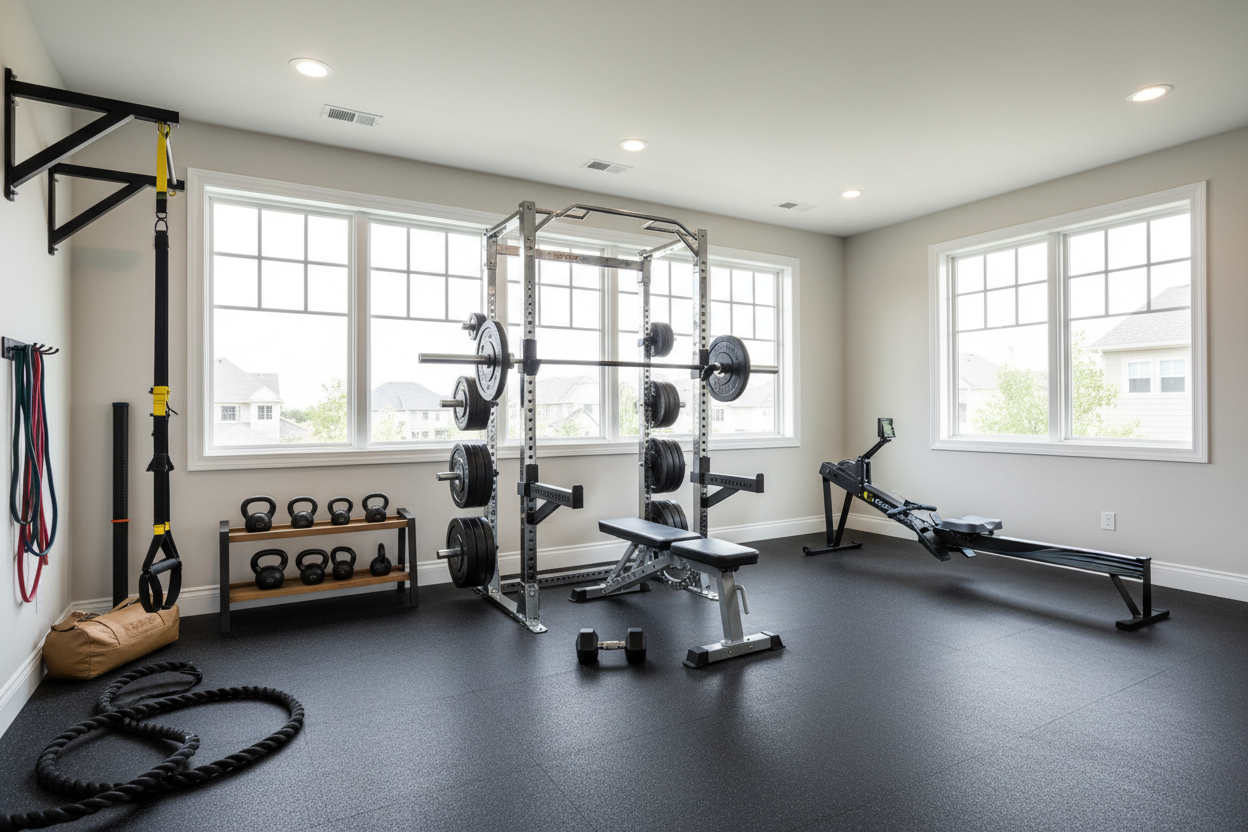
A functional home gym athlete should be able to deadlift 2x their body weight and also run a respectable 5K. If you’re leaning too far into the 'show' side, your heart and lungs are going to pay the price. You don't need a treadmill; a jump rope and a heavy sandbag for carries will build more 'go' than a thousand hours on an elliptical.
The 'Look Strong, Be Strong' Home Routine
If you want the best of both worlds, stop training like a pro bodybuilder and start training like an athlete. My blueprint is simple: start with one heavy compound lift (Squat, Deadlift, Press, or Row). Go heavy. Use that 300-lb weight capacity on your rack. Get the central nervous system fired up and build the raw strength that forms the foundation of a thick physique.
After your heavy work, move into a circuit. Pick three movements: one for 'show' (like a chin-up or dip), one for 'go' (like a kettlebell swing or box jump), and one for the core. Run those back-to-back with minimal rest. You’ll get the hypertrophy stimulus you crave, but you’ll also be dripping sweat and gasping for air. That is how you build a body that is actually useful.
This isn't about ignoring aesthetics; it’s about earning them through performance. When you focus on being able to move more weight faster, the 'bodybuilders muscle' you're looking for will show up as a side effect. And the best part? You won't feel like a stiff board when you try to get out of bed the next morning.
Personal Experience: The 'Couch' Wake-Up Call
A few years back, I was at my 'peak' bodybuilding weight. I looked great in a tank top. A friend asked me to help him move a sleeper sofa up two flights of stairs. I thought it would be a breeze. Five minutes in, my lower back was screaming, my grip was failing, and I was sweating more than I did during my leg days. I realized then that my 'strength' was a lie. I had built muscles for the mirror, not for the world. Since then, I’ve traded half my isolation work for carries and sprints, and I’ve never felt more capable.
FAQ
Is bodybuilding muscle 'fake' strength?
Not exactly. A larger muscle has a higher potential for strength, but if you don't train it to work with other muscles, you won't be able to apply that force in real-world scenarios. It's 'unoptimized' strength.
Can I still get big without isolation exercises?
Absolutely. Look at gymnasts or heavy-weight wrestlers. They focus on big, multi-joint movements and have some of the most impressive physiques on the planet. You don't need a pec deck to grow a chest; you need heavy weighted dips.
How often should I do conditioning to stay 'functional'?
Aim for at least two dedicated conditioning sessions a week, or add 10-15 minute finishers to the end of your lifting sessions. The goal is to keep your heart rate high and your body moving in ways that aren't just a straight line.