Can You Look Like a Gym Body Builder With Just a Rack and Bench?
I remember the exact moment I realized I was paying $120 a month for a commercial gym membership just to wait 15 minutes for a cable crossover machine. I was scrolling through equipment sites at midnight, wondering if my 10x10 spare room could actually turn me into a gym body builder or if I was destined to stay 'home-gym small.' The truth is, most of the shiny machines in big boxes are there for marketing, not muscle.
- Tempo and time-under-tension replace the need for constant-tension cable machines.
- Heel elevation and stance manipulation turn basic squats into quad-focused hypertrophy tools.
- A stable floor and a rigid rack are more important than 20 different attachment handles.
- The 'One Compound, Two Isolations' rule ensures growth without burnout.
The Commercial Machine Illusion
Commercial gyms want you to believe that a muscular bodybuilder physique is a byproduct of variety. They sell you on the idea that you need a specific machine for the long head of the tricep and another for the short head. It is a lie. Muscle fibers don't have eyes; they only recognize tension, load, and metabolic stress.
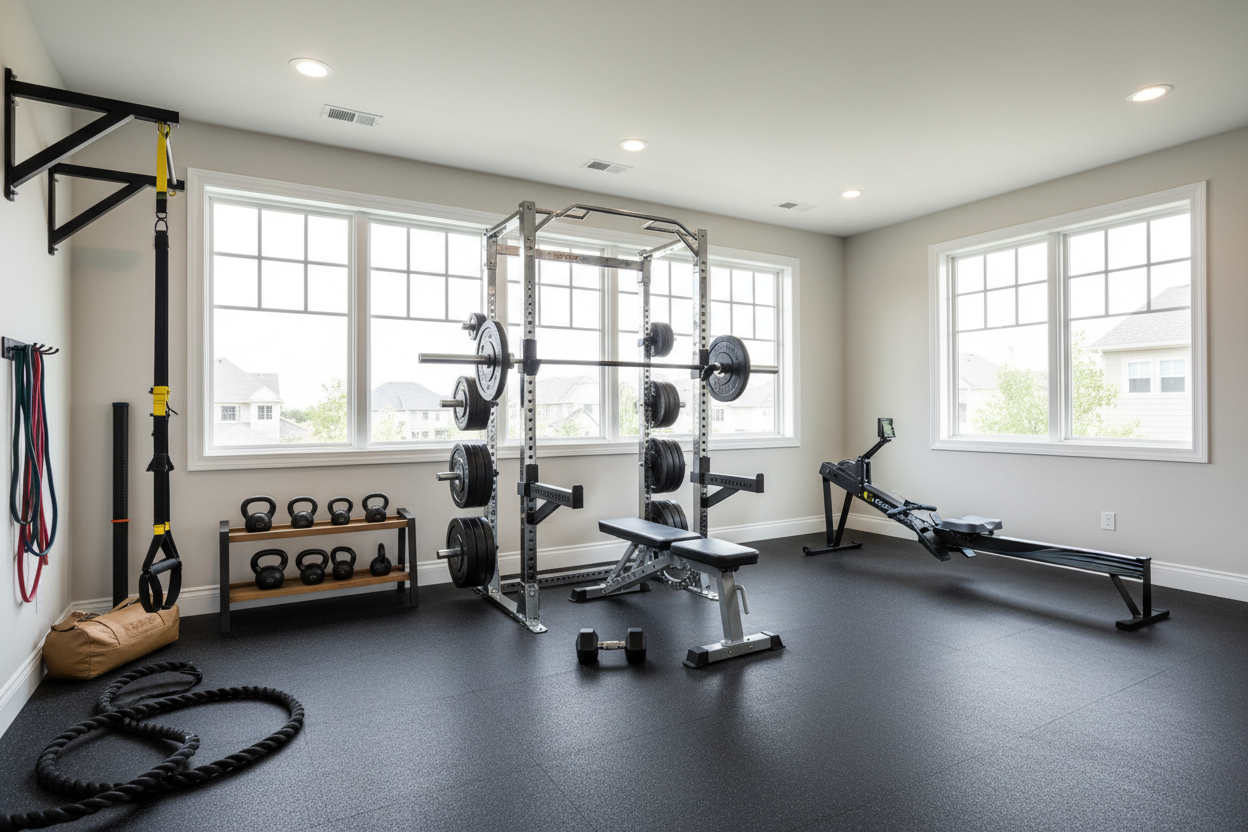
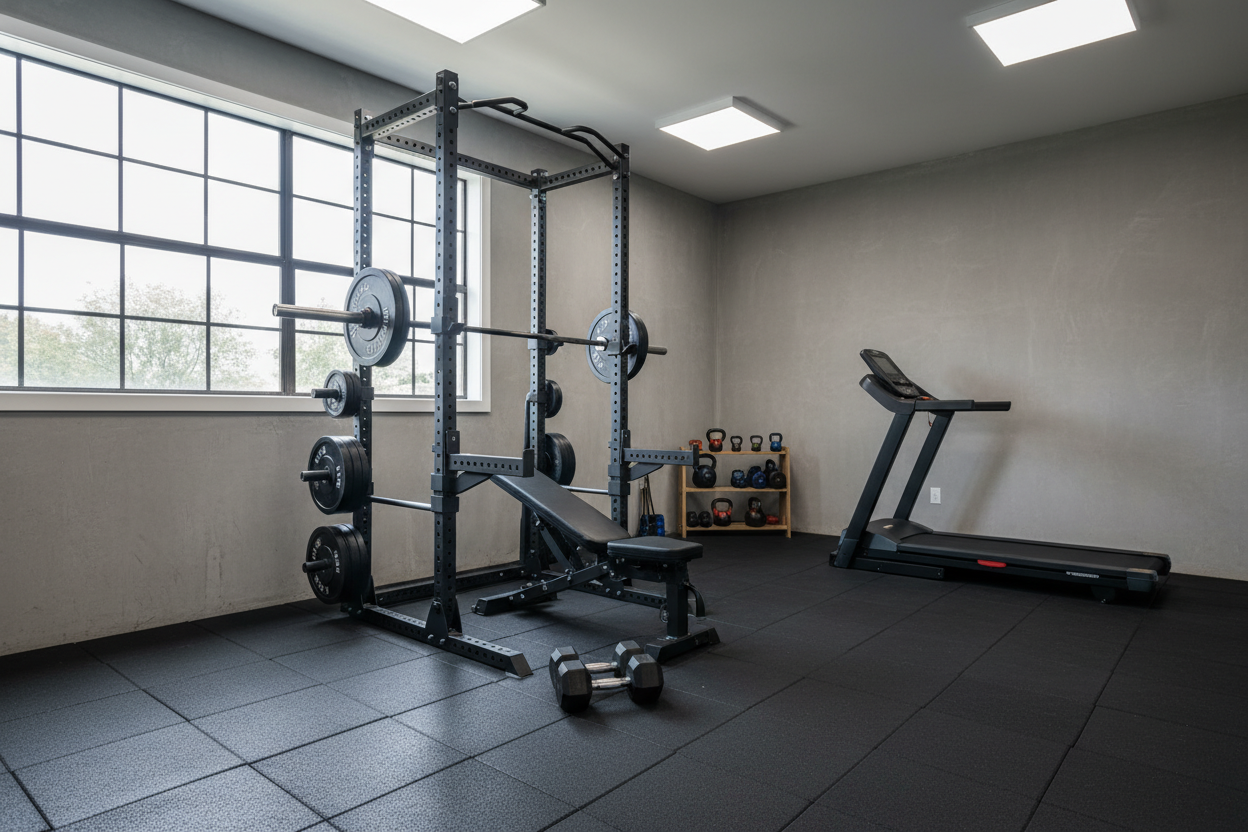
When you shift your focus to a garage setup, you have to stop training like a powerlifter who only cares about moving the bar from point A to point B. You need to start thinking about how to make the weight feel heavier. Investing in the right muscle fitness full body workout gear—like a solid 11-gauge steel rack and a barbell with decent knurling—is the only foundation you actually need to build bodybuilding bodybuilder mass.
The downside of machines is the fixed path. While that’s great for isolation, it robs you of the micro-stabilization that builds dense body builder muscle. A barbell bench press might be harder to master than a chest press machine, but the recruitment of your serratus and stabilizers creates a thicker, more complete look that machines just can't mimic.
Tempo is Your New Cable Crossover
The biggest advantage of cables is the constant tension. Gravity, unfortunately, doesn't work that way with a dumbbell. If you're doing a dumbbell fly, there's zero tension at the top. To fix this and achieve muscle body builder results, you have to manipulate your tempo. I stopped counting reps and started timing sets.
Try a 4-second eccentric (lowering phase) on every single rep. By slowing down the movement, you increase the time under tension to match what you'd get on a selectorized machine. You'll find that 30-pound dumbbells suddenly feel like 60-pounders. This is how you carve out muscle body builder detail without a $5,000 cable stack.
I also use '1.5 reps' to kill the dead zones in free weight movements. On a bench press, go all the way down, come halfway up, go back down, and then lock out. That’s one rep. It keeps the chest under a load that mimics a high-end pec deck. It’s brutal, it’s effective, and it costs exactly zero dollars in extra equipment.
Modifying Leg Day for Home Gym Hypertrophy
Leg day is usually where people quit on their home gym. They miss the leg extension and the hack squat. But fitness body builders have been using 'low-tech' hacks for decades to blow up their quads. If you want the stimulus of a lower body strength machine, you just need to change your leverages.
Elevate your heels on a pair of 5-lb plates or a dedicated squat wedge. This shifts the center of mass forward, driving your knees over your toes and putting the load squarely on the quads. Pair this with a high-bar position and you've basically turned your squat rack into a hack squat. It’s more demanding on your core, but the quad growth is identical.
Don't sleep on the Bulgarian Split Squat either. It is arguably the most hated movement in bodybuilding, but it’s the king of home-gym leg growth. You don't need a dedicated stand; the bench you already own works perfectly. It allows for a massive range of motion and deep stretch—two things that trigger serious hypertrophy in bodybuilder bodies.
Protecting Your Joints During High-Volume Sets
One thing nobody tells you about building body builder muscle at home is that it’s harder on your joints than machine training. Machines stabilize the weight for you. When you’re doing high-volume dumbbell work or heavy rows to failure, your body is fighting to keep the weight on track. This is why your foundation matters.
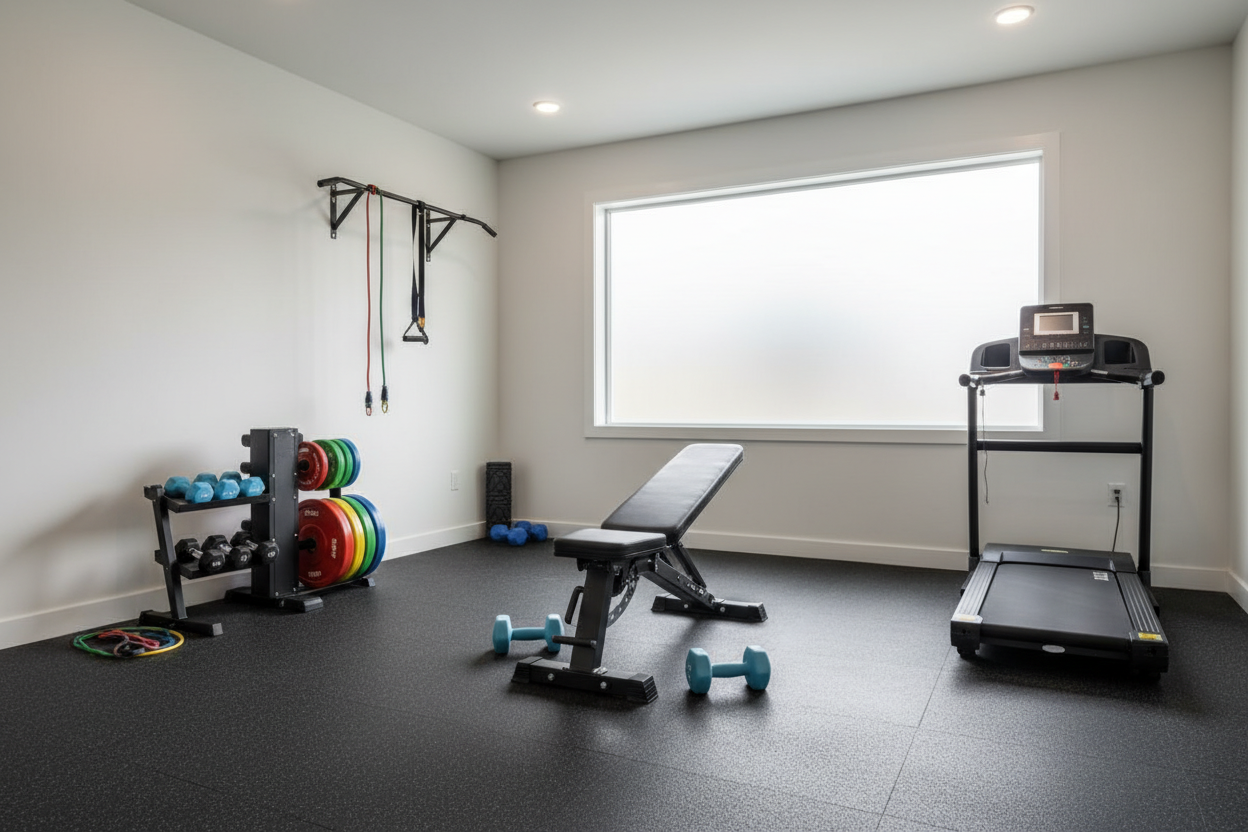
If you're training on bare concrete or cheap, squishy foam, your ankles and knees are going to pay the price. I learned this the hard way after a month of heavy overhead presses on thin flooring—my balance was off, and my joints felt like they were on fire. You need high-density gym flooring for home workout that doesn't compress under load.
A stable base allows you to push closer to failure safely. When you aren't worried about your feet sliding or the floor denting, you can focus 100% of your mental energy on the mind-muscle connection. That focus is what separates someone who just lifts weights from a muscular bodybuilder.
The 'One Compound, Two Isolations' Garage Rule
Programming for a home gym doesn't have to be complicated. I follow a simple framework: start with one heavy compound movement to build raw strength, then follow it with two isolation movements using strict form and high reps. This ensures you're getting both the mechanical tension and the metabolic stress required for gym body builder aesthetics.
For a chest day, that might look like a heavy barbell bench, followed by dumbbell flyes with a 3-second pause at the bottom, and finishing with pushups to failure. You’re hitting the muscle from multiple angles and rep ranges. This approach fits perfectly into a full body workout for muscle and strength if you're training 3-4 days a week.
The goal is to leave the ego at the door. In a commercial gym, you might be tempted to stack the plates on the leg press to look cool. At home, nobody is watching. Use that privacy to use lighter weights with 'perfect' bodybuilding form. Squeeze the muscle, control the negative, and chase the pump. That’s what bodybuilders actually do.
Personal Experience: My Cable Trap
I once spent $400 on a cheap, wall-mounted cable tower because I thought I couldn't grow my back without lat pulldowns. It was a disaster. The pulley was jerky, the weight ratio felt off, and it took up a huge chunk of my wall. I eventually sold it and went back to heavy rows and weighted chin-ups. My back grew more in three months of heavy chin-ups than it did in a year of mediocre pulldowns. Don't buy a machine just because you think you 'should' have it. Master the barbell first.
FAQ
Can I get big without a leg press?
Absolutely. Front squats and heel-elevated goblet squats provide more than enough stimulus for quad growth. The leg press is just a tool to add volume without taxing the lower back, which you can replicate with high-rep split squats.
How do I hit my rear delts at home?
Rear delt flyes with dumbbells or even small change plates are all you need. You can also do 'face pulls' using a TRX-style trainer or even a stout resistance band looped around your power rack uprights.
Is a 300-lb weight set enough for bodybuilding?
For most people, yes. Bodybuilding is about the quality of the contraction, not just the total weight. If you find 300 lbs is getting light for deadlifts, start adding pauses or increasing your rep range to the 12-15 mark to keep the hypertrophy stimulus high.