Stop Doing Nothing: Why a light upper body workout beats a rest day
We've all been there. You hit a massive PR on Monday, and by Wednesday morning, your shoulders feel like they've been glued shut and your elbows are cranky. Your instinct is to stay on the couch and binge Netflix until the soreness fades, but that's actually the slowest way to get back under the bar. Engaging in a light upper body workout is the secret to clearing that 'concrete' feeling out of your joints and getting back to 100% faster.
Quick Takeaways
- Active recovery beats static rest by pumping fresh, oxygenated blood into damaged tissue.
- Keep the intensity below 30% of your max to avoid taxing the central nervous system.
- Focus on high repetitions (20-30) to lubricate the joints without causing more micro-tears.
- A 15-minute session is all you need to 'flush' the system.
Why Complete Rest Days Are Leaving Your Joints Stiff
There's a massive difference between systemic fatigue and local muscle stiffness. If you're mentally fried and your sleep is trashed, you need a nap. But if you're just 'gym sore,' sitting still is your worst enemy. When you remain inactive, your lymphatic system—which is responsible for clearing out waste products from exercise—stagnates because it relies on muscle contraction to move fluid.
By skipping movement entirely, you're essentially letting the debris from your heavy upper body weight workout routine sit in your muscle fibers. This leads to that 'rusty gate' feeling in your shoulders and neck. I've found that on days I do absolutely nothing, my first warm-up set the following day feels like I'm moving through molasses. Movement is medicine, provided you don't overdo the dose.
The Biological Magic of a Low Weight Upper Body Workout
The goal here isn't to build muscle; it's to facilitate the 'Active-Flush.' When you perform a low weight upper body workout, you're increasing the temperature of the local tissue and dilating blood vessels. This delivery system brings amino acids and oxygen to the site of the damage while whisking away the metabolic byproducts that contribute to DOMS (delayed onset muscle soreness).
Think of your joints like a bicycle chain. If it sits in the rain, it gets stiff. You don't fix it by letting it sit longer; you apply a little oil and move the pedals. For us, that 'oil' is synovial fluid, which only gets secreted when the joint moves through a full range of motion. A few sets of high-rep, low-tension movements act as a biological lubricant for your rotator cuffs and elbows.
Rule #1: Chase the Pump, Avoid the Burn
This is the hardest rule for garage gym lifters to follow. We are wired to push until it hurts. For active recovery, you have to kill your ego. If you're grinding out a rep or your breathing becomes labored, you've gone too far. You want to feel the muscle filling with blood—the 'pump'—but you should never feel that acidic 'burn' that comes with training to failure. If you're using 10-lb dumbbells and it feels too light, good. That's the point.
Rule #2: Focus on Contraction, Not the Stretch
In a typical hypertrophy session, we love the deep, loaded stretch at the bottom of a chest fly or a pull-up. That stretch is great for creating the micro-tears that lead to growth, but it's the last thing you want during a recovery session. During your lightweight upper body workout, focus entirely on the peak contraction. Squeeze the muscle at the top of the movement and control the descent, but don't hang out in the fully lengthened position where the tissue is most vulnerable.
My 15-Minute Lightweight Upper Body Workout
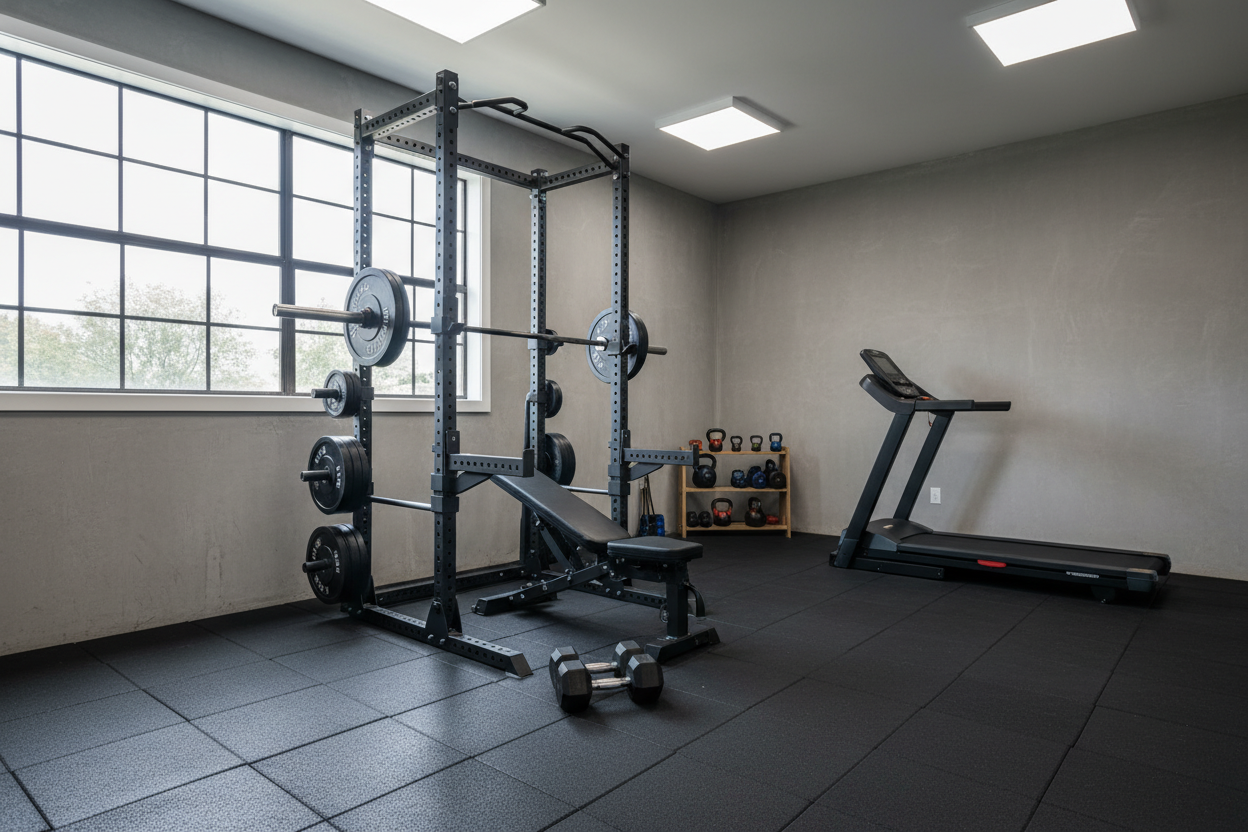
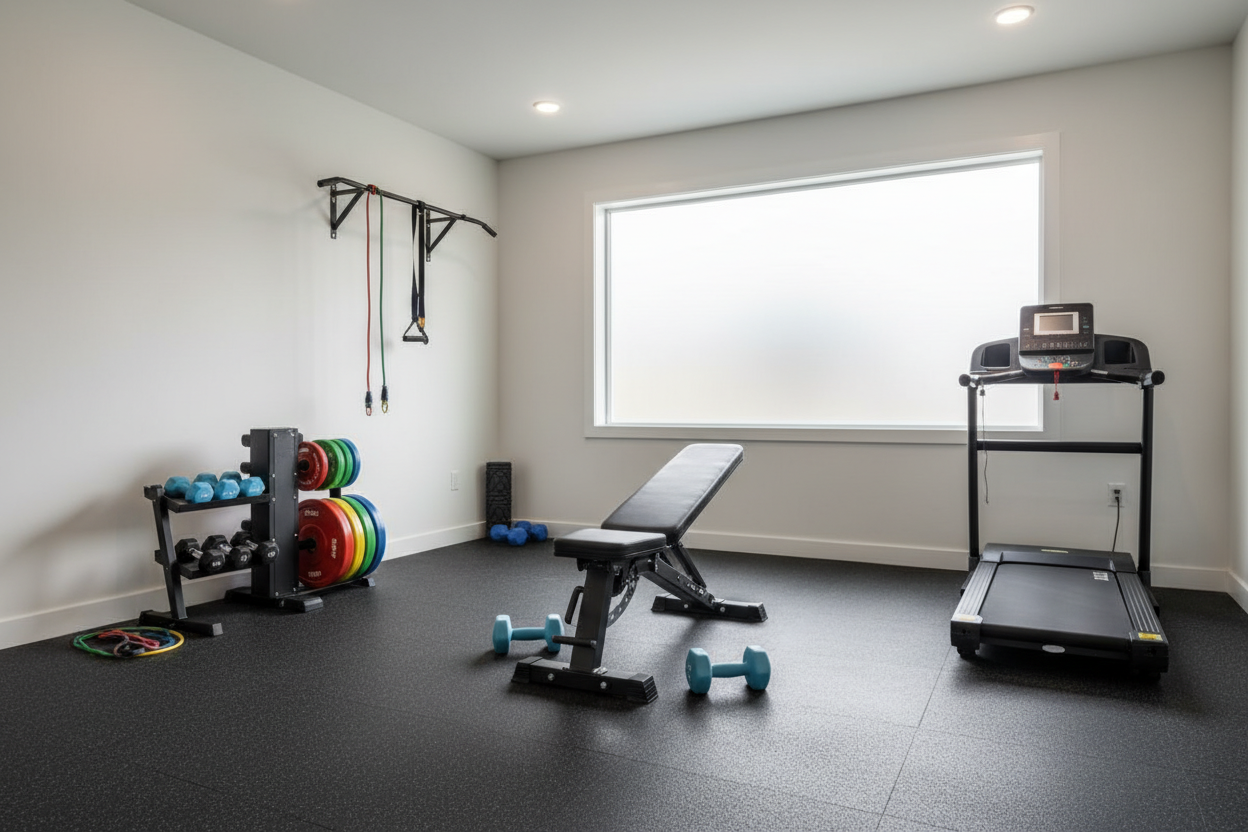
I perform this routine right in the middle of my garage on my rest days. I usually do this barefoot because I like the stability of the floor. If you're working on hard concrete, I highly recommend getting some high-density gym flooring for home workouts to make the floor-based mobility work easier on your knees and wrists.
- Band Face Pulls: 3 sets of 25 reps. Focus on pulling the band apart and squeezing your shoulder blades together.
- Light Dumbbell Lateral Raises: 3 sets of 20 reps. Use 5 or 10-lb weights max. Keep the movement fluid and constant.
- Triceps Band Pressdowns: 2 sets of 30 reps. This is purely for elbow health. Use a light resistance band and just pump the blood into the back of the arm.
- Push-ups against a bench: 2 sets of 15 reps. By elevating your hands, you remove the strain from the shoulder and focus on a gentle chest contraction.
This entire circuit takes me about 15 minutes. No heavy plates, no chalk, and no pre-workout required. Just move, breathe, and get out.
Fitting Active Recovery Into Your Weekly Schedule
Timing is everything. I've found the 'sweet spot' for this routine is 24 to 48 hours after your most intense pressing session. If you bench heavy on Monday, Wednesday morning is the ideal time for your flush. It bridges the gap between your heavy sessions without adding to your recovery debt. For more ideas on how to structure your week, check out our broader workout hub for programming guides that balance intensity with longevity.
Don't make the mistake of thinking more is better. If you start adding sets because you 'feel good,' you're no longer recovering—you're just training. Keep it boring, keep it light, and you'll find your heavy days become significantly more productive.
Personal Experience: The 'More is Better' Trap
I spent years thinking rest days were for the weak. I'd try to do 'active recovery' by going for a 5-mile run or doing 100 pull-ups. All I did was dig a deeper hole. I eventually realized that my elbows were constantly inflamed because I never let the local inflammation settle. Switching to a genuine, boring, lightweight upper body workout with literal 5-lb weights felt embarrassing at first, but my bench press numbers shot up because my shoulders finally felt healthy enough to handle the load. The biggest mistake you can make is turning a recovery day into a 'light' training day. They aren't the same thing.
FAQ
Can I use resistance bands instead of dumbbells?
Absolutely. In fact, I prefer bands for active recovery. They provide a linear resistance curve that is much easier on the joints at the bottom of the movement compared to the constant gravitational pull of a dumbbell.
How many times a week should I do this?
Twice a week is plenty. Usually, one session for the upper body and one for the lower body on your non-lifting days will keep the blood moving without overtraining.
Should I take supplements before a light workout?
No. Save your caffeine and expensive powders for the heavy days. The goal here is to lower your cortisol, not spike it. A glass of water and maybe some electrolytes are all you need.