You're Overthinking How Many Exercises for Upper Body Day (Just Do 4)
I spent years scrolling through forums and watching pro bodybuilders do twelve different variations of a cable flye, convinced I was missing some secret sauce. My garage gym was a mess of half-used attachments and a cheap 300-lb barbell set that I was treating like a toy. I was spending two hours a night 'working out,' but I wasn't getting any stronger. If you are constantly searching for how many exercises for upper body day you need to finally see some chest growth or shoulder width, the answer is probably half of what you are doing right now.
- The Limit: Four high-intensity exercises is the maximum your nervous system can handle if you are actually training to failure.
- The Framework: One horizontal push, one horizontal pull, one vertical push, and one vertical pull.
- The Myth: Doing 8-10 exercises usually means you are 'pacing' yourself and sandbagging the first half of the session.
- The Key: Stability is everything. If your feet are slipping on dusty concrete, you aren't hitting mechanical failure; you're just falling over.
Why Your 8-Movement Routine is Masking Weak Effort
If you are wondering how many upper body exercises should I do, you have to be honest about your intensity. Most people in home gyms are 'pacing' themselves. You know you have three more chest variations and two tricep finishers after your main bench press, so you subconsciously hold back. You leave two or three reps in the tank on that first lift because you don't want to be 'spent' for the rest of the hour. That is a mistake.
When you commit to only four movements, that safety net disappears. You realize that if you don't kill it on the bench and the rows, your workout is basically over. I’ve seen guys with 52.5-lb adjustable dumbbells get more out of a session than guys with a full rack of fixed weights just because they stopped treating their workout like a social hour. If you can survive eight different lifts in one session, you simply aren't training hard enough on the first two. You are doing 'junk volume'—moving weight just to move it, without actually forcing your muscles to adapt.
The Biological Limit: Why 4 is the Magic Number
Your central nervous system (CNS) is like a battery, and heavy, high-intensity lifting drains it fast. When you hit true mechanical failure—the point where the bar literally stops moving despite your best efforts—your CNS takes a massive hit. This naturally solves the dilemma of how many upper body exercises per workout you should program. After two or three movements performed with that level of violence, your power output drops off a cliff. Anything you do after that is just burning calories, not building muscle.
Think about it in terms of specific body parts. When people ask how many chest exercises should you do, they often forget that the chest doesn't work in a vacuum. Your triceps and front delts are screaming during every press. If you do two heavy pressing movements to failure, your triceps are likely cooked. Adding four more 'isolation' moves isn't high-level programming; it's just stubbornness. I’ve found that by the time I reach my fourth exercise—usually a heavy row or weighted pull-up—my grip strength is fading and my heart rate is pinned. My body is telling me it's done. Listen to it.
The 4-Move Blueprint for Maximum Muscle Tension
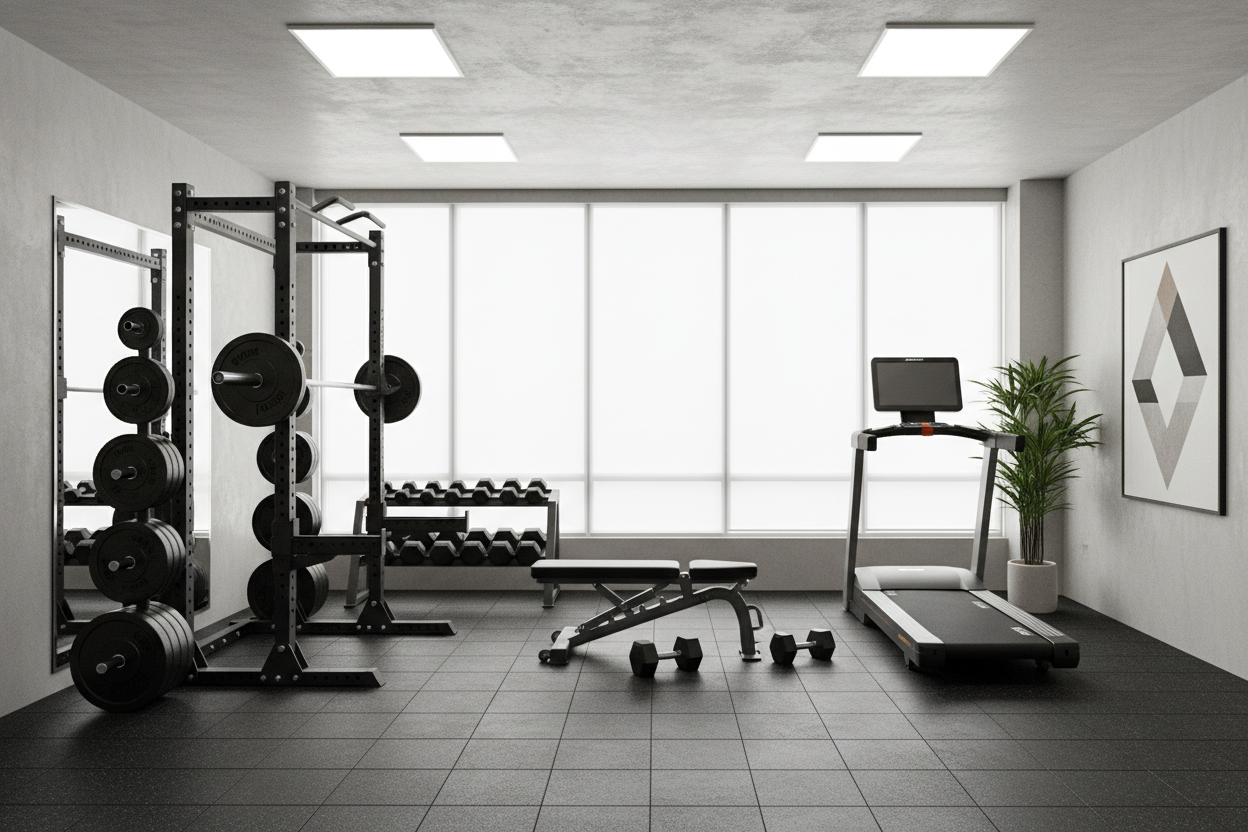
You don't need a 6×8 ft corner filled with every machine from a 1980s Gold's Gym. You need four categories of movement. First, a horizontal push like the barbell bench press or a heavy dumbbell floor press. Second, a vertical pull—think weighted pull-ups or lat pulldowns. Third, a vertical push like the overhead press. Finally, a horizontal pull like a bent-over row or a one-arm dumbbell row. This covers every major muscle group in the upper body with zero fluff.
This tight focus is similar to what I recommend for exercises in full body workout plans. You pick the biggest, 'manliest' movers and you pour every ounce of energy into them. I prefer using a barbell with aggressive knurling—something that bites into your hands—because it forces you to stay tight. When you only have four moves, you can't afford to be casual. You treat every set like a 1-rep max attempt in terms of focus, even if you're working in the 8-12 rep range.
Drop the Ego and Plant Your Feet
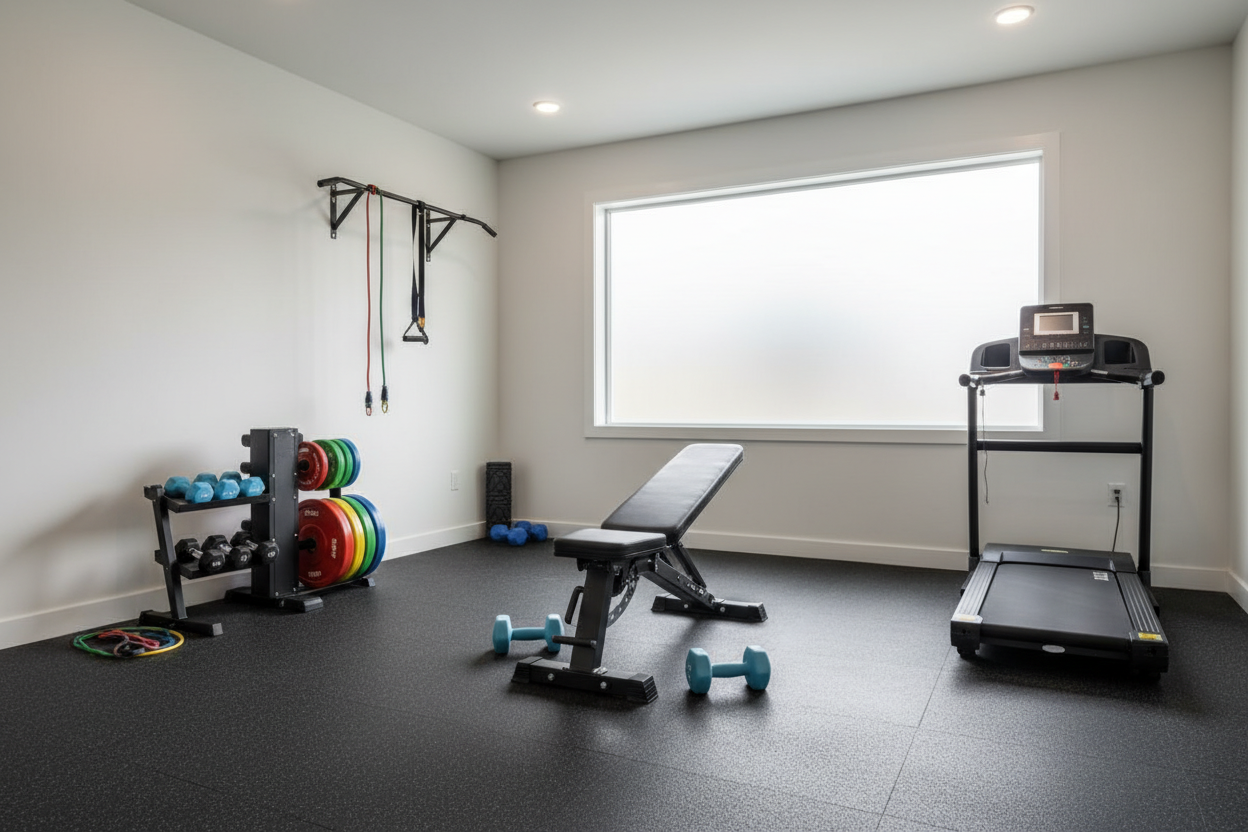
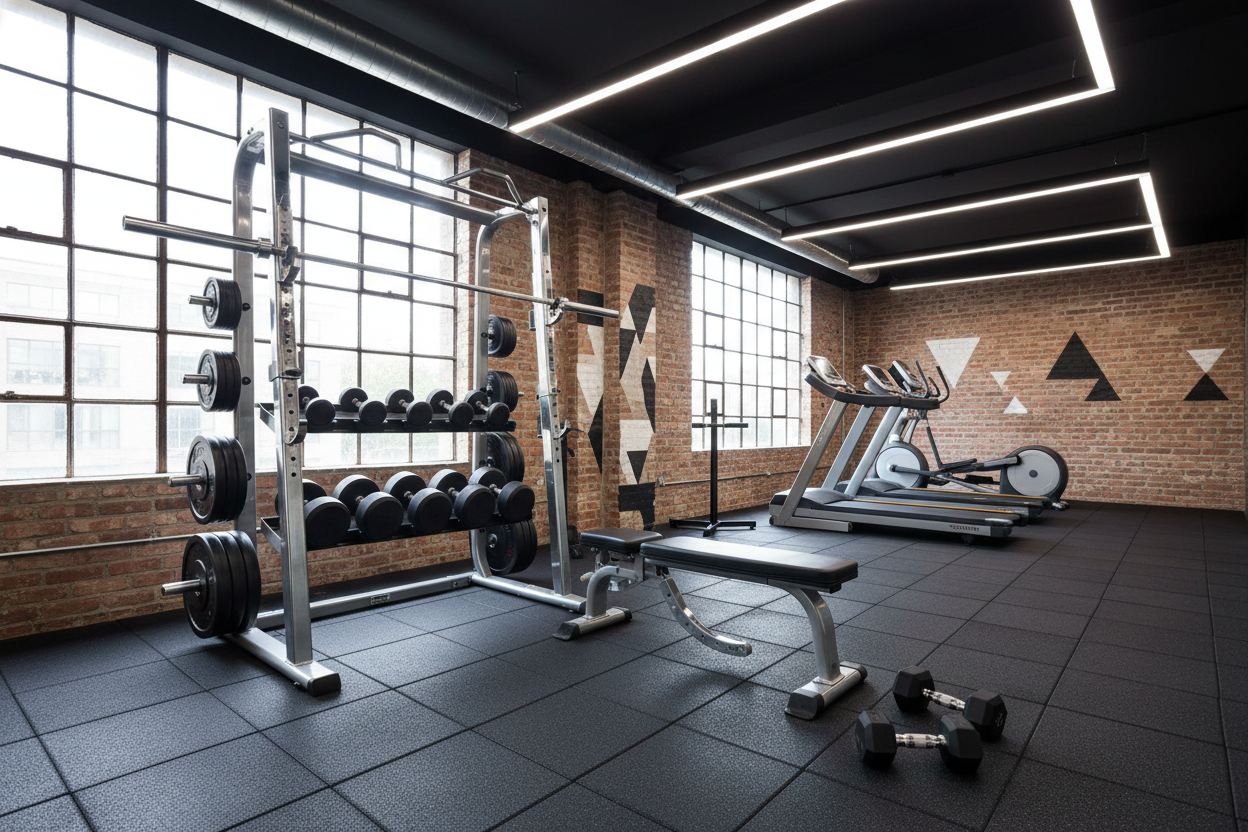
Reaching true mechanical failure is dangerous if you aren't stable. I’ve seen guys try to hit a PR on overhead press while standing on a slippery, oil-stained garage floor. You can't drive force into the bar if your base is shifting. This is why I tell everyone that high-traction gym flooring for home workout is a performance upgrade, not just a cosmetic one. You need to be able to 'screw' your feet into the ground to create the torque necessary for heavy lifting.
When you strip away the excess exercises, you have the mental bandwidth to focus on these details. You stop worrying about the 'pump' and start worrying about your foot position, your bracing, and your bar path. You'll find that 4 exercises done with perfect stability and terrifying intensity will build more muscle than 10 exercises done while you're sliding around on a cheap yoga mat. Plant your feet, grip the bar like you're trying to snap it, and stop overthinking the volume.
Personal Experience: The 'More is Better' Trap
I remember when I first moved my training to my garage. I bought a cheap rack that felt like it was made of soda cans and a barbell that had the knurling of a wet noodle. I was doing 12 exercises an upper-body day, chasing a pump because I didn't trust my equipment to handle real weight. I was small, tired, and my joints hurt. It wasn't until I upgraded to a rack with 3x3 inch 11-gauge steel and cut my routine down to just the 'Big Four' that I actually started seeing my shirts get tighter. I realized I wasn't 'overtraining' my muscles—I was overtraining my patience and undertraining my intensity.
FAQ
Can I add bicep curls to a 4-exercise routine?
Sure, if you have five minutes at the end and it makes you happy. But don't count it as a 'main' exercise. If curls are the highlight of your upper body day, you aren't pressing hard enough.
What if I don't feel 'sore' the next day?
Soreness isn't a requirement for growth. Performance is. If your numbers are going up on those four main lifts every two weeks, you are growing. If you aren't sore but you're getting stronger, keep going.
How many sets should I do for each of the 4 exercises?
I recommend 2 to 3 'working' sets. These are the sets that go to, or very near, mechanical failure. This doesn't include 1-2 warm-up sets to get the blood flowing and the joints lubricated.