YouTube Hip Strengthening Exercises: 5-Minute Routine Mechanics, Form Corrections, and Home Floor Staging
Navigating Online Follow-Along Hip Workouts
Digital fitness channels offer thousands of quick workout routines targeting lower-body mobility and glute activation. When searching for youtube hip strengthening exercises, lifters and runners are frequently met with high-paced, high-repetition follow-along videos designed to produce an immediate muscular burn. However, keeping pace with an on-screen instructor without checking individual mechanics can lead to form breakdown rather than genuine muscle recruitment.
Why Many Video Routines Lead to Lumbar Compensation
Fast-paced video workouts often encourage exercisers to prioritize movement range over muscular control. When the hip joint reaches its active end range during abduction or extension, the body naturally seeks the path of least resistance. In many cases, this results in excessive arching of the lower back or lateral tilting of the pelvis. Instead of loading the gluteus medius or deep hip rotators, the lumbar spine absorbs mechanical stress. As detailed in our exercise youtube guide, video workouts that rush through repetitions often mask compensatory movement patterns that reduce training effectiveness.
Essential Criteria for Selecting Quality Follow-Along Content
To get the most out of online sessions, filter for creators who prioritize structured coaching cues over nonstop speed. Look for the following instructional markers when vetting digital routines:
- Clear alignment cues: Instructors who emphasize a neutral spine, level hips, and steady rib cage positioning.
- Controlled pacing: Routines that utilize deliberate tempos, pauses at peak contraction, and controlled eccentric phases.
- Regression options: Channels that demonstrate modified hand placements, reduced ranges of motion, or unbanded alternatives.
5 Foundational Movements in Short Hip Strengthening Routines
A well-structured five-minute routine focuses on multi-angle activation of the hip musculature. Integrating these key patterns creates a comprehensive baseline for stability and control, complementing a broader hip exercise guide.
Quadruped Fire Hydrants and Controlled Articulations
Starting on hands and knees, lift one leg out to the side while keeping the knee bent at a right angle. The common error is shifting torso weight heavily toward the supporting side or rotating the lower back. Focus on keeping both arms straight, pressing the floor away, and moving purely from the hip socket without twisting the pelvis.
Side-Lying Hip Abductions and Isometric Holds
Lying on your side with the bottom leg slightly bent for balance, raise the top leg with the toes pointing slightly downward or forward. Avoid rolling the top hip backward. Adding a brief isometric pause at the top of the movement increases time under tension without requiring heavy external loads.
Glute Bridge Variations for Pelvic Stability
Lying supine with feet flat on the floor, drive through the heels to elevate the hips until thighs and torso align. Focus on tucking the pelvis slightly to engage the glutes rather than hyperextending the lower back at the top. Single-leg variations or placing a light resistance band above the knees can further challenge lateral hip stability.
Standing Lateral Band Steps and Weight Transfers
Placing a mini-band around the ankles or above the knees, adopt a shallow athletic quarter-squat. Step laterally while keeping feet parallel and maintaining constant tension on the band. Avoid dragging the trailing foot or letting the knees cave inward during the transition.
Half-Kneeling Hip Thrusts for Glute Activation
Setting up in a 90-90 half-kneeling stance, squeeze the glute of the trailing leg while maintaining a tall, upright posture. This movement encourages active hip extension while challenging pelvic control in an asymmetrical stance.
Key Biomechanical Principles for Pain-Free Hip Training
Executing hip routines safely requires active awareness of posture, tempo, and joint positioning throughout every repetition.
Maintaining Neutral Spine and Preventing Pelvic Tilt
The pelvis serves as the foundation for both the spine and the lower extremities. During hip extension or abduction drills, engaging the deep abdominal wall helps prevent anterior pelvic tilt and excessive lumbar extension. Think of bracing the midsection gently as if preparing for a sudden balance challenge.
Controlling Tempo and Eliminating Momentum
Swinging the legs to complete repetitions creates momentum that bypasses target muscle groups. Adopting a two-second lifting phase, a one-second isometric hold, and a two-second lowering phase ensures that the muscular system performs the work rather than joint elasticity or momentum.
Home Gym Staging and Floor Protection for Hip Drills
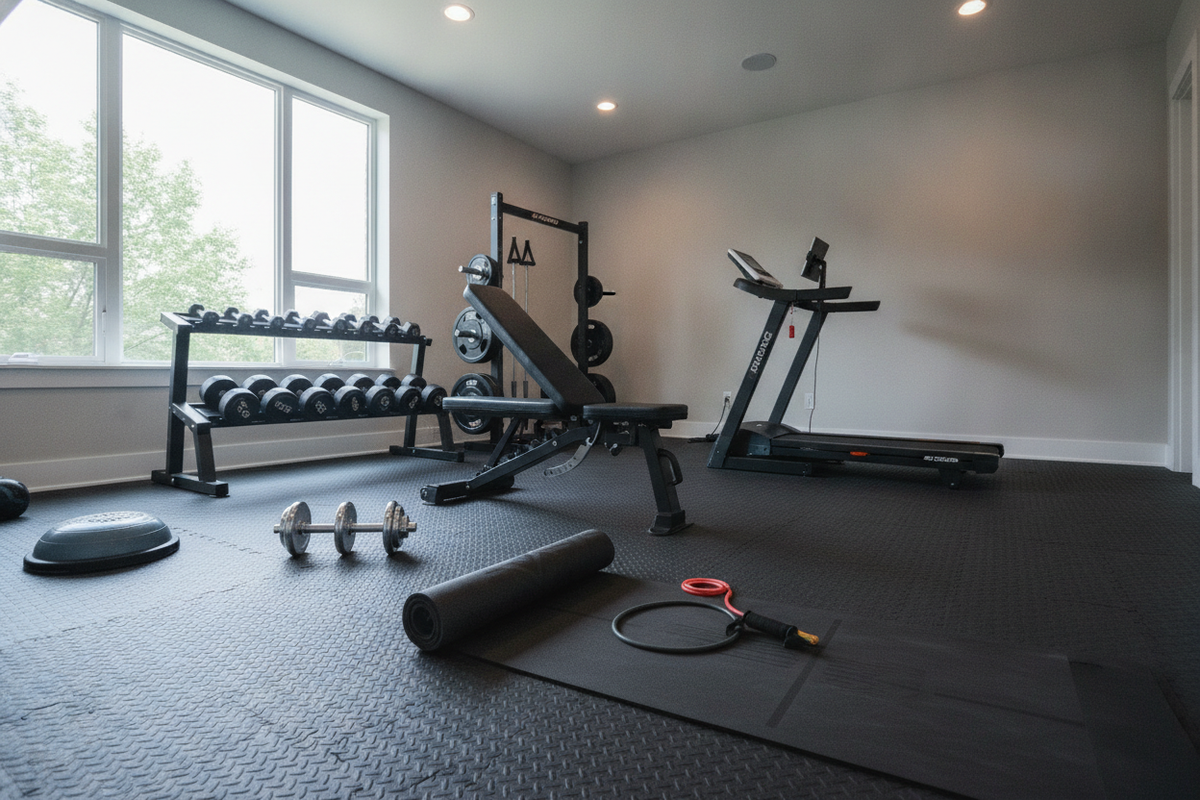
Proper floor staging is essential when performing floor-based and standing hip exercises at home. Thin surfaces or slick flooring can disrupt balance and create uncomfortable pressure on joints.
Cushioning Pressure Points in Kneeling and Side-Lying Positions
Floor drills such as fire hydrants, bird dogs, and side-lying abductions place significant localized pressure on the kneecaps, wrists, and greater trochanter of the hip. Performing these movements on hard subfloors or thin yoga mats can cause discomfort that distracts from proper muscle activation. Utilizing high-density, shock-absorbing exercise mats provides the firm yet forgiving support needed to cushion bony landmarks without compromising balance.
Traction and Stability for Dynamic Standing Hip Movements
Standing lateral band walks and single-leg balance drills require reliable surface grip. Slippery hardwood or shifting area rugs can cause the feet to slide, increasing the risk of uncontrolled joint shearing. A large, non-slip mat surface creates dependable traction underfoot, allowing for confident lateral pushes and stable landings.
Equipment Setup and Subfloor Protection for Resisted Band Work
When incorporating looped resistance bands, dumbbells, or ankle weights into your hip training, durable gym flooring protects your underlying concrete, tile, or hardwood from accidental drops and continuous friction. Setting up a dedicated workout zone ensures equipment stays organized and ready for daily use.
Structuring a Sustainable Weekly Hip Strengthening Habit
Consistency and progressive overload form the backbone of long-term lower-body resilience. Combining hip activation with an exercise strengthening guide creates a balanced training split for the entire lower kinetic chain.
Warm-Up Integration and Session Frequency
Short five- to ten-minute hip routines work exceptionally well as targeted warm-ups prior to heavy lower-body lifts, running sessions, or sports. Alternatively, they can be performed three to four times per week as standalone mobility and activation breaks during sedentary workdays.
Progression Strategies Without Sacrificing Form
When a routine begins to feel easy, resist the temptation to merely rush through more repetitions. Instead, progress movements by increasing time under tension, integrating subtle pauses, or utilizing bands with higher resistance while maintaining strict pelvic stability.