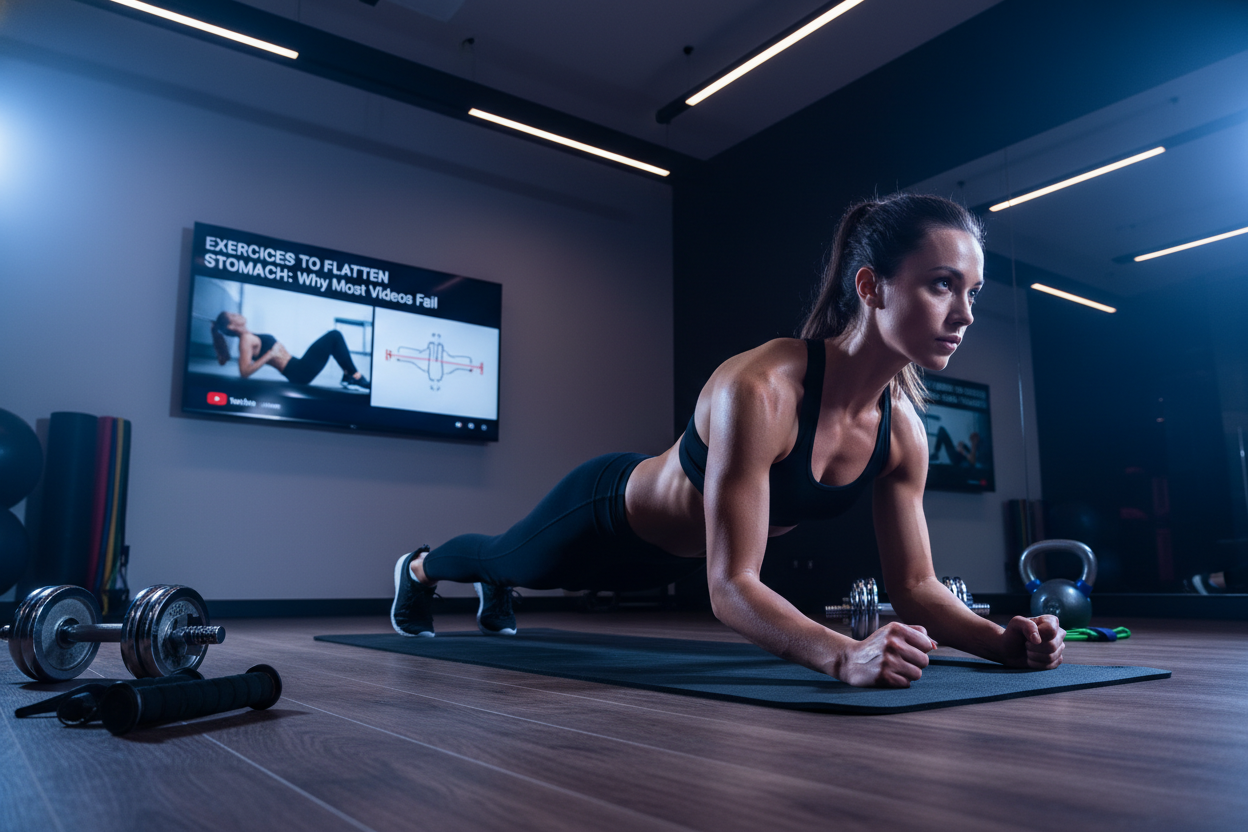
Exercises to flatten stomach youtube: Why Most Videos Fail
We've all been there. You finish a heavy lifting session in your garage gym, look at your midsection, and immediately start searching for exercises to flatten stomach youtube. It is one of the most common fitness searches, promising quick fixes and six-pack abs in just ten minutes a day. But if you have spent any time trying to out-crunch a bad diet or a poorly structured training program, you already know the frustration of hitting a plateau.
The truth is, while a quick flat stomach video can be a great way to finish a workout, most free online routines lack the progressive overload and full-body integration required for real results. In this guide, we are breaking down what actually works, what equipment you need, and how to properly integrate core training into your home gym routine.
Key Takeaways
- Spot reduction is a myth; a flat stomach requires a mix of caloric deficit and core hypertrophy.
- Most YouTube ab routines focus heavily on hip flexors rather than deep core stabilization.
- Integrating tools like an ab wheel or resistance bands yields better results than bodyweight alone.
- Consistency in your overall training program trumps any single ten-minute video.
Why Most YouTube Core Routines Fall Short
When you pull up a typical core workout online, you are often met with high-rep, fast-paced crunches, flutter kicks, and sit-ups. While these burn, they primarily target the superficial rectus abdominis and the hip flexors. To truly build a strong, tight midsection, you need to target the transverse abdominis—the deep core muscle that acts like a natural weight belt.
Progressive Overload is Missing
Home gym owners know that to build the chest or legs, you add weight. The core is no different. A standard bodyweight circuit will eventually stop yielding results. To flatten and tone, you need to introduce resistance. This is where your home gym setup becomes invaluable.
Equipment That Actually Makes a Difference
You do not need a massive commercial crunch machine to get results. A few strategic pieces of equipment can take a basic routine and turn it into a highly effective core builder.
The Ab Wheel and Resistance Bands
If you want to upgrade your routine, grab an ab roller. Rollouts force your core to stabilize under extreme tension, engaging the entire abdominal wall. Similarly, attaching resistance bands to your power rack allows for Pallof presses and woodchoppers, which train anti-rotation—a key component often completely ignored in the average flat stomach video.
From Our Gym: Honest Take
I have tested dozens of viral core routines right here on our garage gym floor. A few years ago, I spent a solid month following the top-ranked YouTube ab workouts daily. The result? My hip flexors were incredibly tight, my lower back ached during heavy squats, and my stomach looked exactly the same.
It wasn't until I swapped the daily ten-minute video crunch-fests for heavy, weighted cable crunches (using a pulley system attached to my rack) and strict ab wheel rollouts that I noticed a physical change. The takeaway? Use those videos for inspiration, but do not be afraid to add real resistance and treat your abs like any other muscle group. Oh, and you still need to dial in your nutrition—no piece of equipment can fix a bad diet.
Frequently Asked Questions
Can I get a flat stomach just by doing YouTube workouts?
No. While these workouts can strengthen your abdominal muscles, a flat stomach is primarily the result of low body fat, which is achieved through a caloric deficit and a well-rounded strength training program.
What equipment is best for home core workouts?
An ab wheel, a high-density exercise mat, and a set of resistance bands are the most cost-effective and space-saving tools for targeting the deep core effectively.
How often should I train my core in a home gym?
Treat your core like any other muscle. Training it 2 to 3 times a week with weighted resistance and proper recovery is far more effective than doing bodyweight crunches every single day.