Your Sloppy Reps Ruin Every Weight Gain Exercise for Men
I remember the night I finally snapped. I was three months into a 'bulking' phase, eating enough peanut butter to sustain a small village, and staring at a physique in the mirror that looked exactly the same as when I started. I’d been hitting every weight gain exercise for men I could find on YouTube, but my arms were still sticks and my chest was as flat as a pancake. My mistake wasn't the exercises themselves; it was the fact that I was basically throwing the weights around like a caffeinated toddler.
Quick Takeaways
- Muscle growth is triggered by tension, not just moving a bar from point A to point B.
- The eccentric (lowering) phase is where the most muscle damage and growth occur.
- Stability is non-negotiable; if your equipment wobbles, your gains will too.
- Stop doing 'circus tricks'—unstable surfaces are for physical therapy, not hypertrophy.
- A 3-second count on the way down is the fastest way to fix a weight gain workout for men.
The Ego Trap: Moving the Bar Instead of Building Muscle
Most guys walk into the gym with one goal: put more plates on the bar. I get it. Seeing a stack of 45s looks cool on Instagram. But if you're heaving that weight using momentum, your hips, and a prayer, you aren't actually doing a workout to gain weight for men. You're just doing a heavy cardio session that beats up your joints. When you use momentum, you're bypassing the very muscle fibers you're trying to grow.
Think about the last time you did a barbell curl. Did you swing your torso to get the weight up? If so, your lower back did the first 30% of the work, and the weight's own inertia did the rest. Your biceps were just along for the ride. To fix this, you have to park your ego at the door. It’s better to do 10 perfectly controlled reps with 80 pounds than 5 sloppy ones with 120. True hypertrophy—the kind that actually makes your shirts fit tighter—requires you to keep the target muscle under constant, agonizing tension.
I’ve seen guys spend years in the gym without changing their appearance. They’re 'strong' in the sense that they can move heavy objects, but they have zero muscle density. They’re masters of leverage, not masters of muscle recruitment. If you want to stop being a hardgainer, you have to stop thinking about the weight and start thinking about the muscle fibers you're trying to tear.
Why 'Time Under Tension' Is the Secret to a Workout to Gain Weight for Men
The science of building mass isn't complicated, but it is demanding. There are two main phases to every lift: the concentric (the way up) and the eccentric (the way down). Most guys focus entirely on the concentric. They fight to get the bar up and then just let gravity drop it back down. This is a massive waste of time. Studies consistently show that the eccentric phase is actually more important for muscle growth than the concentric.
When you slowly lower a weight, you’re creating more micro-tears in the muscle tissue. These tears are what signal your body to repair the muscle and make it bigger and stronger. By rushing the negative, you’re skipping 50% of the workout. If you want a workout to gain weight for men that actually delivers results, you have to embrace the slow burn. This forces your nervous system to recruit more motor units and keeps the tension exactly where it belongs.
This isn't just about 'feeling the burn.' It’s about mechanical tension and metabolic stress. When you slow down, blood pools in the muscle, creating that 'pump' that stretches the muscle fascia and triggers growth factors. If you’re just bouncing the weight off your chest or your thighs, you’re missing out on the primary driver of hypertrophy. You're essentially doing half a rep every time.
The 3-Second Rule That Changed My Routine
To put this into practice, I started using the 3-second rule. It’s simple: no matter what exercise you’re doing, you must take a full three seconds to lower the weight. On a bench press, that’s three seconds from the top until the bar touches your chest. On a squat, it’s three seconds from standing until your hips are below your knees. This feels like an eternity when you’re under a heavy load, but it’s the only way to ensure you aren't using gravity as a crutch.
At first, you’ll hate it. Your numbers will drop significantly. You might have to take a plate off each side of the bar. Don't panic. Those 'lost' pounds were never yours to begin with—they were just momentum. By strictly controlling the tempo, you’re forcing the muscle to work through its entire range of motion. This eliminates the 'dead spots' in your lifts where momentum usually takes over. Within three weeks of adopting this rule, my soreness changed from a joint ache to a deep, muscular fatigue. That’s when I knew I was finally on the right track.
You Can't Control the Weight if Your Setup Wobbles
Here is a hard truth: you cannot perform high-tension, slow-tempo reps on garbage equipment. I’ve tried. If you’re trying to lower a heavy set of dumbbells on a bench that’s shaking or has a 2-inch gap between the pads, your brain will prioritize survival over muscle recruitment. Your stabilizer muscles will fire like crazy just to keep you from falling off, which takes energy away from the primary movers you’re trying to grow.
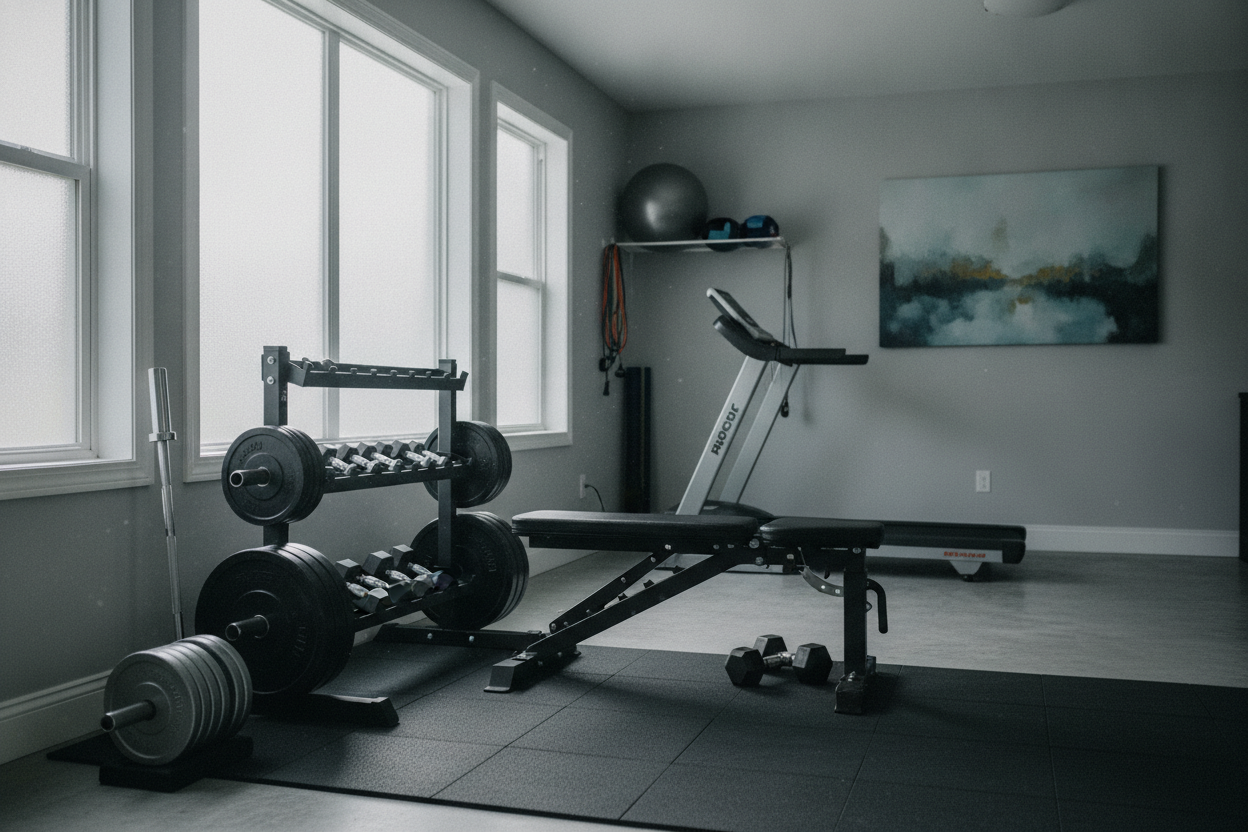
For any seated or lying press, you need a rock-solid foundation like the Gxmmat Adjustable Weight Bench. You need something with a high weight capacity—at least 600 lbs—and a frame that doesn't twist when you're digging your feet in for a heavy set. When your body feels stable, your central nervous system 'allows' your muscles to exert maximum force. If the setup feels sketchy, your body will instinctively 'throttle' your strength to protect your joints.
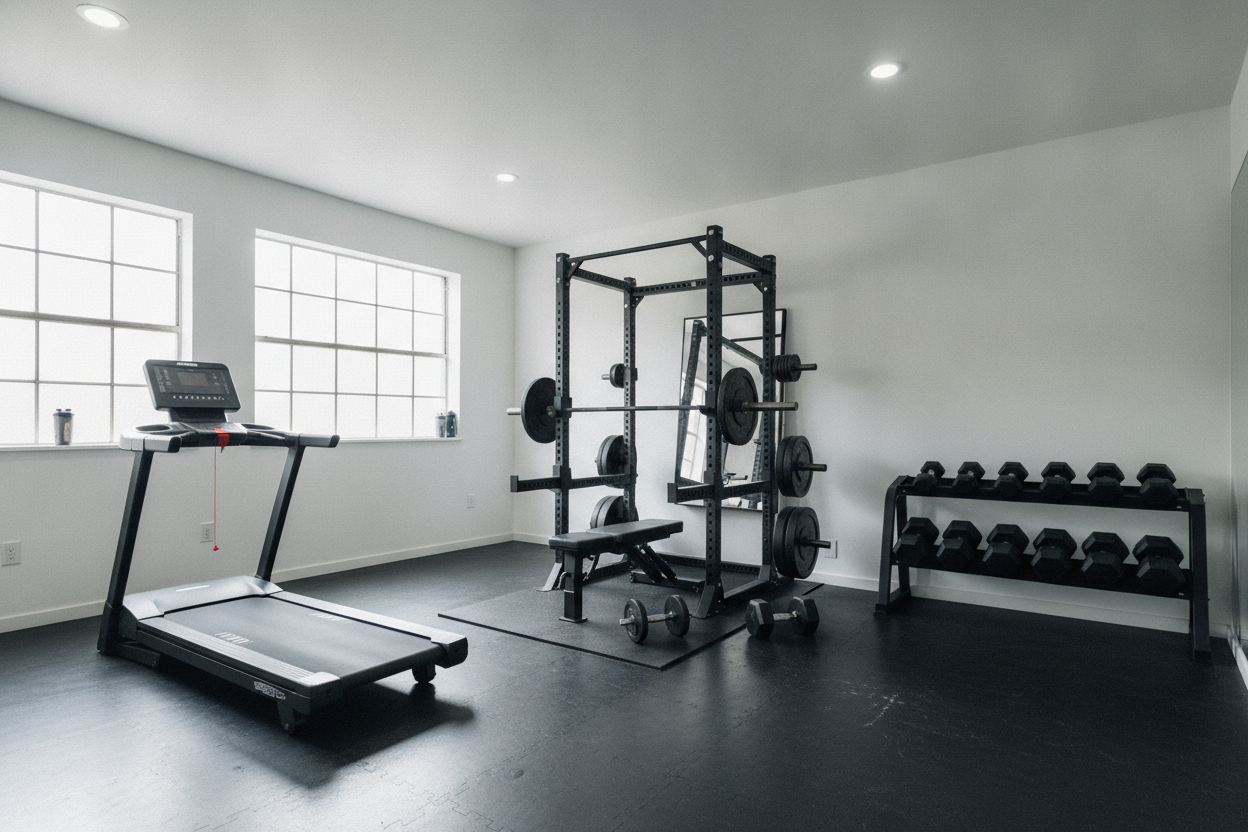
If you're training alone in a home gym, the stakes are even higher. Trying to do slow, controlled eccentrics on a heavy squat or bench press without a cage is a recipe for a trip to the ER. This is where a setup like the Gxmmat X6 Power Rack Weight Bench Package becomes essential. Having those safety spotter arms allows you to push yourself to true muscular failure. You can take that last rep, lower it over a full four seconds, and know that if your muscles give out at the bottom, the rack has your back. That safety allows for a level of intensity you just can't get with a flimsy, standalone rack.
Ditch the Circus Tricks for True Stability
I see it every day on social media: some guy doing squats on a BOSU ball or trying to do overhead presses while standing on one leg. They call it 'functional training.' I call it a waste of a weight gain exercise for men. If your goal is to get bigger, you need to be as stable as possible. The more stable you are, the more weight you can move, and the more tension you can place on the target muscle.
I actually wrote a whole piece on why you should Stop Balancing: The Missing Key in Your Workout for Weight Gain. When you add a balance component to a lift, your strength output drops by nearly 60%. You aren't building muscle; you're just practicing a circus trick. If you want big quads, don't do lunges on a wobbly foam pad. Get on a hack squat or use a heavy barbell in a stable rack where you can focus entirely on the leg drive.
In fact, if you’re a true hardgainer, don't be afraid of Weight Lifting Machines. While free weights are great for overall development, machines lock you into a fixed path of motion. This removes the need for stabilization entirely, allowing you to focus 100% of your mental and physical energy on the eccentric contraction. It’s much easier to maintain a 4-second negative on a chest press machine than it is with a pair of heavy, wandering dumbbells.
Structuring Your New Weight Gain Workout for Men
Fixing your reps is step one. Step two is making sure you aren't overtraining. Hardgainers often make the mistake of thinking 'more is better.' They do six days a week of high-volume body part splits and wonder why they're losing weight. When you train with the high-tension, slow-eccentric style I’m describing, you are putting a massive strain on your recovery systems. You cannot do this every day.
I’m a huge advocate for a Full Body Workout For Weight Gain Stop Wasting Time On Splits. By hitting the whole body three times a week, you trigger protein synthesis more frequently than a traditional 'bro-split.' You do one or two heavy compound movements per body part, focus on that 3-second negative, and then get out of the gym to eat and sleep. This approach prioritizes quality over quantity. You're not trying to see how much work you can do; you're trying to see how much growth you can stimulate.
Keep your sessions under 60 minutes. If you’re doing these slow-tempo reps correctly, you won't have the energy for much more than that anyway. Focus on the big three: Squat, Bench, and Deadlift (or their machine equivalents), and treat every single rep like it’s the only one that matters. Stop counting reps and start making the reps count.
My Personal Lesson in 'Ego Lifting'
I learned this the hard way back in 2018. I was obsessed with hitting a 315-lb bench press. I got there, but I was bouncing the bar off my ribs so hard I actually bruised my sternum. My chest didn't look any bigger, but my shoulders were constantly inflamed. I finally swallowed my pride, dropped the weight back to 225, and started using a 3-second eccentric with a 1-second pause at the bottom. My chest grew more in the next two months than it had in the previous two years. My 'max' went down, but my actual muscle mass went up. That was the moment I realized that the weight on the bar is just a tool, not the trophy.
FAQ
How slow should the 'down' part of the lift be?
Aim for 3 to 4 seconds. It should feel uncomfortably slow. If you can't control the weight for that long, the weight is too heavy. Period.
Will training this way make me lose strength?
Your 'ego' strength (using momentum) will go down, but your actual muscular strength will skyrocket. Within a few months, you'll likely be moving your old 'max' weights with perfect control.
Can I do this with bodyweight exercises?
Absolutely. Slow-tempo pushups and pullups are significantly harder and more effective for growth than cranking out 50 fast, half-range reps. If you can do 20 pullups, try doing 5 with a 5-second negative. It will change your life.